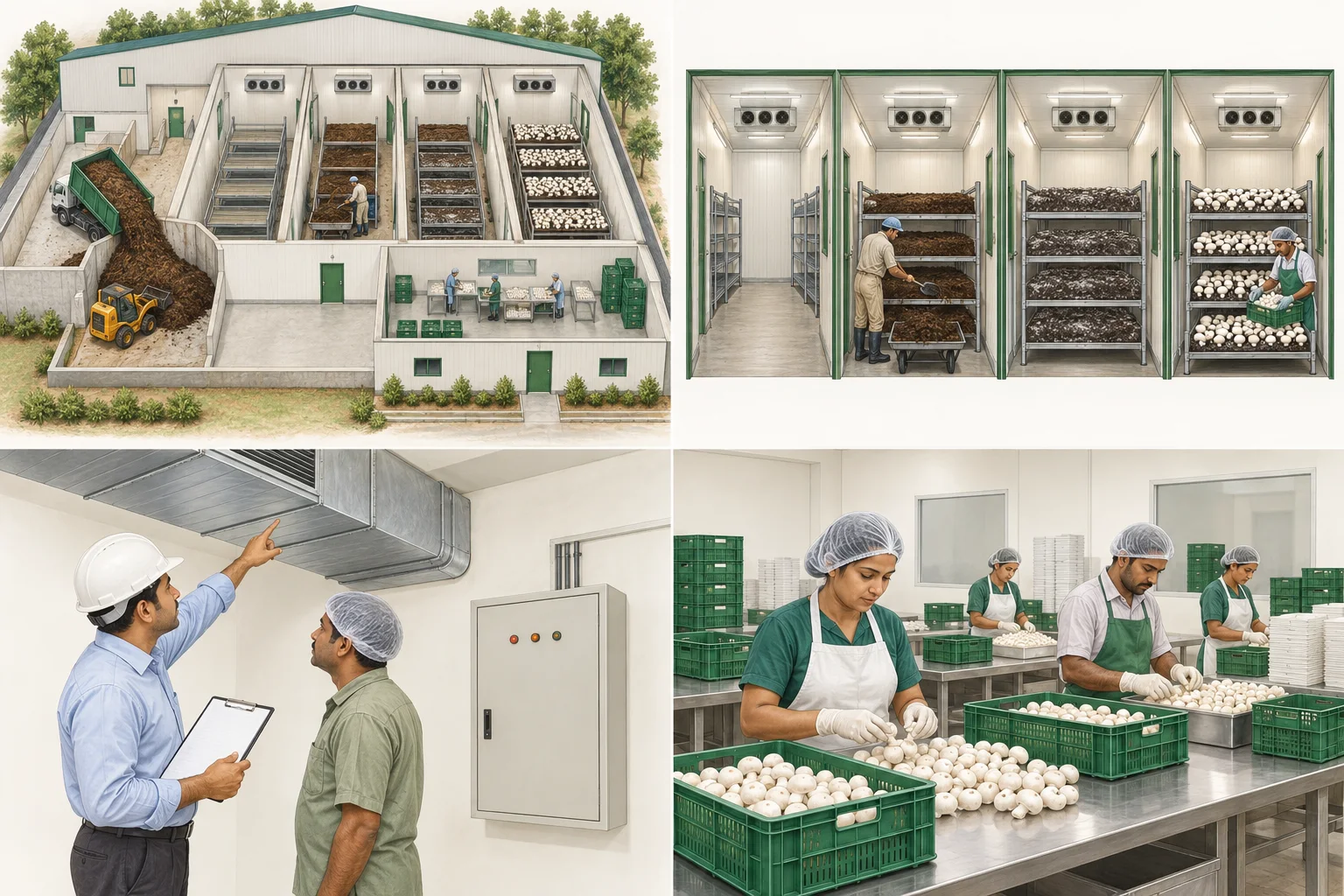
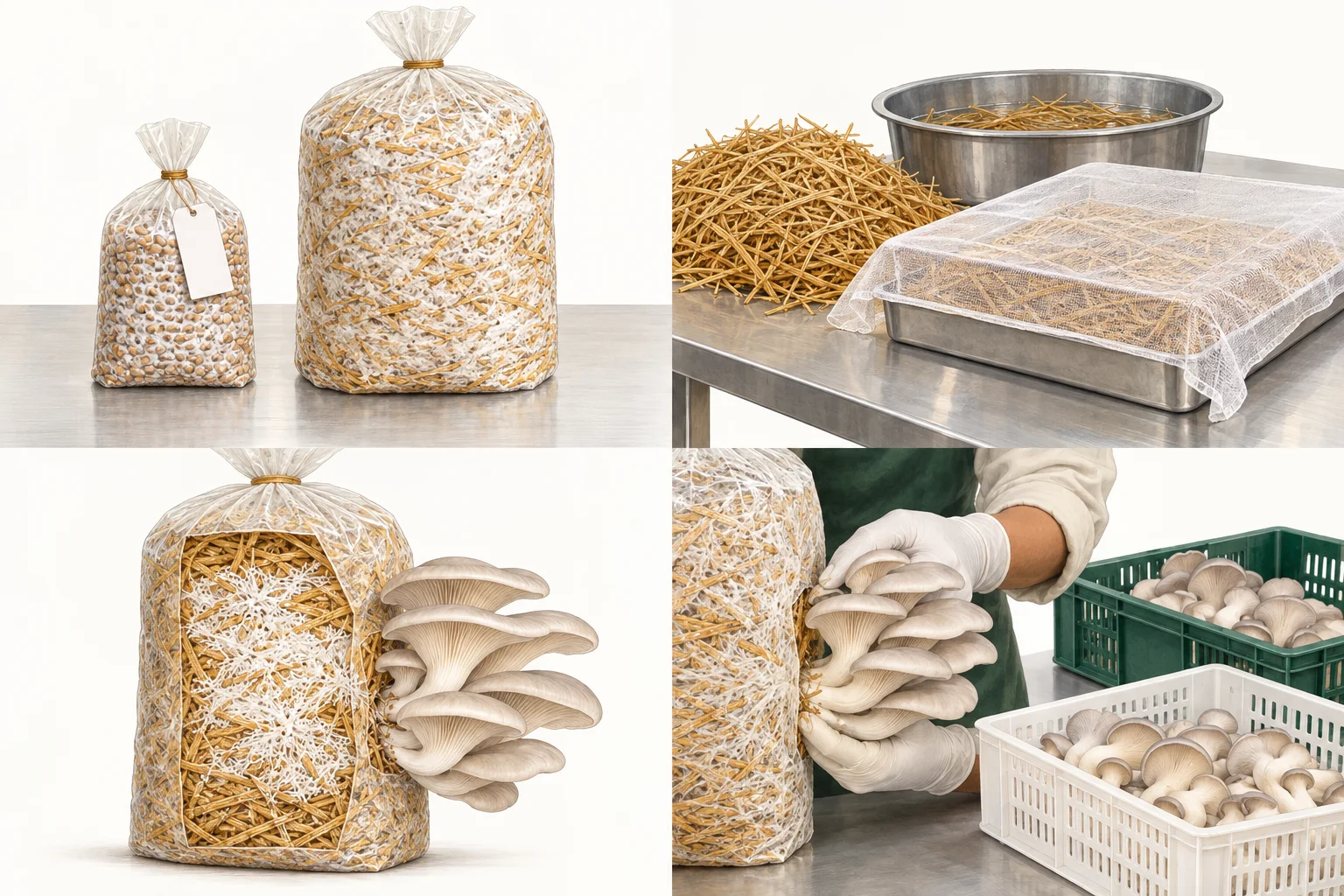
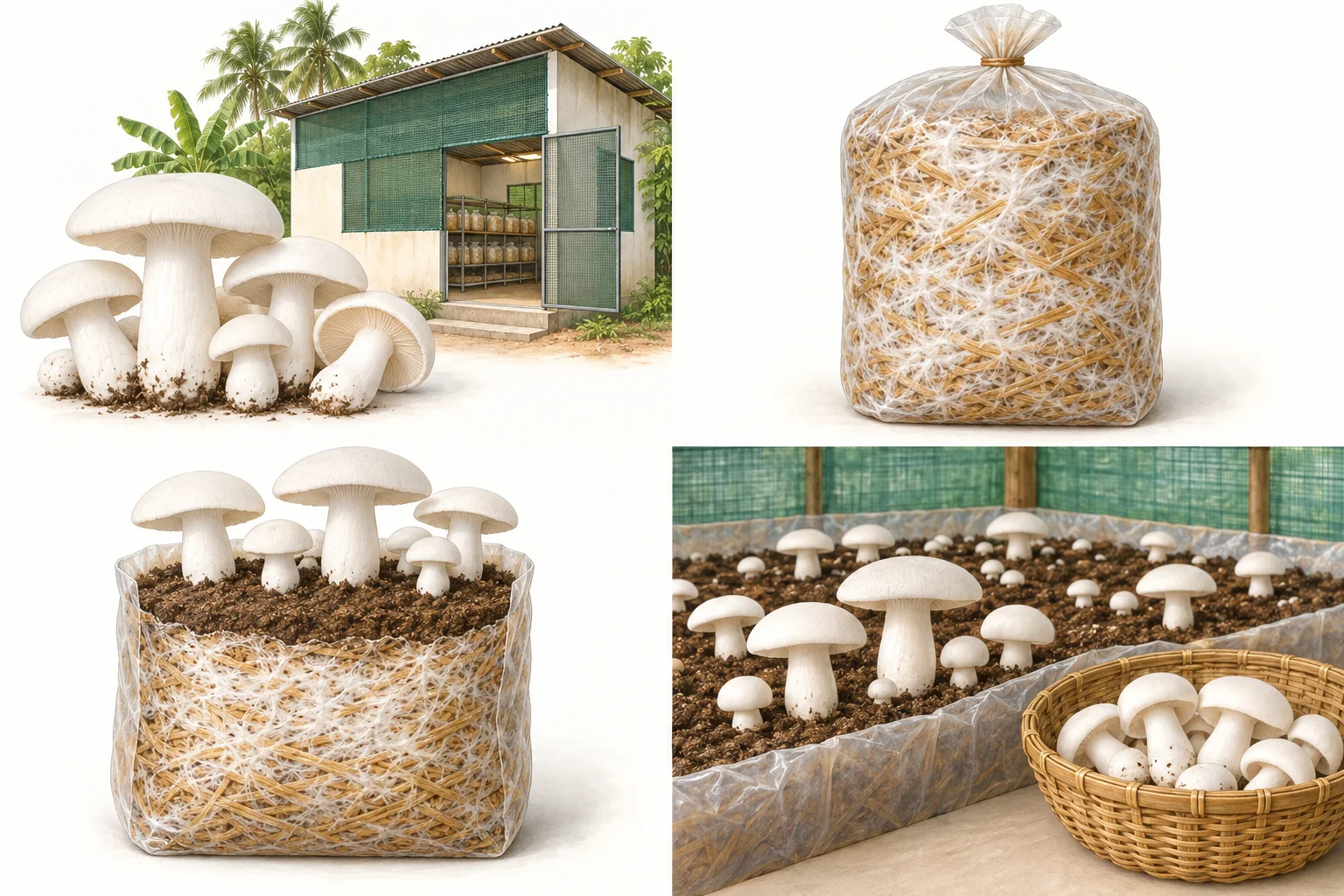
A practical guide to growing mushrooms in IndiaA joint educational initiative by MushroomWale & DMR Solan
MushroomFarming.in

A joint educational initiative by

MushroomWale.com
ICAR–Directorate of Mushroom Research, Solan logoICAR–DMRSolan
Watch → read → practise → check

Your mushroom farming classroom

See the process first. Then learn your crop step by step, understand the numbers, and practise with a field task.

4
institutional videos
86
detailed lessons
13
learning tracks
English · External institutional video

See the cultivation process

Mushroom Cultivation (English)ICAR Indian Institute of Horticultural Research

Published in 2012. A foundational demonstration, not a current chemical, investment or operating prescription.

Watch on YouTube

Watched is a self-reported note, not a skill certificate. Captions and full transcripts, where available, are on YouTube. If playback is blocked, use the source link above.

What to record while watching
  1. Write the order of operations you observe, without copying a number out of context.
  2. Separate clean spawning work from raw-material handling on a sketch.
  3. Compare the demonstrated crop with your chosen species and production method.

These are our learning prompts, not a transcript or timestamped description of the film.

Picture → explanation → field task

Turn a lesson into a field task

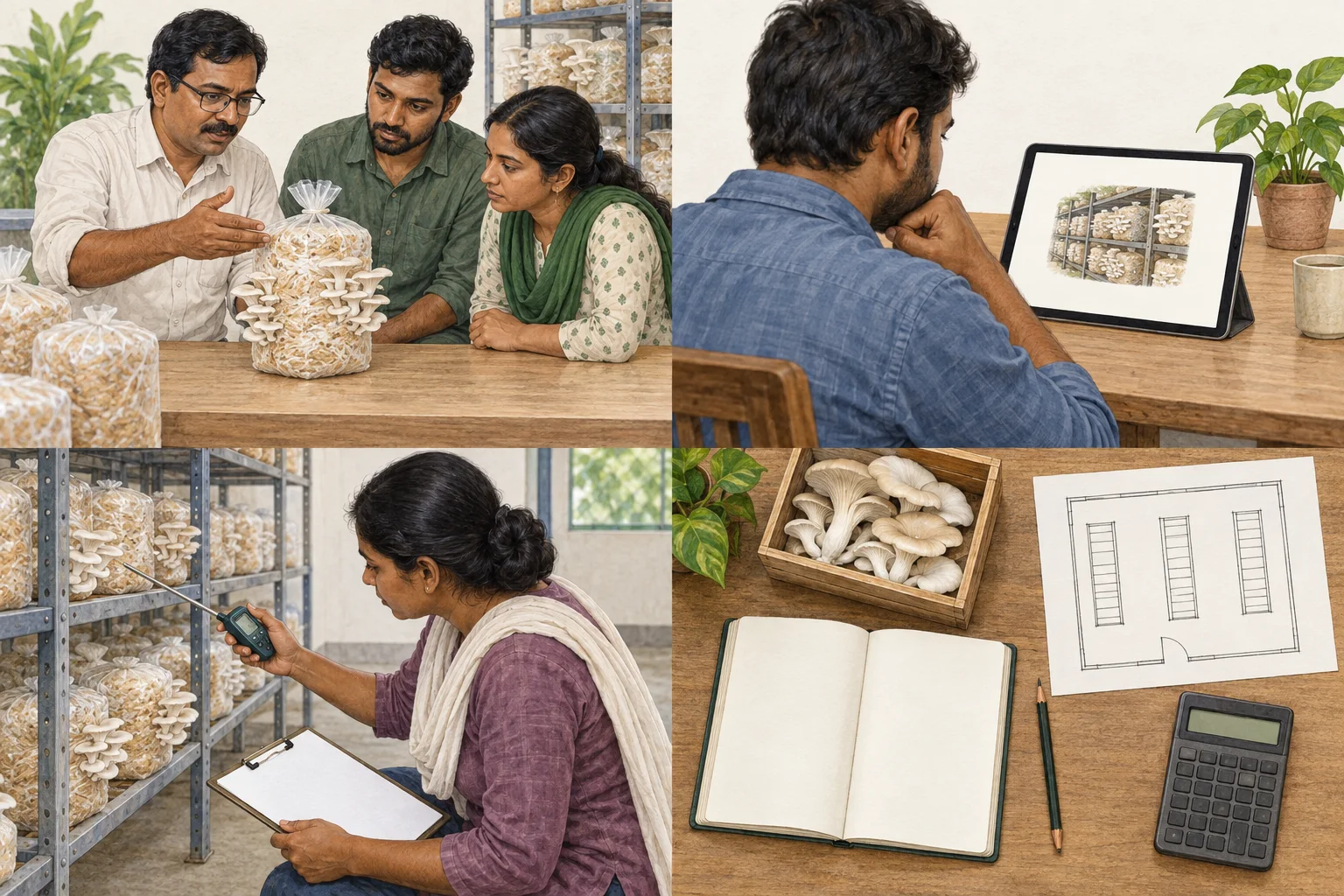
AI-generated educational illustrations. Not actual farm photographs, diagnostic evidence or construction specifications.

Generated illustration of an instructor and growers examining an Oyster mushroom cultivation bag.
01

Learn the material in front of you

The group is examining a specific crop and production stage. A useful demonstration identifies the species, input and stage before explaining a technique.

Try this on your farm

Write down what the demonstration uses and which tasks remain on your own farm. Do not assume all mushroom species share the same method.

Generated illustration of a grower watching a mushroom cultivation demonstration on a tablet.
02

Watch with an observation question

Video helps reveal hand movements and the working sequence. A demonstration from another farm may use different inputs or equipment. It is not automatically a locally suitable prescription.

Try this on your farm

Pause to list the materials, sequence and checks shown. Compare with the written lesson and its source notes before practising.

Generated illustration of a grower using a probe beside Oyster bags and keeping a blank record sheet.
03

Practise measuring and recording

A measurement needs both a location and a written record. The meaning changes with sensor placement, stage and time. Repeated comparable records are more useful than a remembered reading.

Try this on your farm

Record the sensor, location, time and observation together. Ask an experienced trainer to check the measurement technique.

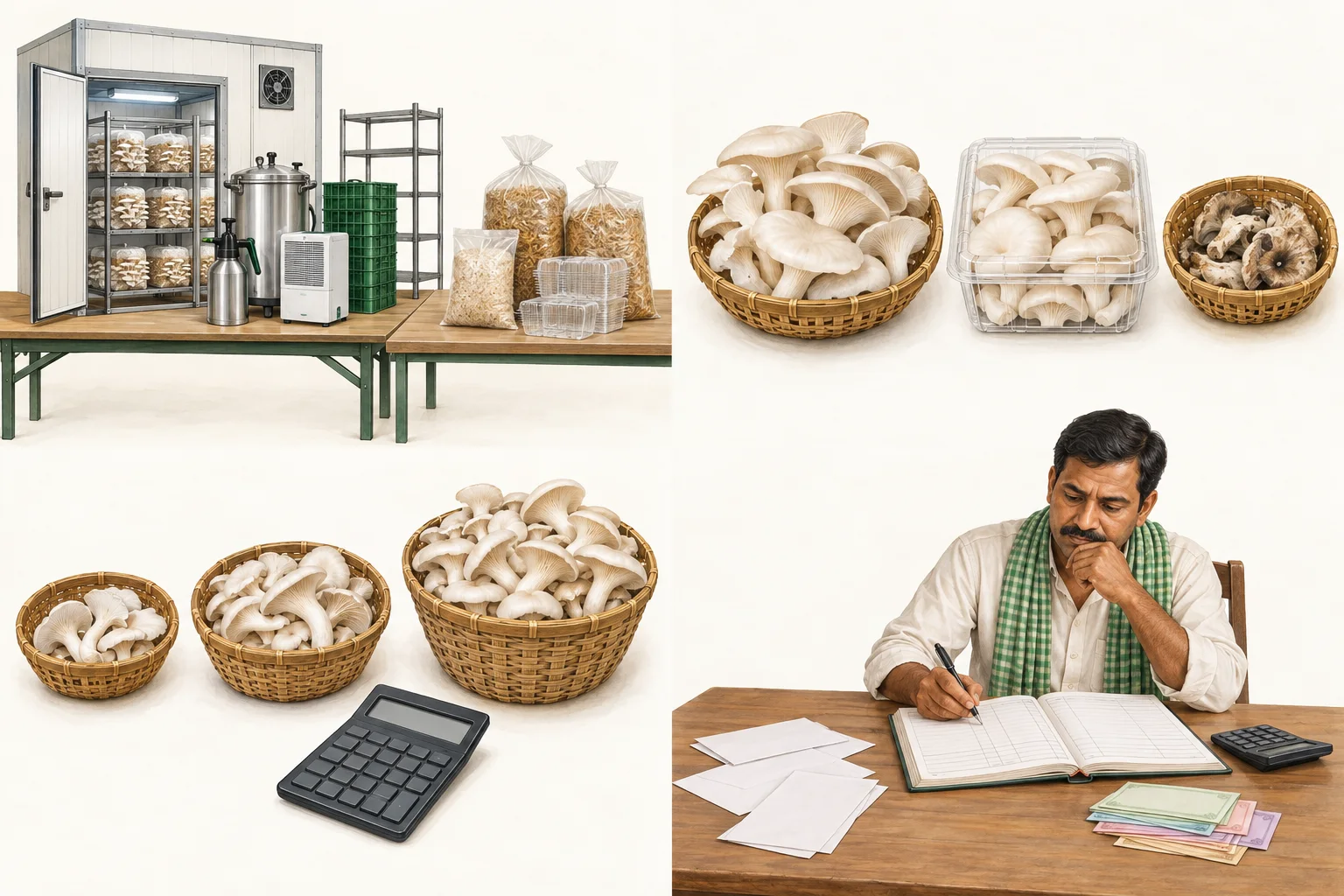
Generated overhead illustration of a notebook, blank calculator, mushroom crate and simple room sketch.
04

Plan on paper before expanding

A crop plan links space, work and money. The sketch and calculator represent planning tools, not a finished project design or an income prediction.

Try this on your farm

List assumptions, missing information and who will verify each point. Test a pilot batch before committing to an unverified scale.

Learn by crop and farming need

The details behind the demonstration

Each detailed lesson includes objectives, a visual, source-linked context, a practical task and self-checks. Written notes are not video transcripts. Dedicated footage is not yet available for every topic; those tracks remain useful as illustrated lessons.

01

Mushroom Farming Foundations

The main beginner course: biology, cultivated species, crop systems, hygiene, harvest, business reality and species fit.

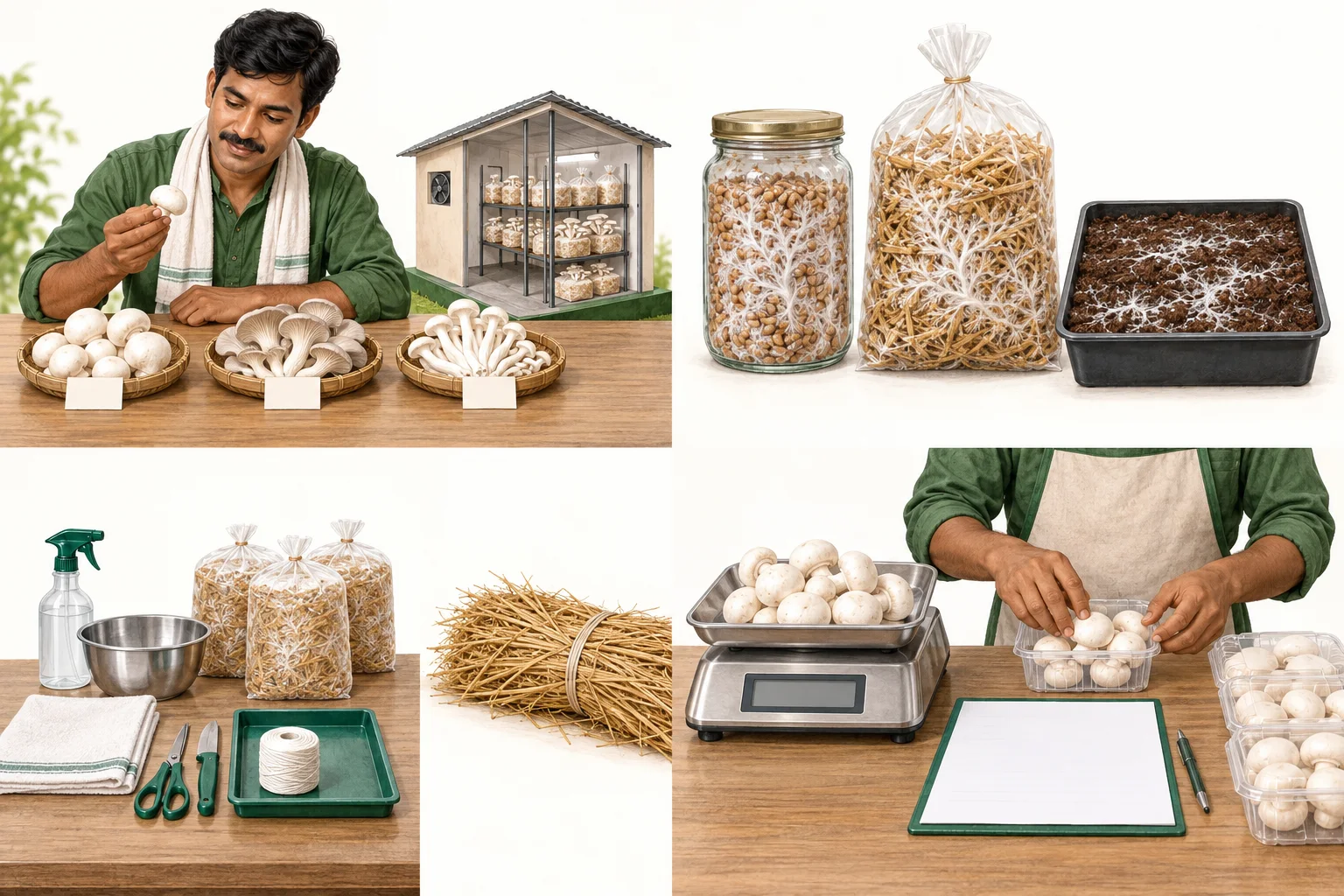
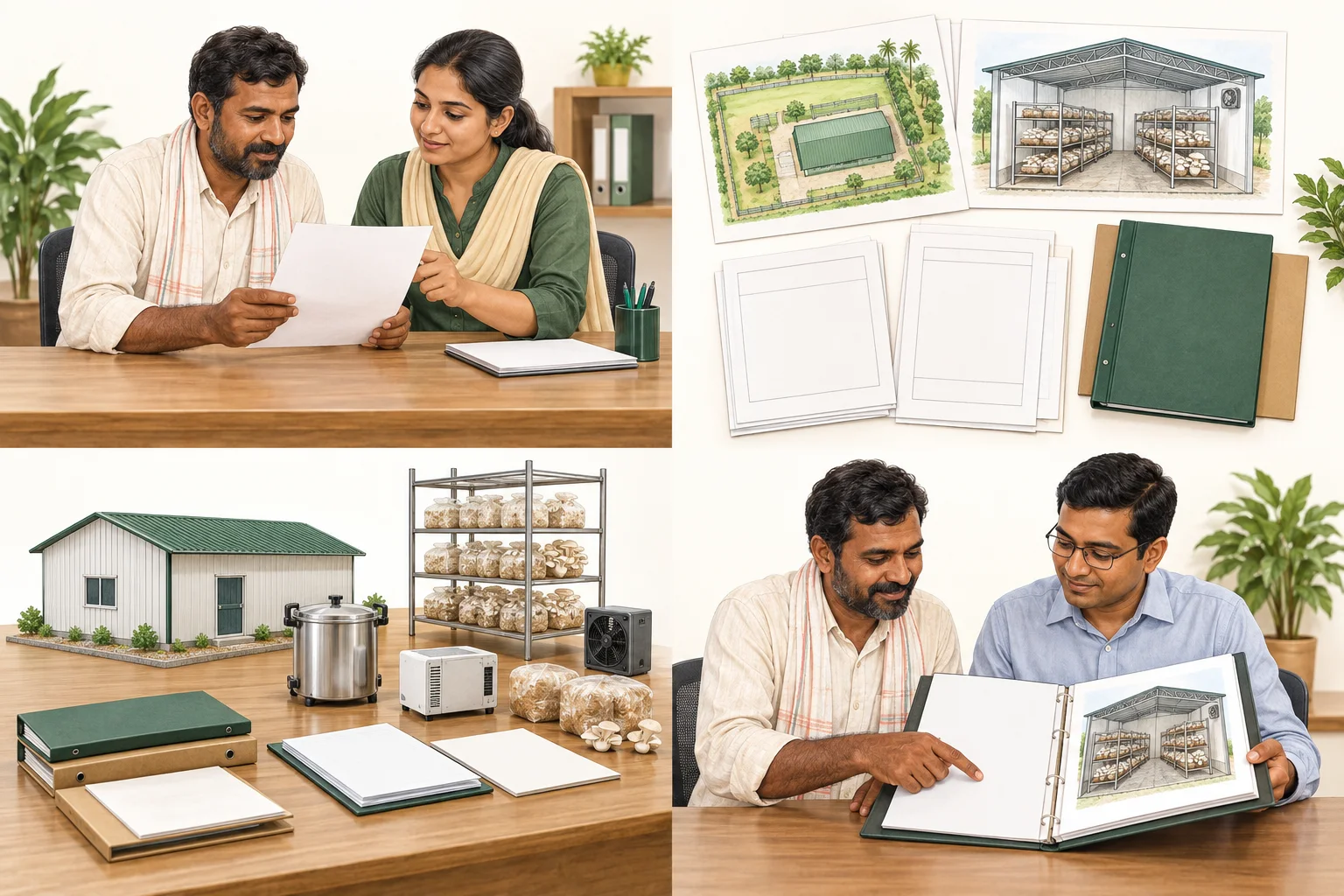
Educational illustration of a grower comparing mushroom crops and a small growing-room model.
AI teaching illustrationChoose your crop

Crop, room, season and buyer belong in one decision.

9 illustrated lessonsCompanion video available
See the lesson sequence
  1. What Mushrooms Are
  2. Major Cultivated Mushrooms
  3. Mycelium, Spawn & Substrate
  4. Environment
  5. Hygiene & Contamination
  6. Cultivation Cycle
  7. Harvest & Post-Harvest
  8. Business Reality
  9. Which Mushroom Fits Me?
Open course & field exercises
02

Button Mushroom Grower

An 18-module journey from Button fundamentals through compost, spawning, casing, cropping, climate, health and basic economics.

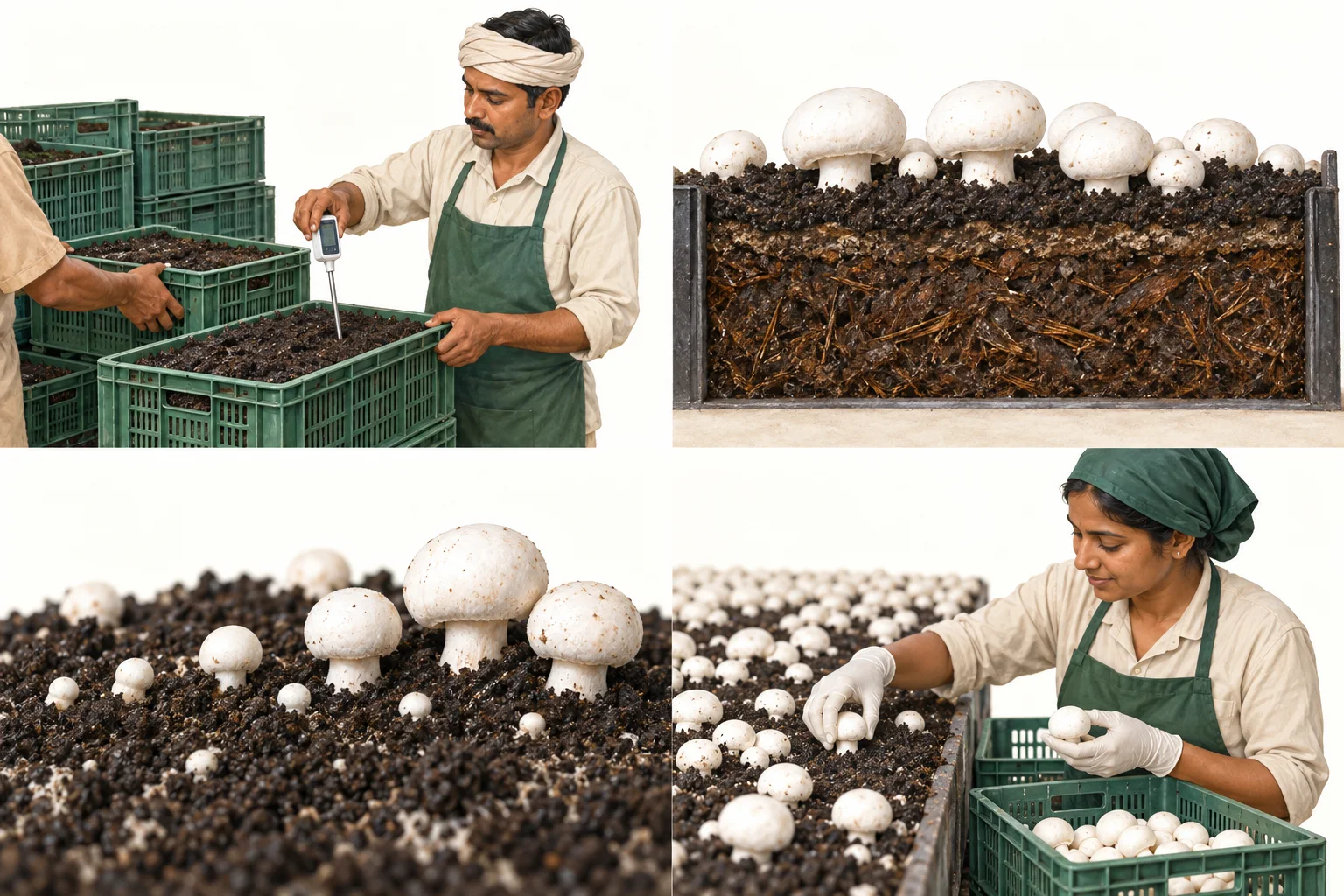
Illustration of compost receipt and a probe measurement.
AI teaching illustrationReceive the right compost

The delivered compost stage determines the work still needed.

18 illustrated lessonsRead & practise · dedicated footage pending
See the lesson sequence
  1. Button Mushroom Fundamentals
  2. Production Systems
  3. Compost Fundamentals
  4. Phase I
  5. Phase II
  6. Spawn & Spawning
  7. Spawn Run
  8. Casing
  9. Case Run
  10. Pinning
  11. Cropping & Flushes
  12. Climate Management
  13. Watering
  14. Crop Health
  15. Harvest
  16. Post-Harvest
  17. Farm Hygiene
  18. Basic Economics
Open course & field exercises
04

Compost Operator

A rigorous Phase I and Phase II specialization covering materials, water, biology, aeration, ammonia, sampling, quality and batch records.

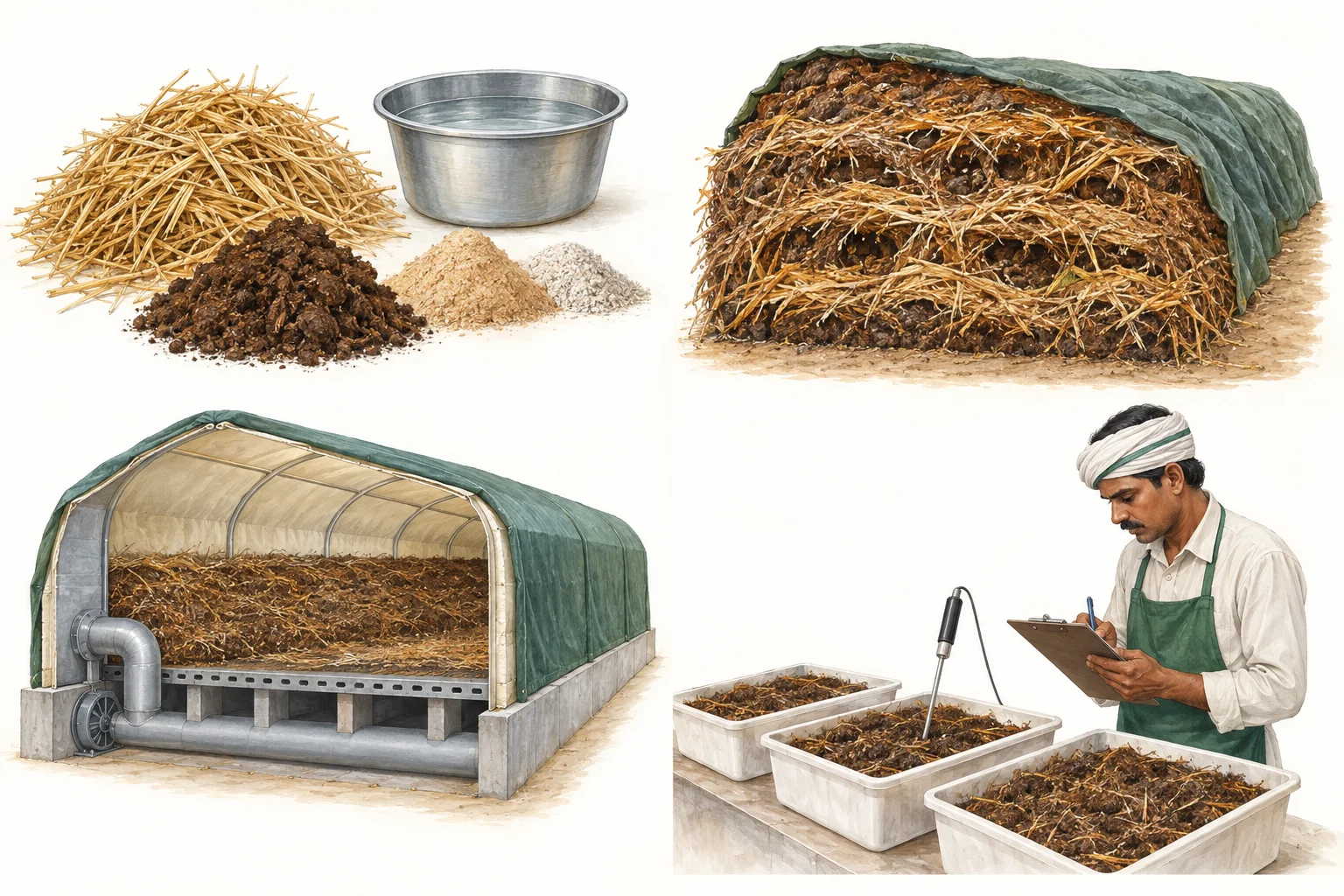
Conceptual compost heap cutaway showing straw structure and internal spaces.
AI teaching illustrationStructure and air

The heap has structure, depth and internal variation.

18 illustrated lessonsRead & practise · dedicated footage pending
See the lesson sequence
  1. Raw Materials
  2. Formulation
  3. Water & Moisture
  4. Microbiology
  5. Phase I
  6. Bunker Operation
  7. Aeration
  8. Phase II
  9. Pasteurization
  10. Conditioning
  11. Ammonia
  12. Tunnel Operation
  13. Sensors
  14. Quality Control
  15. Sampling
  16. Troubleshooting
  17. Hygiene
  18. Batch Records
Open course & field exercises
ICAR-DMR · Available directly from the institute

Official seasonal Button training films

DMR lists seasonal Button films in Hindi and English, plus Oyster, Paddy Straw and Shiitake films. Confirm availability and terms with the institute. We do not hold these films or rights to republish them.


Check the DMR film catalogue