

Raw Materials
Wheat straw can mean a bright dry bale or a grey heap already rotting in the rain. Compost is never better than the lot you accept.
- By the end you can name the job each material does in the mix.
- By the end you can read DMR nitrogen figures and say why your own lot differs.
- By the end you can inspect and log a delivery before it is tipped.
Read numerical examples with their source, method and crop context. They are not universal operating instructions. Historical prices are not current quotations.
Start with the inputs
- Notice
- Wet weight is not the same as dry matter.
- Understand
- Two equally heavy ingredient loads can contain different amounts of dry material.
- Try it
- Record input identity, moisture basis and the formulation being followed.
01Four jobs, not four ingredients
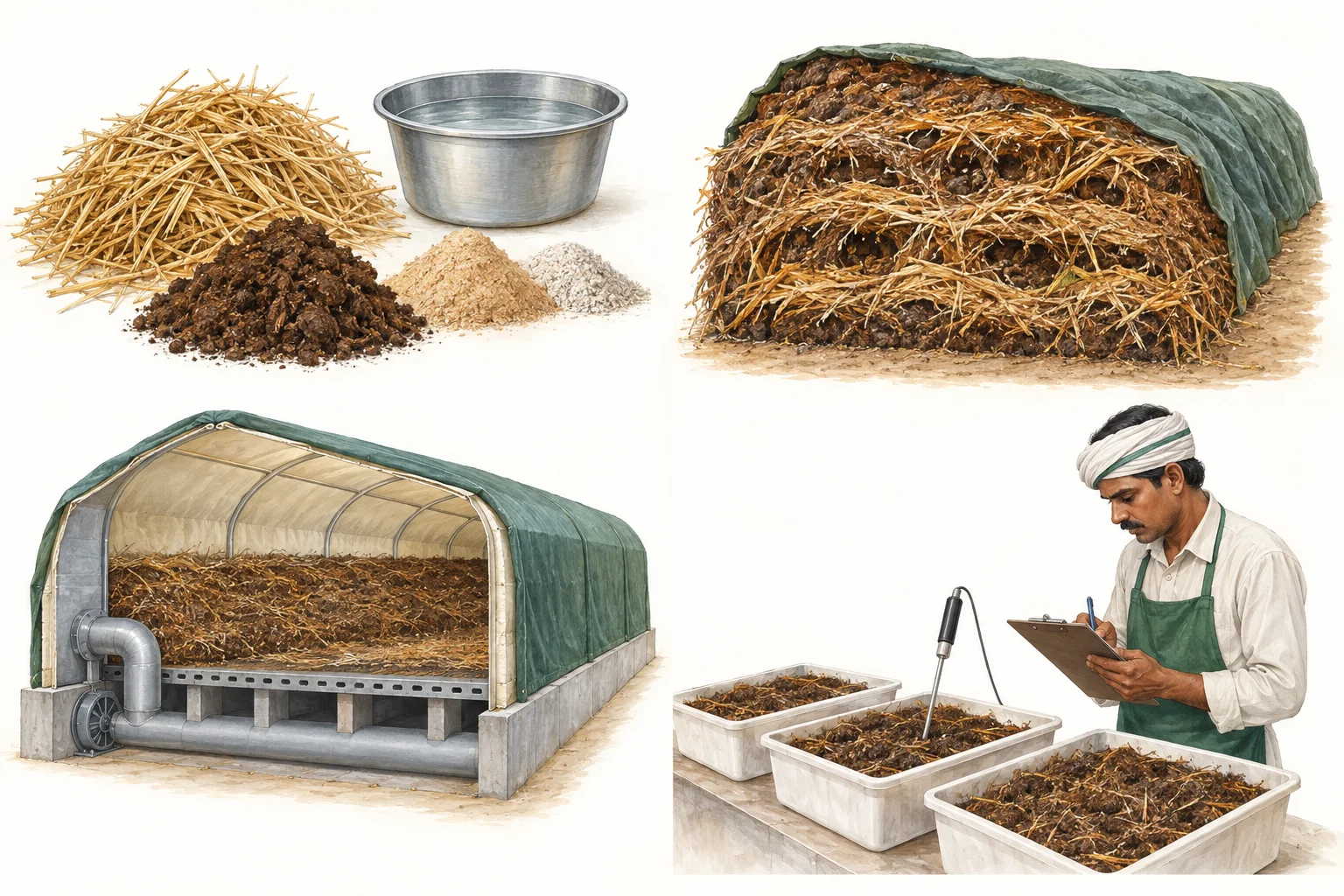
Every compost mix has four jobs. Straw supplies carbon, the energy food of microbes, and the open structure that lets air move. Chicken manure, wheat bran, oil cakes and fertilisers such as urea or calcium ammonium nitrate supply nitrogen, the protein food. Gypsum is the conditioner: it keeps the mass open and adds calcium. Water carries everything.
If you buy a material without knowing its job, you cannot repair the mix when one job falls short. Wheat straw, paddy straw and farmyard manure are what most Indian yards actually have, so plan around them.
02What the DMR table says, and what it does not
The ICAR-DMR raw material table gives typical dry weight values: wheat straw about 0.6 per cent nitrogen, deep litter chicken manure 3.0 per cent, wheat bran 2.0 per cent, soybean meal 6.5 per cent and cotton seed meal 7.0 per cent.
These are typical values, not your values. A worked example in the same chapter uses chicken manure at 2.6 per cent and straw at 0.40 per cent. Manure from a young flock on fresh litter is not manure scraped off a shed floor after a year. Start from the table, then test your own lot when a laboratory is reachable.
03Inspect the lot at the gate
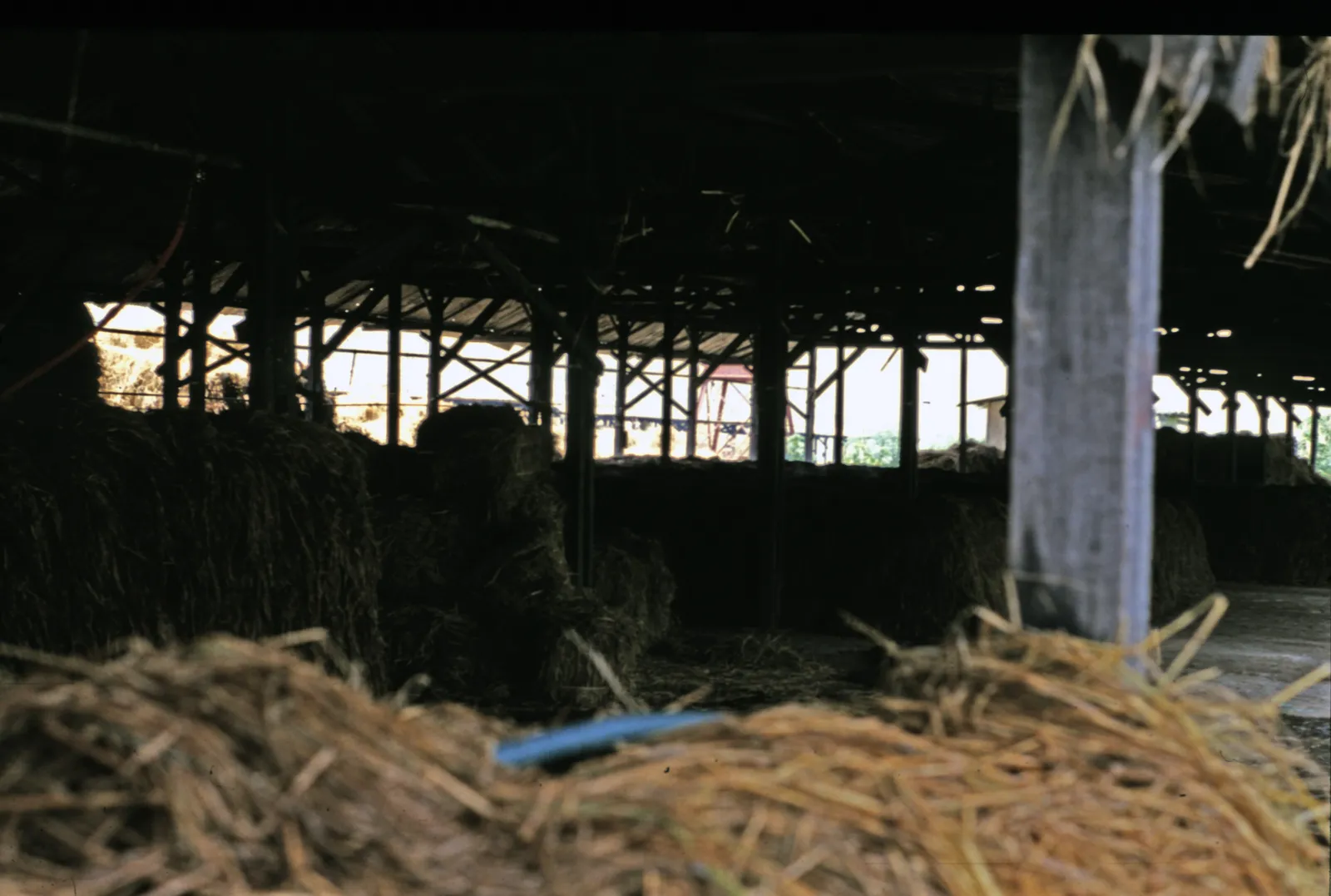
Judge every delivery before it is tipped. Straw should be bright, dry, springy and free of black or grey mould. A sour cellar smell means it has already fermented and lost carbon you paid for. DMR asks for freshly harvested material chopped to about 5 to 8 cm. Manure should be crumbly, not a slurry.
- Look: colour, mould patches, foreign matter, soil.
- Feel: dry and springy, or damp and matted.
- Smell: clean straw, not sour or mouldy.
- Weigh it yourself; do not count trolleys.
- Log supplier, date, weight and condition.
04Why a copied formula fails
A formula is arithmetic done on particular materials. If your manure holds less nitrogen than the manure it was written for, the same weights give a weaker mix, the heap heats poorly and moulds that live on carbohydrate move in. If it holds more, nitrogen escapes as ammonia and yellow moulds follow.
Size matters too. DMR warns against composting less than 300 kg of base material, because a smaller pile cannot hold the temperature it needs. Keep a lot record so next season you can explain a good batch and a bad one.
Run a gate check on the next delivery
- Take three handfuls from different parts of the load.
- Note colour, mould, smell and how springy the straw feels.
- Weigh the load yourself and compare it with the bill.
- Chop a sample and check it near 5 to 8 cm.
- Accept, discount or reject, and write the reason down.
Write in your farm diary: Supplier, date, material, weight, condition notes and the accept or reject decision.
Mistakes that cost a crop
- Buying straw by eye and paying by the trolley; formulae are written in kilograms.
- Taking rain soaked straw because it is cheap; the carbon is already gone.
- Copying a neighbour's weights without knowing the nitrogen in your own manure.
Check yourself
Three questions, instant answersGypsum is added mainly to:
DMR lists deep litter chicken manure at about:
A pile of only 150 kg of straw is:
An editorial self-check, not a certificate. Answers are not stored, not even on this device.
Words used in this lesson
- Carbon source
- Material such as straw that feeds energy and holds the heap open.
- Nitrogen source
- Material such as chicken manure, bran or oil cake supplying protein.
- Dry weight basis
- A figure worked out after the water is removed.
References & further reading
A lesson cannot replace batch measurements or plant-specific procedures.
Open current reference