


Quick orientation
Accept, reject, store and issue materials by supplier lot, visible condition, storage history and the analyses required by the formulation.
01
Simple explanation
A material name describes a category, not its exact chemistry, moisture or behaviour.
02
What is happening
Feedstock variability changes available carbon, nitrogen release, microbial demand, water absorption, particle structure and contamination risk.
03
Operator explanation
Accept, reject, store and issue materials by supplier lot, visible condition, storage history and the analyses required by the formulation.
04
What to observe
Observation should describe stage, location, pattern and change history before interpretation.
- Bale condition
- mould and weather damage
- manure bedding and age
- concentrate pests
- conditioner identity
- water source
05
What to measure
Measurement must retain method, unit, location, timing, calibration and sample identity.
- Lot moisture where relevant
- representative material analysis
- arrival and storage dates
- rejected quantity and cause
06
Equipment and process boundary
Equipment is useful only when its role in the biological process is explicit.
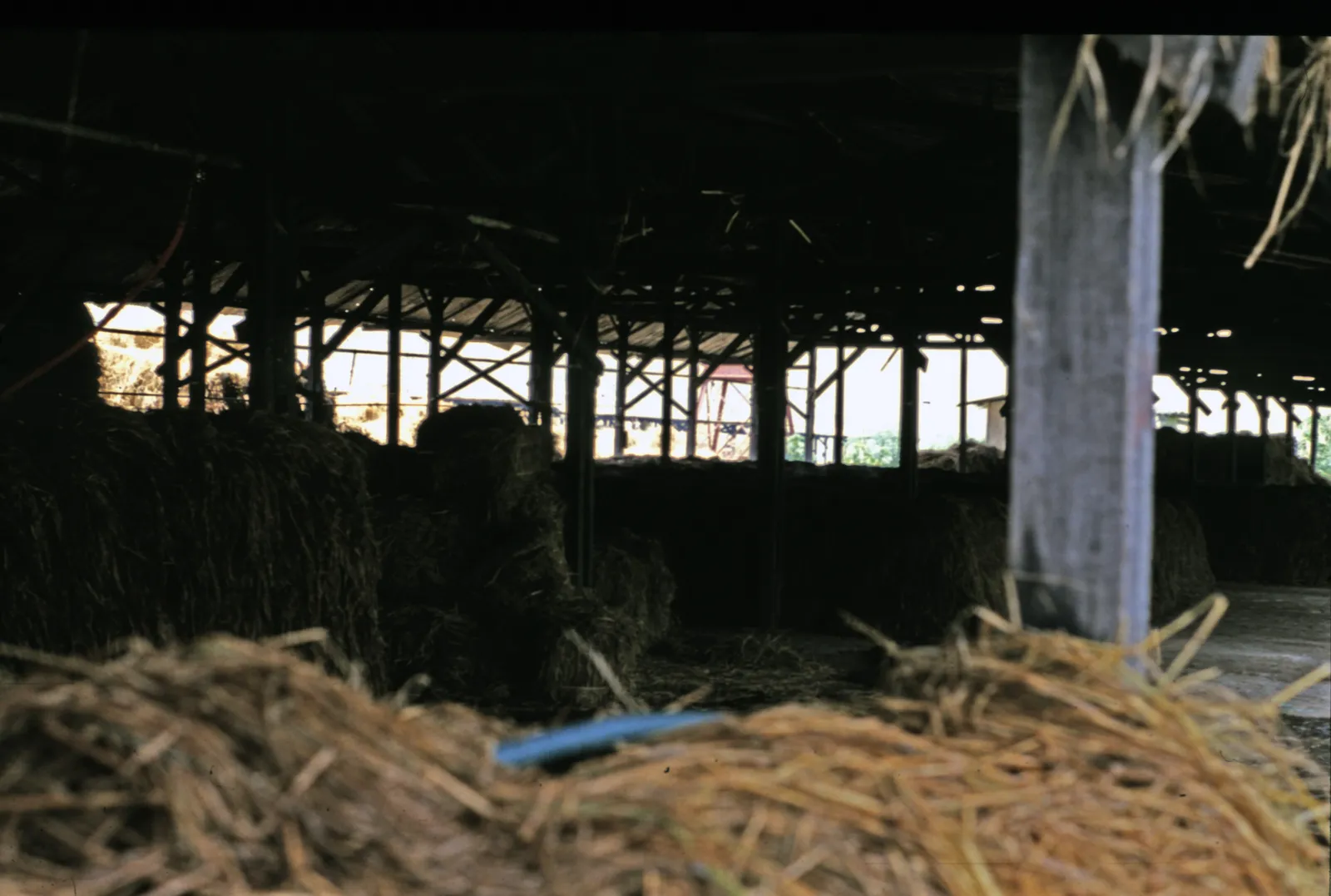
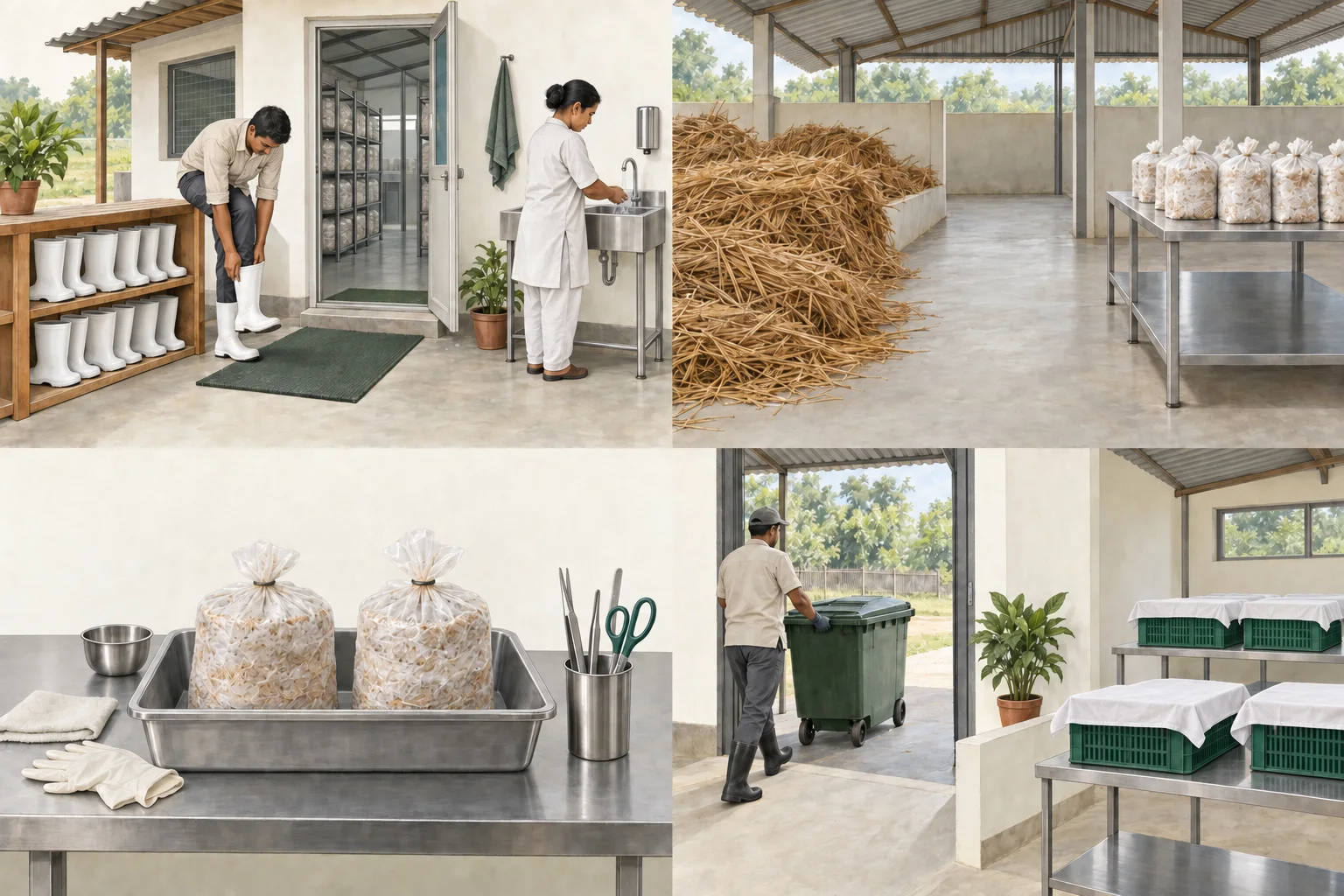
- Covered storage
- lot labels
- sampling tools
- clean handling routes
- runoff containment
07
Variables that interact
Raw-material uncertainty propagates into formulation, heat generation, ammonia, air resistance and final compost quality.
08
What can go wrong
A symptom may have several mechanisms. Verify the cause before changing the process.
- Substituting materials by weight alone
- mixing rejected and accepted lots
- uncontrolled rain exposure
- using average analyses as current facts
09
What changes at commercial scale
Scaling changes geometry, repeatability, instrumentation, material flow and failure consequence.
- Small units need simple lot discipline
- Commercial units need supplier qualification, quarantine, sampling and repeated-problem analysis
10
Evidence boundary
Mapped evidence: Mushroom Cultivation, Marketing and Consumption; Influence of turning methods on temperature profile of Button Mushroom compost pile; Physico-chemical properties and thermophilic flora in Button Mushroom compost using spent substrate. Foundational, current operational, research and engineering sources retain their different roles.
Raw-material database
Material identity, function, variability, storage and contamination risk remain attached to every entity.
COMPOST-MATERIAL-WHEAT-STRAWWheat straw
Creates fibre, pore pathways and water-holding structure before progressive softening and compression.
Material record
- Carbon role
- Provides a lignocellulosic carbon framework that is transformed during composting.
- Nitrogen role
- Its own nitrogen contribution varies and must be measured or sourced by lot when formulation depends on it.
- Moisture
- Lot-specific. Water absorption and retained moisture must be observed separately.
- Regional context
- Common in wheat-growing supply chains, with quality and season varying by region.
Typical variability
- Variety and growing region
- bale age and weather exposure
- stem length
- dust and foreign material
- initial moisture
Quality indicators
- Fibre integrity
- uniform bale condition
- absence of abnormal odour
- documented storage history
COMPOST-MATERIAL-PADDY-STRAWPaddy straw
Particle form and fibre behaviour alter wetting, compaction and air pathways.
Material record
- Carbon role
- Can contribute structural carbon in documented formulations.
- Nitrogen role
- Must not be assumed equal to wheat straw on an analytical basis.
- Moisture
- Lot and storage specific.
- Regional context
- Regionally relevant where rice residues are available; formulation consequences require validation.
Typical variability
- Cultivar
- harvest and threshing method
- silica and ash context
- weathering
- chop length
Quality indicators
- Clean fibre
- consistent particle form
- no persistent off-odour
- traceable origin
COMPOST-MATERIAL-POULTRY-MANUREPoultry manure
Fine material can fill voids and change wetting, stickiness and air resistance.
Material record
- Carbon role
- Contributes organic matter whose composition depends on bedding and handling.
- Nitrogen role
- Can provide nitrogen that supports microbial activity and ammonia formation.
- Moisture
- Highly variable and unsuitable for a fixed wet-weight assumption.
- Regional context
- Supply and composition depend on local poultry systems.
Typical variability
- Bird system
- bedding content
- age
- moisture
- storage losses
- foreign matter
Quality indicators
- Known source
- consistent bedding context
- representative analysis where required
- controlled storage
COMPOST-MATERIAL-HORSE-MANUREHorse manure and stable bedding
Bedding identity changes fibre, porosity and moisture behaviour.
Material record
- Carbon role
- Bedding and manure together can supply carbon in documented systems.
- Nitrogen role
- Nitrogen contribution varies with bedding ratio, age and storage.
- Moisture
- Cannot be inferred from the name alone.
- Regional context
- May be limited or inconsistent in many Indian regions.
Typical variability
- Bedding material
- manure-to-bedding ratio
- age
- urine retention
- storage
Quality indicators
- Declared bedding
- consistent handling
- no unsuitable foreign material
- documented source
COMPOST-MATERIAL-WHEAT-BRANWheat bran
Fine particles can alter distribution and local oxygen demand if mixing is uneven.
Material record
- Carbon role
- Provides more readily available organic matter than intact straw.
- Nitrogen role
- May contribute nitrogen and stimulate microbial activity within a sourced formulation.
- Moisture
- Normally assessed by lot and protected from humidity.
- Regional context
- Common but quality remains supplier and season dependent.
Typical variability
- Mill source
- particle size
- storage age
- moisture
- adulteration
Quality indicators
- Clean odour
- consistent particle size
- protected packaging
- known supplier
COMPOST-MATERIAL-GYPSUMGypsum
Used in documented formulations to influence physical handling, aggregation and compost condition.
Material record
- Carbon role
- No primary carbon role.
- Nitrogen role
- No primary nitrogen role.
- Moisture
- Kept dry enough for even dosing and distribution.
- Regional context
- Commercially available, but product grade and purity must be checked.
Typical variability
- Purity
- particle size
- moisture
- contaminants
- supplier
Quality indicators
- Verified identity
- consistent powder or granule form
- supplier documentation
COMPOST-MATERIAL-SMSSpent mushroom substrate
Age, recomposting and particle breakdown change its physical effect.
Material record
- Carbon role
- Contains transformed organic matter whose remaining composition depends on the previous crop and post-use handling.
- Nitrogen role
- Cannot be assigned a universal value without analysis and source context.
- Moisture
- Highly dependent on crop and storage history.
- Regional context
- Generated wherever mushroom production occurs; reuse requires a defined pathway.
Typical variability
- Original mushroom species
- original formulation
- crop duration
- storage
- weather exposure
- recomposting
Quality indicators
- Known origin
- defined processing history
- representative analysis
- safe intended use
COMPOST-MATERIAL-WATERProcess water
Water films alter particle contact, free air space and resistance to airflow.
Material record
- Carbon role
- No carbon role, but governs transport and access to soluble substrates.
- Nitrogen role
- May carry dissolved materials if reused; this requires analysis and hygiene review.
- Moisture
- Water added and water retained are separate batch records.
- Regional context
- Availability and quality are site-specific constraints.
Typical variability
- Source
- season
- salinity
- pH
- microbial quality
- reuse history
Quality indicators
- Known source
- appropriate testing
- clean distribution
- metered addition
Technical diagrams
Original system diagrams separate air paths, material paths, measurements and biological transformations.
Progressive depth
Move from field observation to mechanism, engineering and evidence without losing the original question.
PracticalWhat the operator notices
- A material name describes a category, not its exact chemistry, moisture or behaviour.
- Bale condition
- mould and weather damage
- manure bedding and age
TechnicalHow process variables interact
- Raw-material uncertainty propagates into formulation, heat generation, ammonia, air resistance and final compost quality.
- Lot moisture where relevant
- representative material analysis
- arrival and storage dates
EngineeringHow the physical system serves the process
- Covered storage
- lot labels
- sampling tools
- Small units need simple lot discipline
- Commercial units need supplier qualification, quarantine, sampling and repeated-problem analysis
ResearchWhich evidence records govern this page
- COMPOST-SRC-DMR-MANUAL
- COMPOST-SRC-ICAR-TURNING
- COMPOST-SRC-ICAR-THERMOPHILES
The numbers for this step, with their source.
Process values are published from ICAR-DMR guidance with the stage and measuring point they apply to. A parameter still marked pending has no published Indian value yet.
Biological and process parameters
COMPOST.RAW.MATERIAL_MOISTUREpending technical verificationRaw-material moisture
Technical value pending verification- Stage
- Receipt and formulation
- Measurement context
- Representative material lot sample
- Conditions
- Material identity; sampling method; storage exposure
COMPOST.FORMULATION.NITROGENsource contextualFormulation nitrogen at stacking
1.5 to 1.75 % N, dry weight- Stage
- Formulation
- Measurement context
- Compounding mixture on a dry-weight basis
- Conditions
- ICAR-DMR: 1.5 to 1.75 percent nitrogen at stacking; Target minerals also include P2O5 1.2 to 1.5 percent and K2O 2.0 to 2.3 percent; Dry-weight basis
Evidence, applicability and review3 mapped sources
Sources support mechanisms and architecture. Technical and engineering values publish only through their separate governed registries.
Mushroom Cultivation, Marketing and Consumption
Indian Button Mushroom compost methods, cultivation context, Phase I and Phase II process vocabulary.
- Publisher
- ICAR-Directorate of Mushroom Research
- Accessed
- 2026-08-22
Influence of turning methods on temperature profile of Button Mushroom compost pile
Evidence that turning method, material and process system affect compost temperature behaviour.
- Publisher
- Mushroom Research, ICAR
- Accessed
- 2026-08-22
Physico-chemical properties and thermophilic flora in Button Mushroom compost using spent substrate
Thermophilic fungi, ammonia reduction and experimental raw-material substitution context.
- Publisher
- Mushroom Research, ICAR
- Accessed
- 2026-08-22