

A practical guide to growing mushrooms in IndiaA joint educational initiative by MushroomWale & DMR Solan
MushroomFarming.in

A joint educational initiative by

MushroomWale.com
ICAR–Directorate of Mushroom Research, Solan logoICAR–DMRSolan

MushroomFarming / guide

Button Mushroom knowledge system

A governed field manual for Agaricus bisporus biology, compost, crop management, climate, hygiene, diagnostics and farm engineering.
4 full chapters + technical referenceSources & review ↓
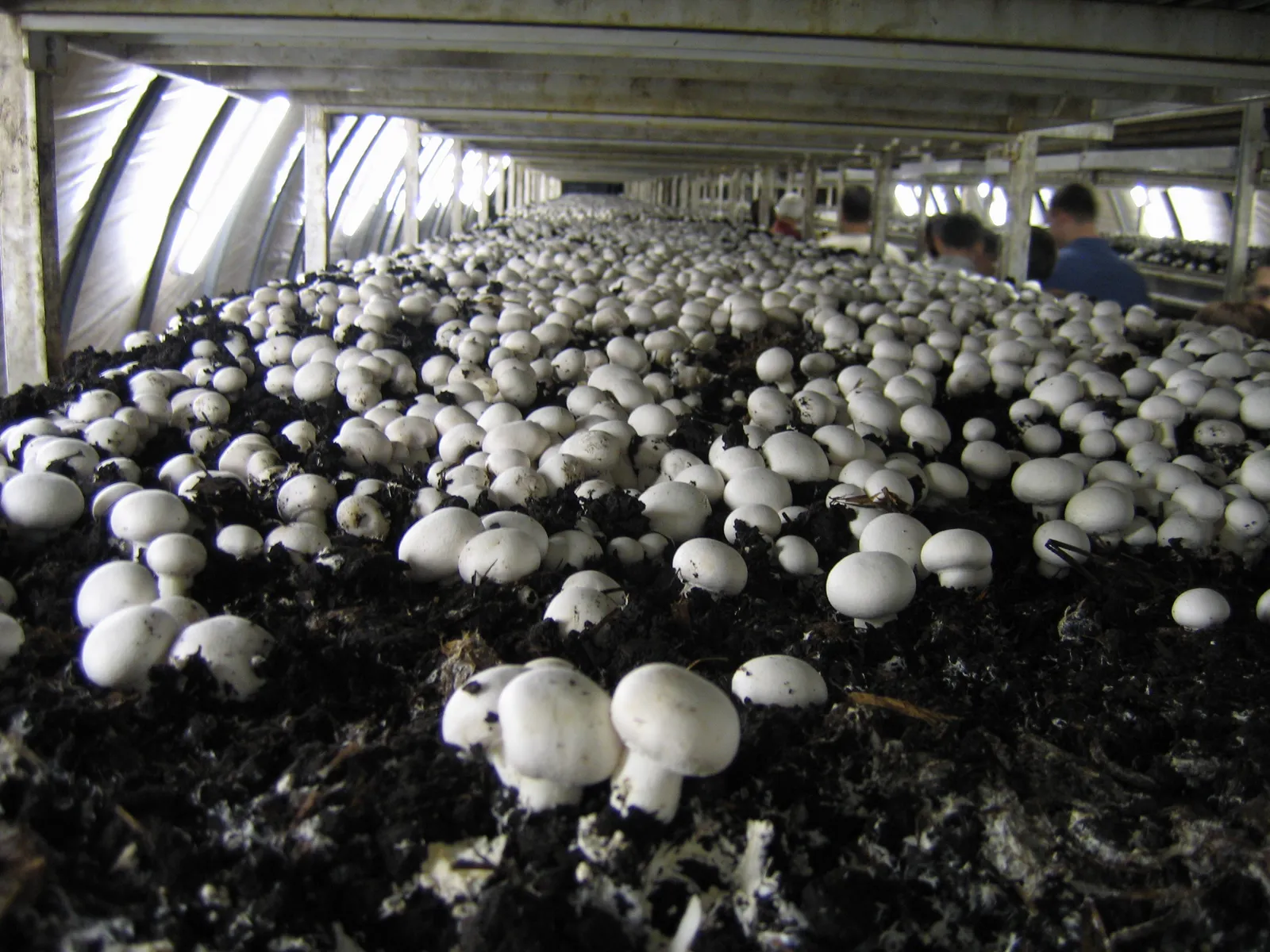
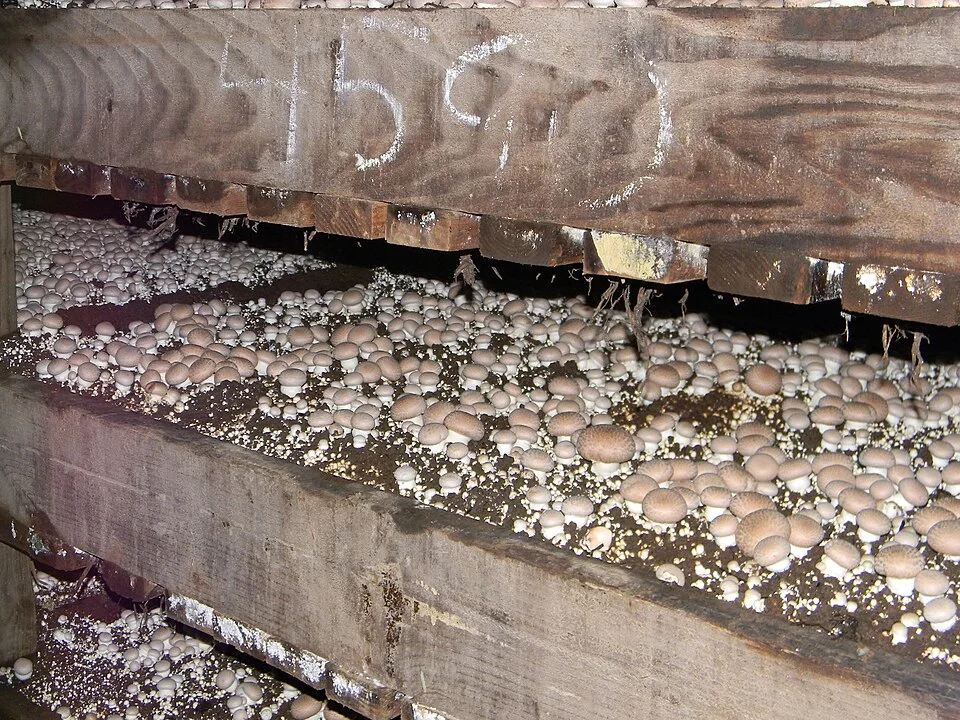
White button mushrooms on casing soil in long shelf beds inside a commercial cropping room near Eger, Hungary.
Real cultivation photograph. Read its source for location and context; it is not a universal operating specification.Andrew Bossi · CC BY-SA 2.5View full photograph ↗
On this pageChoose a section, or keep reading below
The full field guide

Run a Button mushroom crop from receipt to room reset

Understand each handoff: prepared compost, spawning, colonisation, casing, pinning, harvest and the next crop.

Chapter 01

Know exactly what compost you are buying

Button mushroom is grown on selectively prepared compost. Ask whether the delivery is Phase II compost ready for spawning, already spawned material, or fully colonised Phase III compost. These deliveries require different facilities and schedules. A quotation that says only ‘mushroom compost’ is insufficient for planning the work you must do after it arrives.

Before unloading, match the delivery to the supplier's batch record and acceptance specification. Record temperature at representative locations, delivered mass, transport duration and any visible difference between loads. Ask how preparation, conditioning and release were verified. Material that has completed a heating programme may still need conditioning or cooling; the calendar alone does not establish that it is ready for spawn.

Agree where an uncertain load will wait and who can authorise its use. Spawning questionable compost commits further money and makes later cause tracing harder. Keep the supplier's instructions with the batch instead of mixing advice from different compost systems. Use the detailed compost and parameter pages below for the preparation method being used.

Three purchase stages and the work still required
Delivered materialMain work remainingConfirm before ordering
Phase II compostSpawning, spawn run, casing and croppingRelease criteria, transport conditions and spawn requirement
Recently spawned compostComplete colonisation, then casing and croppingInoculation date, strain and handling instructions
Phase III compostHandling of colonised material, casing and croppingReadiness, delivery temperature and filling procedure
Chapter 02

Separate the jobs of compost and casing

During spawn run the objective is reliable colonisation of the compost. Protect batch identity, distribute and fill material consistently, and record both air and compost conditions. A change in the room display does not show how quickly the centre of a bed responds. Compare representative bed locations and investigate unusual heating or stalled development before moving the whole room to the next stage.

Casing provides the surface environment in which fruiting develops, including water storage and gas exchange. Its preparation, physical structure and hygiene affect that environment. Prepare an even layer using the method specified for the material, while avoiding unintended compression. Record where a particular casing batch is used so that later patchy performance can be compared with material and watering history.

Check moisture in the layer itself as well as conditions above it. A room can feel humid while the casing has dried. Conversely, a wet-looking surface can hide compaction or poor distribution. Learn to compare samples under a consistent method with a trained grower; do not turn one photograph or a hand-squeeze description into a universal acceptance test.

Chapter 03

Manage the transition to pins as a sequence

Pinning follows the development of the crop and the change to suitable fruiting conditions. Review compost and casing development first. Then follow the strain and crop programme for air, temperature and moisture together. A sudden change in ventilation also changes drying and cooling, so treat the room as an interacting system rather than a set of independent switches.

Map the response. Pins only near the door, drying along an air outlet or delayed patches on one tier are useful patterns. Compare those locations with air distribution, casing depth, watering and bed measurements. Record the time of an adjustment and assess its effect at the next planned observation. Avoid repeatedly changing several controls because pins did not appear on the expected date.

From observation to an evidence-based check
ObservationCompare firstUseful next record
Patchy colonisationMaterial batch, filling and compost conditionsMap of slow areas and batch IDs
Uneven pinsCasing history, moisture and room distributionMatched photos of early and late areas
Long stems or small capsStrain, maturity and air measurementsStage, morphology and sensor location together
Wet capsWatering time, condensation and cooling changesSurface condition before and after the event
Chapter 04

Plan harvest, later flushes and the reset

Agree the buyer's grade before picking starts. Train pickers to recognise the agreed maturity, handle mushrooms gently, segregate damaged material and protect nearby developing mushrooms. Use clean, identified containers and keep the elapsed time from picking to packing and temperature control short enough for your validated handling process.

Record each flush separately. This helps distinguish an uneven first pinset from poor recovery later in the crop. Review harvest mass with watering and climate history, rather than assuming that a large first flush guarantees the rest of the cycle. Close the room only after spent material has been removed through the planned route and the appropriate cleaning process completed.

Reconcile gross harvest, trimmed or rejected mass, packed quantity, sales and returns. Include room turnaround time when planning the next crop. Filling a room earlier is not an improvement if cleaning, maintenance or compost readiness has been compromised.

Chapter sources & scope

These are educational explanations, not an independently reviewed operating protocol. Worked examples do not predict your yield or income.

Back to the chapter list ↑

Understand the topic

The key ideas, at a glance.

Button Mushroom production is a linked biological and engineering system. This vertical lets a first-time learner follow the whole crop, while experienced growers can enter through a stage, symptom, parameter or room-system question.

Part 01

Why this matters

The hub connects crop biology with compost quality, casing behaviour, environmental control, labour, hygiene and post-harvest handling.

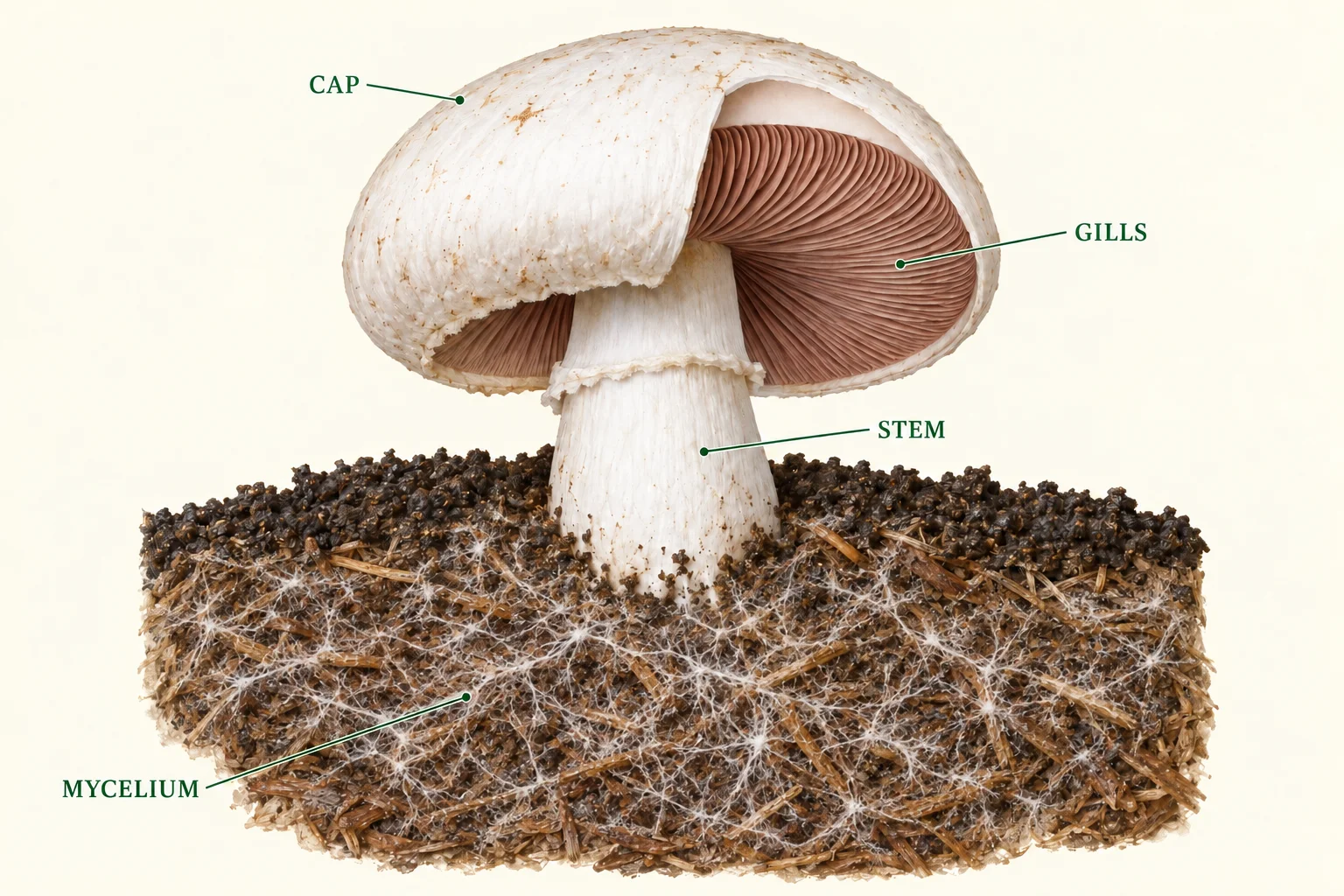
Generated Button anatomy and mycelium illustration.
AI teaching illustration. Visible fruit bodies and hidden mycelium have different roles.
Open full image ↗
Part 02

What to look for

Build a record before making a change.

  • Where you are in the crop cycle
  • Which biological material is changing
  • Which process or room system can influence that change
  • What evidence is recorded before a decision
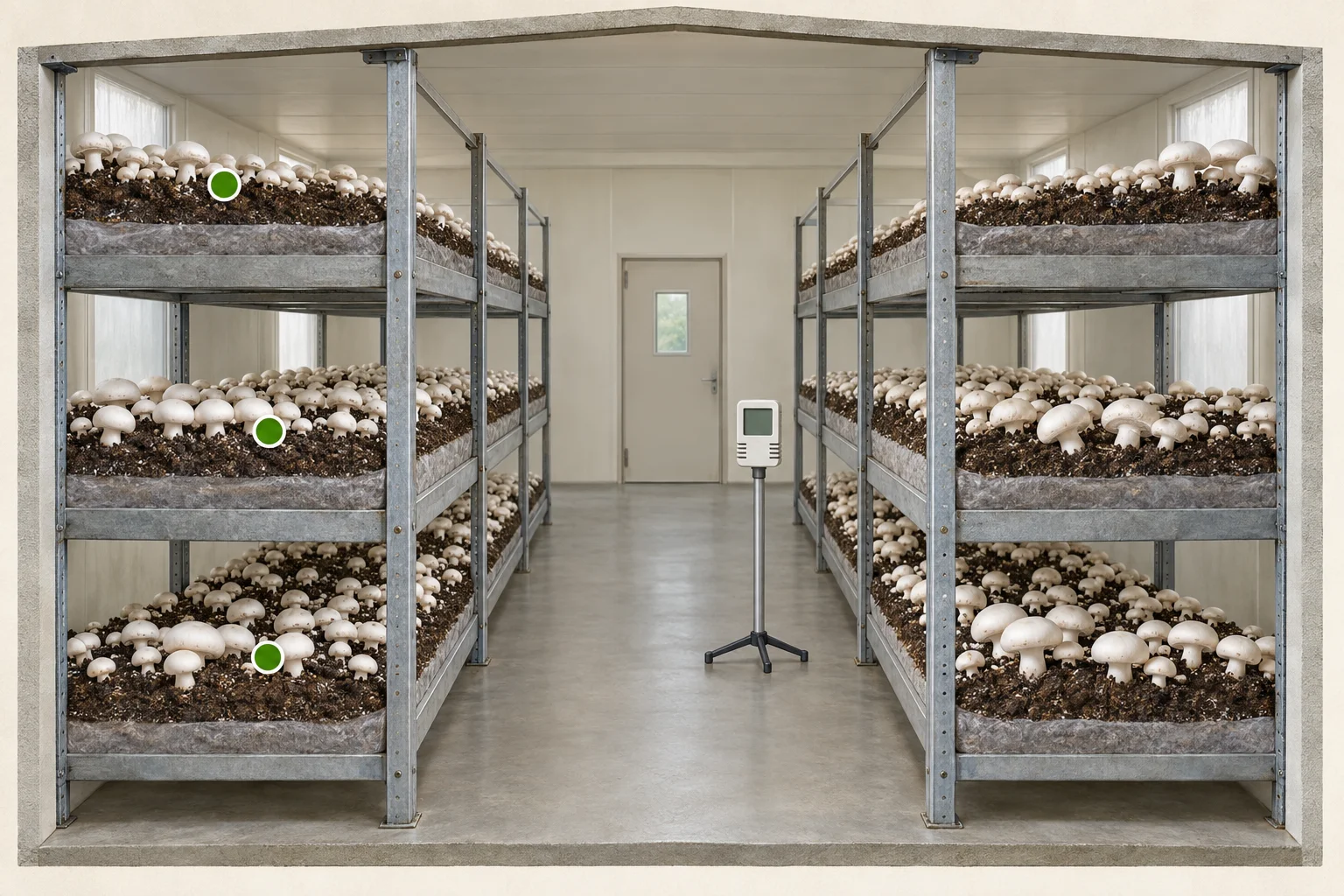
Generated crop-room measurement locations.
AI teaching illustration. Record measurement position; not an installation design.
Open full image ↗
Part 03

How to make the next decision

Use the observation to narrow a decision, then verify the response.

  • Choose a learning path by role
  • Follow the process in sequence
  • Open a parameter only with its stage and measurement context
  • Use troubleshooting as an investigation, not an automatic diagnosis
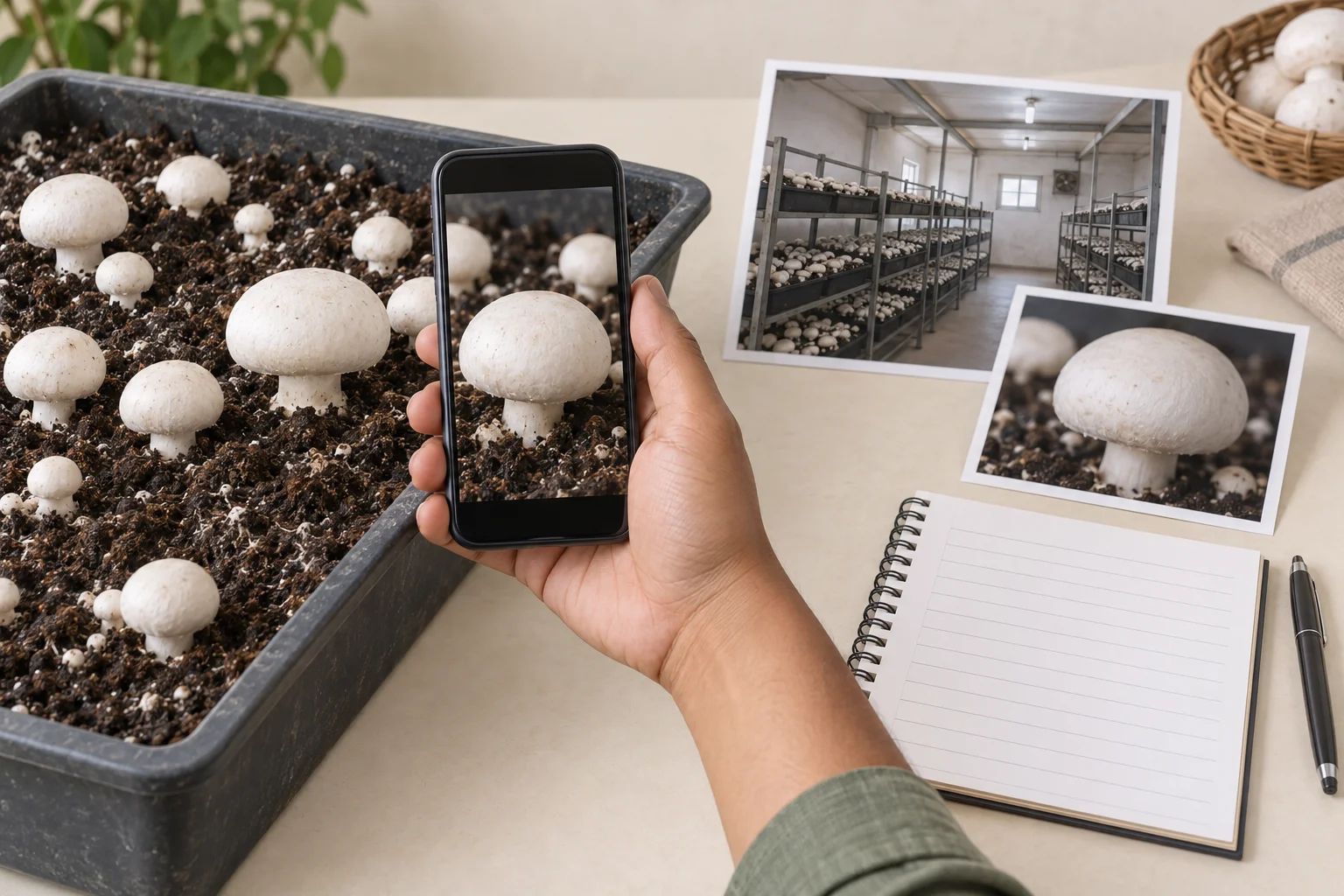
Generated crop-observation record and evidence kit.
AI teaching illustration. Record evidence before choosing an intervention; not a diagnosis.
Open full image ↗
Part 04

What to check before moving on

This topic cannot be interpreted in isolation.

  • Biology and life cycle
  • Compost and casing process quality
  • Stage-specific climate interaction
  • Hygiene and traceability
  • Qualified technical review
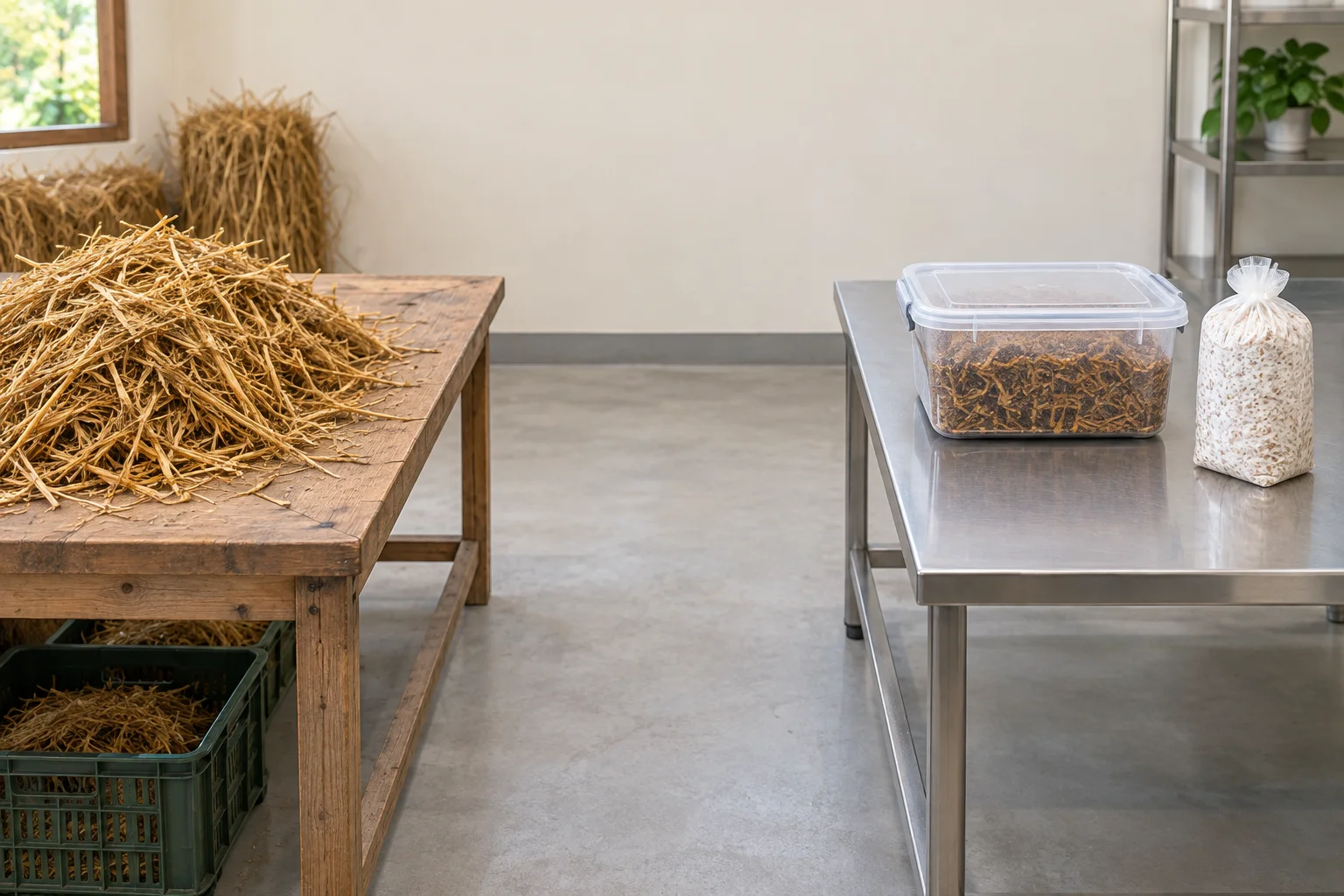
Generated separation of protected and unprotected material handling.
AI teaching illustration. Handling boundaries, not a validated sterile procedure.
Open full image ↗
Part 05

On the farm

Start in the room with where you are in the crop cycle and which biological material is changing. Record location, stage and recent events before changing the process.

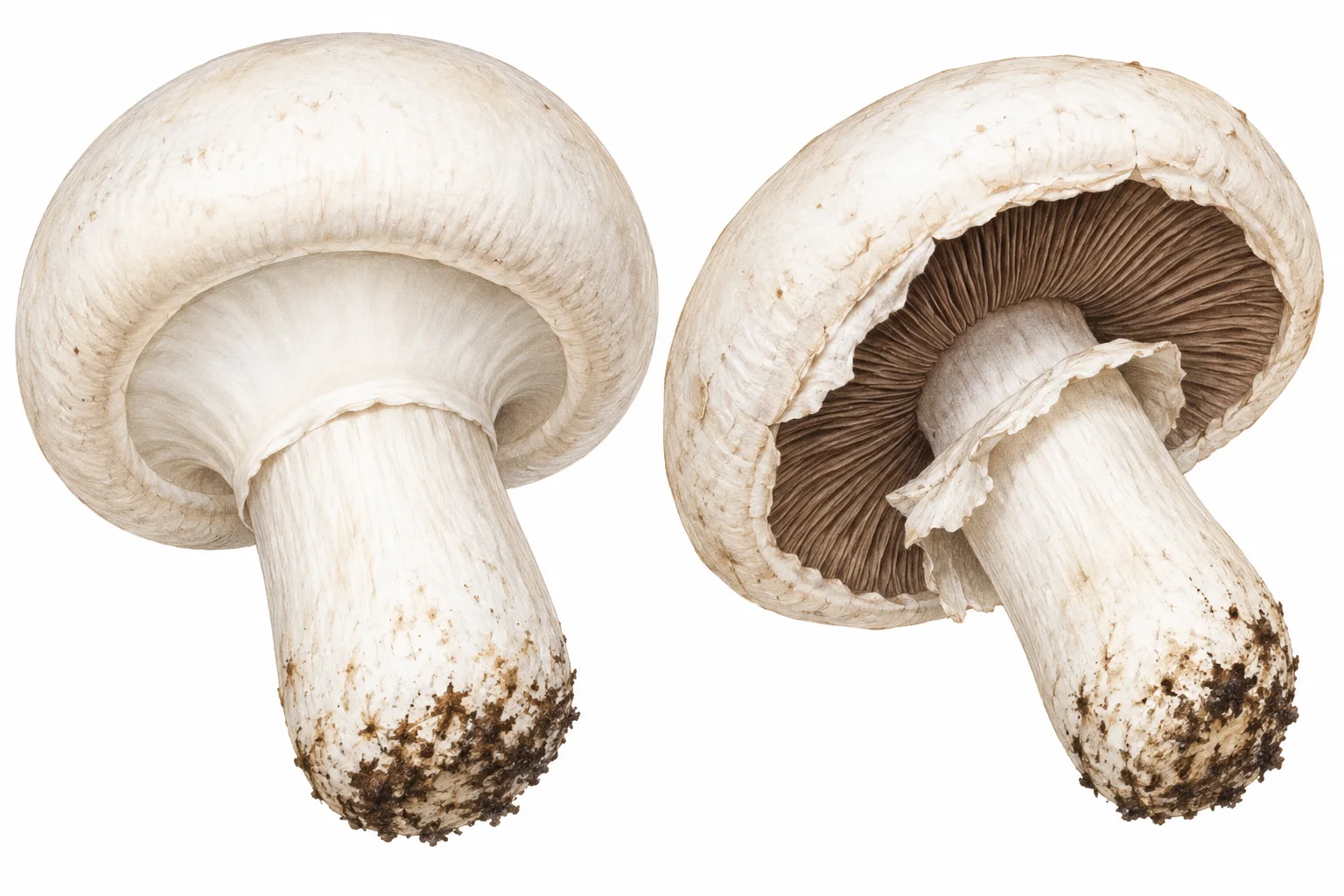
Generated botanical study of Button mushroom undersides and partial veils.
AI teaching illustration. Morphology study, not a harvest-grade standard or identification guide.
Open full image ↗
Part 06

The technical explanation

The technical model joins biology and life cycle, compost and casing process quality, stage-specific climate interaction. Any operating value must be attached to a registered parameter, measurement location and applicable condition.

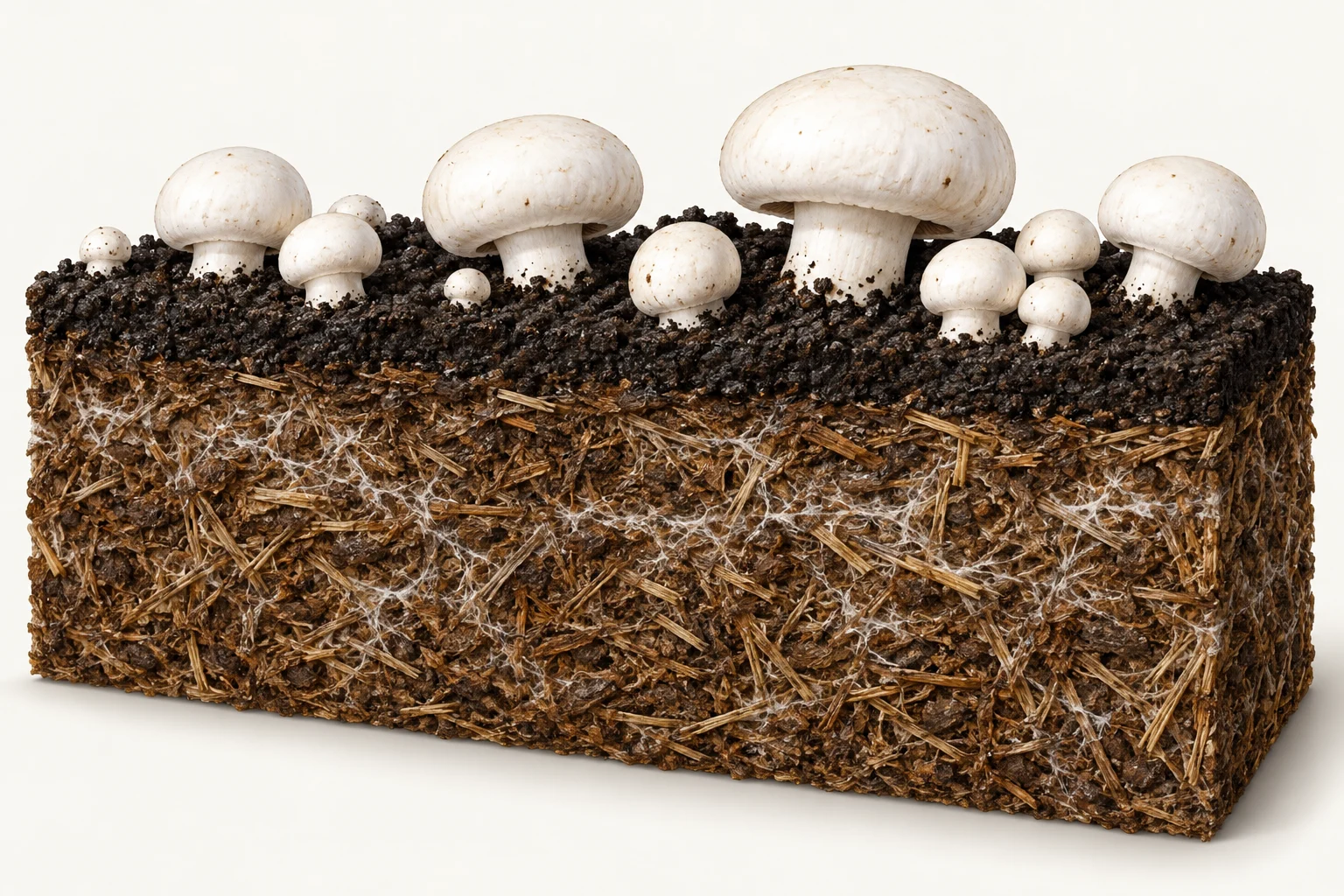
Generated Button bed cutaway.
AI teaching illustration. Relate compost, casing and the crop; not prescribed layer dimensions.
Open full image ↗
Part 07

What the evidence can tell you

This page is grounded in: ICAR-Directorate of Mushroom Research; Mushroom Cultivation, Marketing and Consumption; Farm Design for White Button Mushroom Cultivation; Research programmes. Source provenance does not remove the need to check stage, system, date and local applicability.

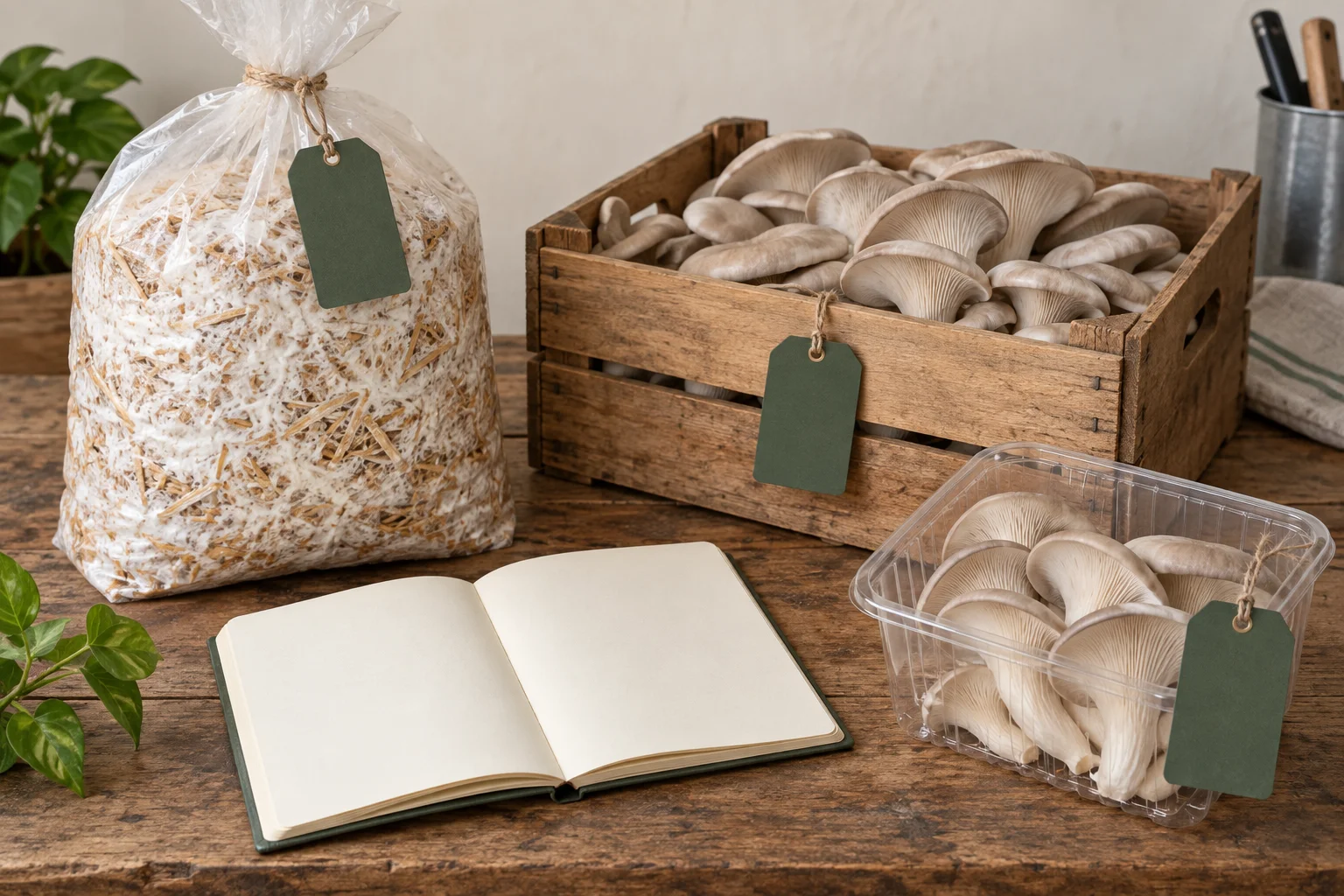
Generated batch identifiers and records.
AI teaching illustration. Trace records to their crop and input batch; no entries are real farm data.
Open full image ↗

Keep exploring

Every part of this topic.

Choose the stage, material or decision you need to understand next.

01

Winter seasonal Button Mushroom farming, hut method

A field-oriented operating manual for low-cost winter Button Mushroom production in a climate-buffering mud, bamboo or thatch hut in India.

02

Button Mushroom overview

Understand the crop as one connected production system before studying recipes, rooms or symptoms.

03

Biology of Agaricus bisporus

Connect fungal biology, mycelial growth and fruit-body development to cultivation decisions.

04

Button Mushroom compost system

Learn compost as a controlled biological process from formulation through Phase I, Phase II and quality release.

05

Button Mushroom climate system

Understand temperature, humidity, carbon dioxide, airflow, evaporation and condensation as one interacting system.

06

Button Mushroom troubleshooting

A symptom-first diagnostic engine for crop, casing, compost and environment problems.

07

Button Mushroom farm engineering

Translate crop requirements into rooms, racks, airflow, cooling, humidification, utilities, controls and hygiene zones.

08

Commercial Button Mushroom farming

Plan a commercial system through capacity, market, crop calendar, utilities, labour, risk and evidence-based economics.

Go deeper

Technical reference, records and tools.

Detailed crop-stage information, parameters, diagrams and specialist tools are kept together below. This material retains its source conditions and review limits.

Open the complete technical reference

Button mushroom guide

Button mushroom: compost, crop, climate, and the numbers behind each stage.

Agaricus bisporus

A governed field manual for Agaricus bisporus biology, compost, crop management, climate, hygiene, diagnostics and farm engineering.

Real photograph of many Button Mushrooms growing across tiered wooden cultivation beds.
Cultivation context on tiered beds; not a prescribed layout or production standard. Photo: I. G. Safonov (IGSafonov), CC BY-SA 3.0. Source

The crop at a glance

Published ICAR-DMR reference values for Indian conditions. Your strain, room and season set the final numbers.

Spawn run22-25°CCompost temperature, 12 to 15 days in the dark, humidity 85 to 90 percent.Source: ICAR-DMR
Fruiting16-18°CRoom air after casing; humidity 85 to 90 percent, carbon dioxide below 1,000 ppm.Source: ICAR-DMR
Crop cycle60-75daysSpawning to end of third flush, excluding compost preparation.Source: ICAR-DMR
Yield15-20kg / 100 kg compostGood long-method compost; well-run pasteurised compost reaches 20 kg and above.Source: ICAR-DMR
Spawn rate0.5-0.75% of compost500 to 750 g spawn per 100 kg ready compost.Source: ICAR-DMR
Season (plains)Oct-FebSeasonal growing in the north Indian plains; mid hills September to March, high hills March to November; controlled rooms run all year.Source: ICAR-DMR
  1. CompostDay 0Pasteurised, ammonia below 10 ppm
  2. Spawn run12-15 days22-25 °C in the dark
  3. CasingDay 153-4 cm layer, pH 7-7.5
  4. Case run7-10 daysMycelium reaches the surface
  5. PinningDay 25Air the room, 15-18 °C
  6. FlushesDay 32-70Three flushes, 7-10 days apart
A path for each stage of learning

Choose your depth.

Start where you are. Move between the paths as your questions change.

Photograph credits and context

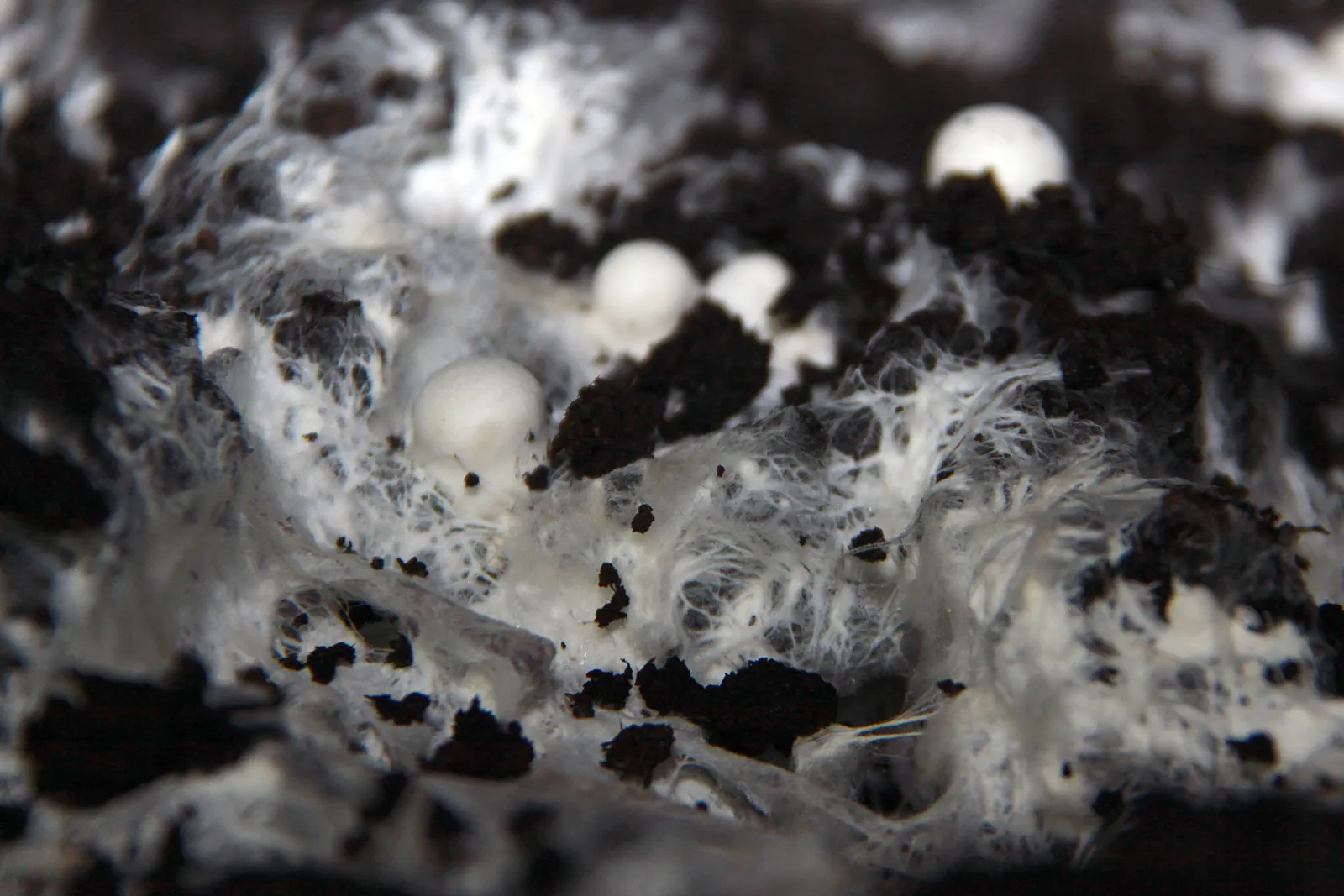
Mycelium (spawn run) and pinheads on compost (Spain). Context photograph, not a universal operating specification. Pradejoniensis · CC BY-SA 3.0

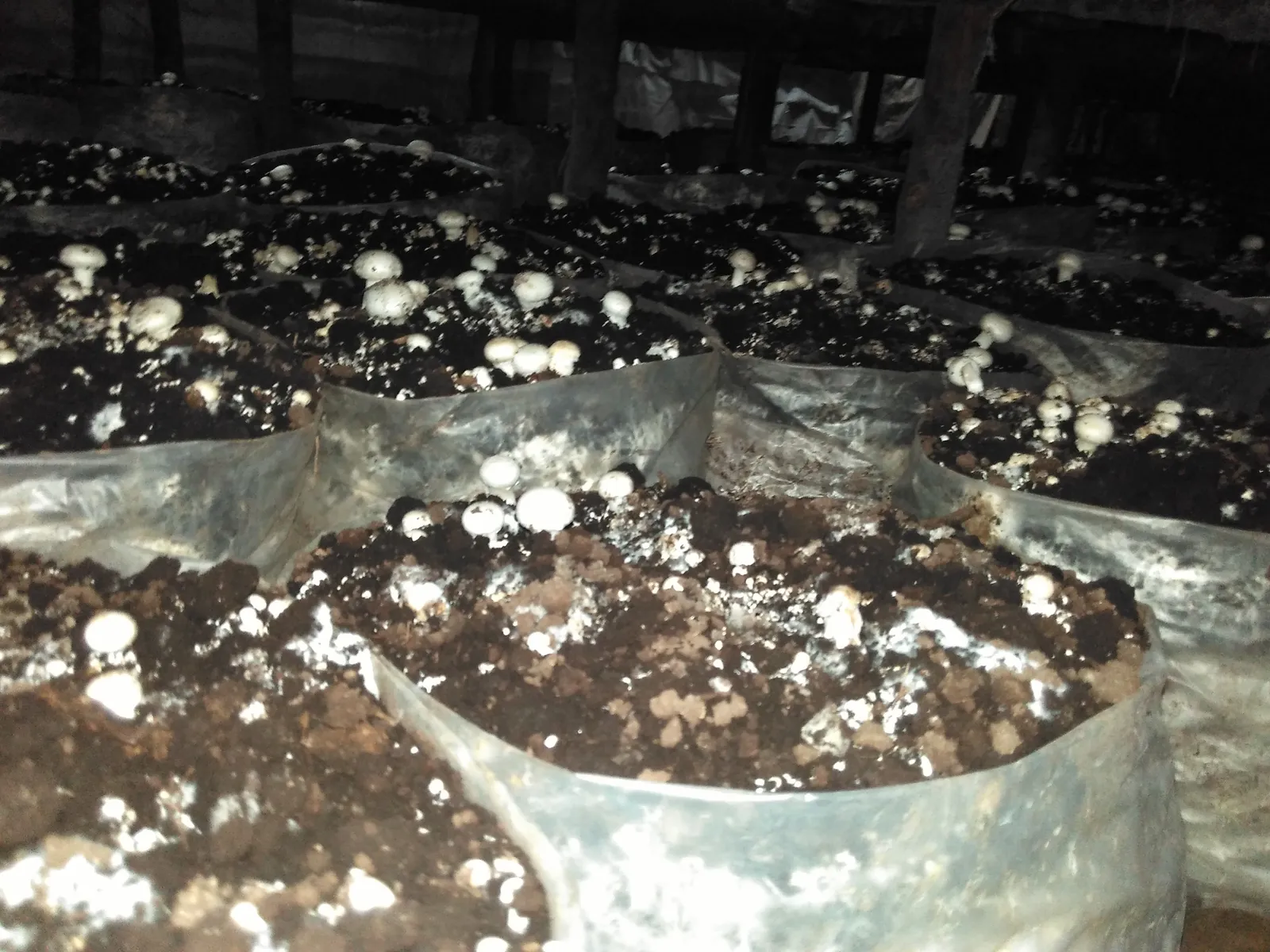
Button mushroom compost bags with pinheads in a dark grow room. Context photograph, not a universal operating specification. Rahumath nisha · CC BY-SA 4.0

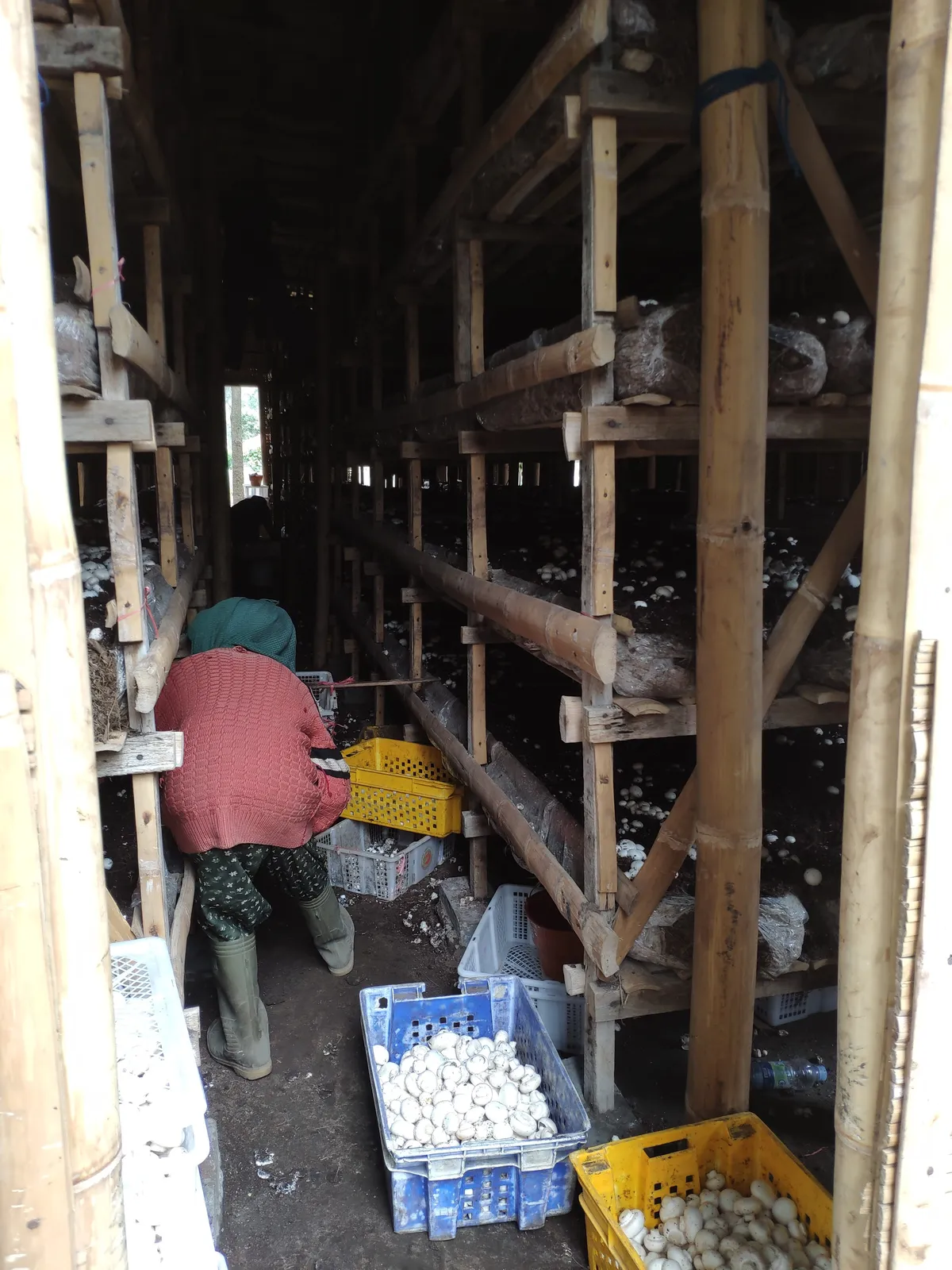
Interior of a low-cost bamboo button-mushroom grow house with tiered beds and a worker (Indonesia). Context photograph, not a universal operating specification. Ekaterina Kvelidze · CC BY-SA 4.0

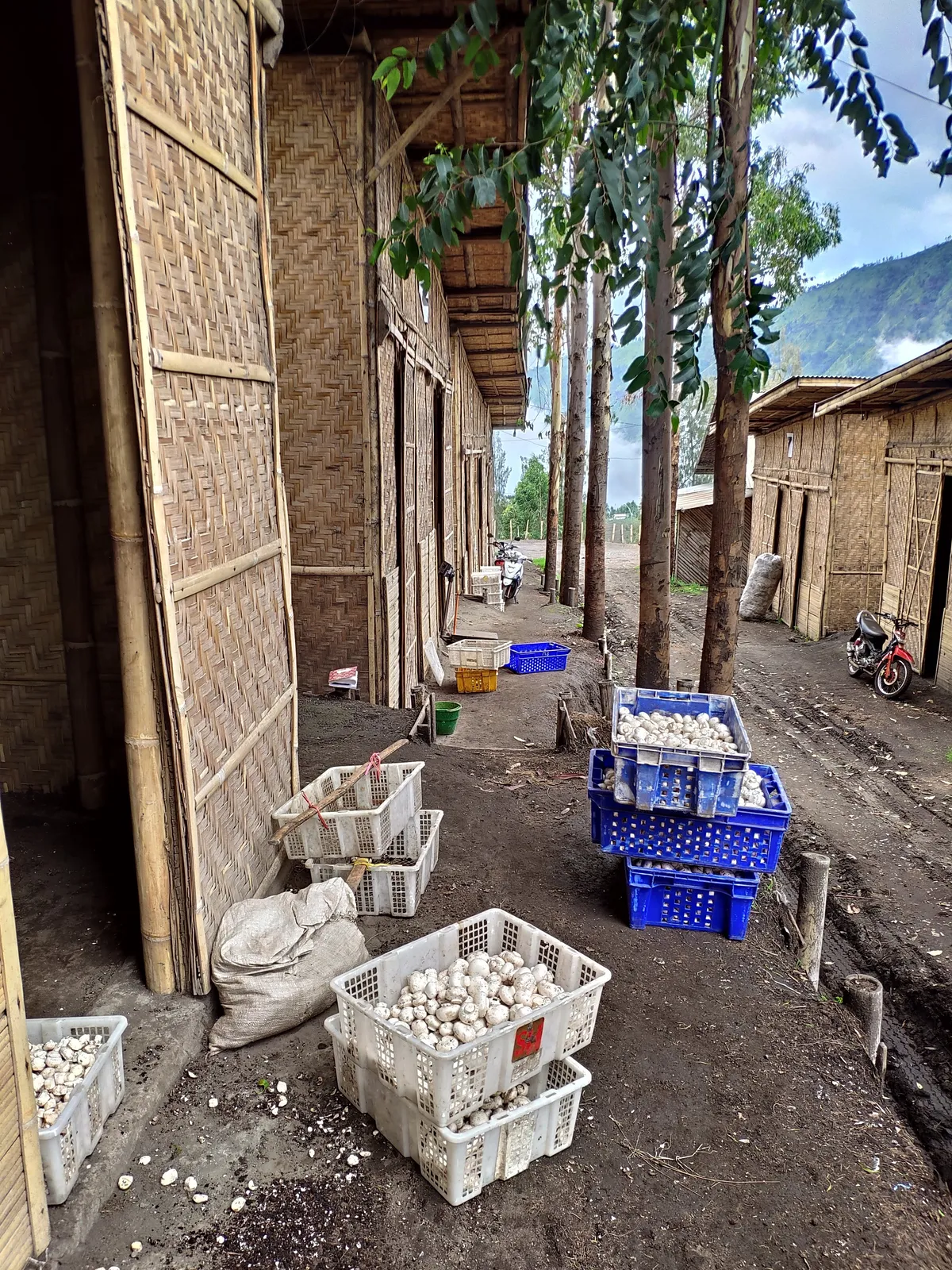
Exterior of a bamboo/thatch mushroom grow house with harvest crates (Indonesia). Context photograph, not a universal operating specification. Ekaterina Kvelidze · CC BY-SA 4.0

Master process map

Every handoff changes what the next stage can achieve.

Follow the sequence from accepted raw materials to room reset and the next crop.

  1. 01Raw materials for compost
  2. 02Compost formulation
  3. 03Phase I composting
  4. 04Phase II composting
  5. 05Compost pasteurization
  6. 06Compost conditioning
  7. 07Cooling and release
  8. 08Spawning compost
  9. 09Spawn run
  10. 10Casing for Button Mushroom
  11. 11Case run
  12. 12Pinning and initiation
  13. 13Cropping Button Mushroom
  14. 14Flush management
  15. 15Harvesting Button Mushroom
  16. 16post-harvest system
  17. 17Room emptying and hygiene
Picture → explanation → field task

A crop-room round

AI-generated educational illustrations. Not actual farm photographs, diagnostic evidence or construction specifications.
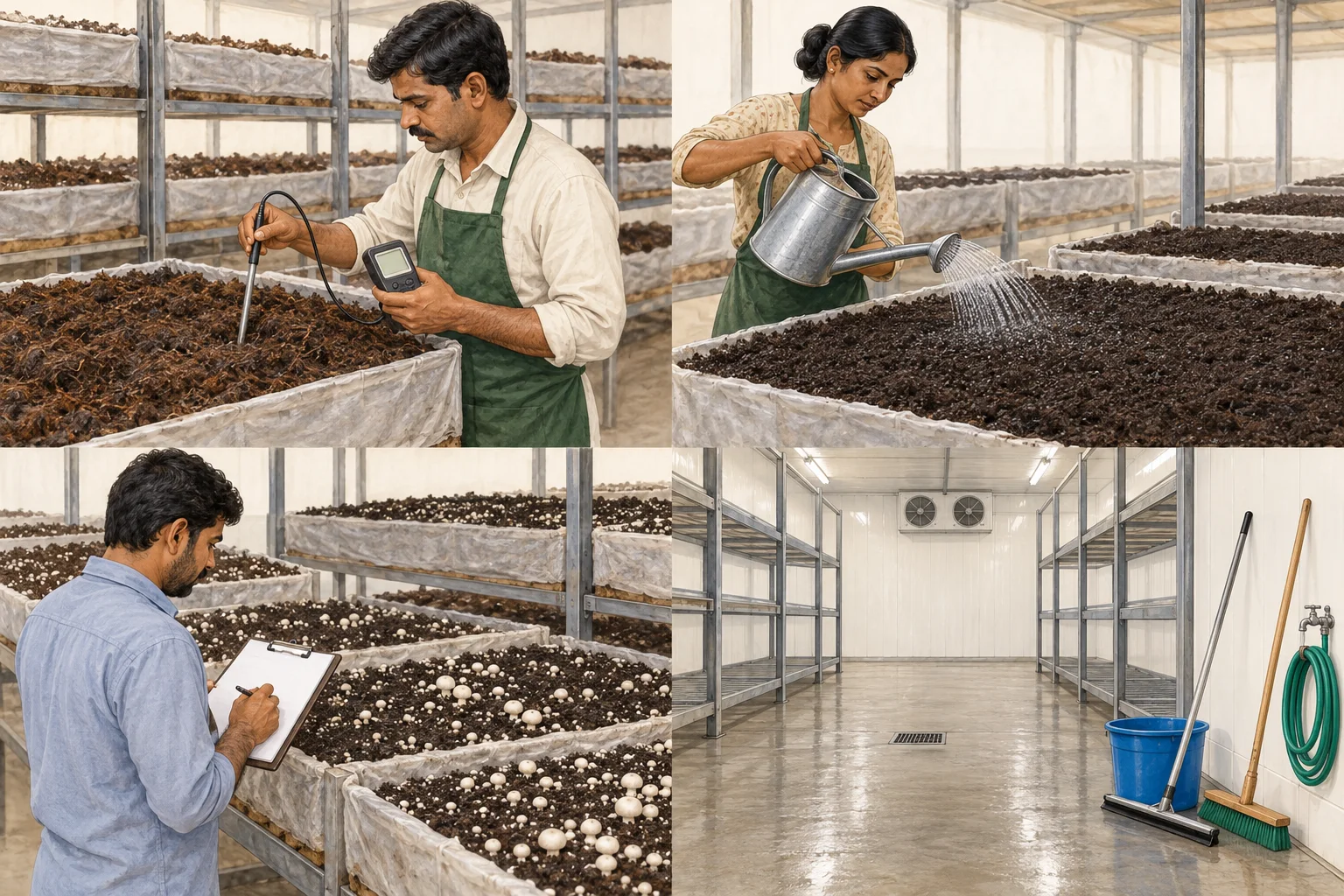
Generated illustration of an operator inserting a temperature probe into a compost bed.
01

Measure the bed, not only the air

The probe measures growing material at a specific location. Room air and biologically active compost can have different temperatures. One reading is not a whole-room survey.

Try this on your farm

Use a consistent measurement location and method. Record time, crop stage and bed position with the value.

Generated illustration of gentle water application to a bare casing surface before mushrooms emerge.
02

Assess casing before watering

This scene shows casing without developing fruit bodies. Water needs depend on stage and material condition. The picture does not specify a quantity or a universal watering schedule.

Try this on your farm

Check the approved crop protocol and the actual casing condition before deciding how much to apply. Record the application.

Generated illustration of a grower recording different pin densities along mushroom beds.
03

Compare the pinning pattern

The bed does not develop uniformly at every position. Differences can involve inputs, water or room conditions. A patch is an observation, not a diagnosis.

Try this on your farm

Compare fixed locations over successive rounds. Photograph the same patch and record nearby readings before changing settings.

Generated illustration of an empty growing room with racks, dedicated cleaning tools and a hose.
04

Prepare for the next crop

The crop is removed before the room is prepared for reuse. An empty room provides access to surfaces hidden by a loaded crop. Clean appearance alone does not verify disinfection.

Try this on your farm

Follow the farm's validated cleaning and end-of-crop procedure, document completion and resolve defects before refilling.

Knowledge architecture

Browse by system, not by article pile.

Technical registry

The numbers for this stage, with their source.

Values are published from ICAR-DMR guidance with the stage and measuring point they apply to. A parameter still marked pending has no published Indian value yet.

BUTTON.CLIMATE.AIR_TEMPERATURE

Room air temperature

14 to 25 °C

Spawn run 22 to 24 °C, case run 23 to 25 °C, fruiting 15 to 17 °C in controlled rooms; the seasonal tables give 14 to 18 °C for fruiting.

Stage
Crop-wide
Measured at
Defined crop-zone position
Crop meaning
The control variable that interacts with compost temperature, evaporation and crop stage.
Applicable conditions
Stage; Strain; Sensor location; Room system
published sourced
BUTTON.CLIMATE.RELATIVE_HUMIDITY

Relative humidity

80 to 95 % RH

About 95 percent during spawn run and case run, 80 to 85 percent during cropping.

Stage
Crop-wide
Measured at
Defined crop-zone position
Crop meaning
Air moisture state; it does not equal crop-surface wetness.
Applicable conditions
Air temperature; Sensor accuracy; Crop stage
published sourced
BUTTON.CLIMATE.CO2

Carbon dioxide concentration

800 to 15,000 ppm

10,000 to 15,000 ppm during spawn run with no fresh air; 800 to 1,000 ppm for pinning; 1,000 to 1,500 ppm during cropping with 20 to 30 percent fresh air.

Stage
Spawn run through cropping
Measured at
Representative room and rack positions
Crop meaning
A crop-activity and ventilation signal that needs stage context.
Applicable conditions
Stage; Crop load; Fresh-air strategy
published sourced

Diagnostic engine foundation

Begin with the pattern you can observe.

This tool organises checks. It does not identify a pathogen or prescribe treatment.

Selected observation

Uneven pinning

Possible categories

  • Casing condition
  • Water distribution
  • Air distribution
  • Temperature history
  • Crop-surface evaporation

Discriminating checks

  1. Map the pattern before changing a setting
  2. Compare casing depth and moisture across affected and unaffected zones
  3. Compare crop-zone air and temperature history
  4. Review the timing of watering and climate transitions
Evidence and review record4 mapped sources

Sources support the page architecture and conceptual guidance. Technical values remain governed separately in the Button registry.

Tier A · institutional

ICAR-Directorate of Mushroom Research

Current institutional scope, publication channels, services and crop-advisory access.

Accessed
2026-08-22
Publisher
ICAR-Directorate of Mushroom Research
Open original source
Tier A · foundational

Mushroom Cultivation, Marketing and Consumption

Broad cultivation, post-harvest and market context. Values are not promoted without page-level review.

Accessed
2026-08-22
Publisher
ICAR-Directorate of Mushroom Research
Open original source
Tier A · foundational

Farm Design for White Button Mushroom Cultivation

Room planning, workflow, environmental-control architecture and engineering vocabulary.

Accessed
2026-08-22
Publisher
ICAR mushroom research institute
Open original source
Tier A · institutional

Research programmes

Research themes across production, protection, improvement and post-harvest.

Accessed
2026-08-22
Publisher
ICAR-Directorate of Mushroom Research
Open original source

Read the evidence

Sources & review.

Editorial update: 2026-08-22. Independent technical review is not recorded for this entry.

  1. ICAR-Directorate of Mushroom Research

    ICAR-Directorate of Mushroom Research · 2026

  2. Mushroom Cultivation, Marketing and Consumption

    ICAR-Directorate of Mushroom Research

  3. Farm Design for White Button Mushroom Cultivation

    ICAR mushroom research institute · Foundational official bulletin. Engineering guidance must still be checked against current codes, equipment and project conditions.

  4. Research programmes

    ICAR-Directorate of Mushroom Research

Reading a source is not the same as applying its instructions to every farm. Confirm species, strain, crop stage, system, region and publication date. Old chemical recommendations are not current-use instructions.

See something that needs correcting? Tell us →