


A practical guide to growing mushrooms in IndiaA joint educational initiative by MushroomWale & DMR Solan
MushroomFarming.in

A joint educational initiative by

MushroomWale.com
ICAR–Directorate of Mushroom Research, Solan logoICAR–DMRSolan

MushroomFarming / disease

Button Mushroom diseases

Move from observation to differential diagnosis, containment and prevention without unsafe treatment shortcuts.

Practical explanation + detailed referenceSources & review ↓
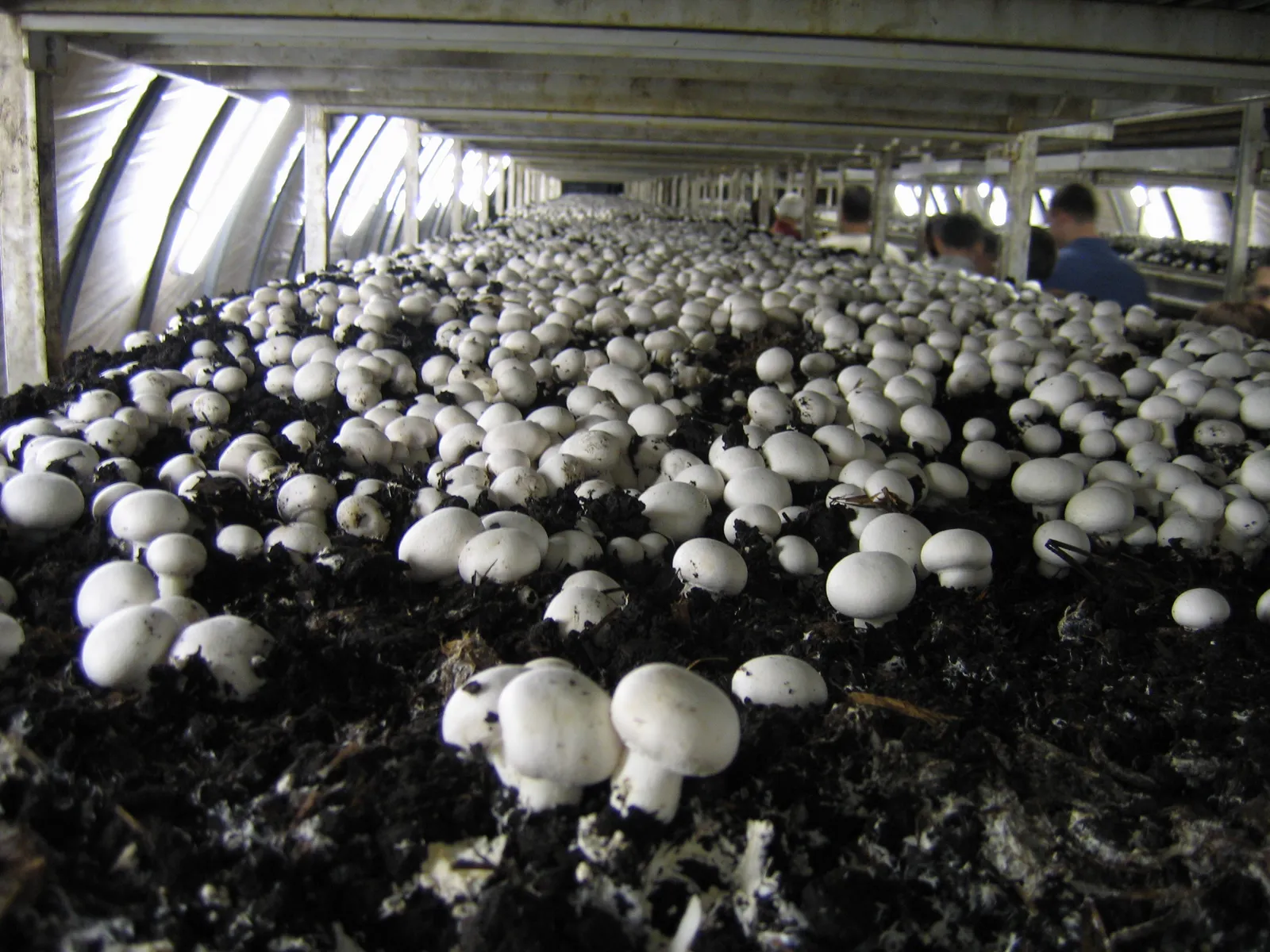
White button mushrooms on casing soil in long shelf beds inside a commercial cropping room near Eger, Hungary.
Real cultivation photograph. Read its source for location and context; it is not a universal operating specification.Andrew Bossi · CC BY-SA 2.5View full photograph ↗
On this pageChoose a section, or keep reading below

Read this in the full guide: Run a Button mushroom crop from receipt to room reset

Understand the topic

Start with the explanation.

A disease page should help a grower record and differentiate a problem. It should not turn a photograph into certainty or publish chemical use without current legal, label and safety review.

Part 01

Why this matters

Disease investigation connects symptoms, spatial pattern, crop stage, material traceability, hygiene and laboratory support.

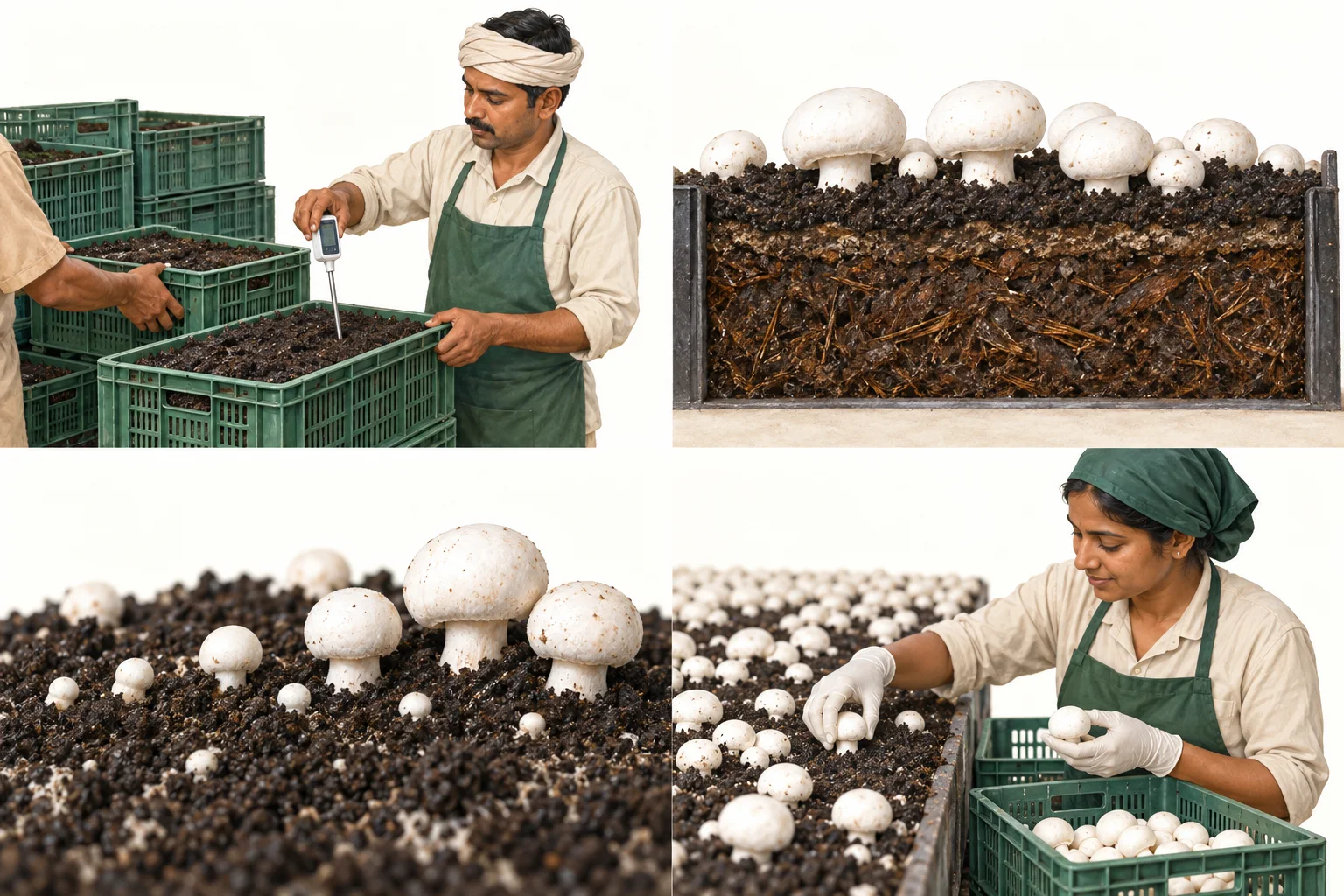
Illustration of compost receipt and a probe measurement.
AI teaching illustrationReceive the right compost

The delivered compost stage determines the work still needed. Phase II and Phase III deliveries require different handovers.

Conceptual explanation—not a real farm photograph, diagnostic finding or construction specification.
Part 02

What to look for

Build a record before making a change.

  • First location and spread
  • Morphology and tissue signs
  • Water and handling pathways
  • Crop and room history
Part 03

How to make the next decision

Use the observation to narrow a decision, then verify the response.

  • Contain movement
  • Build a differential diagnosis
  • Collect qualified evidence
  • Use only authorised management under competent supervision
Part 04

What to check before moving on

This topic cannot be interpreted in isolation.

  • Rapid reporting
  • Clean sampling
  • Diagnostic support
  • Biosecurity procedure
  • Current regulation
Part 05

On the farm

Start in the room with first location and spread and morphology and tissue signs. Record location, stage and recent events before changing the process.

Part 06

The technical explanation

The technical model joins rapid reporting, clean sampling, diagnostic support. Any operating value must be attached to a registered parameter, measurement location and applicable condition.

Part 07

What the evidence can tell you

This page is grounded in: Technical Bulletins; Technical and diagnostic services; Crop Advisory, August 2026. Source provenance does not remove the need to check stage, system, date and local applicability.

Illustration of careful Button mushroom harvesting into clean food-contact containers.
AI teaching illustrationHarvest and reset

Picking, grading, packing and room reset are connected tasks. A strong flush can still lose value through poor handling or delayed dispatch.

Conceptual explanation—not a real farm photograph, diagnostic finding or construction specification.

Go deeper

Technical reference, records and tools.

Detailed crop-stage information, parameters, diagrams and specialist tools are kept together below. This material retains its source conditions and review limits.

Open the complete technical reference

Button Mushroom · disease

Button Mushroom diseases

Agaricus bisporus

Move from observation to differential diagnosis, containment and prevention without unsafe treatment shortcuts.

Publication
Public editorial page
External review
Not yet recorded · needed from Button Mushroom technical reviewer
Updated
2026-08-22
Evidence records
3

From symptom to cause

A first look, not a diagnosis. Source: ICAR-DMR manual and disease bulletin.

What you seeLikely causeFirst step
Long stems, small capsCO₂ too high (above about 1,500 ppm)More fresh air
Green patches on compostTrichoderma; low pH or leftover ammoniaIsolate, remove; check next batch
No pins after casingRoom not aired and cooled16 to 18 °C, ventilate
Brown sunken spots on capsBacterial blotch; wet capsDry the surface, humidity under 85%
White wet lumpsWet bubble from casingSalt, remove; steam next casing
Small fliesSciarid or phorid fliesScreens, light traps, hygiene
Picture → explanation → field task

Keep clean and suspect work separate

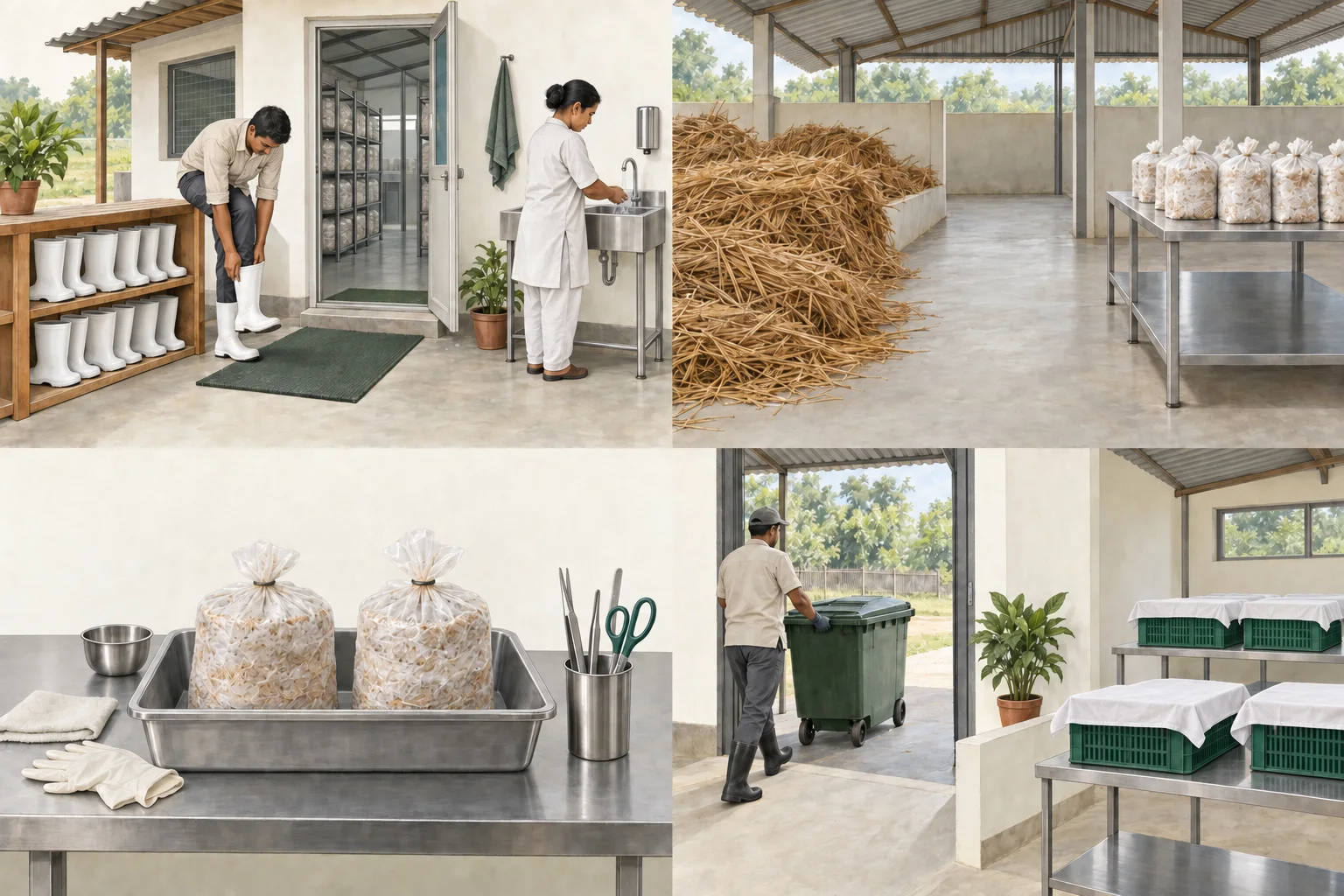
AI-generated educational illustrations. Not actual farm photographs, diagnostic evidence or construction specifications.

Generated illustration of dedicated work footwear and a handwashing basin at a farm entrance.
01

Make clean entry a routine

Clean entry has a place and a repeatable sequence. Footwear, hands and movement between areas are part of farm hygiene. The illustration does not demonstrate a validated disinfection process.

Try this on your farm

Assign the entry routine, provide suitable facilities and check that visitors and workers follow it.

Generated illustration of raw straw separated from closed cultivation bags on a different bench.
02

Protect prepared material

Raw inputs and protected prepared material are separated. Treatment does not protect a substrate indefinitely. Handling afterwards can introduce contamination.

Try this on your farm

Keep work areas, tools and movement routes separated. Label batches so a later problem can be traced to its preparation history.

Generated illustration of two closed cultivation bags in a washable tray with dedicated tools.
03

Keep suspect bags closed

A separate tray helps identify material being held for investigation. The bags are illustrative and not diagnosed. Opening, shaking or smelling suspect material is not a confirmation method.

Try this on your farm

Mark the batch, limit movement and seek qualified advice on sampling or disposal. Do not return dedicated tools to clean work without the appropriate procedure.

Generated illustration of a covered waste tub leaving a separate area away from covered harvest crates.
04

Plan the spent-material route

Used material and saleable harvest follow different handling paths. A disposal route can undo clean-work separation if it crosses incoming materials or harvest handling.

Try this on your farm

Map the exit route and cleaning responsibility. Check the actual workflow during a busy room turnaround, not only on a drawing.

Button mushroom · Photo reference and management

See the symptom. Check the cause. Act carefully.

Real research photographs with practical, nonchemical first steps. These examples come from published studies, not MushroomWale farms. Resemblance is a clue, not confirmation of disease in your crop.

  1. 01Observe the crop and record the pattern
  2. 02Limit transfer to clean areas
  3. 03Check the diagnosis and follow a response plan
  4. 04Review the next crop for recurrence
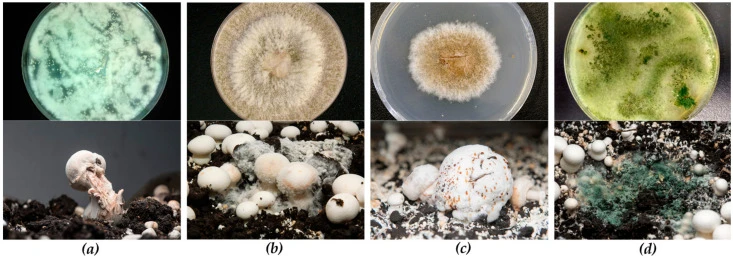
Research reference: a malformed Button mushroom with a split stem, captioned as dry bubble in Gea et al. Figure 1a.
Published research photographPanel 1a, lower photograph. Display cropped; no symptom retouching.Gea, Navarro, Santos, Diánez & Carrasco (2021), Figure 1, Microorganisms 9:585CC BY 4.0The publication identifies crop symptoms in the lower row; the upper row contains cultures. Only the crop photograph is shown here.

Dry bubble

Look for malformed mushrooms, split stems or wart-like growths. Later infection can appear as grey-brown cap spots; the appearance changes with crop stage.

What to do first
Mark the patch and do not pick out or handle dry bubbles. Avoid splashing exposed affected tissue. Have a trained supervisor contain the patch using the linked extension procedure.
Reduce the chance of recurrence
Keep casing, casing equipment and clean tools protected from contaminated dust and debris. Check fly control and movement of people between rooms.
What can look similar?
Wet bubble and other causes of spotting can look similar. A photograph cannot identify the pathogen; ask for specialist examination when the pattern is unclear.
What to record
Record when the first affected mushrooms appeared, their bed positions, watering history and whether new spots developed nearby.
Research reference: a large malformed white mass with amber droplets, captioned as wet bubble in Gea et al. Figure 1c.
Published research photographPanel 1c, lower photograph. Display cropped; no symptom retouching.Gea, Navarro, Santos, Diánez & Carrasco (2021), Figure 1, Microorganisms 9:585CC BY 4.0The publication identifies crop symptoms in the lower row; the upper row contains cultures. Only the crop photograph is shown here.

Wet bubble

Irregular swollen tissue, severely distorted mushrooms and amber droplets are useful clues. Decay can develop as affected tissue deteriorates.

What to do first
Mark the area and avoid splashing it. Once wet bubble is identified, trained staff can carefully enclose local affected material in a disposable bag, seal it and follow the farm's containment and disposal procedure.
Reduce the chance of recurrence
Protect casing and water supplies from soil, dust and crop debris. Keep clean equipment away from contaminated floors and spent material.
What can look similar?
Do not apply this removal approach to an unidentified bubble: dry bubble handling differs. Ask a crop-health specialist to distinguish them.
What to record
Record the casing lot, first affected location, water source, spread after watering and photographs before intervention.
Research reference: white cottony growth spreading across mushrooms and casing, captioned as cobweb in Gea et al. Figure 1b.
Published research photographPanel 1b, lower photograph. Display cropped; no symptom retouching.Gea, Navarro, Santos, Diánez & Carrasco (2021), Figure 1, Microorganisms 9:585CC BY 4.0The publication identifies crop symptoms in the lower row; the upper row contains cultures. Only the crop photograph is shown here.

Cobweb disease

Watch for an expanding cottony surface growth across casing and mushrooms. Older growth may become powdery, with spotting or a pinkish tinge.

What to do first
Mark the patch before routine watering. Do not brush, blow or spray exposed growth. Arrange gentle containment by trained staff, following the extension procedure and the room's crop-management plan.
Reduce the chance of recurrence
Inspect before watering, control dust and crop debris, and clean equipment between rooms. Review how air movement and watering could carry material from an affected patch.
What can look similar?
Normal mushroom mycelium and other moulds may look white. Rate of spread, location and examination of samples matter more than colour alone.
What to record
Photograph the same marked area over time. Note nearby spotting, recent watering and which rooms shared tools or staff.
Research reference: green-sporulating growth in a Button mushroom crop, captioned as green mould in Gea et al. Figure 1d.
Published research photographPanel 1d, lower photograph. Display cropped; no symptom retouching.Gea, Navarro, Santos, Diánez & Carrasco (2021), Figure 1, Microorganisms 9:585CC BY 4.0The publication identifies crop symptoms in the lower row; the upper row contains cultures. Only the crop photograph is shown here.

Green mould observation

A dense white patch may later become green as spores form. Poor cropping can accompany the affected area, but colour does not identify a mould species.

What to do first
Flag the batch and restrict movement of affected material, tools and staff into clean areas. Do not shake bags or brush spores off beds. Obtain advice on containment and whether the crop should continue.
Reduce the chance of recurrence
Review compost preparation, spawning hygiene and batch history together. Check cleaning and the validated end-of-crop treatment before loading another crop.
What can look similar?
Several moulds can appear green. Laboratory identification may be needed to establish whether Trichoderma is involved and which species it is.
What to record
Record whether growth is in compost, casing or surface debris, which input lots are shared, and whether other rooms from the same batch are affected.
Research reference: brown surface blotching on a naturally affected mature Button mushroom, Huang et al. Figure 1b.
Published research photographPanel 1b, natural symptoms. Display cropped; no symptom retouching.Huang, Huang, Nie & Liu (2024), Figure 1b, Phytopathology Research 6:21CC BY 4.0Panel b shows naturally affected mature Button mushrooms from the study in Guangxi, China, not an Indian farm or an inoculation experiment.

Bacterial blotch

Yellow-brown to dark brown superficial patches may occur on caps, including places where mushrooms touch or surfaces remain wet.

What to do first
Check actual cap wetness after watering and look for condensation. Correct water timing and air distribution with the crop supervisor so surfaces can dry without desiccating the crop.
Reduce the chance of recurrence
Avoid persistent wet surfaces, uncontrolled temperature swings and splash transfer. Clean handling equipment and compare conditions across the room, not only at the wall sensor.
What can look similar?
Bruising, fungal spots and other bacteria can produce browning. The photographed study found more than one bacterial cause; matching a picture is not a species diagnosis.
What to record
Note when spotting appears relative to watering, picking and packing. Record wetness, condensation and affected positions before changing settings.

Quick orientation

A disease page should help a grower record and differentiate a problem. It should not turn a photograph into certainty or publish chemical use without current legal, label and safety review.

01

System role

Disease investigation connects symptoms, spatial pattern, crop stage, material traceability, hygiene and laboratory support.

02

What to observe

Build a record before making a change.

  • First location and spread
  • Morphology and tissue signs
  • Water and handling pathways
  • Crop and room history

03

Decision framework

Use the observation to narrow a decision, then verify the response.

  • Contain movement
  • Build a differential diagnosis
  • Collect qualified evidence
  • Use only authorised management under competent supervision

04

Dependencies and handoffs

This topic cannot be interpreted in isolation.

  • Rapid reporting
  • Clean sampling
  • Diagnostic support
  • Biosecurity procedure
  • Current regulation

05

Practical layer

Start in the room with first location and spread and morphology and tissue signs. Record location, stage and recent events before changing the process.

06

Technical layer

The technical model joins rapid reporting, clean sampling, diagnostic support. Any operating value must be attached to a registered parameter, measurement location and applicable condition.

07

Evidence boundary

This page is grounded in: Technical Bulletins; Technical and diagnostic services; Crop Advisory, August 2026. Source provenance does not remove the need to check stage, system, date and local applicability.

Progressive depth

Go deeper without losing the field question.

PracticalWhat to notice in the room
  • First location and spread
  • Morphology and tissue signs
  • Water and handling pathways
  • Crop and room history
TechnicalHow the interacting system is interpreted
  • Rapid reporting
  • Clean sampling
  • Diagnostic support
  • Biosecurity procedure
  • Current regulation
ResearchWhich evidence records govern this page
  • ICAR-DMR-TECH-BULLETINS
  • ICAR-DMR-SERVICES
  • ICAR-DMR-ADVISORY-2026-08
Evidence and review record3 mapped sources

Sources support the page architecture and conceptual guidance. Technical values remain governed separately in the Button registry.

Tier A · institutional

Technical Bulletins

Official index for crop protection, post-harvest, farm design, spawn and developed technologies.

Accessed
2026-08-22
Publisher
ICAR-Directorate of Mushroom Research
Open original source
Tier A · institutional

Technical and diagnostic services

Official scope for compost and casing tests, crop protection diagnosis, farm design and crop-management support.

Accessed
2026-08-22
Publisher
ICAR-Directorate of Mushroom Research
Open original source
Tier A · advisory

Crop Advisory, August 2026

Time-bounded Indian crop observations and seasonal alerts. Does not overwrite foundational guidance.

Accessed
2026-08-22
Publisher
ICAR-Directorate of Mushroom Research
Open original source

Read the evidence

Sources & review.

Editorial update: 2026-08-22. Independent technical review is not recorded for this entry.

  1. Technical Bulletins

    ICAR-Directorate of Mushroom Research

  2. Technical and diagnostic services

    ICAR-Directorate of Mushroom Research

  3. Crop Advisory, August 2026

    ICAR-Directorate of Mushroom Research · 2026 · Date-specific advisory. Chemical recommendations are not reproduced without current label, jurisdiction and safety verification.

Reading a source is not the same as applying its instructions to every farm. Confirm species, strain, crop stage, system, region and publication date. Old chemical recommendations are not current-use instructions.

See something that needs correcting? Tell us →