

A practical guide to growing mushrooms in IndiaA joint educational initiative by MushroomWale & DMR Solan
MushroomFarming.in

A joint educational initiative by

MushroomWale.com
ICAR–Directorate of Mushroom Research, Solan logoICAR–DMRSolan

MushroomFarming / species profile

Oyster mushroom knowledge system

Choose a Pleurotus species and method before reading cultivation advice. Evidence, method and India-context boundaries remain visible.
4 full chapters + technical referenceSources & review ↓
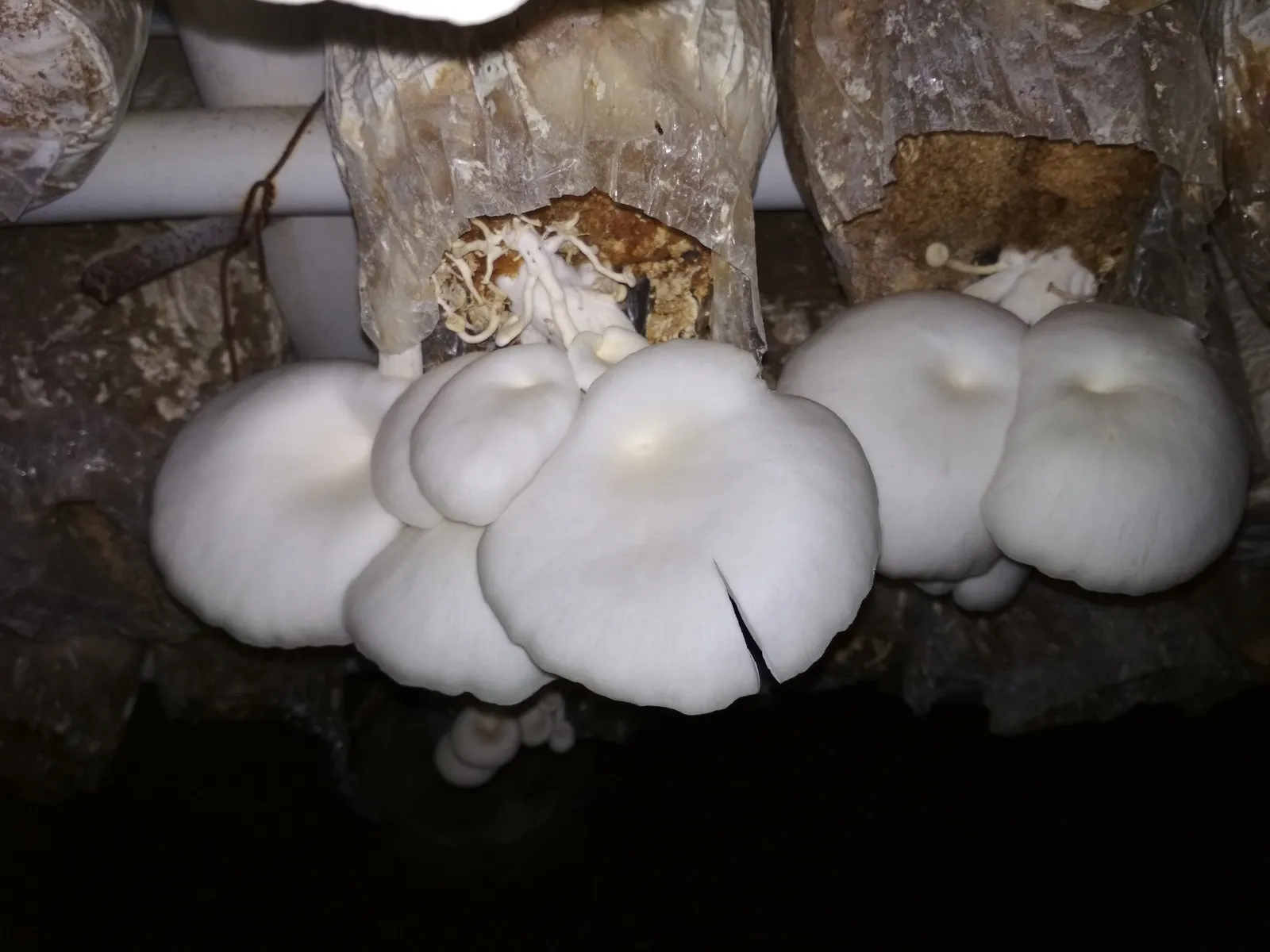
A cluster of white oyster mushrooms fruiting from the mouth of a sawdust baglog at a commercial oyster-mushroom unit, Indonesia.
Real cultivation photograph. Read its source for location and context; it is not a universal operating specification.CatatanLagitBiru · CC BY-SA 4.0View full photograph ↗
On this pageChoose a section, or keep reading below
The full field guide

Understand the whole Oyster mushroom bag cycle

Choose the right species, prepare a repeatable batch, read bag development and organise harvests that buyers can receive.

Chapter 01

Decide which part of production you will operate

A beginner can buy ready-to-fruit bags, buy spawn and make bags, or eventually produce spawn. These are different businesses with different clean-work requirements. Buying prepared bags helps you learn fruiting, harvest and selling, but transfers part of your quality control to a supplier. Making bags adds substrate procurement, treatment, cooling and inoculation. Spawn production adds another specialised operation; it is not an automatic first step toward independence.

Write the scientific species name and strain on the order. Oyster is a group of cultivated mushrooms, not one universal temperature programme. Ask for the incubation and fruiting requirements, recommended opening method, expected maturity at delivery and storage guidance. Compare these with measurements in your room. A bag that performs in a supplier's room may respond differently under your roof or ventilation system.

Choose your starting boundary
ModelYou need to learnSupplier evidence
Buy fruiting-ready bagsReceipt, room management, harvest and salesSpecies, inoculation date, readiness and delivery conditions
Make bags from purchased spawnAll of the above plus substrate treatment and clean inoculationSpawn identity, lot, storage and substrate protocol
Produce spawnCulture quality control and laboratory workflow as a separate enterpriseTraceable mother culture and a validated production system
Chapter 02

Treat substrate preparation as a recorded batch

Inspect straw or other approved substrate before using it. Record where it came from and whether storage has allowed rain, visible mould, soil or chemical contamination. A low purchase price is not a saving if preparation losses or crop failures increase. Use a crop-specific treatment method taught by a competent institution; treatment time and temperature belong to the method and load, not to a generic internet recipe.

The treated material must cool under protected conditions before spawn is added. Mixing hot material with spawn, draining on a dirty floor or handling treated and untreated straw with the same equipment creates different failure routes. Identify the transition from raw to treated material physically. Label each treatment load so that later contamination can be traced to preparation, spawn or handling rather than blamed on the whole room.

Chapter 03

Read colonisation and fruiting separately

During colonisation, compare bags from the same batch at the same age. Note the progress of mycelium, stalled areas, damage to packaging and abnormal colour. Keep questionable bags out of routine opening or handling; follow your containment procedure and obtain advice. Opening a suspect bag to smell it spreads material and exposes the operator without reliably identifying the cause.

When the bag is ready, follow the opening and fruiting method for that species. Light, air exchange and moisture management must work together. Long stems or small caps are reasons to inspect crop identity, light and air distribution, not proof of a single cause. Dry margins near a fan and persistently wet clusters elsewhere can coexist in one room; raising the room's humidity setting alone may not solve that distribution problem.

Chapter 04

Schedule bags around harvest and sales capacity

Agree the maturity and cluster size your buyer accepts, then harvest and handle consistently. Separate trimming waste, saleable grades, rejects and unsold product in the records. Keep clean food-contact containers ready before picking. A busy harvest morning is a poor time to discover that packaging or transport is unavailable.

Staggering bag preparation can spread work, but a fixed number of new bags each week does not guarantee equal daily harvests. Compare actual flush dates and quantities across several batches. Use those observations to plan labour and buyer deliveries. At crop end, remove spent material through the dirty route and reset the area before bringing in fresh bags. Review kilograms sold per batch alongside lost bags, labour and cash received.

  1. 01

    Receive or prepare

    Identify species, stage and batch.

  2. 02

    Incubate

    Compare development and record abnormalities.

  3. 03

    Fruit

    Open according to the species protocol and observe room distribution.

  4. 04

    Harvest and reset

    Grade, reconcile sales, remove spent material and clean.

Chapter sources & scope

These are educational explanations, not an independently reviewed operating protocol. Worked examples do not predict your yield or income.

Back to the chapter list ↑

Understand the topic

The key ideas, at a glance.

Choose a Pleurotus species and method before reading cultivation advice. This topic belongs to a Pleurotus substrate-bag or validated block system. The species or strain, substrate treatment and fruiting-air context must travel together.

Part 01

Why this stage matters

Choose a Pleurotus species and method before reading cultivation advice.

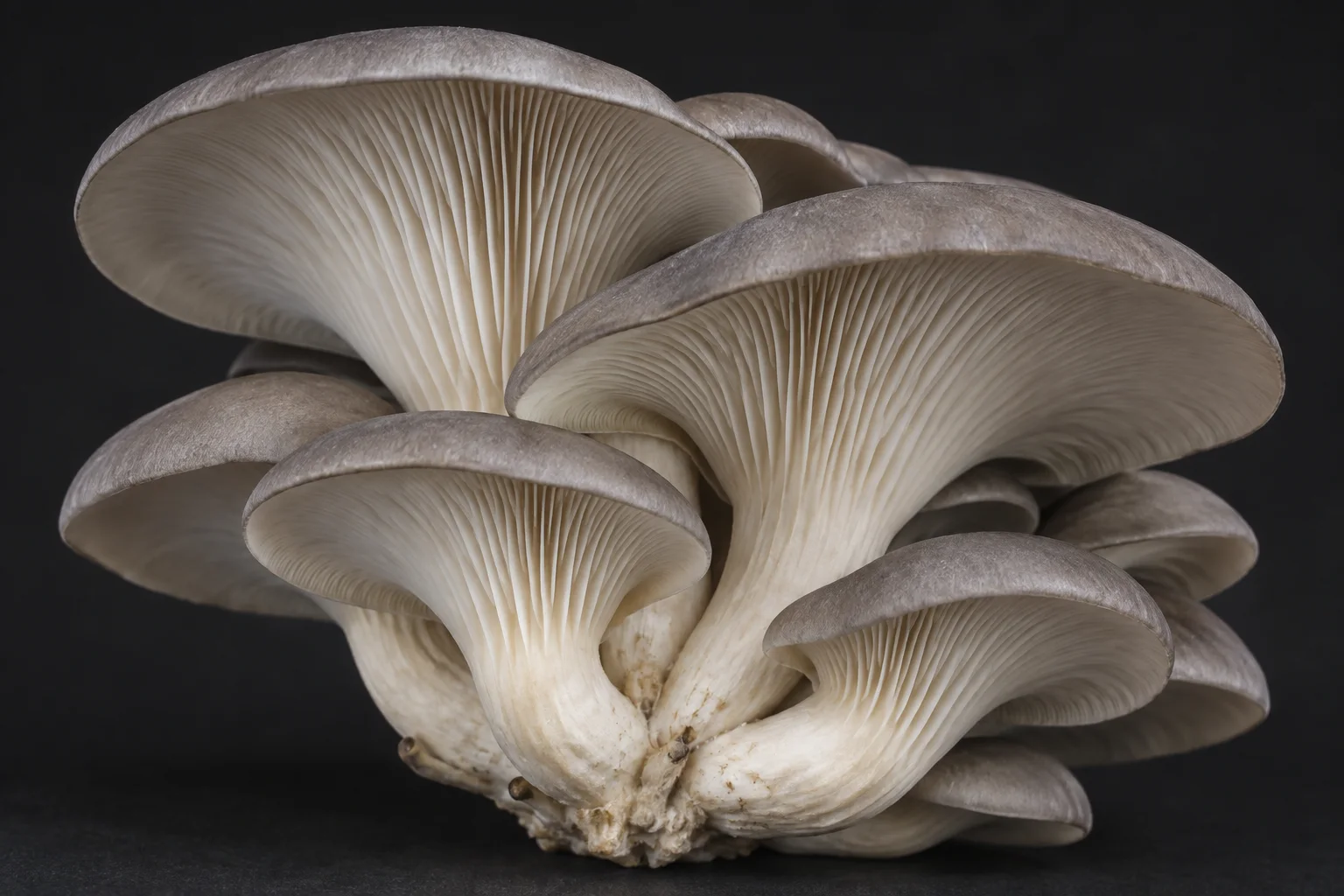
Generated Oyster cluster seen from the side and underneath, showing fan-shaped caps and gills.
AI teaching illustration. Morphology teaching study. Do not identify wild mushrooms or diagnose crop health from this image.
Open full image ↗
Part 02

Method boundary

This topic belongs to a Pleurotus substrate-bag or validated block system. The species or strain, substrate treatment and fruiting-air context must travel together.

  • Confirm the culture as Pleurotus spp., with strain or variety recorded where available.
  • Confirm one method: straw bag or validated lignocellulosic bag or block.
  • Record substrate source, treatment class, batch and contamination observations.
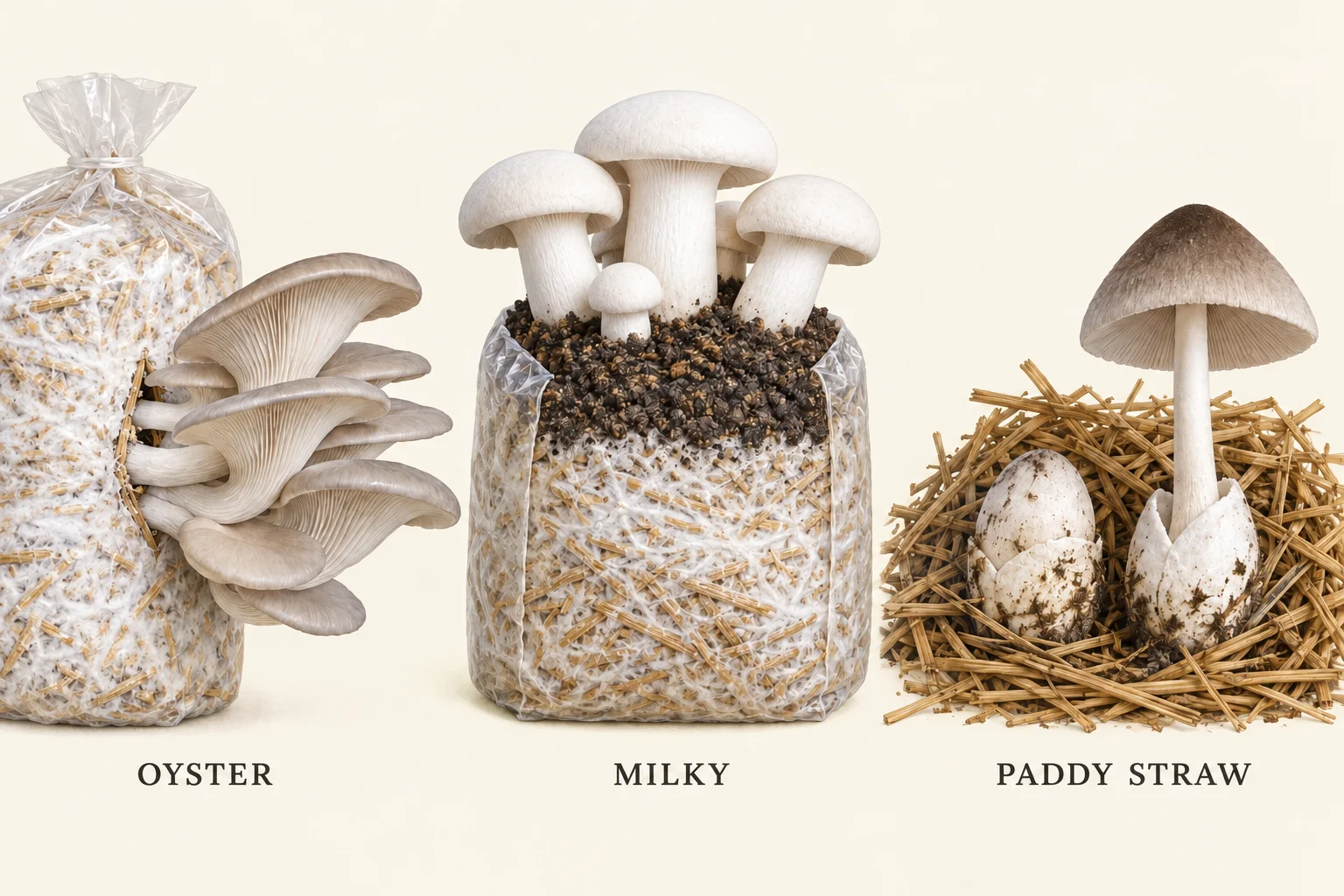
Generated comparison of different growing systems.
AI teaching illustration. Keep species and production methods separate; do not transfer protocols between them.
Open full image ↗
Part 03

Observe and record

Use batch records, stage dates, room observations and contamination patterns. Compare the crop with its own prior condition before changing several variables at once.

Generated crop-batch records.
AI teaching illustration. Link observations to a named batch and stage.
Open full image ↗
Part 04

Evidence status

The page publishes process relationships supported by primary institutional sources. Numeric recipes remain absent where source context, strain identity or specialist review is incomplete.

Generated protected material-handling scene.
AI teaching illustration. An illustration explains a relationship; it does not validate the process.
Open full image ↗

Keep exploring

Every part of this topic.

Choose the stage, material or decision you need to understand next.

01

Oyster mushroom cultivation overview

Follow the crop from residue inspection to cluster harvest without flattening all Pleurotus into one recipe. Evidence, method and India-context boundaries remain visible.

02

Oyster species selector

Compare candidate Pleurotus groups through location, season, observed temperature, method and substrate instead of an unsourced best-species ranking. Evidence, method and India-context boundaries remain visible.

03

Oyster species and varieties

Keep species, strain, institutional release status and spawn provenance separate. Evidence, method and India-context boundaries remain visible.

04

Oyster mushroom life cycle

Connect mycelial colonization, fruiting initiation, cluster development and harvest to cultivation observations. Evidence, method and India-context boundaries remain visible.

05

Oyster mushroom substrates

Evaluate cereal straw and other residues by evidence, source, storage, physical quality and selected Pleurotus method. Evidence, method and India-context boundaries remain visible.

06

Oyster substrate preparation

Prepare a documented batch with moisture, cleanliness, particle structure and cooling checks before spawning. Evidence, method and India-context boundaries remain visible.

07

Oyster substrate pasteurization

Understand a pasteurization-class treatment as a controlled reduction step, not a synonym for sterilization. Evidence, method and India-context boundaries remain visible.

08

Oyster substrate sterilization

Use sterilization only inside a formulation and sterile-workflow context that justifies it. Evidence, method and India-context boundaries remain visible.

09

Oyster mushroom spawn

Assess species identity, strain, batch traceability, colonization condition, transport and handling. Evidence, method and India-context boundaries remain visible.

10

Spawning oyster substrate

Join a cooled, treated substrate batch to traceable spawn through a clean method. Evidence, method and India-context boundaries remain visible.

11

Oyster spawn run

Observe colonization progress, contamination pattern and substrate condition before changing to fruiting. Evidence, method and India-context boundaries remain visible.

12

Oyster cultivation bag preparation

Design fill, closure and fruiting openings as parts of a validated bag method. Evidence, method and India-context boundaries remain visible.

13

Oyster incubation

Manage colonization as a separate crop stage with its own heat, hygiene and inspection responsibilities. Evidence, method and India-context boundaries remain visible.

14

Oyster fruiting

Coordinate crop exposure, fresh air, moisture context and light for the selected Pleurotus species. Evidence, method and India-context boundaries remain visible.

15

Oyster mushroom climate

Interpret environment by Pleurotus species, strain, crop stage, crop load and room system. Evidence, method and India-context boundaries remain visible.

16

Oyster mushroom temperature context

Separate room air, substrate, outdoor condition and crop-stage temperature evidence. Evidence, method and India-context boundaries remain visible.

17

Oyster humidity and surface condition

Read humidity with evaporation, surface response, airflow and wetness rather than chasing one display value. Evidence, method and India-context boundaries remain visible.

18

Oyster carbon dioxide context

Read carbon dioxide as a crop-load and ventilation signal whose morphological meaning varies by species and stage. Evidence, method and India-context boundaries remain visible.

19

Oyster fresh-air management

Distribute conditioned air through the crop zone while watching clusters, surfaces and room uniformity. Evidence, method and India-context boundaries remain visible.

20

Light in oyster cultivation

Treat light as a crop-stage and morphology variable, not a substitute for ventilation or temperature control. Evidence, method and India-context boundaries remain visible.

21

Watering oyster crops

Base water decisions on substrate, fruiting-body stage, surface condition, room response and delivery method. Evidence, method and India-context boundaries remain visible.

22

Oyster pinning

Recognize initiation as a system response involving a colonized substrate and the complete fruiting environment. Evidence, method and India-context boundaries remain visible.

23

Oyster flush management

Record harvest pattern, block condition, contamination and room response across flushes without assuming fixed yield. Evidence, method and India-context boundaries remain visible.

24

Oyster mushroom harvest

Choose maturity and handling around cluster quality, customer format and the immediate post-harvest path. Evidence, method and India-context boundaries remain visible.

25

Oyster mushroom diseases

Start with species, crop stage and distribution pattern before comparing biological causes. Evidence, method and India-context boundaries remain visible.

26

Oyster mushroom pests

Separate the observed organism, damage pattern, entry route and hygiene breakdown. Evidence, method and India-context boundaries remain visible.

27

Oyster crop troubleshooting

Move from symptom and batch context to discriminating checks without diagnosing from one image. Evidence, method and India-context boundaries remain visible.

28

Oyster post-harvest quality

Protect fragile clusters from handling damage, unmanaged warmth, surface wetness and delayed dispatch. Evidence, method and India-context boundaries remain visible.

29

Oyster mushroom business context

Connect production method, reliable local demand, sell-through and loss to a transparent business model. Evidence, method and India-context boundaries remain visible.

30

Commercial oyster mushroom farming

Scale substrate processing, clean flow, incubation, fruiting, harvest and cooling as one species-specific facility. Evidence, method and India-context boundaries remain visible.

Go deeper

Technical reference, records and tools.

Detailed crop-stage information, parameters, diagrams and specialist tools are kept together below. This material retains its source conditions and review limits.

Open the complete technical reference

Crop guide

Oyster mushroom knowledge system

Choose a Pleurotus species and method before reading cultivation advice. Evidence, method and India-context boundaries remain visible.

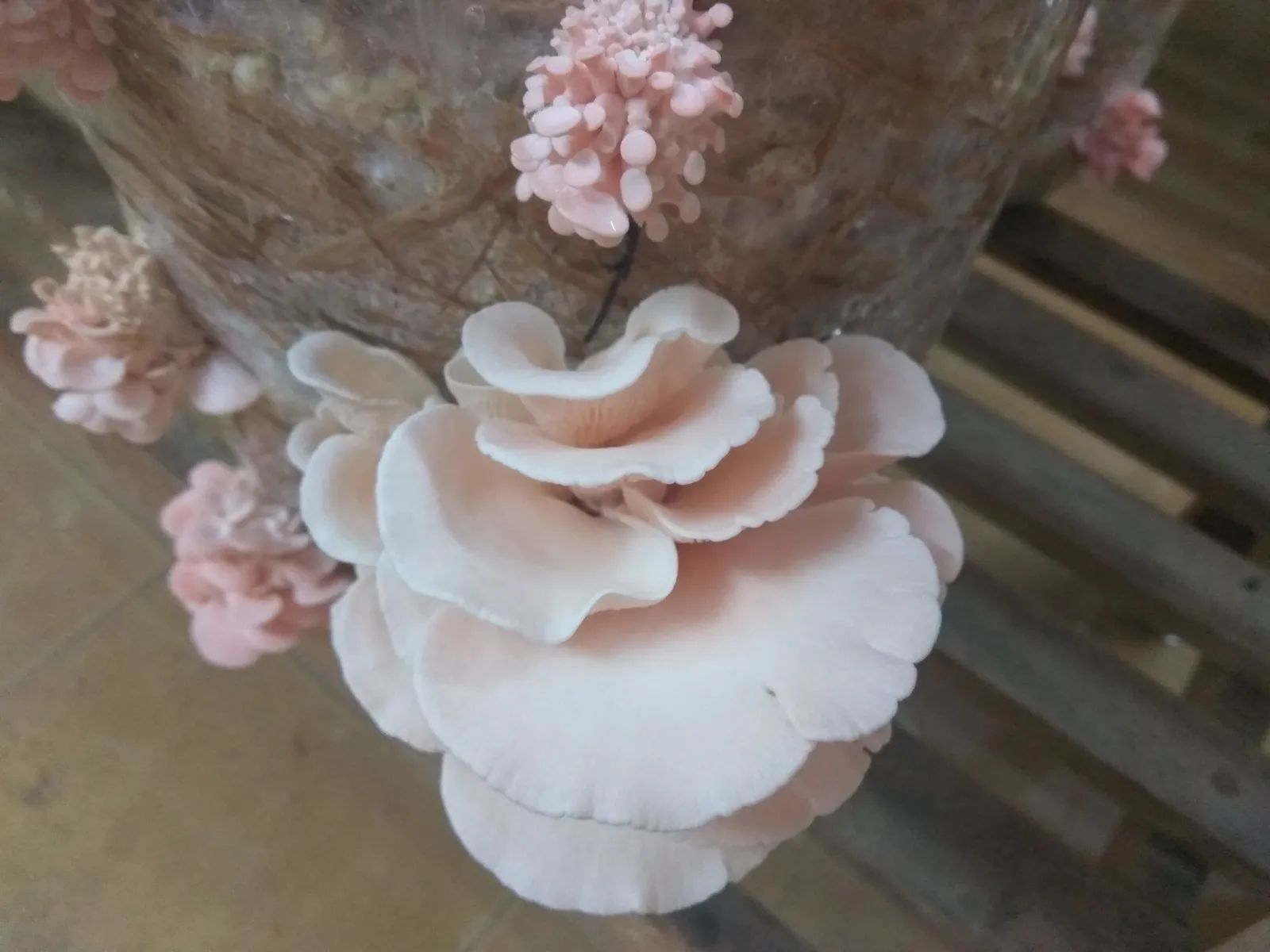
A large pink oyster mushroom (Pleurotus djamor) cluster and young pins fruiting through the side of a straw-filled polythene bag on a rack, Coimbatore, Tamil Nadu.
Pink oyster mushrooms fruiting from a straw bag, Coimbatore. Photo: Shreevaishnavi96, CC BY-SA 4.0. Source

The crop at a glance

Published ICAR-DMR reference values for Indian conditions. Species, strain and your room decide the final numbers.

Spawn run22-28°C15 to 20 days in a dark room, humidity 80 to 85 percent.Source: ICAR-DMR
Fruiting20-28°CSpecies decide the window: P. ostreatus cooler, P. sajor-caju and P. florida warmer. Humidity 85 to 90 percent, light and fresh air needed.Source: ICAR-DMR
Crop cycle45-60daysBag filling to third flush.Source: ICAR-DMR
Yield60-100kg / 100 kg dry strawBiological efficiency on chopped, pasteurised wheat or paddy straw.Source: ICAR-DMR
Spawn rate2-3% of wet strawAbout 100 g spawn for a 3 to 4 kg wet-straw bag.Source: ICAR-DMR
Season (plains)Sep-AprMost of the year in plains with species change by temperature; year-round in hills and controlled rooms.Source: ICAR-DMR
  • No context-free setpoints
  • No profit promises
  • Species comes first
  • No medical marketing

Identity before method

Oyster mushroom group

Pleurotus spp.

Taxonomy note
A cultivation group containing materially different Pleurotus species and strains.
India readiness
establishedInstitutionally established as a group, but species and strain fit still depend on environment and method.
Method difficulty
accessible
Casing
no
Production systems
straw bag; validated lignocellulosic bag or block
Post-harvest
Clusters are handling-sensitive and can develop mucilage or rapid quality loss when handling and temperature control fail.

Production method records

One species can require more than one cultivation model.

OYS-STRAW-BAG

Treated straw bag system

Substrate
clean cereal straw with method evidence
Container
perforated or opened cultivation bag
Treatment
Pasteurization-class treatment or another validated method; not interchangeable with sterilization.
Scale context
home trial to commercial batch, with different hygiene and climate responsibilities
  1. Material check
  2. Treatment
  3. Cooling and moisture check
  4. Spawning
  5. Spawn run
  6. Fruiting transition
  7. Cluster harvest

Canonical learning map

30 distinct routes for this crop system.

01
Oyster mushroom cultivation overview

Follow the crop from residue inspection to cluster harvest without flattening all Pleurotus into one recipe. Evidence, method and India-context boundaries remain visible.

02
Oyster species selector

Compare candidate Pleurotus groups through location, season, observed temperature, method and substrate instead of an unsourced best-species ranking. Evidence, method and India-context boundaries remain visible.

03
Oyster species and varieties

Keep species, strain, institutional release status and spawn provenance separate. Evidence, method and India-context boundaries remain visible.

04
Oyster mushroom life cycle

Connect mycelial colonization, fruiting initiation, cluster development and harvest to cultivation observations. Evidence, method and India-context boundaries remain visible.

05
Oyster mushroom substrates

Evaluate cereal straw and other residues by evidence, source, storage, physical quality and selected Pleurotus method. Evidence, method and India-context boundaries remain visible.

06
Oyster substrate preparation

Prepare a documented batch with moisture, cleanliness, particle structure and cooling checks before spawning. Evidence, method and India-context boundaries remain visible.

07
Oyster substrate pasteurization

Understand a pasteurization-class treatment as a controlled reduction step, not a synonym for sterilization. Evidence, method and India-context boundaries remain visible.

08
Oyster substrate sterilization

Use sterilization only inside a formulation and sterile-workflow context that justifies it. Evidence, method and India-context boundaries remain visible.

09
Oyster mushroom spawn

Assess species identity, strain, batch traceability, colonization condition, transport and handling. Evidence, method and India-context boundaries remain visible.

10
Spawning oyster substrate

Join a cooled, treated substrate batch to traceable spawn through a clean method. Evidence, method and India-context boundaries remain visible.

11
Oyster spawn run

Observe colonization progress, contamination pattern and substrate condition before changing to fruiting. Evidence, method and India-context boundaries remain visible.

12
Oyster cultivation bag preparation

Design fill, closure and fruiting openings as parts of a validated bag method. Evidence, method and India-context boundaries remain visible.

13
Oyster incubation

Manage colonization as a separate crop stage with its own heat, hygiene and inspection responsibilities. Evidence, method and India-context boundaries remain visible.

14
Oyster fruiting

Coordinate crop exposure, fresh air, moisture context and light for the selected Pleurotus species. Evidence, method and India-context boundaries remain visible.

15
Oyster mushroom climate

Interpret environment by Pleurotus species, strain, crop stage, crop load and room system. Evidence, method and India-context boundaries remain visible.

16
Oyster mushroom temperature context

Separate room air, substrate, outdoor condition and crop-stage temperature evidence. Evidence, method and India-context boundaries remain visible.

17
Oyster humidity and surface condition

Read humidity with evaporation, surface response, airflow and wetness rather than chasing one display value. Evidence, method and India-context boundaries remain visible.

18
Oyster carbon dioxide context

Read carbon dioxide as a crop-load and ventilation signal whose morphological meaning varies by species and stage. Evidence, method and India-context boundaries remain visible.

19
Oyster fresh-air management

Distribute conditioned air through the crop zone while watching clusters, surfaces and room uniformity. Evidence, method and India-context boundaries remain visible.

20
Light in oyster cultivation

Treat light as a crop-stage and morphology variable, not a substitute for ventilation or temperature control. Evidence, method and India-context boundaries remain visible.

21
Watering oyster crops

Base water decisions on substrate, fruiting-body stage, surface condition, room response and delivery method. Evidence, method and India-context boundaries remain visible.

22
Oyster pinning

Recognize initiation as a system response involving a colonized substrate and the complete fruiting environment. Evidence, method and India-context boundaries remain visible.

23
Oyster flush management

Record harvest pattern, block condition, contamination and room response across flushes without assuming fixed yield. Evidence, method and India-context boundaries remain visible.

24
Oyster mushroom harvest

Choose maturity and handling around cluster quality, customer format and the immediate post-harvest path. Evidence, method and India-context boundaries remain visible.

25
Oyster mushroom diseases

Start with species, crop stage and distribution pattern before comparing biological causes. Evidence, method and India-context boundaries remain visible.

26
Oyster mushroom pests

Separate the observed organism, damage pattern, entry route and hygiene breakdown. Evidence, method and India-context boundaries remain visible.

27
Oyster crop troubleshooting

Move from symptom and batch context to discriminating checks without diagnosing from one image. Evidence, method and India-context boundaries remain visible.

28
Oyster post-harvest quality

Protect fragile clusters from handling damage, unmanaged warmth, surface wetness and delayed dispatch. Evidence, method and India-context boundaries remain visible.

29
Oyster mushroom business context

Connect production method, reliable local demand, sell-through and loss to a transparent business model. Evidence, method and India-context boundaries remain visible.

30
Commercial oyster mushroom farming

Scale substrate processing, clean flow, incubation, fruiting, harvest and cooling as one species-specific facility. Evidence, method and India-context boundaries remain visible.

Trace the boundary

Evidence and limitations

institutional · tier AResearch programmes

Current institutional scope for cultivated and specialty mushroom research in India.

Research scope does not by itself establish a farm recommendation, commercial readiness or strain-specific operating range.

Open primary source
technical-bulletin · tier ATechnologies developed by ICAR-DMR

Institutional method history for oyster, milky, paddy straw, shiitake and selected specialty mushrooms.

Method descriptions are context-specific and contain numeric and broad substrate statements that require independent technical review before operational publication.

Open primary source
current-advisory · tier ACurrent crop advisory

Time-stamped Indian seasonal crop context and the need to choose oyster species for conditions.

Chemical directions are excluded from this platform unless a current label and jurisdiction are independently verified.

Open primary source
technical-bulletin · tier AOyster mushroom cultivation FAQ

Indian institutional distinction between warm- and cool-fruiting Pleurotus species, plus an occupational spore-exposure warning.

The species bands are source context, not a strain guarantee. Generic yield, storage and legacy chemical statements are not carried into operational guidance.

Open primary source
technical-bulletin · tier APost-harvest technology of mushrooms

Species-specific post-harvest deterioration patterns and handling context.

Historic shelf-life statements depend on maturity, handling, packaging and storage conditions and are not reproduced as guarantees.

Open primary source

Read the evidence

Sources & review.

Editorial update: 2026-09-03. Independent technical review is not recorded for this entry.

  1. Research programmes

    ICAR Directorate of Mushroom Research

  2. Technologies developed by ICAR-DMR

    ICAR Directorate of Mushroom Research · 2020

  3. Current crop advisory

    ICAR Directorate of Mushroom Research · 2026

  4. Oyster mushroom cultivation FAQ

    ICAR Directorate of Mushroom Research

  5. Post-harvest technology of mushrooms

    ICAR Directorate of Mushroom Research

Reading a source is not the same as applying its instructions to every farm. Confirm species, strain, crop stage, system, region and publication date. Old chemical recommendations are not current-use instructions.

See something that needs correcting? Tell us →