

A practical guide to growing mushrooms in IndiaA joint educational initiative by MushroomWale & DMR Solan
MushroomFarming.in

A joint educational initiative by

MushroomWale.com
ICAR–Directorate of Mushroom Research, Solan logoICAR–DMRSolan

MushroomFarming / article

Watering oyster crops

Base water decisions on substrate, fruiting-body stage, surface condition, room response and delivery method. Evidence, method and India-context boundaries remain visible.

Practical explanation + detailed referenceSources & review ↓
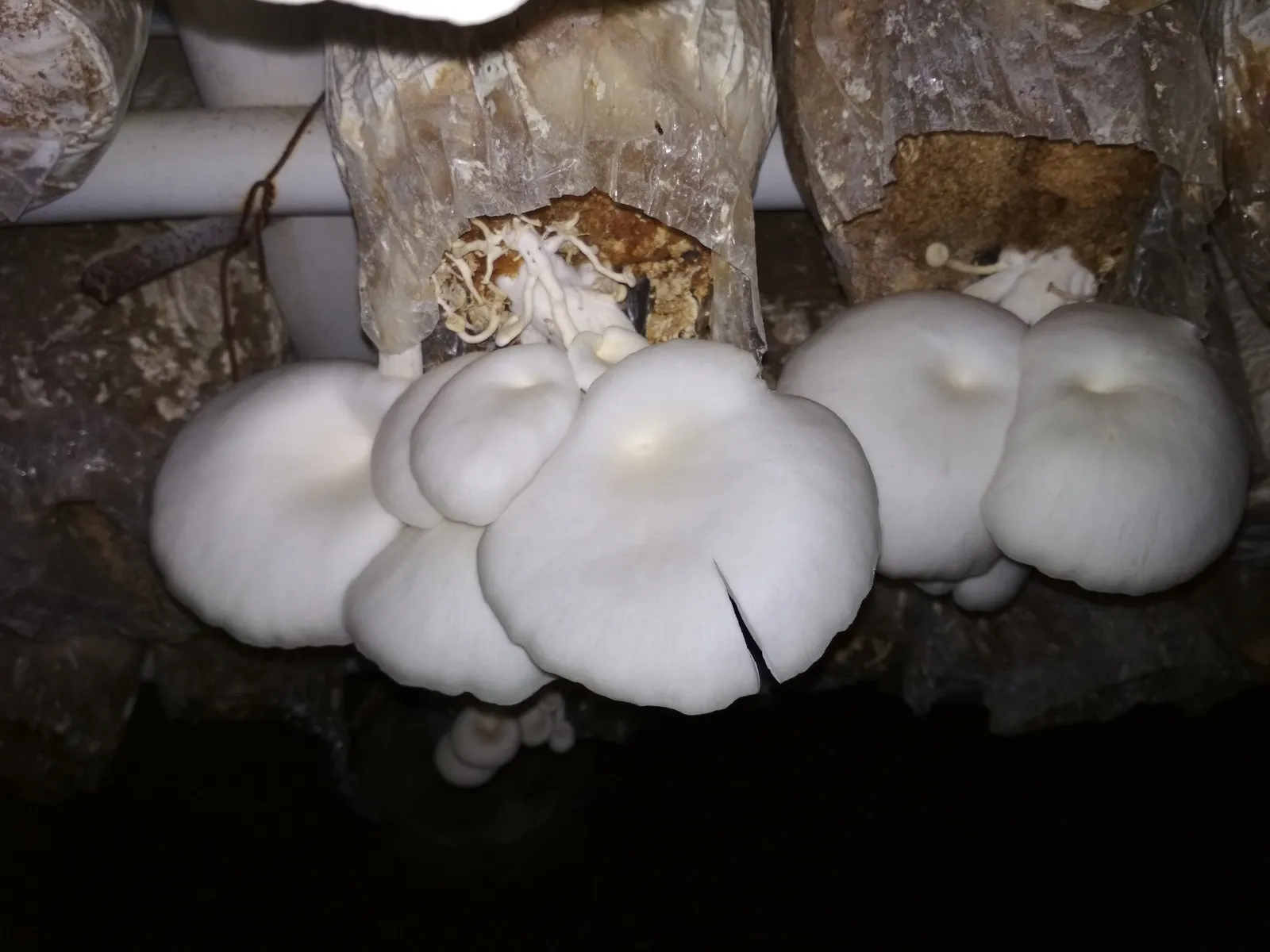
A cluster of white oyster mushrooms fruiting from the mouth of a sawdust baglog at a commercial oyster-mushroom unit, Indonesia.
Real cultivation photograph. Read its source for location and context; it is not a universal operating specification.CatatanLagitBiru · CC BY-SA 4.0View full photograph ↗
On this pageChoose a section, or keep reading below

Read this in the full guide: Understand the whole Oyster mushroom bag cycle

Understand the topic

Start with the explanation.

Base water decisions on substrate, fruiting-body stage, surface condition, room response and delivery method. This topic belongs to a Pleurotus substrate-bag or validated block system. The species or strain, substrate treatment and fruiting-air context must travel together.

Part 01

Why this stage matters

Base water decisions on substrate, fruiting-body stage, surface condition, room response and delivery method.

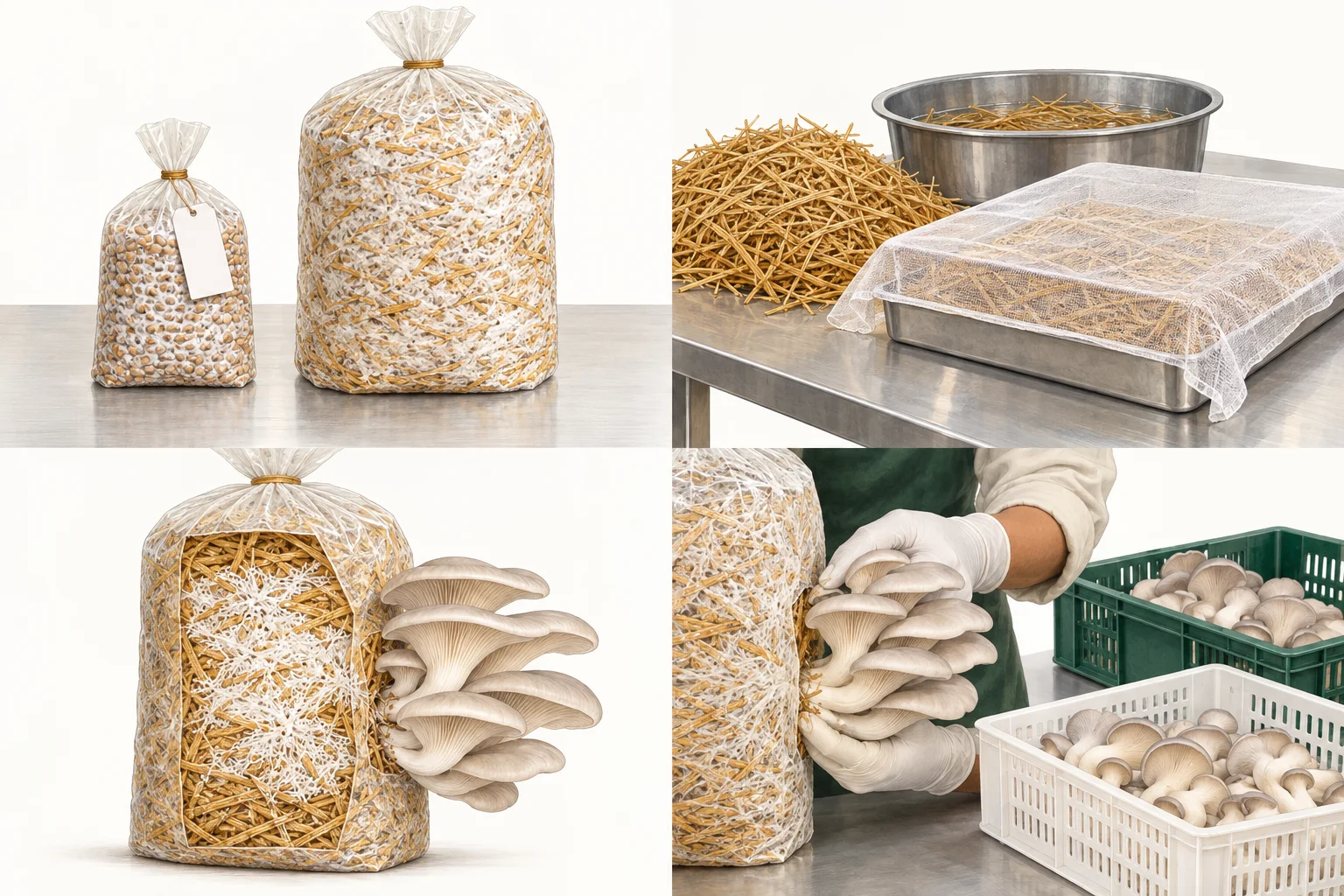
Illustration of straw preparation and protected cooling containers.
AI teaching illustrationPrepare and protect

Treated material must remain protected during cooling and handling. Recontamination can happen after an otherwise adequate treatment.

Conceptual explanation—not a real farm photograph, diagnostic finding or construction specification.
Part 02

Method boundary

This topic belongs to a Pleurotus substrate-bag or validated block system. The species or strain, substrate treatment and fruiting-air context must travel together.

  • Confirm the culture as Pleurotus spp., with strain or variety recorded where available.
  • Confirm one method: straw bag or validated lignocellulosic bag or block.
  • Record substrate source, treatment class, batch and contamination observations.
Part 03

Observe and record

Use batch records, stage dates, room observations and contamination patterns. Compare the crop with its own prior condition before changing several variables at once.

Illustration of Oyster mushroom clusters harvested into clean grading containers.
AI teaching illustrationHandle the cluster

The cluster is a delicate food product after picking. Buyer grade and delivery capacity should influence your bag schedule.

Conceptual explanation—not a real farm photograph, diagnostic finding or construction specification.
Part 04

Evidence status

The page publishes process relationships supported by primary institutional sources. Numeric recipes remain absent where source context, strain identity or specialist review is incomplete.

Go deeper

Technical reference, records and tools.

Detailed crop-stage information, parameters, diagrams and specialist tools are kept together below. This material retains its source conditions and review limits.

Open the complete technical reference

oyster · cultivation stage

Watering oyster crops

Base water decisions on substrate, fruiting-body stage, surface condition, room response and delivery method. Evidence, method and India-context boundaries remain visible.

Publication
Editorial review in progress
Evidence records
5
External review
Not yet recorded
Wild ID
Not provided
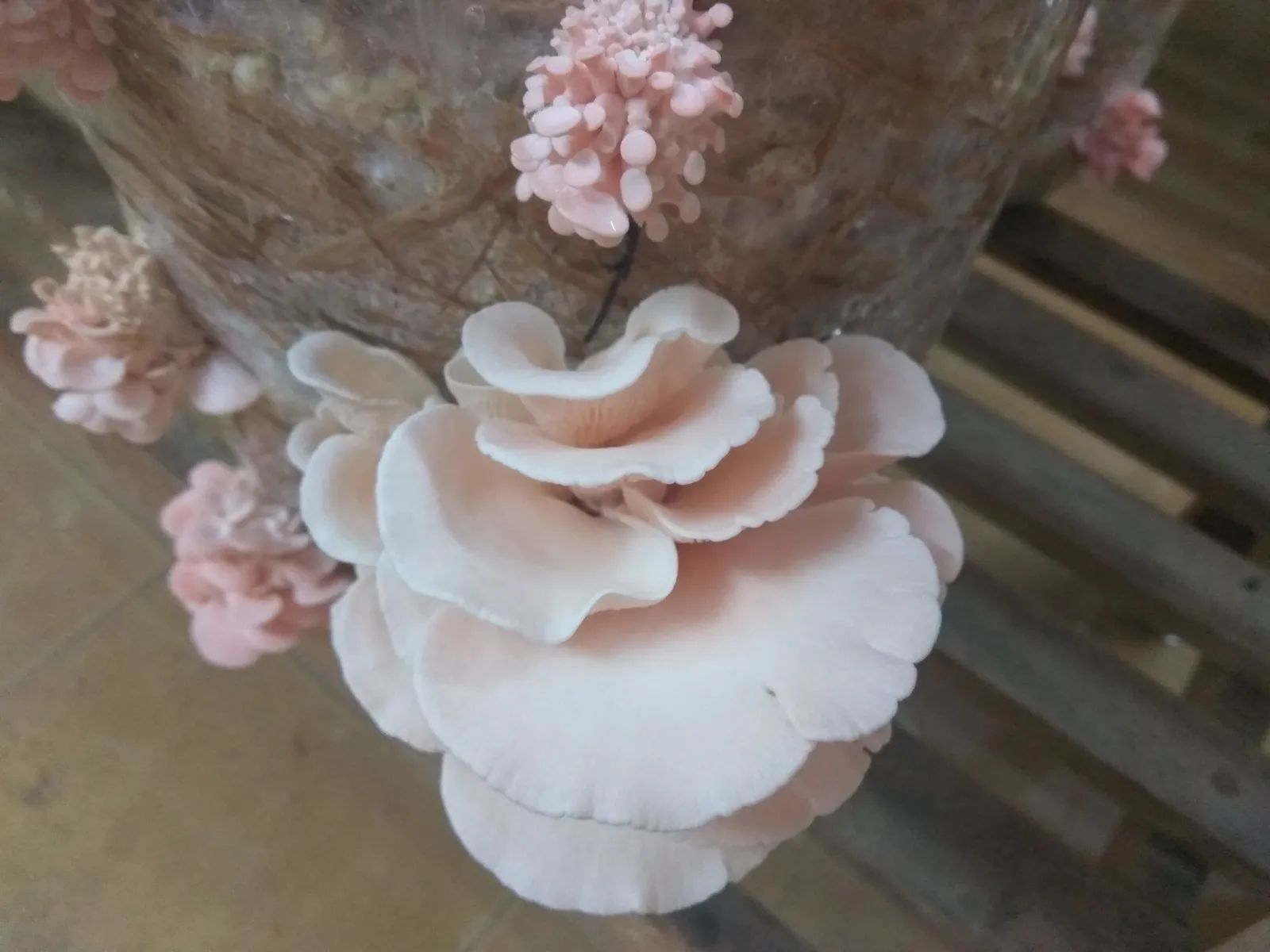
A large pink oyster mushroom (Pleurotus djamor) cluster and young pins fruiting through the side of a straw-filled polythene bag on a rack, Coimbatore, Tamil Nadu.
Pink oyster mushroom cluster fruiting from a polythene bag. Photo: Shreevaishnavi96, CC BY-SA 4.0. Source

The oyster bag method in six steps

Source: ICAR-DMR oyster folder and the 2011 manual.

  1. Chop the strawWheat or paddy straw cut to 2 to 3 cm (manual method uses 5 to 10 cm).Day 0
  2. Hot-water treatmentSoak at 60 to 65 °C for 20 to 30 minutes, then drain to 65 to 70 percent moisture.Day 0
  3. Spawn and fill bags2 to 3 percent spawn on wet-straw weight, in layers; 10 to 12 holes per bag.Day 0
  4. Spawn run22 to 26 °C in the dark for 15 to 25 days until the bag is white through.Day 1-20
  5. Open the bag and fruitLight, fresh air, 75 to 85 percent humidity, CO₂ under 600 to 800 ppm. Pins in 5 to 7 days.Day 20-27
  6. Harvest and next flushThree flushes 8 to 10 days apart; 60 to 100 kg from 100 kg dry straw.Day 27-60

Quick orientation

Base water decisions on substrate, fruiting-body stage, surface condition, room response and delivery method. This topic belongs to a Pleurotus substrate-bag or validated block system. The species or strain, substrate treatment and fruiting-air context must travel together.

01

Why this stage matters

Base water decisions on substrate, fruiting-body stage, surface condition, room response and delivery method.

02

Method boundary

This topic belongs to a Pleurotus substrate-bag or validated block system. The species or strain, substrate treatment and fruiting-air context must travel together.

  • Confirm the culture as Pleurotus spp., with strain or variety recorded where available.
  • Confirm one method: straw bag or validated lignocellulosic bag or block.
  • Record substrate source, treatment class, batch and contamination observations.
03

Observe and record

Use batch records, stage dates, room observations and contamination patterns. Compare the crop with its own prior condition before changing several variables at once.

04

Evidence status

The page publishes process relationships supported by primary institutional sources. Numeric recipes remain absent where source context, strain identity or specialist review is incomplete.

Production method records

One species can require more than one cultivation model.

OYS-STRAW-BAG

Treated straw bag system

Substrate
clean cereal straw with method evidence
Container
perforated or opened cultivation bag
Treatment
Pasteurization-class treatment or another validated method; not interchangeable with sterilization.
Scale context
home trial to commercial batch, with different hygiene and climate responsibilities
  1. Material check
  2. Treatment
  3. Cooling and moisture check
  4. Spawning
  5. Spawn run
  6. Fruiting transition
  7. Cluster harvest

Trace the boundary

Evidence and limitations

institutional · tier AResearch programmes

Current institutional scope for cultivated and specialty mushroom research in India.

Research scope does not by itself establish a farm recommendation, commercial readiness or strain-specific operating range.

Open primary source
technical-bulletin · tier ATechnologies developed by ICAR-DMR

Institutional method history for oyster, milky, paddy straw, shiitake and selected specialty mushrooms.

Method descriptions are context-specific and contain numeric and broad substrate statements that require independent technical review before operational publication.

Open primary source
current-advisory · tier ACurrent crop advisory

Time-stamped Indian seasonal crop context and the need to choose oyster species for conditions.

Chemical directions are excluded from this platform unless a current label and jurisdiction are independently verified.

Open primary source
technical-bulletin · tier AOyster mushroom cultivation FAQ

Indian institutional distinction between warm- and cool-fruiting Pleurotus species, plus an occupational spore-exposure warning.

The species bands are source context, not a strain guarantee. Generic yield, storage and legacy chemical statements are not carried into operational guidance.

Open primary source
technical-bulletin · tier APost-harvest technology of mushrooms

Species-specific post-harvest deterioration patterns and handling context.

Historic shelf-life statements depend on maturity, handling, packaging and storage conditions and are not reproduced as guarantees.

Open primary source

Read the evidence

Sources & review.

Editorial update: 2026-09-03. Independent technical review is not recorded for this entry.

  1. Research programmes

    ICAR Directorate of Mushroom Research

  2. Technologies developed by ICAR-DMR

    ICAR Directorate of Mushroom Research · 2020

  3. Current crop advisory

    ICAR Directorate of Mushroom Research · 2026

  4. Oyster mushroom cultivation FAQ

    ICAR Directorate of Mushroom Research

  5. Post-harvest technology of mushrooms

    ICAR Directorate of Mushroom Research

Reading a source is not the same as applying its instructions to every farm. Confirm species, strain, crop stage, system, region and publication date. Old chemical recommendations are not current-use instructions.

See something that needs correcting? Tell us →