

A practical guide to growing mushrooms in IndiaA joint educational initiative by MushroomWale & DMR Solan ↗
MushroomFarming.in

A joint educational initiative by

MushroomWale.com
ICAR–Directorate of Mushroom Research, Solan logoICAR–DMRSolan

MushroomFarming / article

Light in oyster cultivation

Treat light as a crop-stage and morphology variable, not a substitute for ventilation or temperature control. Evidence, method and India-context boundaries remain visible.

Practical explanation + detailed referenceSources & review ↓
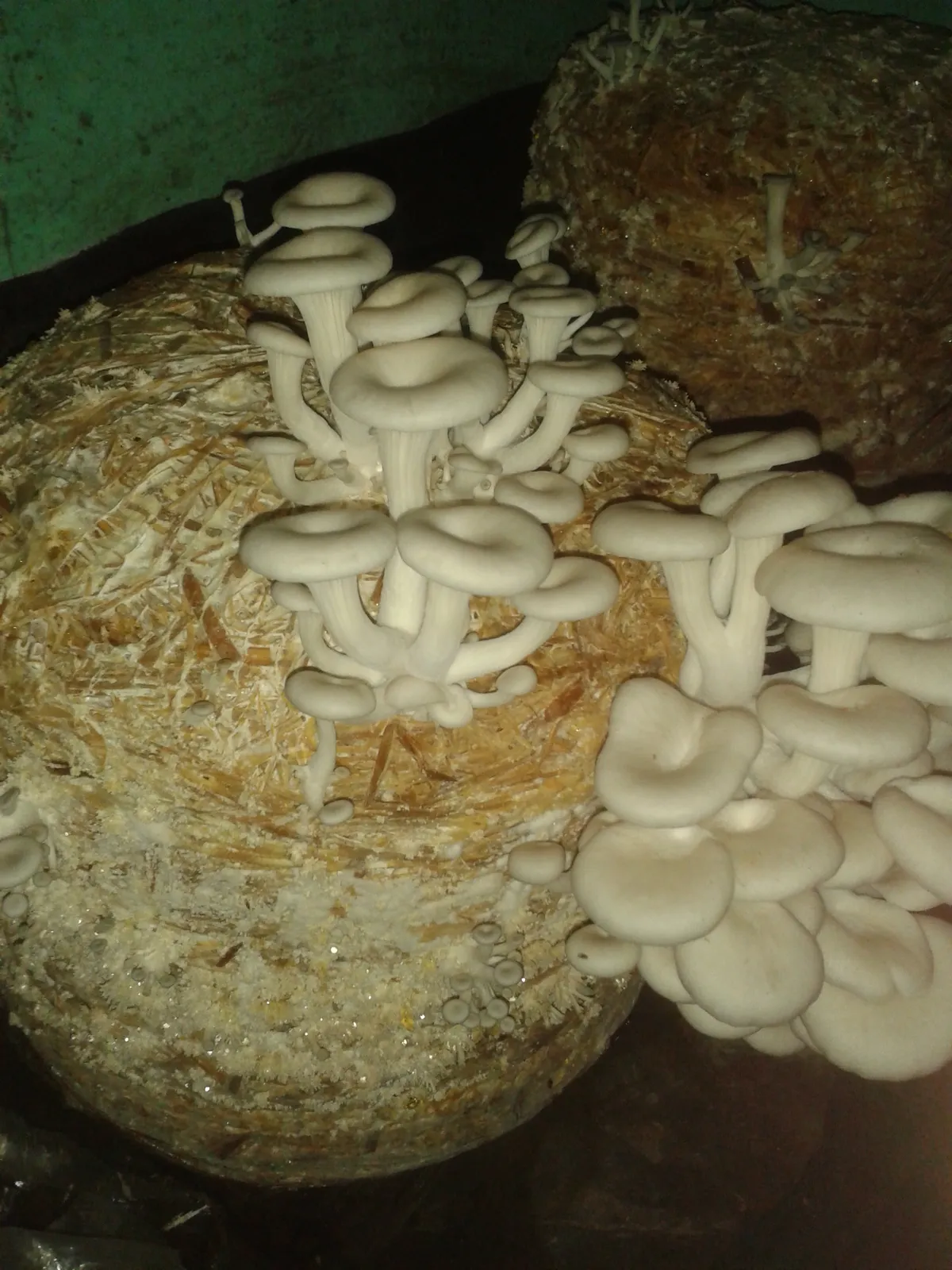
White oyster mushrooms fruiting around a cylindrical straw substrate bag in a grow room, Nepal (Wiki Loves Earth Nepal upload).
Real cultivation photograph. Read its source for location and context; it is not a universal operating specification.Ricky Partel · CC BY-SA 4.0View full photograph ↗
On this pageChoose a section, or keep reading below

Read this in the full guide: Understand the whole Oyster mushroom bag cycle →

Understand the topic

Start with the explanation.

Treat light as a crop-stage and morphology variable, not a substitute for ventilation or temperature control. This topic belongs to a Pleurotus substrate-bag or validated block system. The species or strain, substrate treatment and fruiting-air context must travel together.

Part 01

Why this stage matters

Treat light as a crop-stage and morphology variable, not a substitute for ventilation or temperature control.

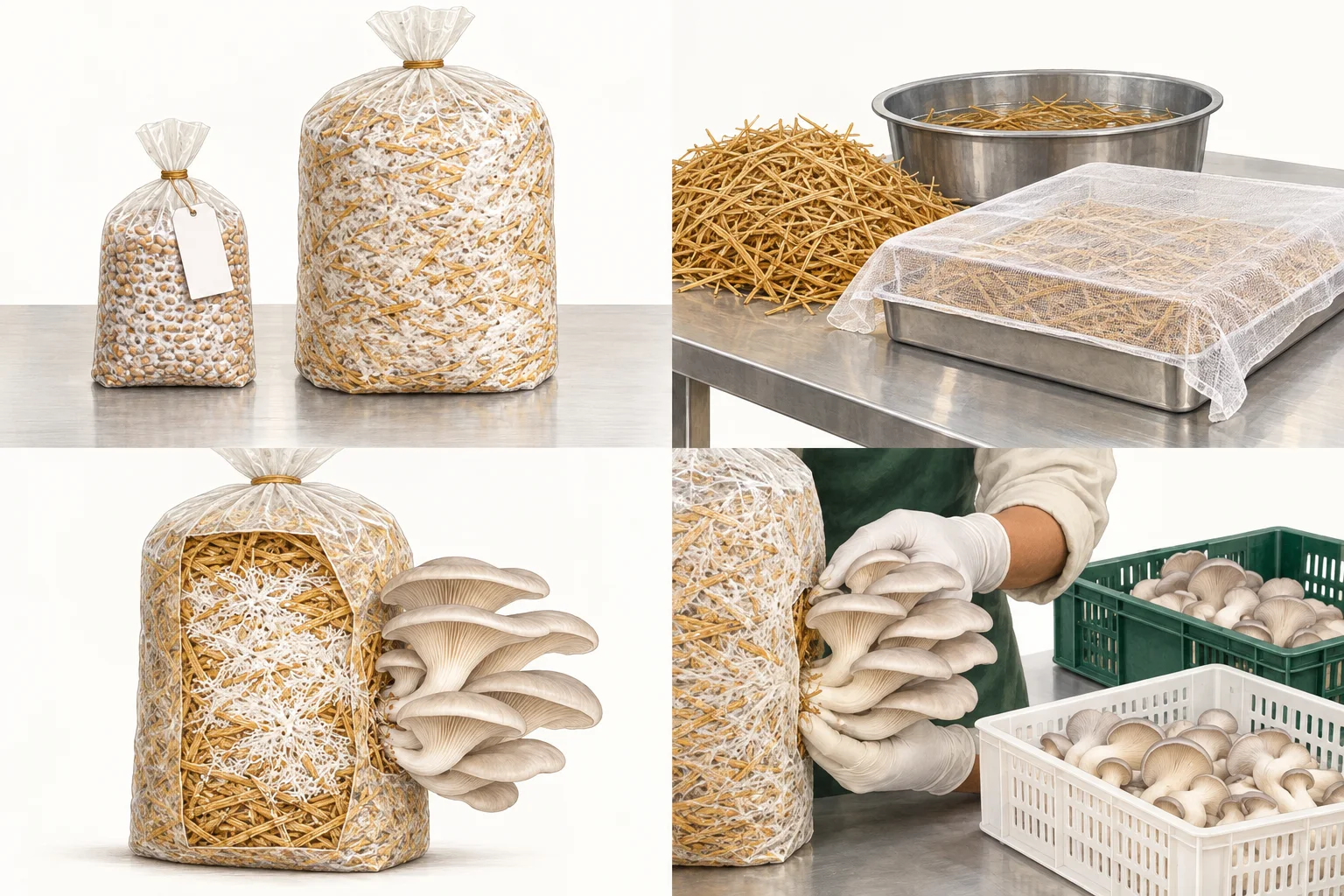
Illustration comparing purchased spawn and a colonised Oyster growing bag.
AI teaching illustrationChoose your starting point

Buying spawn and buying a prepared bag leave different tasks on your farm. Bag production adds preparation, treatment and clean inoculation work.

Conceptual explanation—not a real farm photograph, diagnostic finding or construction specification.
Part 02

Method boundary

This topic belongs to a Pleurotus substrate-bag or validated block system. The species or strain, substrate treatment and fruiting-air context must travel together.

  • Confirm the culture as Pleurotus spp., with strain or variety recorded where available.
  • Confirm one method: straw bag or validated lignocellulosic bag or block.
  • Record substrate source, treatment class, batch and contamination observations.
Part 03

Interpret the environment

Air temperature, substrate or block temperature, humidity, fresh air, light and crop response interact. A number without stage, strain, sensor position and source is not an operating instruction.

Part 04

Evidence status

The page publishes process relationships supported by primary institutional sources. Numeric recipes remain absent where source context, strain identity or specialist review is incomplete.

Illustration of Oyster mushroom clusters harvested into clean grading containers.
AI teaching illustrationHandle the cluster

The cluster is a delicate food product after picking. Buyer grade and delivery capacity should influence your bag schedule.

Conceptual explanation—not a real farm photograph, diagnostic finding or construction specification.

Go deeper

Technical reference, records and tools.

Detailed crop-stage information, parameters, diagrams and specialist tools are kept together below. This material retains its source conditions and review limits.

Open the complete technical reference

oyster · environment

Light in oyster cultivation

Treat light as a crop-stage and morphology variable, not a substitute for ventilation or temperature control. Evidence, method and India-context boundaries remain visible.

Publication
Editorial review in progress
Evidence records
5
External review
Not yet recorded
Wild ID
Not provided
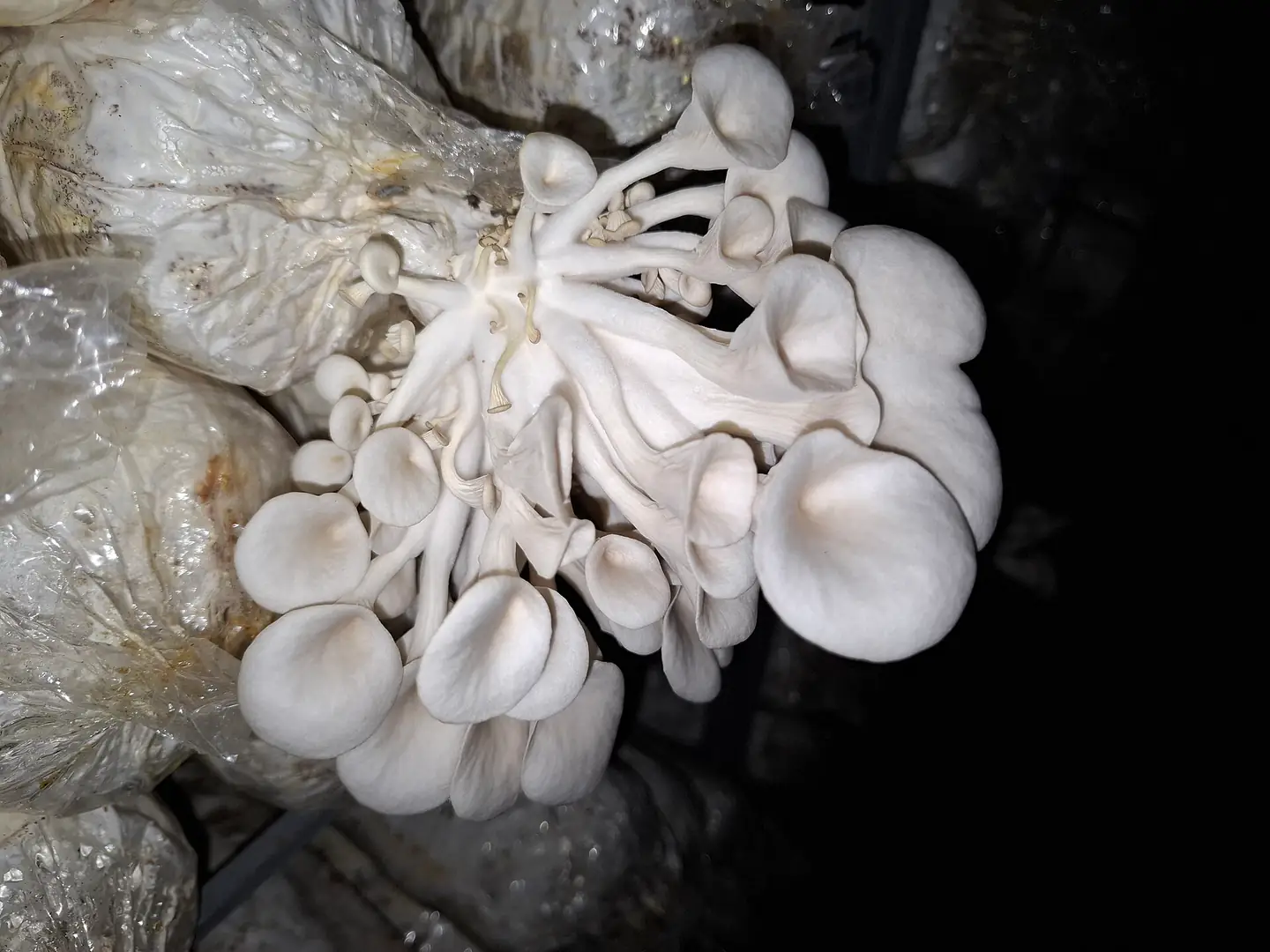
A dense cluster of white oyster mushrooms with short stems emerging from a plastic bag.
A white oyster mushroom cluster growing from the opening of a fruiting bag at a farm in the Philippines. Photo: MarvinBikolano, CC BY-SA 4.0. Source

The oyster bag method in six steps

Source: ICAR-DMR oyster folder and the 2011 manual.

  1. Chop the strawWheat or paddy straw cut to 2 to 3 cm (manual method uses 5 to 10 cm).Day 0
  2. Hot-water treatmentFolder: 60 to 65 °C for 20 to 30 minutes (manual: 65 to 70 °C for one hour), then drain off the excess water.Day 0
  3. Spawn and fill bags2 to 3 percent spawn on wet-straw weight, in layers; 10 to 12 holes per bag (manual: 10 to 15).Day 0
  4. Spawn run22 to 26 °C in the dark for 15 to 25 days until the bag is white through.Days 1 to 25
  5. Open the bag and fruitLight, fresh air, 75 to 85 percent humidity, CO₂ below 600 ppm (folder: 800 ppm). Pins in about a week.From day 16
  6. Harvest and next flushNext flush 8 to 10 days later. Manual: 500 to 700 kg from one tonne of dry straw in 45 to 60 days.Up to day 60

Quick orientation

Treat light as a crop-stage and morphology variable, not a substitute for ventilation or temperature control. This topic belongs to a Pleurotus substrate-bag or validated block system. The species or strain, substrate treatment and fruiting-air context must travel together.

01

Why this stage matters

Treat light as a crop-stage and morphology variable, not a substitute for ventilation or temperature control.

02

Method boundary

This topic belongs to a Pleurotus substrate-bag or validated block system. The species or strain, substrate treatment and fruiting-air context must travel together.

  • Confirm the culture as Pleurotus spp., with strain or variety recorded where available.
  • Confirm one method: straw bag or validated lignocellulosic bag or block.
  • Record substrate source, treatment class, batch and contamination observations.
03

Interpret the environment

Air temperature, substrate or block temperature, humidity, fresh air, light and crop response interact. A number without stage, strain, sensor position and source is not an operating instruction.

04

Evidence status

The page publishes process relationships supported by primary institutional sources. Numeric recipes remain absent where source context, strain identity or specialist review is incomplete.

Production method records

One species can require more than one cultivation model.

OYS-STRAW-BAG

Treated straw bag system

Substrate
clean cereal straw with method evidence
Container
perforated or opened cultivation bag
Treatment
Pasteurization-class treatment or another validated method; not interchangeable with sterilization.
Scale context
home trial to commercial batch, with different hygiene and climate responsibilities
  1. Material check
  2. Treatment
  3. Cooling and moisture check
  4. Spawning
  5. Spawn run
  6. Fruiting transition
  7. Cluster harvest

Governed climate records

Published ranges carry their operating context.

Source-backed records are shown where stage and production method are clear. Empty records remain visibly pending rather than being filled with generic internet values.

CLIMATE-OYSTER-SPAWN-RUNsource-contextual

spawn run

23–27 °C air; species and strain still govern suitability
Season / source context
ICAR-DMR March 2026 crop advisory; use only with identified Pleurotus species and local room observations.
Production
Bag spawn run in the seasonal advisory context; substrate temperature can exceed room air.
Strain
Source did not attach a strain
CLIMATE-OYSTER-FRUITINGsource-contextual

fruiting

Warm group: 20–28 °C; cool group: 12–20 °C — only after recording the Pleurotus species and strain
Season / source context
ICAR-DMR oyster FAQ species grouping; this is not one universal 12–28 °C operating band.
Production
Warm group in the cited FAQ: P. flabellatus, P. sajor-caju and P. djamor. Cool group: P. florida, P. ostreatus, P. eryngii and P. cornucopiae.
Strain
Source did not attach a strain

Trace the boundary

Evidence and limitations

institutional · tier AResearch programmes

Current institutional scope for cultivated and specialty mushroom research in India.

Research scope does not by itself establish a farm recommendation, commercial readiness or strain-specific operating range.

Open primary source
technical-bulletin · tier ATechnologies developed by ICAR-DMR

Institutional method history for oyster, milky, paddy straw, shiitake and selected specialty mushrooms.

Method descriptions are context-specific and contain numeric and broad substrate statements that require independent technical review before operational publication.

Open primary source
current-advisory · tier ACurrent crop advisory

Time-stamped Indian seasonal crop context and the need to choose oyster species for conditions.

Chemical directions are excluded from this platform unless a current label and jurisdiction are independently verified.

Open primary source
technical-bulletin · tier AOyster mushroom cultivation FAQ

Indian institutional distinction between warm- and cool-fruiting Pleurotus species, plus an occupational spore-exposure warning.

The species bands are source context, not a strain guarantee. Generic yield, storage and legacy chemical statements are not carried into operational guidance.

Open primary source
technical-bulletin · tier APost-harvest technology of mushrooms

Species-specific post-harvest deterioration patterns and handling context.

Historic shelf-life statements depend on maturity, handling, packaging and storage conditions and are not reproduced as guarantees.

Open primary source

Read the evidence

Sources & review.

Editorial update: 2026-09-03. Independent technical review is not recorded for this entry.

  1. Research programmes ↗

    ICAR Directorate of Mushroom Research

  2. Technologies developed by ICAR-DMR ↗

    ICAR Directorate of Mushroom Research · 2020

  3. Current crop advisory ↗

    ICAR Directorate of Mushroom Research · 2026

  4. Oyster mushroom cultivation FAQ ↗

    ICAR Directorate of Mushroom Research

  5. Post-harvest technology of mushrooms ↗

    ICAR Directorate of Mushroom Research

Reading a source is not the same as applying its instructions to every farm. Confirm species, strain, crop stage, system, region and publication date. Old chemical recommendations are not current-use instructions.

See something that needs correcting? Tell us →