

A practical guide to growing mushrooms in IndiaA joint educational initiative by MushroomWale & DMR Solan
MushroomFarming.in

A joint educational initiative by

MushroomWale.com
ICAR–Directorate of Mushroom Research, Solan logoICAR–DMRSolan

MushroomFarming / guide

Commercial oyster mushroom farming

Scale substrate processing, clean flow, incubation, fruiting, harvest and cooling as one species-specific facility. Evidence, method and India-context boundaries remain visible.

Practical explanation + detailed referenceSources & review ↓
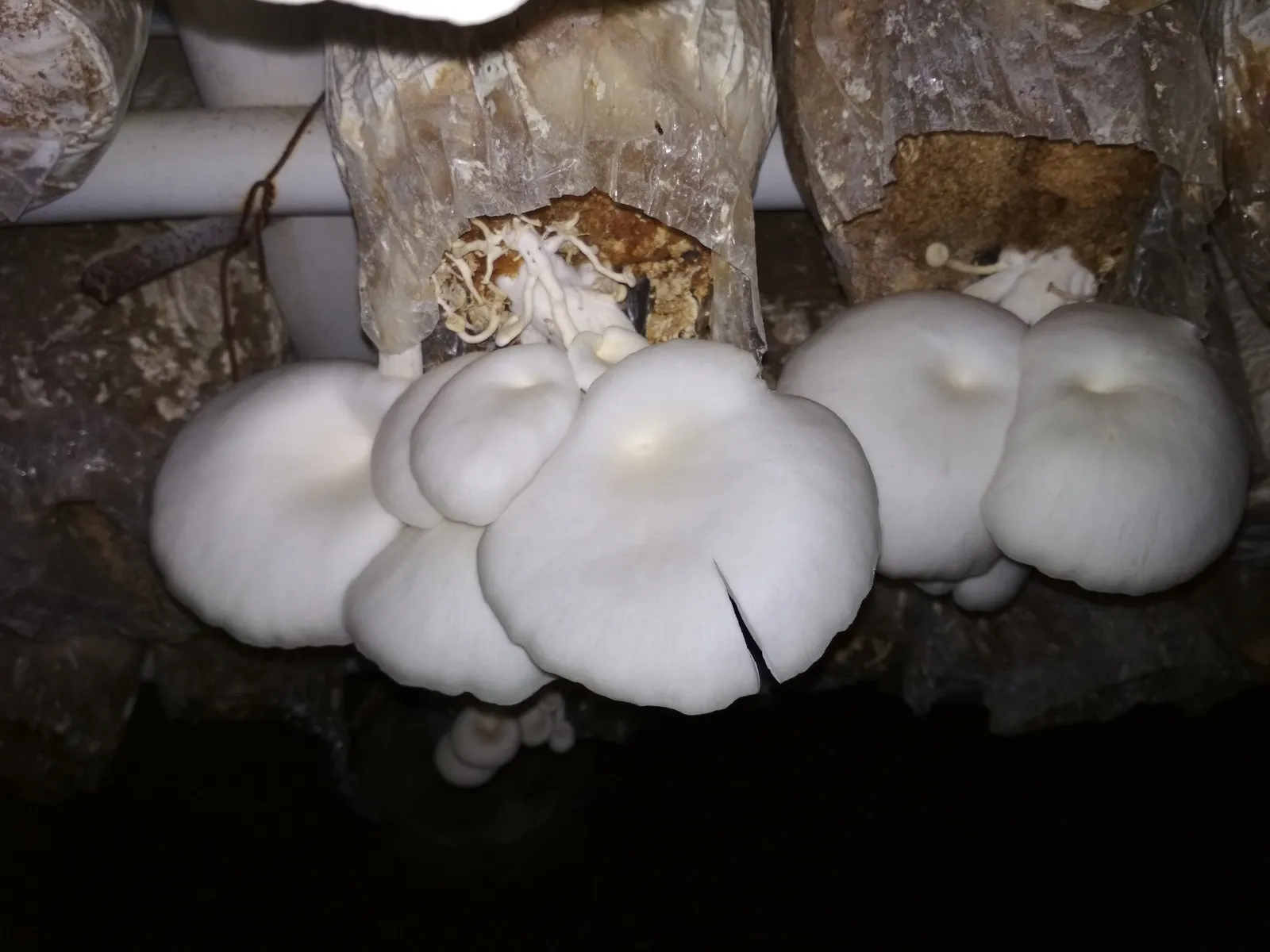
A cluster of white oyster mushrooms fruiting from the mouth of a sawdust baglog at a commercial oyster-mushroom unit, Indonesia.
Real cultivation photograph. Read its source for location and context; it is not a universal operating specification.CatatanLagitBiru · CC BY-SA 4.0View full photograph ↗
On this pageChoose a section, or keep reading below

Read this in the full guide: Understand the whole Oyster mushroom bag cycle

Understand the topic

Start with the explanation.

Scale substrate processing, clean flow, incubation, fruiting, harvest and cooling as one species-specific facility. This topic belongs to a Pleurotus substrate-bag or validated block system. The species or strain, substrate treatment and fruiting-air context must travel together.

Part 01

Why this stage matters

Scale substrate processing, clean flow, incubation, fruiting, harvest and cooling as one species-specific facility.

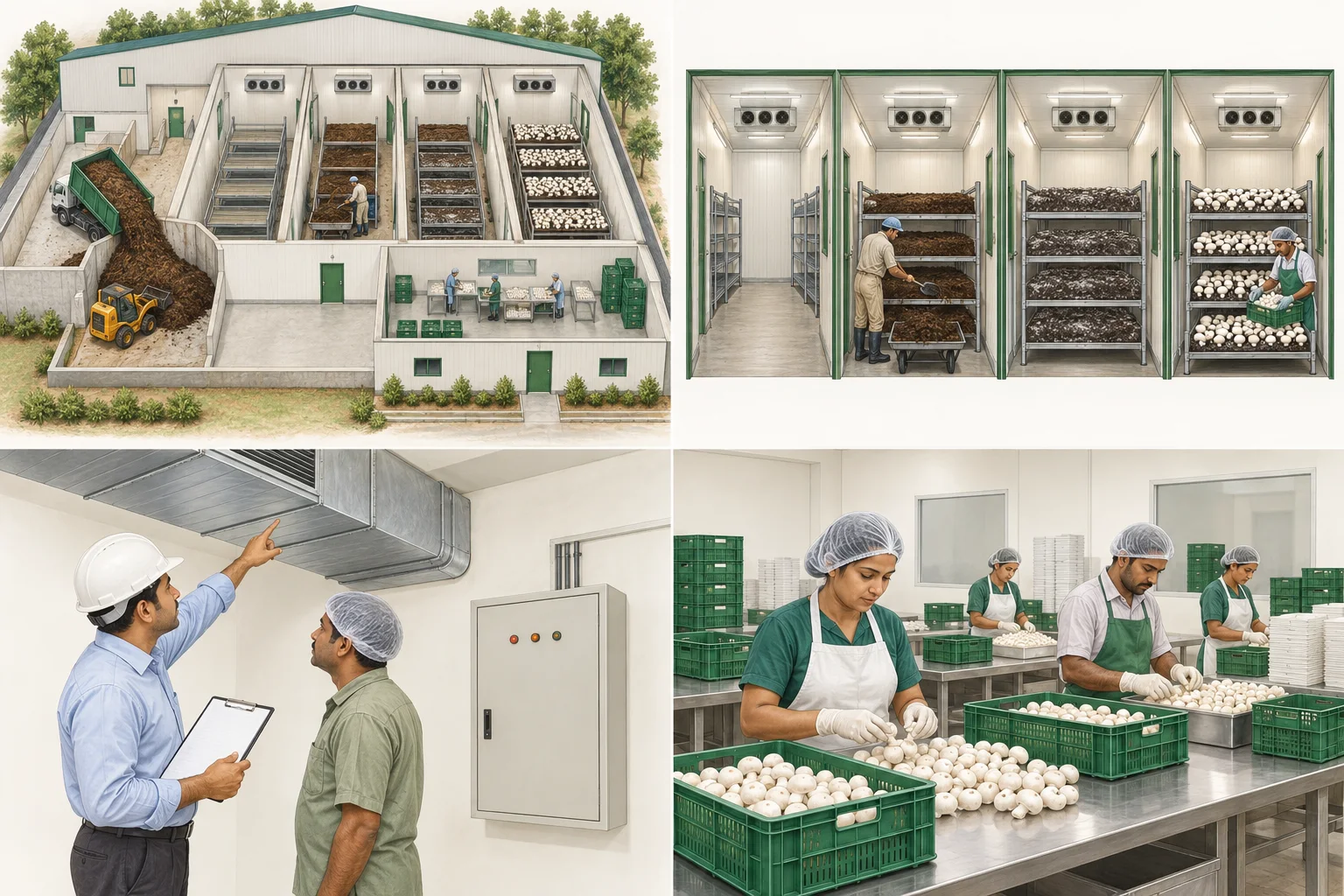
Conceptual commercial mushroom farm cutaway with separate growing and handling areas.
AI teaching illustrationSee the whole operation

Receiving, growing, packing and dispatch need coordinated space. Capacity is a whole-farm outcome, not just the number of racks.

Conceptual explanation—not a real farm photograph, diagnostic finding or construction specification.
Part 02

Method boundary

This topic belongs to a Pleurotus substrate-bag or validated block system. The species or strain, substrate treatment and fruiting-air context must travel together.

  • Confirm the culture as Pleurotus spp., with strain or variety recorded where available.
  • Confirm one method: straw bag or validated lignocellulosic bag or block.
  • Record substrate source, treatment class, batch and contamination observations.
Part 03

Validate before investment

Model batch size, process capacity, room count, labour, rejection, post-harvest loss, sell-through and capital cost with local evidence. Online product price is not a profit forecast.

Part 04

Evidence status

The page publishes process relationships supported by primary institutional sources. Numeric recipes remain absent where source context, strain identity or specialist review is incomplete.

Illustration of workers grading mushrooms in a clean commercial packing room.
AI teaching illustrationTrain the operation

People, food handling and buyer specifications complete the system. Installed racks alone do not demonstrate a working enterprise.

Conceptual explanation—not a real farm photograph, diagnostic finding or construction specification.

Go deeper

Technical reference, records and tools.

Detailed crop-stage information, parameters, diagrams and specialist tools are kept together below. This material retains its source conditions and review limits.

Open the complete technical reference

oyster · commercial

Commercial oyster mushroom farming

Scale substrate processing, clean flow, incubation, fruiting, harvest and cooling as one species-specific facility. Evidence, method and India-context boundaries remain visible.

Publication
Editorial review in progress
Evidence records
5
External review
Not yet recorded
Wild ID
Not provided
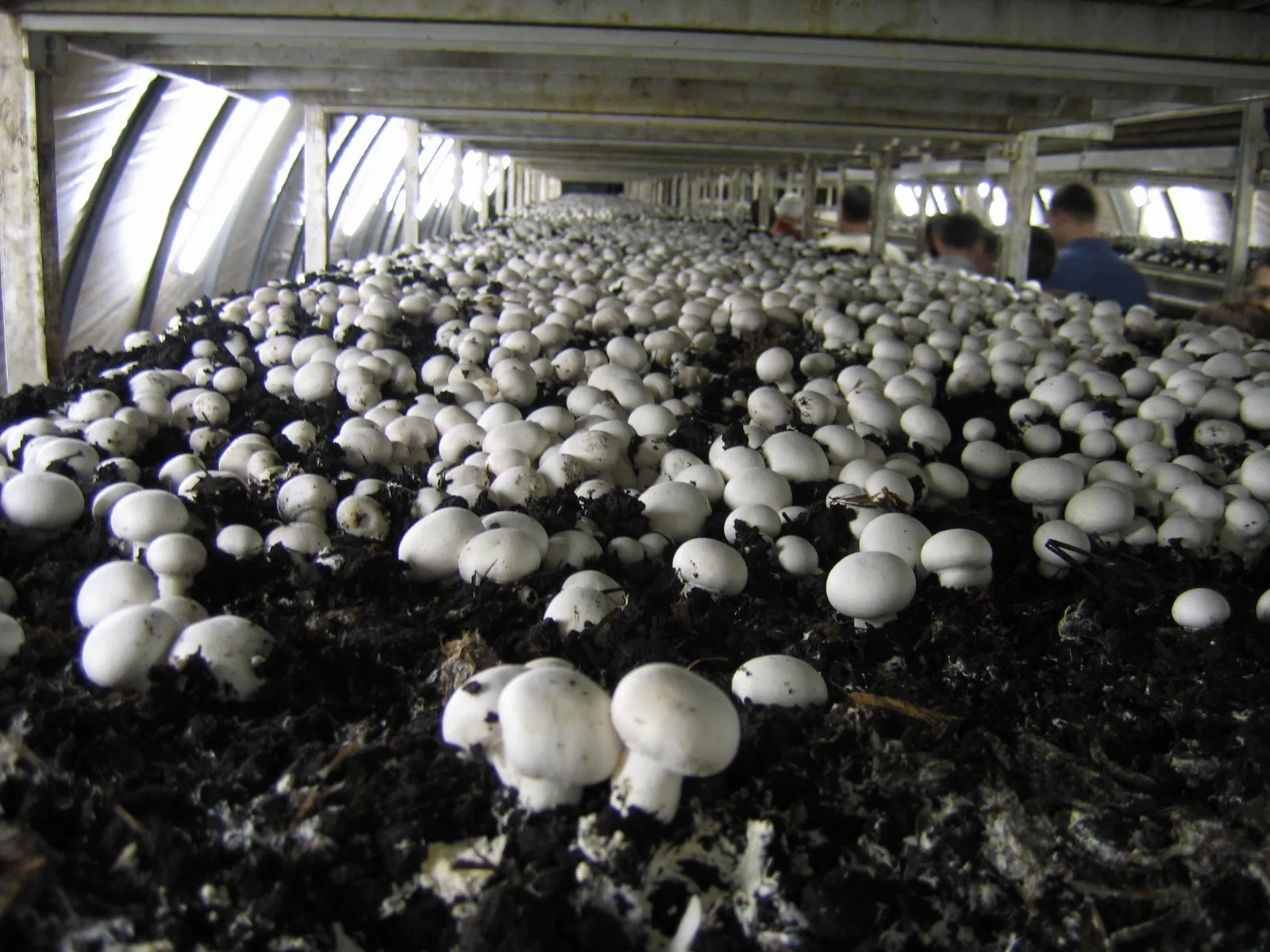
White button mushrooms on casing soil in long shelf beds inside a commercial cropping room near Eger, Hungary.
Button mushrooms on casing in long shelf beds inside a grow room (Hungary). Photo: Andrew Bossi, CC BY-SA 2.5. Source

Controlled room: how the air moves

Cooled, humid air drops from the overhead duct onto the beds, returns through the room, and 20 to 30 percent fresh air is mixed in. About 15 cm per second over the beds, 4 to 6 air changes an hour. Source: ICAR-DMR manual.

Perforated supply ductAHUcooling coilhumidifierreturnfresh air 20-30%
Supply airReturn airBeds

Quick orientation

Scale substrate processing, clean flow, incubation, fruiting, harvest and cooling as one species-specific facility. This topic belongs to a Pleurotus substrate-bag or validated block system. The species or strain, substrate treatment and fruiting-air context must travel together.

01

Why this stage matters

Scale substrate processing, clean flow, incubation, fruiting, harvest and cooling as one species-specific facility.

02

Method boundary

This topic belongs to a Pleurotus substrate-bag or validated block system. The species or strain, substrate treatment and fruiting-air context must travel together.

  • Confirm the culture as Pleurotus spp., with strain or variety recorded where available.
  • Confirm one method: straw bag or validated lignocellulosic bag or block.
  • Record substrate source, treatment class, batch and contamination observations.
03

Validate before investment

Model batch size, process capacity, room count, labour, rejection, post-harvest loss, sell-through and capital cost with local evidence. Online product price is not a profit forecast.

04

Evidence status

The page publishes process relationships supported by primary institutional sources. Numeric recipes remain absent where source context, strain identity or specialist review is incomplete.

Production method records

One species can require more than one cultivation model.

OYS-STRAW-BAG

Treated straw bag system

Substrate
clean cereal straw with method evidence
Container
perforated or opened cultivation bag
Treatment
Pasteurization-class treatment or another validated method; not interchangeable with sterilization.
Scale context
home trial to commercial batch, with different hygiene and climate responsibilities
  1. Material check
  2. Treatment
  3. Cooling and moisture check
  4. Spawning
  5. Spawn run
  6. Fruiting transition
  7. Cluster harvest

Trace the boundary

Evidence and limitations

institutional · tier AResearch programmes

Current institutional scope for cultivated and specialty mushroom research in India.

Research scope does not by itself establish a farm recommendation, commercial readiness or strain-specific operating range.

Open primary source
technical-bulletin · tier ATechnologies developed by ICAR-DMR

Institutional method history for oyster, milky, paddy straw, shiitake and selected specialty mushrooms.

Method descriptions are context-specific and contain numeric and broad substrate statements that require independent technical review before operational publication.

Open primary source
current-advisory · tier ACurrent crop advisory

Time-stamped Indian seasonal crop context and the need to choose oyster species for conditions.

Chemical directions are excluded from this platform unless a current label and jurisdiction are independently verified.

Open primary source
technical-bulletin · tier AOyster mushroom cultivation FAQ

Indian institutional distinction between warm- and cool-fruiting Pleurotus species, plus an occupational spore-exposure warning.

The species bands are source context, not a strain guarantee. Generic yield, storage and legacy chemical statements are not carried into operational guidance.

Open primary source
technical-bulletin · tier APost-harvest technology of mushrooms

Species-specific post-harvest deterioration patterns and handling context.

Historic shelf-life statements depend on maturity, handling, packaging and storage conditions and are not reproduced as guarantees.

Open primary source

Read the evidence

Sources & review.

Editorial update: 2026-09-03. Independent technical review is not recorded for this entry.

  1. Research programmes

    ICAR Directorate of Mushroom Research

  2. Technologies developed by ICAR-DMR

    ICAR Directorate of Mushroom Research · 2020

  3. Current crop advisory

    ICAR Directorate of Mushroom Research · 2026

  4. Oyster mushroom cultivation FAQ

    ICAR Directorate of Mushroom Research

  5. Post-harvest technology of mushrooms

    ICAR Directorate of Mushroom Research

Reading a source is not the same as applying its instructions to every farm. Confirm species, strain, crop stage, system, region and publication date. Old chemical recommendations are not current-use instructions.

See something that needs correcting? Tell us →