


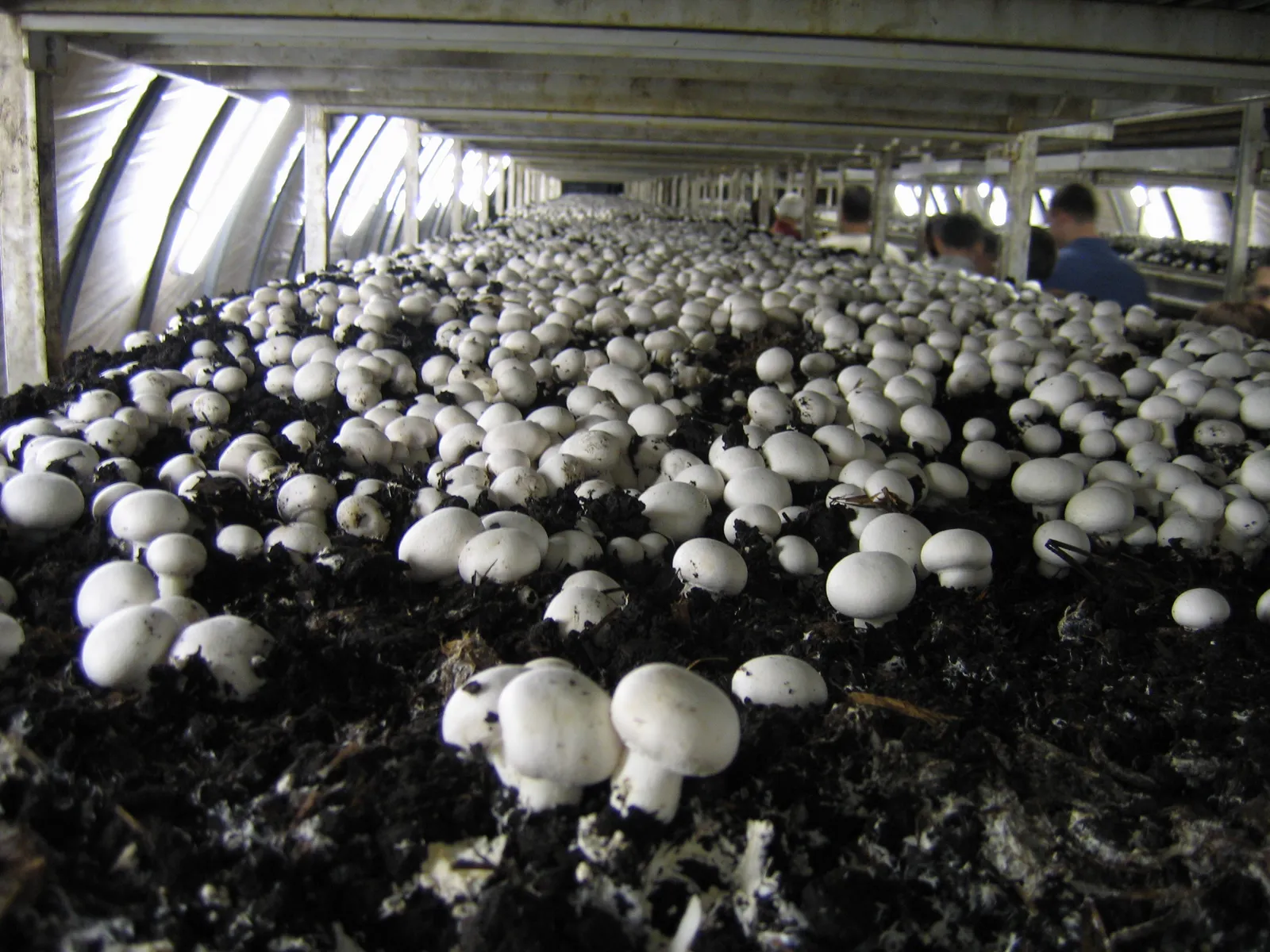
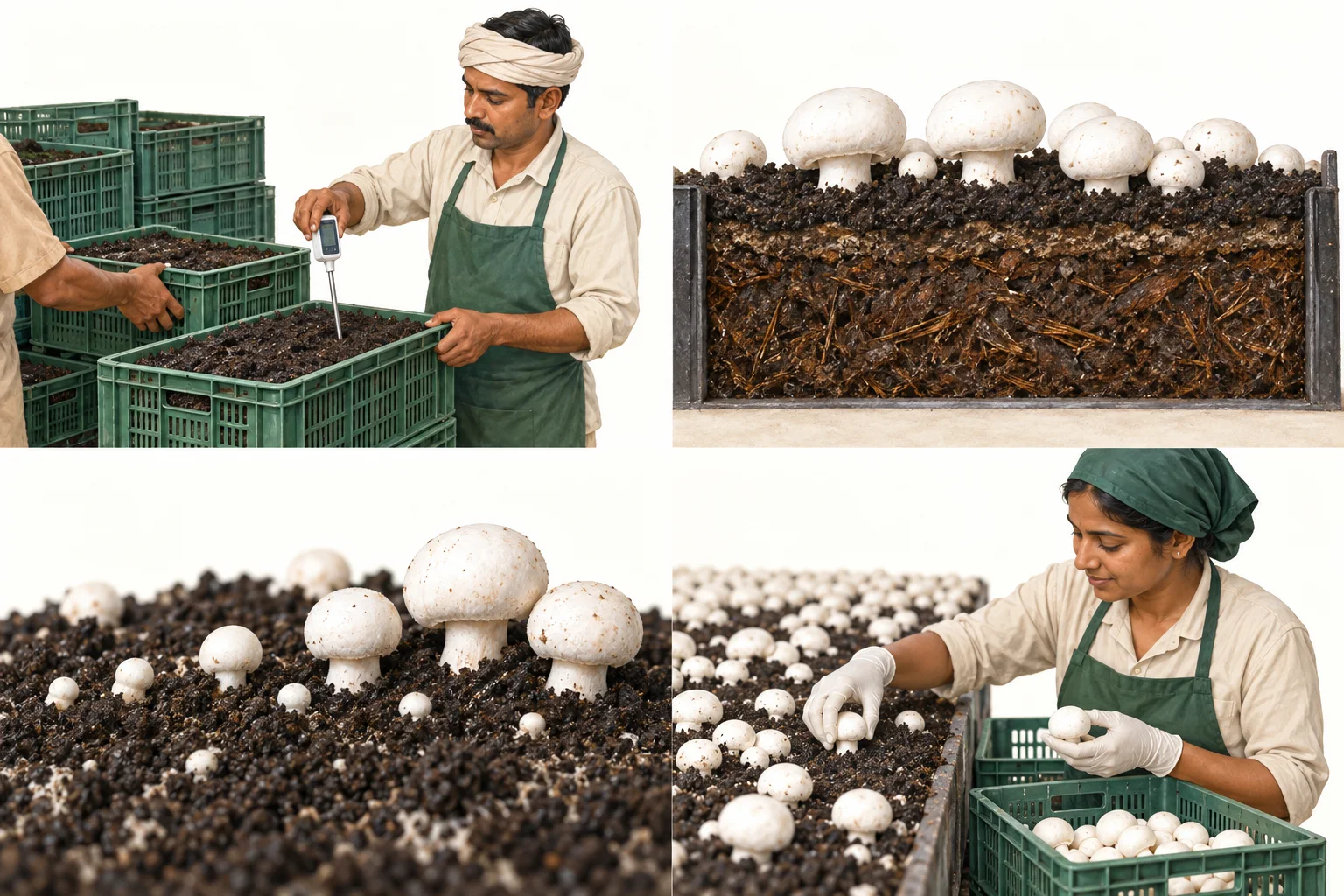
Quick orientation
Troubleshooting begins with a precise observation and a map. The engine organises possible categories and discriminating checks, while keeping disease identification and high-risk action behind a qualified-review boundary.
PracticalWhat to notice in the room
- What changed
- Where it appears
- When it began
- What process, climate or handling event preceded it
TechnicalHow the interacting system is interpreted
- Crop logs
- Sensor confidence
- Material traceability
- Photographic record
- Expert or laboratory access
ResearchWhich evidence records govern this page
- ICAR-DMR-SERVICES
- ICAR-DMR-TECH-BULLETINS
- ICAR-DMR-CULTIVATION-MANUAL
Begin with the pattern you can observe.
This tool organises checks. It does not identify a pathogen or prescribe treatment.
Selected observation
Uneven pinning
Possible categories
- Casing condition
- Water distribution
- Air distribution
- Temperature history
- Crop-surface evaporation
Discriminating checks
- Map the pattern before changing a setting
- Compare casing depth and moisture across affected and unaffected zones
- Compare crop-zone air and temperature history
- Review the timing of watering and climate transitions
Uneven pinning
Observe- Pins cluster in particular rack zones
- Development differs between edges and centres
- The pattern repeats near air or water paths
Checks and prevention
Discriminating checks
- Map the pattern before changing a setting
- Compare casing depth and moisture across affected and unaffected zones
- Compare crop-zone air and temperature history
- Review the timing of watering and climate transitions
Prevention principles
- Verify uniform application and room distribution
- Use mapped observations rather than a single centre-room reading
- Review the complete transition into pinning
Long stipes or weak cap development
Observe- Stem extension is disproportionate to cap development
- The pattern may be room-wide or local
- Timing may align with crop-load or ventilation changes
Checks and prevention
Discriminating checks
- Confirm sensor calibration and placement
- Map readings and morphology by rack zone
- Review fresh-air and recirculation behaviour under crop load
- Compare with unaffected rooms or flushes without assuming one cause
Prevention principles
- Commission airflow with the room loaded
- Maintain traceable crop and climate logs
- Review transitions by stage and flush
Persistent surface wetness or condensation
Observe- Free water remains on the casing or mushrooms
- Condensation appears on cold surfaces
- Wetness is local to particular walls, ducts or rack zones
Checks and prevention
Discriminating checks
- Distinguish applied water from condensation
- Compare surface and air conditions over time
- Inspect local air paths and cold surfaces
- Review door, cooling and humidification events
Prevention principles
- Manage surfaces and air as one moisture system
- Calibrate watering delivery
- Maintain cleanable drainage and envelope details
Dry bubble
Observe- Abnormal tissue or malformed fruit bodies require expert differentiation
- Distribution and progression matter
- Water injury and other disorders may be confused with disease
Checks and prevention
Discriminating checks
- Isolate representative observations
- Record the first affected locations and movement pattern
- Use qualified diagnosis or laboratory support
- Review hygiene, picking and water pathways
Prevention principles
- Clean-to-dirty work sequence
- Tool and personnel hygiene
- Rapid removal under an approved farm procedure
- Verified casing and room sanitation systems
Green mould complex
Observe- Green sporulation is a late visual clue, not a complete species diagnosis
- The point of first appearance may indicate a process pathway
- Affected patches can follow material, water or handling routes
Checks and prevention
Discriminating checks
- Record colour change before disturbance
- Map affected zones and batch links
- Retain traceability for compost, spawn and casing
- Seek laboratory identification when action depends on species
Prevention principles
- Process verification
- Clean material handling
- Room emptying and sanitation
- Batch-level traceability
Sciarid flies
Observe- Adult catches require identification and trend context
- Larval damage may overlap with disease or poor crop development
- Entry and breeding routes should be investigated
Checks and prevention
Discriminating checks
- Use mapped monitoring traps
- Inspect entry points, drains and material flow
- Compare catches with crop stage and room events
- Confirm identification before management
Prevention principles
- Exclusion
- Monitoring
- Waste discipline
- Hygiene zoning and verified sanitation
Evidence and review record3 mapped sources
Sources support the page architecture and conceptual guidance. Technical values remain governed separately in the Button registry.
Technical and diagnostic services
Official scope for compost and casing tests, crop protection diagnosis, farm design and crop-management support.
- Accessed
- 2026-08-22
- Publisher
- ICAR-Directorate of Mushroom Research
Technical Bulletins
Official index for crop protection, post-harvest, farm design, spawn and developed technologies.
- Accessed
- 2026-08-22
- Publisher
- ICAR-Directorate of Mushroom Research
Mushroom Cultivation, Marketing and Consumption
Broad cultivation, post-harvest and market context. Values are not promoted without page-level review.
- Accessed
- 2026-08-22
- Publisher
- ICAR-Directorate of Mushroom Research