
A practical guide to growing mushrooms in IndiaA joint educational initiative by MushroomWale & DMR Solan
MushroomFarming.in

A joint educational initiative by

MushroomWale.com
ICAR–Directorate of Mushroom Research, Solan logoICAR–DMRSolan

Read · Observe · Practise · Check

Oyster mushrooms: understand the whole bag cycle

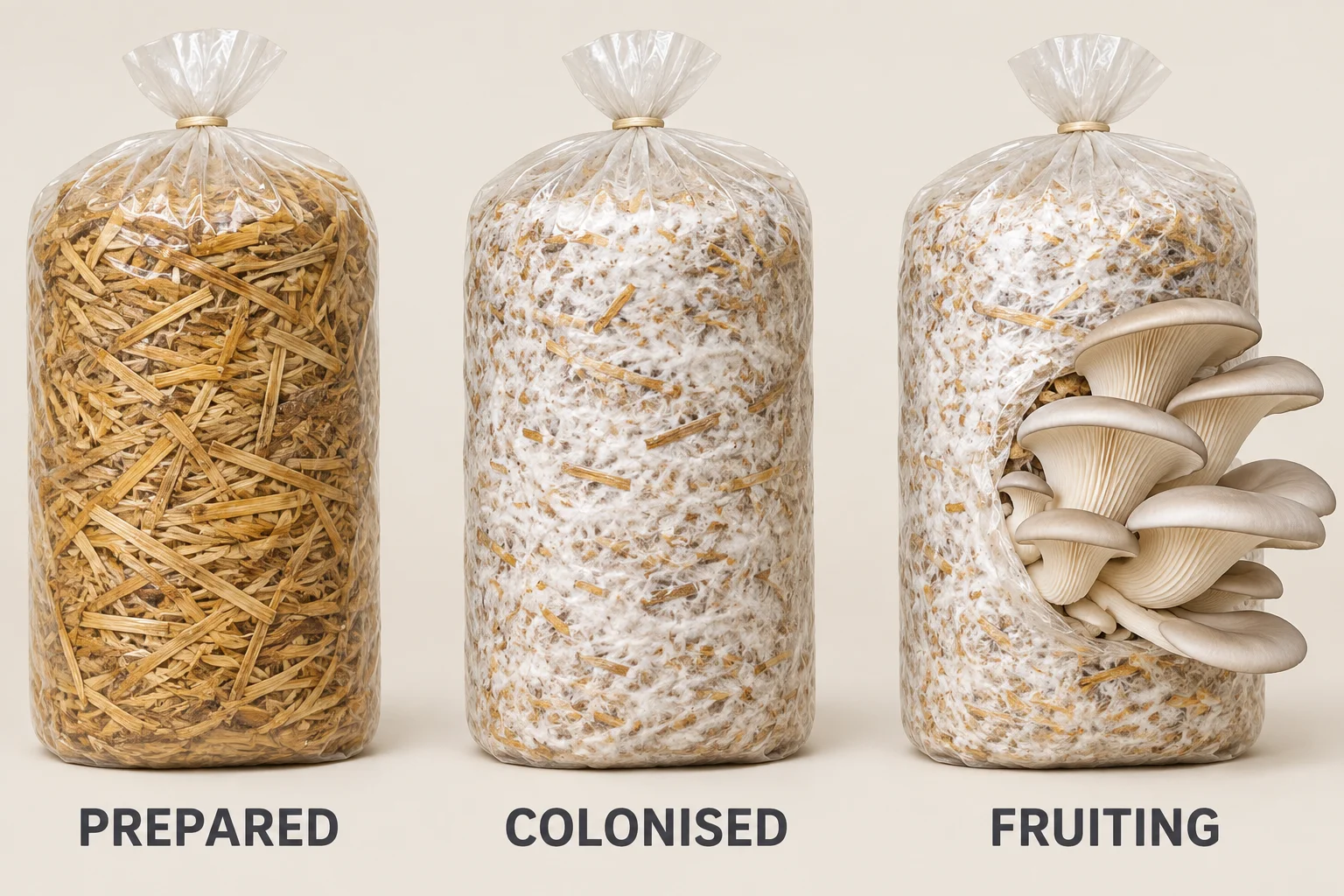
Choose the exact Pleurotus species and method, then connect substrate preparation, inoculation, bag development and harvesting. The three pictured stages explain a sequence, not a fixed number of days.

Begin the walkthrough ↓
Generated comparison labelled prepared, colonised and fruiting, showing three stages of an oyster growing bag.
AI-generated teaching illustrationA conceptual stage sequence, not three guaranteed dates or a visual test for healthy mycelium. Use the applicable species, strain and bag method.

Before you begin

  • Species/strain identity and applicable supplier protocol
  • One chosen substrate-treatment and bag method
  • Clean work area, batch labels and buyer specification

Use the linked crop and technical lessons for method-specific detail. Practical work involving chemicals, pressure, electrical equipment or uncertain crop health requires competent supervision; illustrations are not operating specifications.

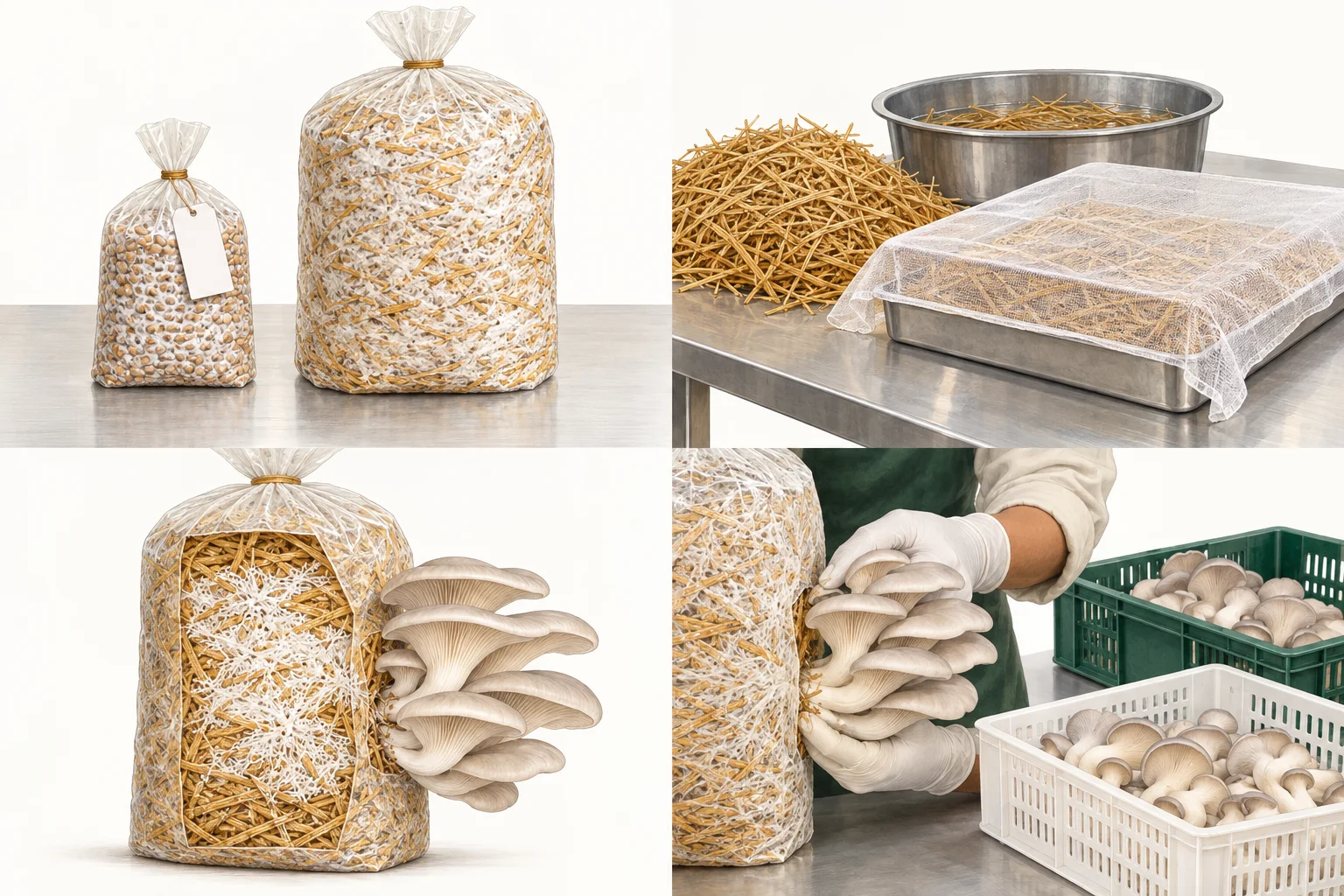
Illustration comparing purchased spawn and a colonised Oyster growing bag.

Conceptual AI teaching scene

Stage 1

Choose the starting product

Buying spawn means you will prepare and inoculate growing material. Buying colonised blocks transfers some of that work to the supplier. Compare the work and risk remaining on your farm, not just the price per kilogram.

Put it into practice
Write the supplied stage and every remaining operation beside each quotation.
Check your work
The chosen method matches your skills, space, time and available equipment.
Illustration of straw preparation and protected cooling containers.

Conceptual AI teaching scene

Stage 2

Protect material after treatment

Preparation, treatment, draining or moisture adjustment, cooling and inoculation are connected operations. A treated batch can be compromised by dirty handling afterwards. Do not blend treatment times from one system with loading conditions from another.

Put it into practice
Draw raw and prepared-material routes. Use the complete chosen protocol and retain its batch record.
Check your work
The prepared material has a protected handling route and the batch can be traced.
Educational cutaway of an Oyster bag with mycelium in straw and fan-shaped clusters at an opening.

Conceptual AI teaching scene

Stage 3

Observe colonisation before fruiting

The white growth shown in the illustration represents the intended cultivated mycelium. In a real bag, colour alone does not establish identity or readiness. Read development, distribution and abnormalities using the specific method.

Put it into practice
Compare marked bags from the same batch over time. Record the fruiting operation and subsequent response.
Check your work
Opening decisions are based on the protocol and observed readiness, not a universal calendar.
Illustration of Oyster mushroom clusters harvested into clean grading containers.

Conceptual AI teaching scene

Stage 4

Harvest for the buyer

Oyster clusters need gentle handling and suitable clean containers. Harvest timing, accepted size and packing depend on the buyer and method. Record a complete batch rather than multiplying the best bag by all bags.

Put it into practice
Weigh harvested, accepted, downgraded and unsold quantities separately. Match each delivery to its batch.
Check your work
The crop account includes failures and the buyer can trace a delivery.

Common mistakes—and the better question

All oyster species suit the same room
Confirm species and strain before applying environmental guidance.
Holes guarantee a safe bag temperature
Opening pattern is not a substitute for measuring the crop.

A task to complete, not just a page to read

Read three bags without guessing

For three marked bags, record the supplied stage, observations, next permitted operation and evidence still missing. Use photographs without opening suspect material.

Bring back this evidence

A bag-development sheet and one complete harvest reconciliation.

Completing this self-guided task is not verification of practical competence. Review it with a suitable instructor before relying on it for farm operation.

Study the detailed lessons in order

Oyster Mushroom Grower. Every lesson keeps its explanations, practical exercise, mistakes and self-checks.

  1. Species SelectionChoose an Oyster production context before applying process guidance.
  2. Substrate & PreparationMap material, preparation method and contamination controls.
  3. Bag Preparation & Spawn RunObserve colonisation and bag conditions.
  4. Fruiting EnvironmentInterpret fresh air, CO₂, distribution, humidity and light together.
  5. Harvest, Problems & BusinessLink saleable quality and realised market outcomes to the actual system.

Keep the field guidance beside the lesson

Open the main subject guide →Oyster substrate preparationOyster spawn runOyster mushroom climateOyster mushroom harvest

Sources, scope and review

Editorial learning material; no independent technical review is claimed. The tasks are original teaching exercises. Source-specific numerical schedules remain in the detailed lessons with their context, rather than being turned into universal instructions here.