


A practical guide to growing mushrooms in IndiaA joint educational initiative by MushroomWale & DMR Solan
MushroomFarming.in

A joint educational initiative by

MushroomWale.com
ICAR–Directorate of Mushroom Research, Solan logoICAR–DMRSolan

Read · Observe · Practise · Check

Milky mushrooms: substrate, casing and crop development

Understand why a milky mushroom crop includes a separate casing operation. Keep preparation, colonisation, casing and fruiting in the right order instead of applying an oyster method unchanged.

Begin the walkthrough ↓
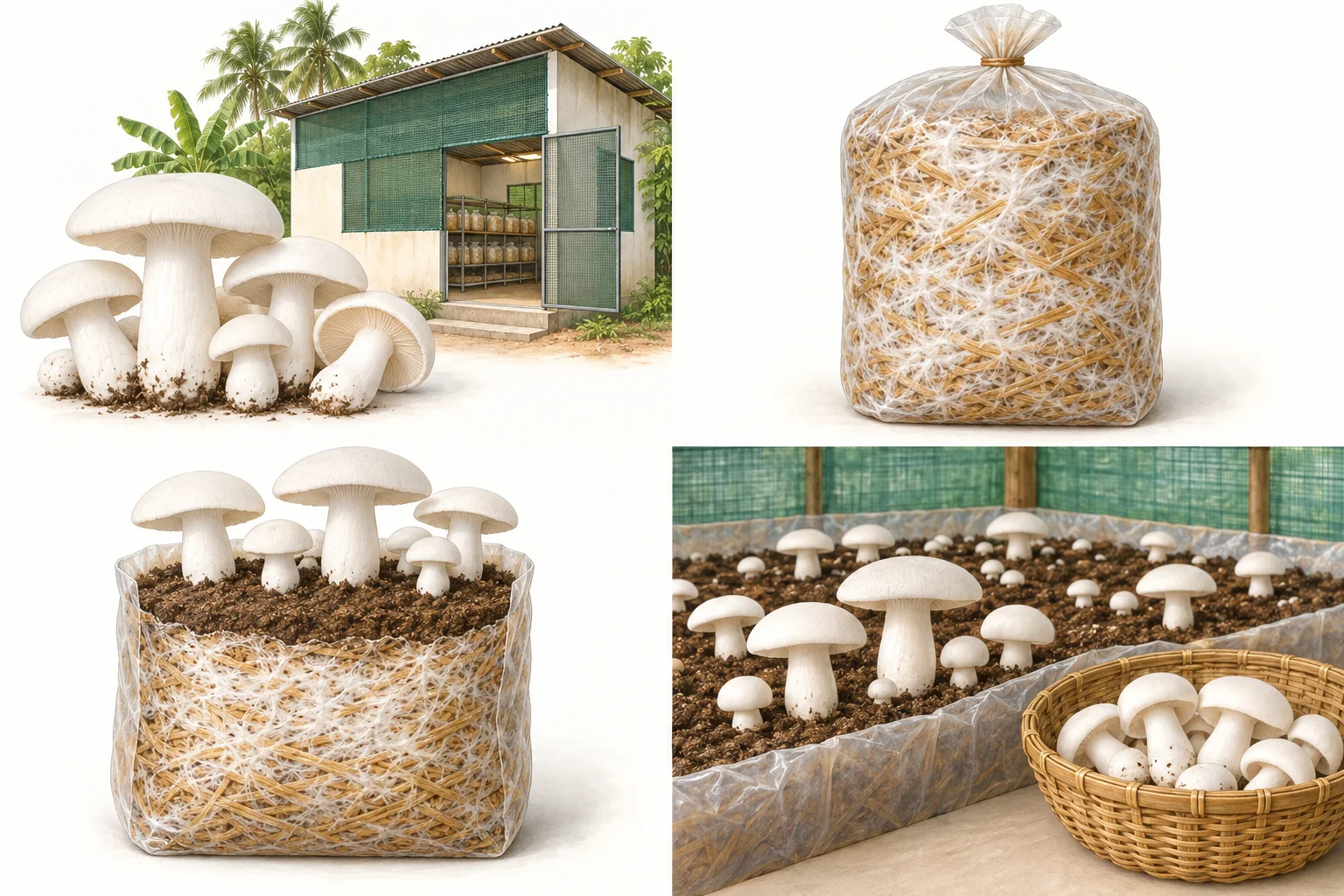
Illustration of robust white Milky mushrooms and a shaded growing-room setting.
AI-generated teaching illustrationConceptual learning scene, not a diagnostic photograph or construction specification.

Before you begin

  • Confirmed Calocybe indica strain and applicable method
  • Separate substrate and casing lot records
  • Stage-specific room observations and clean handling arrangements

Use the linked crop and technical lessons for method-specific detail. Practical work involving chemicals, pressure, electrical equipment or uncertain crop health requires competent supervision; illustrations are not operating specifications.

Illustration of robust white Milky mushrooms and a shaded growing-room setting.

Conceptual AI teaching scene

Stage 1

Match the method to the room

A warm-climate description is not permission to ignore measured conditions. Identify the strain, intended production period and buyer specification. The crop still needs stage-appropriate care and reliable daily attendance.

Put it into practice
Compare the method’s requirements with recorded conditions in the actual growing space.
Check your work
The choice is supported by room and buyer evidence, not only a regional climate label.
Educational cutaway of a colonised straw bag before fruiting.

Conceptual AI teaching scene

Stage 2

Check the substrate stage

Substrate preparation and protected inoculation establish the batch. Later observations should identify uneven or stalled development before the next operation hides the substrate beneath another layer.

Put it into practice
Keep treatment, inoculation and observation dates together. Compare representative bags from the same batch.
Check your work
The casing decision uses the chosen readiness criteria and unresolved bags are not silently mixed with the rest.
Educational Milky mushroom bag cross-section showing substrate below casing and upright fruit bodies.

Conceptual AI teaching scene

Stage 3

Treat casing as its own operation

Casing has a different job from the food-bearing substrate. Its preparation, structure, application and watering history need separate attention. A room humidity reading cannot substitute for observing the casing.

Put it into practice
Record casing material and preparation, lot, application and subsequent water management.
Check your work
The team can trace a casing-related difference separately from a substrate-batch difference.
Illustration of developing and mature Milky mushrooms beside a clean harvest basket.

Conceptual AI teaching scene

Stage 4

Compare development and harvest

Follow marked bags from casing through visible development and picking. When development differs, compare material, room position and operations before assigning a cause. Marketable output, not the largest fruit body, determines the sales record.

Put it into practice
Record accepted weights and buyer feedback from each harvest. Review uneven areas with their earlier observations.
Check your work
The final review connects crop outcome to the records collected throughout the cycle.

Common mistakes—and the better question

Casing is simply more substrate
Study the casing lesson and keep its material record separate.
A fixed delay proves one cause
Investigate the full process and local conditions before deciding.

A task to complete, not just a page to read

Make a two-material batch record

Trace one substrate lot and one casing lot through several marked bags. Show how you would investigate a problem appearing only after casing.

Bring back this evidence

Linked substrate/casing records, photographs and a reasoned comparison.

Completing this self-guided task is not verification of practical competence. Review it with a suitable instructor before relying on it for farm operation.

Study the detailed lessons in order

Milky Mushroom Grower. Every lesson keeps its explanations, practical exercise, mistakes and self-checks.

  1. Warm-Climate ContextExplain why species and season context come first.
  2. Substrate & Spawn RunSequence substrate preparation and colonisation.
  3. Casing & Case DevelopmentTreat casing as a species-specific process stage.
  4. Light, Fruiting & HarvestObserve fruiting context and quality without borrowing Button rules.

Keep the field guidance beside the lesson

Open the main subject guide →Milky substrate preparationMilky mushroom casingMilky mushroom climate

Sources, scope and review

Editorial learning material; no independent technical review is claimed. The tasks are original teaching exercises. Source-specific numerical schedules remain in the detailed lessons with their context, rather than being turned into universal instructions here.