


A practical guide to growing mushrooms in IndiaA joint educational initiative by MushroomWale & DMR Solan
MushroomFarming.in

A joint educational initiative by

MushroomWale.com
ICAR–Directorate of Mushroom Research, Solan logoICAR–DMRSolan

Read · Observe · Practise · Check

Commercial room operation: manage a loaded room

Turn a room specification into daily operating evidence. The four operator lessons connect loading, stage transitions, room mapping and corrective decisions.

Begin the walkthrough ↓
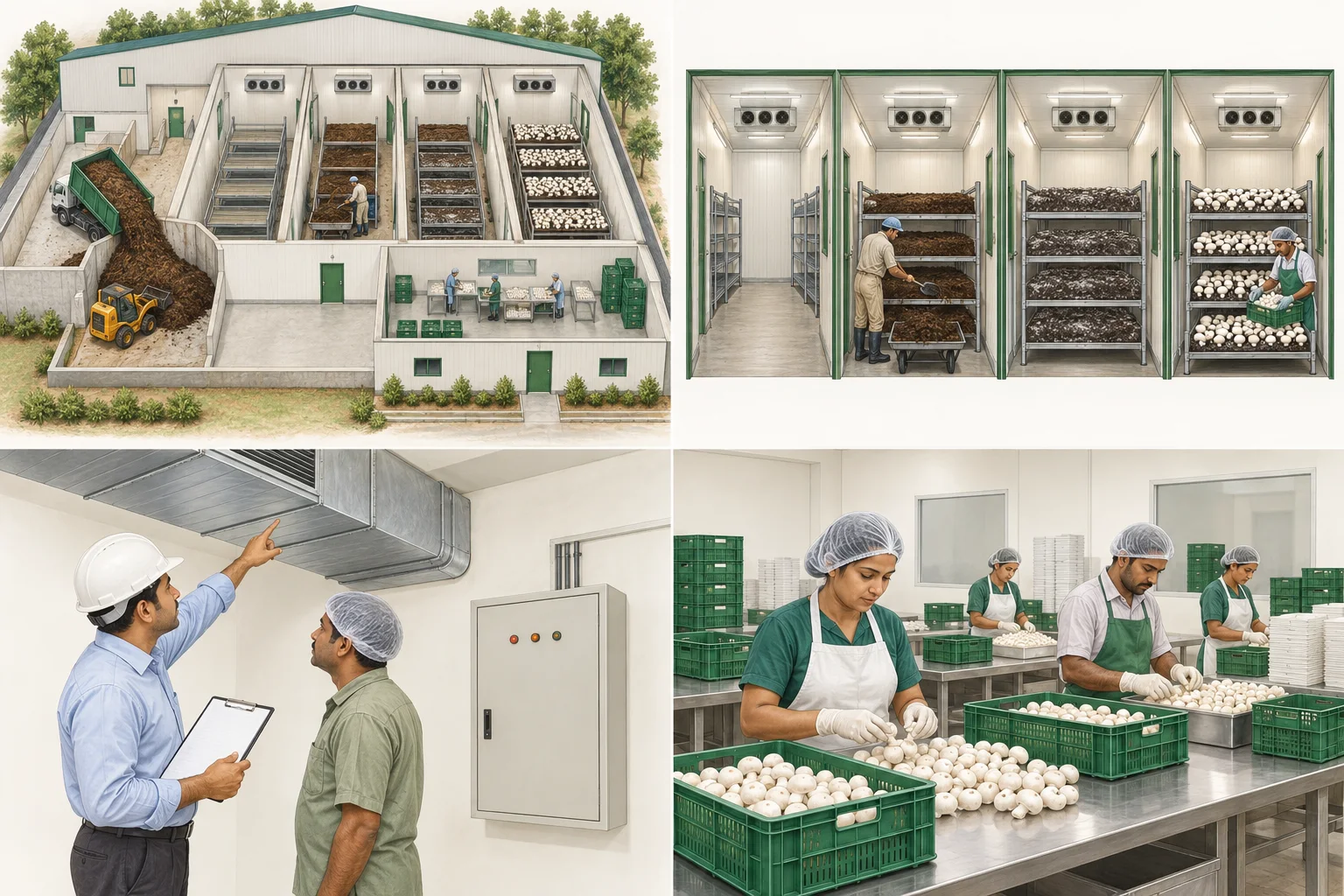
Conceptual commercial mushroom farm cutaway with separate growing and handling areas.
AI-generated teaching illustrationConceptual learning scene, not a diagnostic photograph or construction specification.

Before you begin

  • Room and rack identification plan
  • Approved loading and working-access plan
  • Crop-stage procedure, calibrated instruments and escalation contacts

Use the linked crop and technical lessons for method-specific detail. Practical work involving chemicals, pressure, electrical equipment or uncertain crop health requires competent supervision; illustrations are not operating specifications.

Conceptual commercial mushroom farm cutaway with separate growing and handling areas.

Conceptual AI teaching scene

Stage 1

Make loading reproducible

Record the supplied material stage, quantity and distribution. Working access and air paths are part of the loading plan. Two rooms with the same floor area may contain very different growing loads.

Put it into practice
Assign each rack and representative bed a location ID before filling. Record actual loading against the planned distribution.
Check your work
The operator can find every recorded measurement position and safely reach the crop.
Conceptual comparison of growing rooms at different operating stages.

Conceptual AI teaching scene

Stage 2

Hand over the stage

A stage transition needs crop observations as well as a controller change. Different shifts should use the same definitions of ready, hold and investigate.

Put it into practice
Write the crop observations, settings changed, time, responsible person and recheck requirement on one handover sheet.
Check your work
The next shift knows why the change was made and what response is expected.
Illustration of an engineer and grower inspecting air handling and closed controls.

Conceptual AI teaching scene

Stage 3

Map differences

Compare instruments at the same place before blaming a room zone. Then compare matched measurements across the loaded room, keeping air and growing-material readings distinct.

Put it into practice
Plot locations with time and measurement type. Add crop-response observations to the same map.
Check your work
A hot or slow zone is supported by repeatable evidence rather than one convenient reading.
Illustration of workers grading mushrooms in a clean commercial packing room.

Conceptual AI teaching scene

Stage 4

Review corrective action

Unexplained simultaneous changes can hide the cause. A corrective record should describe the problem, immediate safety response, authorised adjustment and follow-up result.

Put it into practice
Practise a shift handover after a hypothetical alarm without operating dangerous equipment.
Check your work
The record closes with a result or an explicit unresolved question.

Common mistakes—and the better question

Nameplate capacity proves crop performance
Use agreed loaded-room measurements.
The day shift’s memory is the operating record
Keep a shared, traceable handover.

A task to complete, not just a page to read

Run a simulated shift change

Give the next operator a crop map, one deviation and one pending recheck. Ask them to locate the problem and explain the next authorised action.

Bring back this evidence

A loading map, stage handover and corrective-action record.

Completing this self-guided task is not verification of practical competence. Review it with a suitable instructor before relying on it for farm operation.

Study the detailed lessons in order

Commercial Button Mushroom Operator. Every lesson keeps its explanations, practical exercise, mistakes and self-checks.

  1. Room LoadingConnect loading pattern to air, crop and operating observations.
  2. Stage TransitionsDefend a transition from crop and measurement evidence.
  3. Room MappingFind spatial variation before assigning one room-wide value.
  4. Corrective DecisionsChoose the next safe measurement or containment action under uncertainty.

Keep the field guidance beside the lesson

Open the main subject guide →Environmental MeasurementEnvironment-First DiagnosticsProduction Room Commissioning

Sources, scope and review

Editorial learning material; no independent technical review is claimed. The tasks are original teaching exercises. Source-specific numerical schedules remain in the detailed lessons with their context, rather than being turned into universal instructions here.