

A practical guide to growing mushrooms in IndiaA joint educational initiative by MushroomWale & DMR Solan
MushroomFarming.in

A joint educational initiative by

MushroomWale.com
ICAR–Directorate of Mushroom Research, Solan logoICAR–DMRSolan

MushroomFarming / article

Shiitake carbon dioxide context

Use crop-load, distribution and morphology observations to interpret ventilation. Evidence, method and India-context boundaries remain visible.

Practical explanation + detailed referenceSources & review ↓
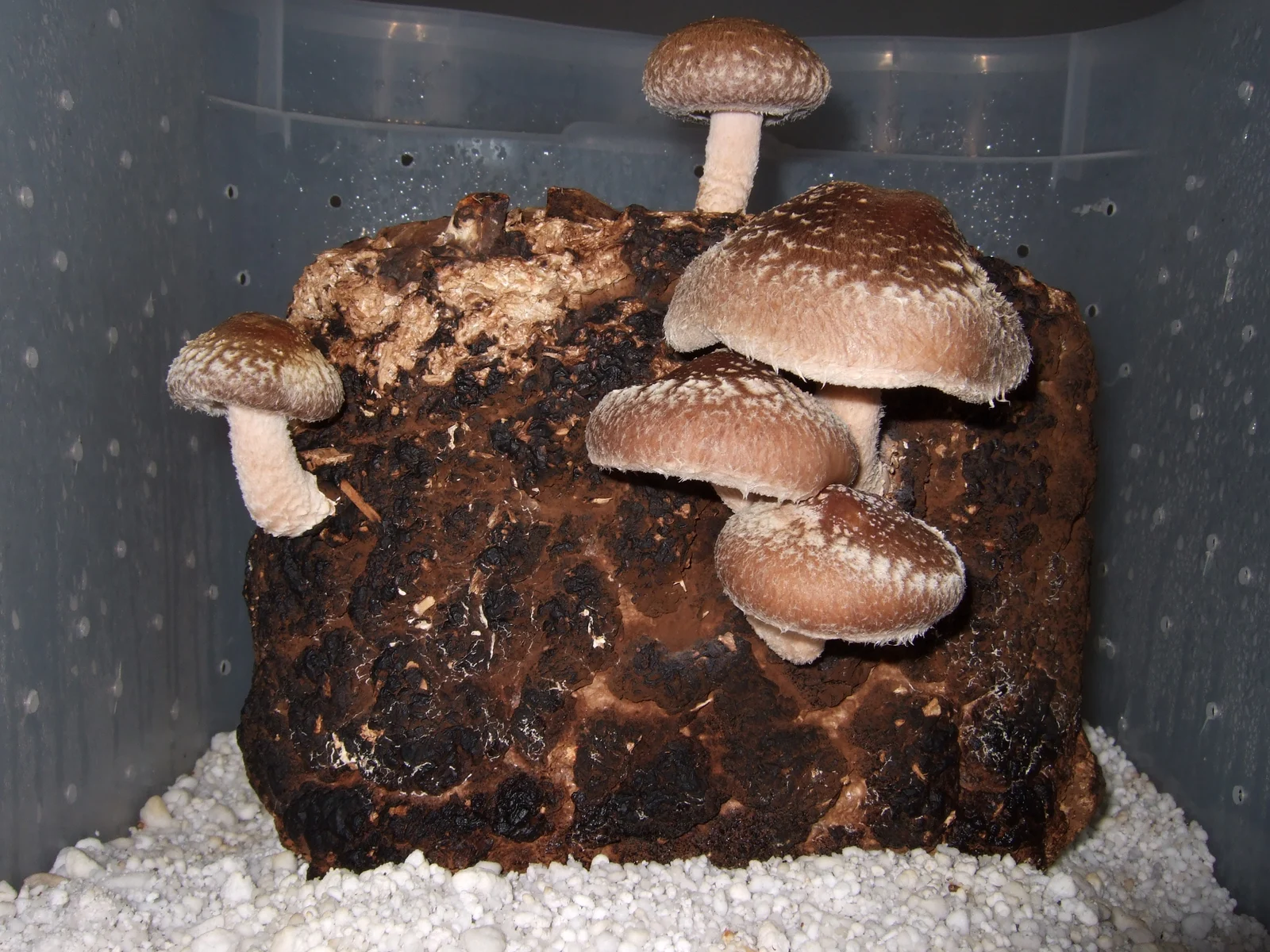
Brown shiitake mushrooms fruiting from a substrate block inside a perforated cultivation container.
Real cultivation photograph. Read its source for location and context; it is not a universal operating specification.frankenstoen · CC BY 2.0View full photograph ↗
On this pageChoose a section, or keep reading below

Read this in the full guide: Understand Shiitake block maturation before forcing a crop

Understand the topic

Start with the explanation.

Use crop-load, distribution and morphology observations to interpret ventilation. This topic keeps Lentinula edodes log and sterile sawdust-block methods separate, including their different incubation and maturation responsibilities.

Part 01

Why this stage matters

Use crop-load, distribution and morphology observations to interpret ventilation.

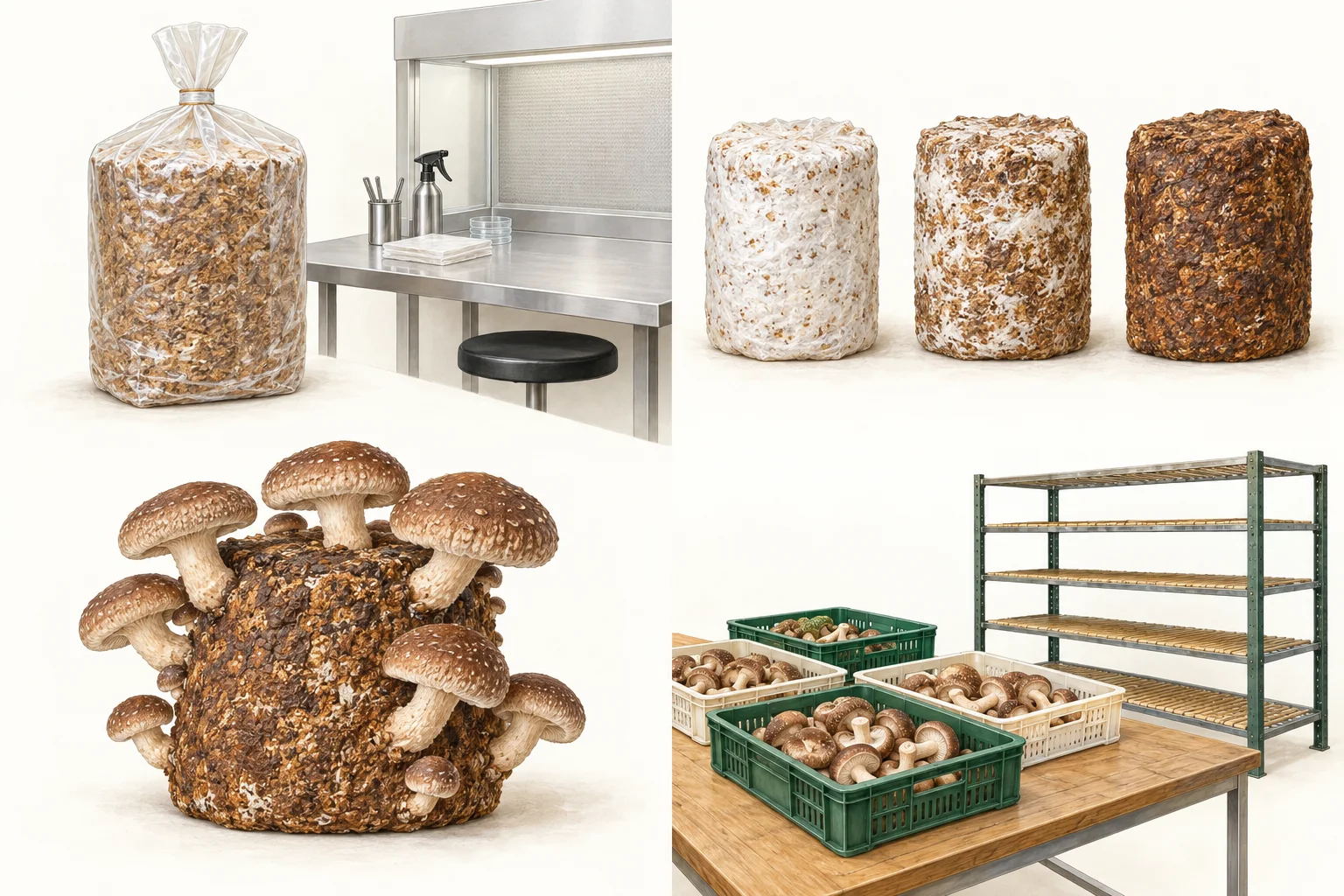
Illustration of a sealed wood-based cultivation block near a clean workbench.
AI teaching illustrationKnow the supplied block

A supplied block may still need incubation or maturation. The term ready block is too vague for a harvest schedule.

Conceptual explanation—not a real farm photograph, diagnostic finding or construction specification.
Part 02

Method boundary

This topic keeps Lentinula edodes log and sterile sawdust-block methods separate, including their different incubation and maturation responsibilities.

  • Confirm the culture as Lentinula edodes, with strain or variety recorded where available.
  • Confirm one method: natural log or sterilized sawdust block.
  • Record substrate source, treatment class, batch and contamination observations.
Part 03

Interpret the environment

Air temperature, substrate or block temperature, humidity, fresh air, light and crop response interact. A number without stage, strain, sensor position and source is not an operating instruction.

Part 04

Evidence status

The page publishes process relationships supported by primary institutional sources. Numeric recipes remain absent where source context, strain identity or specialist review is incomplete.

Illustration of fresh Shiitake grading with cultivation racks in the background.
AI teaching illustrationCount occupied space

Blocks occupy space before, during and between flushes. Total kilograms alone cannot describe annual room productivity.

Conceptual explanation—not a real farm photograph, diagnostic finding or construction specification.

Go deeper

Technical reference, records and tools.

Detailed crop-stage information, parameters, diagrams and specialist tools are kept together below. This material retains its source conditions and review limits.

Open the complete technical reference

shiitake · environment

Shiitake carbon dioxide context

Use crop-load, distribution and morphology observations to interpret ventilation. Evidence, method and India-context boundaries remain visible.

Publication
Editorial review in progress
Evidence records
4
External review
Not yet recorded
Wild ID
Not provided
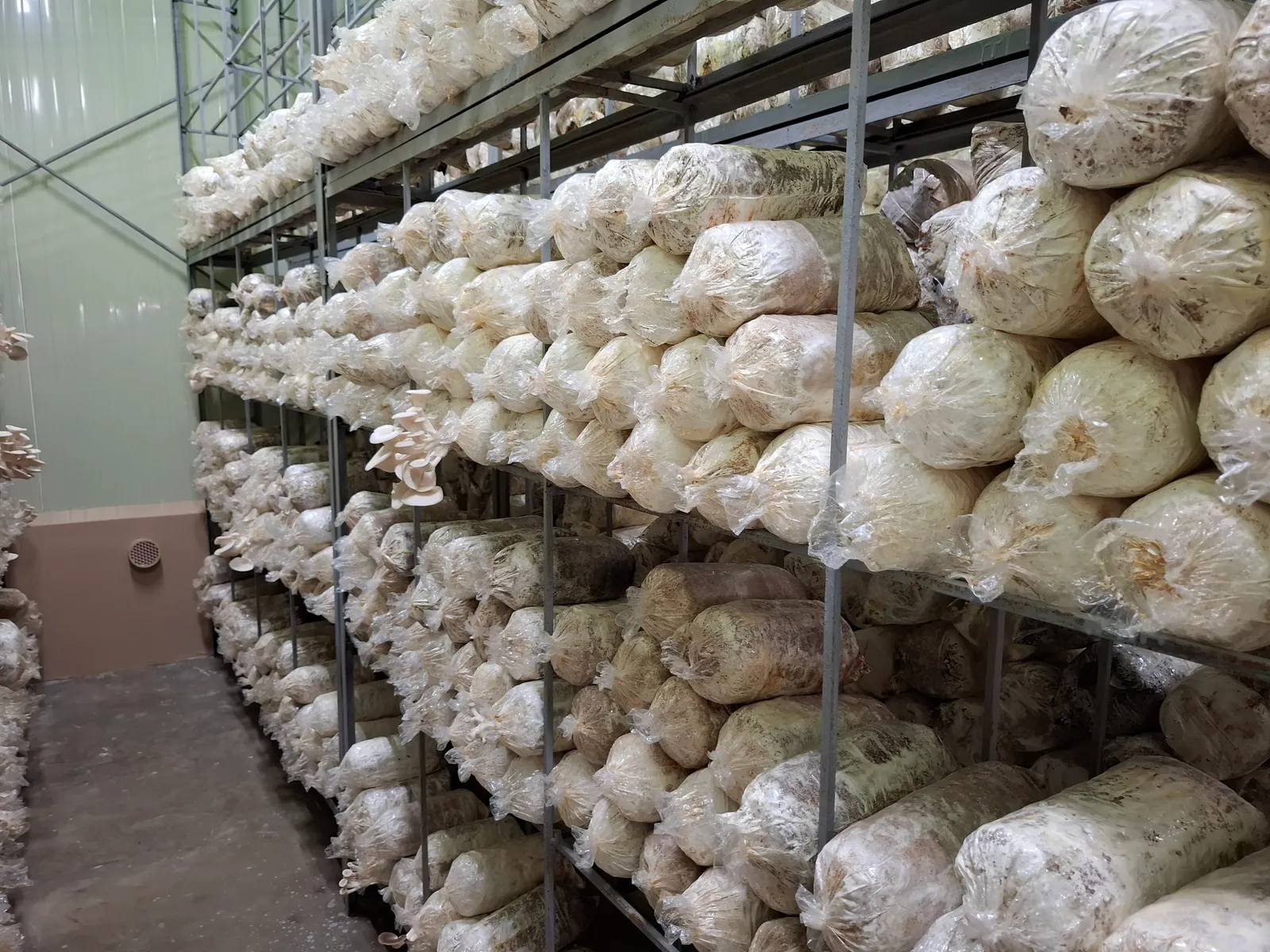
Long tiered metal racks packed with colonised oyster-mushroom fruiting bags inside a grow room, Bicol, Philippines.
Grow room with tiered racks of oyster-mushroom fruiting bags (Philippines). Photo: MarvinBikolano, CC BY-SA 4.0. Source

Room climate by crop stage

Source: ICAR-DMR manual

10°C15°C20°C25°C30°CSpawn run22-25°C85-95% RHCase run23-25°C90-95% RHPinning16-18°C85-90% RHCropping15-18°C80-85% RH
Temperature bandRelative humidity

Quick orientation

Use crop-load, distribution and morphology observations to interpret ventilation. This topic keeps Lentinula edodes log and sterile sawdust-block methods separate, including their different incubation and maturation responsibilities.

01

Why this stage matters

Use crop-load, distribution and morphology observations to interpret ventilation.

02

Method boundary

This topic keeps Lentinula edodes log and sterile sawdust-block methods separate, including their different incubation and maturation responsibilities.

  • Confirm the culture as Lentinula edodes, with strain or variety recorded where available.
  • Confirm one method: natural log or sterilized sawdust block.
  • Record substrate source, treatment class, batch and contamination observations.
03

Interpret the environment

Air temperature, substrate or block temperature, humidity, fresh air, light and crop response interact. A number without stage, strain, sensor position and source is not an operating instruction.

04

Evidence status

The page publishes process relationships supported by primary institutional sources. Numeric recipes remain absent where source context, strain identity or specialist review is incomplete.

Production method records

One species can require more than one cultivation model.

SHI-LOG

Natural log cultivation

Substrate
verified suitable hardwood logs
Container
intact log
Treatment
Log selection, conditioning and sanitation are method-specific; no block sterilization step is implied.
Scale context
long-cycle outdoor or protected system where suitable wood and climate are validated
  1. Tree and log suitability
  2. Log preparation
  3. Inoculation
  4. Seal and incubation
  5. Maturation
  6. Induction
  7. Fruiting
  8. Rest
SHI-BLOCK

Sterilized sawdust block

Substrate
formulated hardwood sawdust
Container
heat-compatible filtered cultivation bag
Treatment
Sterilization-class treatment inside a validated sterile workflow.
Scale context
controlled production with sterile-process capability
  1. Formulation
  2. Bagging
  3. Sterilization
  4. Aseptic inoculation
  5. Incubation
  6. Browning
  7. Maturation
  8. Induction
  9. Fruiting
  10. Rest

Governed climate records

Published ranges carry their operating context.

Source-backed records are shown where stage and production method are clear. Empty records remain visibly pending rather than being filled with generic internet values.

CLIMATE-SHIITAKE-SPAWN-RUNstructural

spawn run

Preferred numeric range pending strain-level review
Season / source context
Location and observed month-level ambient conditions required
Production
Ambient and controlled production must be evaluated separately
Strain
Source did not attach a strain
CLIMATE-SHIITAKE-FRUITINGstructural

fruiting

Preferred numeric range pending strain-level review
Season / source context
Location and observed month-level ambient conditions required
Production
Ambient and controlled production must be evaluated separately
Strain
Source did not attach a strain

Trace the boundary

Evidence and limitations

technical-bulletin · tier ATechnologies developed by ICAR-DMR

Institutional method history for oyster, milky, paddy straw, shiitake and selected specialty mushrooms.

Method descriptions are context-specific and contain numeric and broad substrate statements that require independent technical review before operational publication.

Open primary source
institutional · tier AVarieties and germplasm

Official names and release context for Indian mushroom varieties.

A listed variety is not automatically available, suitable for every region or superior for every farm.

Open primary source
institutional · tier AResearch achievements

Release and institutional technology status for selected varieties.

Achievement summaries do not replace regional trial data, spawn provenance checks or project validation.

Open primary source
institutional · tier AResearch programmes

Current institutional scope for cultivated and specialty mushroom research in India.

Research scope does not by itself establish a farm recommendation, commercial readiness or strain-specific operating range.

Open primary source

Read the evidence

Sources & review.

Editorial update: 2026-09-03. Independent technical review is not recorded for this entry.

  1. Technologies developed by ICAR-DMR

    ICAR Directorate of Mushroom Research · 2020

  2. Varieties and germplasm

    ICAR Directorate of Mushroom Research

  3. Research achievements

    ICAR Directorate of Mushroom Research

  4. Research programmes

    ICAR Directorate of Mushroom Research

Reading a source is not the same as applying its instructions to every farm. Confirm species, strain, crop stage, system, region and publication date. Old chemical recommendations are not current-use instructions.

See something that needs correcting? Tell us →