


A practical guide to growing mushrooms in IndiaA joint educational initiative by MushroomWale & DMR Solan
MushroomFarming.in

A joint educational initiative by

MushroomWale.com
ICAR–Directorate of Mushroom Research, Solan logoICAR–DMRSolan

MushroomFarming / species profile

Shiitake knowledge system

Choose log or sterile sawdust-block cultivation before reading process guidance. Evidence, method and India-context boundaries remain visible.
4 full chapters + technical referenceSources & review ↓
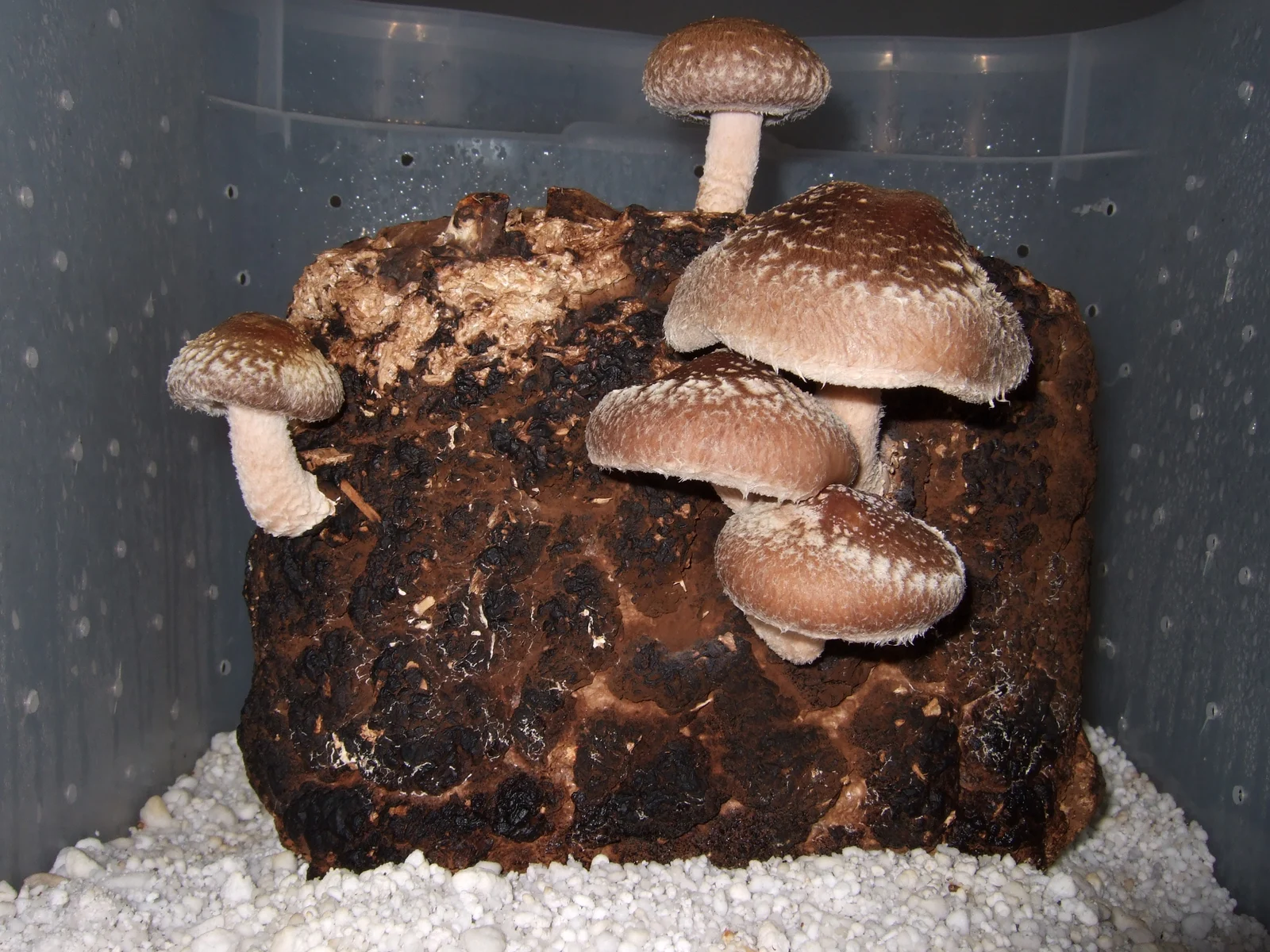
Brown shiitake mushrooms fruiting from a substrate block inside a perforated cultivation container.
Real cultivation photograph. Read its source for location and context; it is not a universal operating specification.frankenstoen · CC BY 2.0View full photograph ↗
On this pageChoose a section, or keep reading below
The full field guide

Understand Shiitake block maturation before forcing a crop

Separate block manufacture, colonisation, browning, fruiting induction and the interval between harvests.

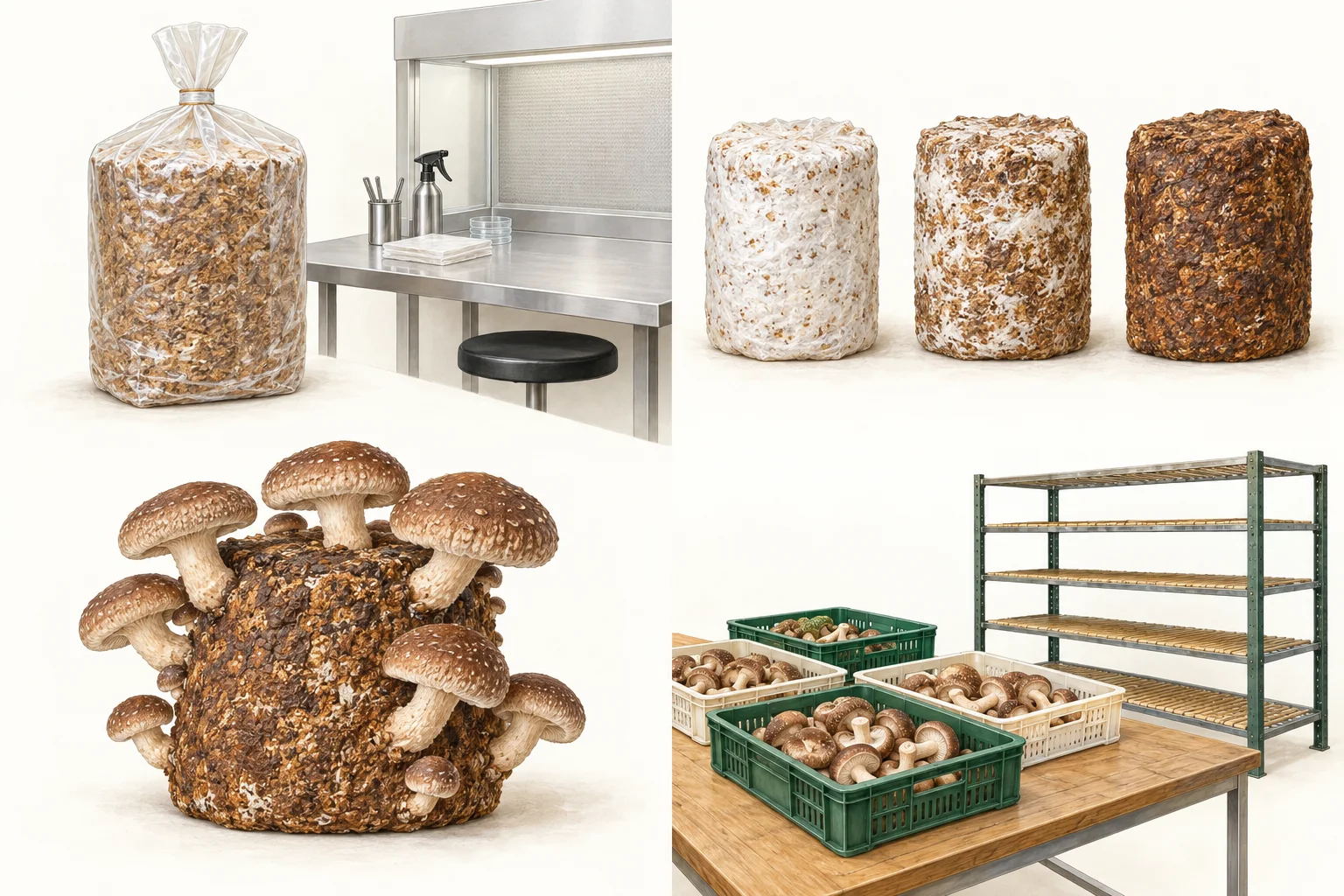
Choose a picture to understand that part of the process.

  1. 01Know the supplied block
  2. 02White to brown
  3. 03Fruit a mature block
  4. 04Count occupied space

AI-generated teaching illustrations · Not photographs of actual farms

Chapter 01

Start with the block supply model

A farm that buys prepared shiitake blocks has different equipment and skills from a farm manufacturing supplemented wood-based blocks. List what the supplier completes and what you must complete. Ask for strain identity, inoculation date, developmental stage, transport conditions and a written handover protocol. The phrase ready block is too vague for a production schedule.

For in-house manufacture, review substrate sourcing, formulation, treatment equipment, clean inoculation and incubation as a whole process with a qualified trainer. Material suitability includes its identity and contamination history; unknown treated wood is not a mushroom substrate. Begin with a controlled pilot and traceable inputs before buying equipment around an assumed output.

Chapter 02

White colonisation is not the final readiness test

Shiitake block systems include development beyond initial colonisation, including a maturation and browning sequence. Learn the appearance and handling criteria for your strain and block process. A block that looks colonised is not automatically ready for the next fruiting intervention. Readiness depends on its developmental history as well as appearance.

Record bag opening, browning progress and any treatment dates for each lot. Compare representative blocks across shelves and note damaged packaging or abnormal patches. Where a supplier's instructions and a general guide differ, identify whether they refer to the same strain, substrate and production stage before deciding which method applies.

Ask what stage a purchased block has actually reached
StageInformation neededPlanning consequence
ColonisingInoculation date and incubation guidanceIncubation space and time still needed
Maturing or browningStage criteria and handling methodDo not schedule immediate harvest
Ready for inductionStrain-specific readiness and induction instructionsFruiting room and harvest team must be available
Chapter 03

Use a strain-specific induction and recovery programme

Fruiting induction, block handling and any soaking or temperature treatment must follow the validated block and strain protocol. Do not apply an arbitrary cold-water duration from a different production system. Record the treatment actually used, the block condition before and after it, and the subsequent pinning response.

Manage fruiting air, moisture and light with observations at crop level. After harvest, follow the programme for block recovery and later flushes rather than assuming the next treatment can begin immediately. Keep later-flush output and losses separate from the first flush so that total block performance is visible.

Chapter 04

Include long occupancy and buyer specifications in the plan

A block occupies space before, during and between harvests. Calculate capacity from that entire occupancy, including handling and room reset, rather than from the visible picking period alone. Include blocks that fail, become unsaleable or are retired early when assessing a supplier or your own block process.

Discuss fresh cap size, stem trimming, packaging and acceptance criteria with buyers. Drying introduces an additional food-processing workflow, moisture-control requirement and market; it is not an automatic rescue for rejected fresh produce. Keep fresh and processed enterprise assumptions separate and verify applicable food-business requirements before commercial processing.

Chapter sources & scope

These are educational explanations, not an independently reviewed operating protocol. Worked examples do not predict your yield or income.

Back to the chapter list ↑

Understand the topic

The key ideas, at a glance.

Choose log or sterile sawdust-block cultivation before reading process guidance. This topic keeps Lentinula edodes log and sterile sawdust-block methods separate, including their different incubation and maturation responsibilities.

Part 01

Why this stage matters

Choose log or sterile sawdust-block cultivation before reading process guidance.

Illustration of a sealed wood-based cultivation block near a clean workbench.
AI teaching illustrationKnow the supplied block

A supplied block may still need incubation or maturation. The term ready block is too vague for a harvest schedule.

Conceptual explanation—not a real farm photograph, diagnostic finding or construction specification.
Part 02

Method boundary

This topic keeps Lentinula edodes log and sterile sawdust-block methods separate, including their different incubation and maturation responsibilities.

  • Confirm the culture as Lentinula edodes, with strain or variety recorded where available.
  • Confirm one method: natural log or sterilized sawdust block.
  • Record substrate source, treatment class, batch and contamination observations.
Part 03

Observe and record

Use batch records, stage dates, room observations and contamination patterns. Compare the crop with its own prior condition before changing several variables at once.

Illustration of fresh Shiitake grading with cultivation racks in the background.
AI teaching illustrationCount occupied space

Blocks occupy space before, during and between flushes. Total kilograms alone cannot describe annual room productivity.

Conceptual explanation—not a real farm photograph, diagnostic finding or construction specification.
Part 04

Evidence status

The page publishes process relationships supported by primary institutional sources. Numeric recipes remain absent where source context, strain identity or specialist review is incomplete.

Keep exploring

Every part of this topic.

Choose the stage, material or decision you need to understand next.

01

Shiitake cultivation overview

Compare log and block systems without merging their materials, treatment or timing. Evidence, method and India-context boundaries remain visible.

02

Shiitake biology

Connect Lentinula edodes identity to colonization, browning, physiological maturation and fruiting. Evidence, method and India-context boundaries remain visible.

03

Shiitake varieties in India

Record institutional variety name, release context, culture source and method fit without a best-variety claim. Evidence, method and India-context boundaries remain visible.

04

Shiitake log cultivation

Treat tree identity, log condition, inoculation, long incubation, maturation and fruiting as one method. Evidence, method and India-context boundaries remain visible.

05

Shiitake sawdust-block cultivation

Use formulated substrate, sterilization, aseptic inoculation, browning and maturation as a controlled block system. Evidence, method and India-context boundaries remain visible.

06

Shiitake substrate selection

Keep intact logs and formulated hardwood sawdust as separate substrate records with supply and quality evidence. Evidence, method and India-context boundaries remain visible.

07

Shiitake substrate supplementation

Balance potential nutrition against contamination pressure, sterilization duty and process complexity. Evidence, method and India-context boundaries remain visible.

08

Shiitake block sterilization

Place sterilization inside a validated block, equipment and aseptic workflow without publishing pressure-vessel instructions. Evidence, method and India-context boundaries remain visible.

09

Shiitake inoculation

Match spawn form and clean handling to log or sterile-block method. Evidence, method and India-context boundaries remain visible.

10

Shiitake incubation

Track colonization, internal heat, contamination and method-specific time without forcing fruiting early. Evidence, method and India-context boundaries remain visible.

11

Shiitake block browning

Interpret surface browning within known strain, block, incubation and handling context. Evidence, method and India-context boundaries remain visible.

12

Shiitake block maturation

Treat physiological readiness as a crop stage between colonization and induction. Evidence, method and India-context boundaries remain visible.

13

Shiitake fruiting

Coordinate induction, block condition, air, moisture and light only after adequate maturation. Evidence, method and India-context boundaries remain visible.

14

Shiitake soaking and induction

Use method- and strain-specific induction evidence rather than applying shock as a universal recipe. Evidence, method and India-context boundaries remain visible.

15

Shiitake climate

Separate log or block stage, strain and controlled-room capability before interpreting environmental guidance. Evidence, method and India-context boundaries remain visible.

16

Light in shiitake cultivation

Interpret light with browning, maturation and fruiting stage. Evidence, method and India-context boundaries remain visible.

17

Shiitake carbon dioxide context

Use crop-load, distribution and morphology observations to interpret ventilation. Evidence, method and India-context boundaries remain visible.

18

Shiitake humidity and block surface

Read room moisture with block condition, air movement and fruit-body stage. Evidence, method and India-context boundaries remain visible.

19

Shiitake harvest

Select maturity and handling for fresh or drying channels without a generic market assumption. Evidence, method and India-context boundaries remain visible.

20

Shiitake post-harvest

Separate fresh cooling and dried-product workflows, quality checks and regulatory responsibilities. Evidence, method and India-context boundaries remain visible.

21

Drying shiitake

Control drying as a food process with batch identity, hygiene, moisture verification, packaging and lawful claims. Evidence, method and India-context boundaries remain visible.

22

Shiitake crop diseases

Distinguish log or block stage, competitor growth, culture condition and environmental stress. Evidence, method and India-context boundaries remain visible.

23

Shiitake crop pests

Map organisms and damage through logs, blocks, incubation and fruiting areas. Evidence, method and India-context boundaries remain visible.

24

Shiitake troubleshooting

Keep normal browning and maturation separate from contamination or abiotic damage. Evidence, method and India-context boundaries remain visible.

25

Shiitake business context

Model long cycles, sterile-process skill, controlled fruiting, post-harvest format and validated demand. Evidence, method and India-context boundaries remain visible.

26

Commercial shiitake farming

Design around one chosen log or block system rather than scaling an oyster room by analogy. Evidence, method and India-context boundaries remain visible.

Go deeper

Technical reference, records and tools.

Detailed crop-stage information, parameters, diagrams and specialist tools are kept together below. This material retains its source conditions and review limits.

Open the complete technical reference

Crop guide

Shiitake knowledge system

Choose log or sterile sawdust-block cultivation before reading process guidance. Evidence, method and India-context boundaries remain visible.

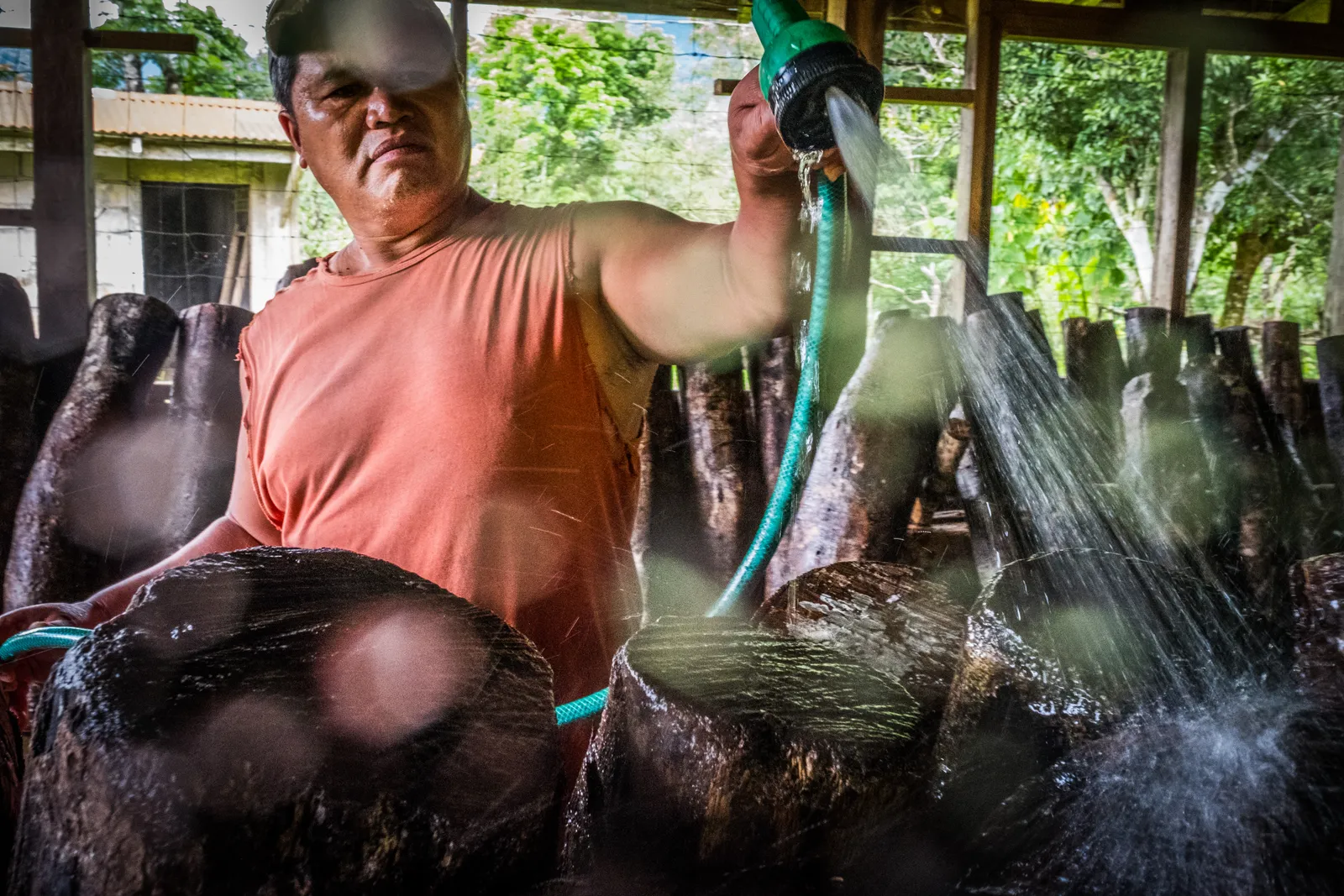
Farm worker Enersto Bagiwan waters logs used for growing shiitake mushrooms at the Kalahan Educational Foundation nursery, Imugan, Nueva Vizcaya, Philippines (USAID, 2017).
Shiitake logs being watered on a small farm. Photo: Jason Houston for USAID, Public domain. Source

The crop at a glance

Published ICAR-DMR reference values for Indian conditions. Species, strain and your room decide the final numbers.

Spawn run22-25°C60 to 90 days on sterilised sawdust blocks until the block browns.Source: ICAR-DMR
Fruiting15-20°CCold-water soak or shock triggers pinning; humidity 85 to 90 percent.Source: ICAR-DMR
Crop cycle120-150daysLong cycle, premium price; a hills or controlled-room crop.Source: ICAR-DMR
  • No context-free setpoints
  • No profit promises
  • Species comes first
  • No medical marketing

Identity before method

Shiitake

Lentinula edodes

Taxonomy note
Cultivated Lentinula edodes with log and supplemented-block methods kept separate.
India readiness
developingIndian institutional methods and varieties exist, while infrastructure, strain, maturation and market fit require project-specific validation.
Method difficulty
advanced
Casing
no
Production systems
natural log; sterilized sawdust block
Post-harvest
Fresh and dried channels have distinct maturity, handling and process-control requirements.

Production method records

One species can require more than one cultivation model.

SHI-LOG

Natural log cultivation

Substrate
verified suitable hardwood logs
Container
intact log
Treatment
Log selection, conditioning and sanitation are method-specific; no block sterilization step is implied.
Scale context
long-cycle outdoor or protected system where suitable wood and climate are validated
  1. Tree and log suitability
  2. Log preparation
  3. Inoculation
  4. Seal and incubation
  5. Maturation
  6. Induction
  7. Fruiting
  8. Rest
SHI-BLOCK

Sterilized sawdust block

Substrate
formulated hardwood sawdust
Container
heat-compatible filtered cultivation bag
Treatment
Sterilization-class treatment inside a validated sterile workflow.
Scale context
controlled production with sterile-process capability
  1. Formulation
  2. Bagging
  3. Sterilization
  4. Aseptic inoculation
  5. Incubation
  6. Browning
  7. Maturation
  8. Induction
  9. Fruiting
  10. Rest

Canonical learning map

26 distinct routes for this crop system.

01
Shiitake cultivation overview

Compare log and block systems without merging their materials, treatment or timing. Evidence, method and India-context boundaries remain visible.

02
Shiitake biology

Connect Lentinula edodes identity to colonization, browning, physiological maturation and fruiting. Evidence, method and India-context boundaries remain visible.

03
Shiitake varieties in India

Record institutional variety name, release context, culture source and method fit without a best-variety claim. Evidence, method and India-context boundaries remain visible.

04
Shiitake log cultivation

Treat tree identity, log condition, inoculation, long incubation, maturation and fruiting as one method. Evidence, method and India-context boundaries remain visible.

05
Shiitake sawdust-block cultivation

Use formulated substrate, sterilization, aseptic inoculation, browning and maturation as a controlled block system. Evidence, method and India-context boundaries remain visible.

06
Shiitake substrate selection

Keep intact logs and formulated hardwood sawdust as separate substrate records with supply and quality evidence. Evidence, method and India-context boundaries remain visible.

07
Shiitake substrate supplementation

Balance potential nutrition against contamination pressure, sterilization duty and process complexity. Evidence, method and India-context boundaries remain visible.

08
Shiitake block sterilization

Place sterilization inside a validated block, equipment and aseptic workflow without publishing pressure-vessel instructions. Evidence, method and India-context boundaries remain visible.

09
Shiitake inoculation

Match spawn form and clean handling to log or sterile-block method. Evidence, method and India-context boundaries remain visible.

10
Shiitake incubation

Track colonization, internal heat, contamination and method-specific time without forcing fruiting early. Evidence, method and India-context boundaries remain visible.

11
Shiitake block browning

Interpret surface browning within known strain, block, incubation and handling context. Evidence, method and India-context boundaries remain visible.

12
Shiitake block maturation

Treat physiological readiness as a crop stage between colonization and induction. Evidence, method and India-context boundaries remain visible.

13
Shiitake fruiting

Coordinate induction, block condition, air, moisture and light only after adequate maturation. Evidence, method and India-context boundaries remain visible.

14
Shiitake soaking and induction

Use method- and strain-specific induction evidence rather than applying shock as a universal recipe. Evidence, method and India-context boundaries remain visible.

15
Shiitake climate

Separate log or block stage, strain and controlled-room capability before interpreting environmental guidance. Evidence, method and India-context boundaries remain visible.

16
Light in shiitake cultivation

Interpret light with browning, maturation and fruiting stage. Evidence, method and India-context boundaries remain visible.

17
Shiitake carbon dioxide context

Use crop-load, distribution and morphology observations to interpret ventilation. Evidence, method and India-context boundaries remain visible.

18
Shiitake humidity and block surface

Read room moisture with block condition, air movement and fruit-body stage. Evidence, method and India-context boundaries remain visible.

19
Shiitake harvest

Select maturity and handling for fresh or drying channels without a generic market assumption. Evidence, method and India-context boundaries remain visible.

20
Shiitake post-harvest

Separate fresh cooling and dried-product workflows, quality checks and regulatory responsibilities. Evidence, method and India-context boundaries remain visible.

21
Drying shiitake

Control drying as a food process with batch identity, hygiene, moisture verification, packaging and lawful claims. Evidence, method and India-context boundaries remain visible.

22
Shiitake crop diseases

Distinguish log or block stage, competitor growth, culture condition and environmental stress. Evidence, method and India-context boundaries remain visible.

23
Shiitake crop pests

Map organisms and damage through logs, blocks, incubation and fruiting areas. Evidence, method and India-context boundaries remain visible.

24
Shiitake troubleshooting

Keep normal browning and maturation separate from contamination or abiotic damage. Evidence, method and India-context boundaries remain visible.

25
Shiitake business context

Model long cycles, sterile-process skill, controlled fruiting, post-harvest format and validated demand. Evidence, method and India-context boundaries remain visible.

26
Commercial shiitake farming

Design around one chosen log or block system rather than scaling an oyster room by analogy. Evidence, method and India-context boundaries remain visible.

Trace the boundary

Evidence and limitations

technical-bulletin · tier ATechnologies developed by ICAR-DMR

Institutional method history for oyster, milky, paddy straw, shiitake and selected specialty mushrooms.

Method descriptions are context-specific and contain numeric and broad substrate statements that require independent technical review before operational publication.

Open primary source
institutional · tier AVarieties and germplasm

Official names and release context for Indian mushroom varieties.

A listed variety is not automatically available, suitable for every region or superior for every farm.

Open primary source
institutional · tier AResearch achievements

Release and institutional technology status for selected varieties.

Achievement summaries do not replace regional trial data, spawn provenance checks or project validation.

Open primary source
institutional · tier AResearch programmes

Current institutional scope for cultivated and specialty mushroom research in India.

Research scope does not by itself establish a farm recommendation, commercial readiness or strain-specific operating range.

Open primary source

Read the evidence

Sources & review.

Editorial update: 2026-09-03. Independent technical review is not recorded for this entry.

  1. Technologies developed by ICAR-DMR

    ICAR Directorate of Mushroom Research · 2020

  2. Varieties and germplasm

    ICAR Directorate of Mushroom Research

  3. Research achievements

    ICAR Directorate of Mushroom Research

  4. Research programmes

    ICAR Directorate of Mushroom Research

Reading a source is not the same as applying its instructions to every farm. Confirm species, strain, crop stage, system, region and publication date. Old chemical recommendations are not current-use instructions.

See something that needs correcting? Tell us →