


Quick orientation
Treat route-to-market speed, seasonal reliability, rejection and unsold product as core feasibility variables. This topic belongs to a Volvariella bed or validated container method with fast development and a route-to-market planned before harvest.
Do not copy a generic 0–4°C cold chain
Paddy-straw mushroom is chilling-sensitive. ICAR-DMR’s 2007 bulletin reports autolysis at 4°C and about three days at 10–15°C, while explicitly noting that more post-harvest research is needed.
Why this stage matters
Treat route-to-market speed, seasonal reliability, rejection and unsold product as core feasibility variables.
Method boundary
This topic belongs to a Volvariella bed or validated container method with fast development and a route-to-market planned before harvest.
- Confirm the culture as Volvariella volvacea, with strain or variety recorded where available.
- Confirm one method: straw bed or validated bag or crate system.
- Record substrate source, treatment class, batch and contamination observations.
Validate before investment
Model batch size, process capacity, room count, labour, rejection, post-harvest loss, sell-through and capital cost with local evidence. Online product price is not a profit forecast.
Evidence status
The page publishes process relationships supported by primary institutional sources. Numeric recipes remain absent where source context, strain identity or specialist review is incomplete.
Production method records
One species can require more than one cultivation model.
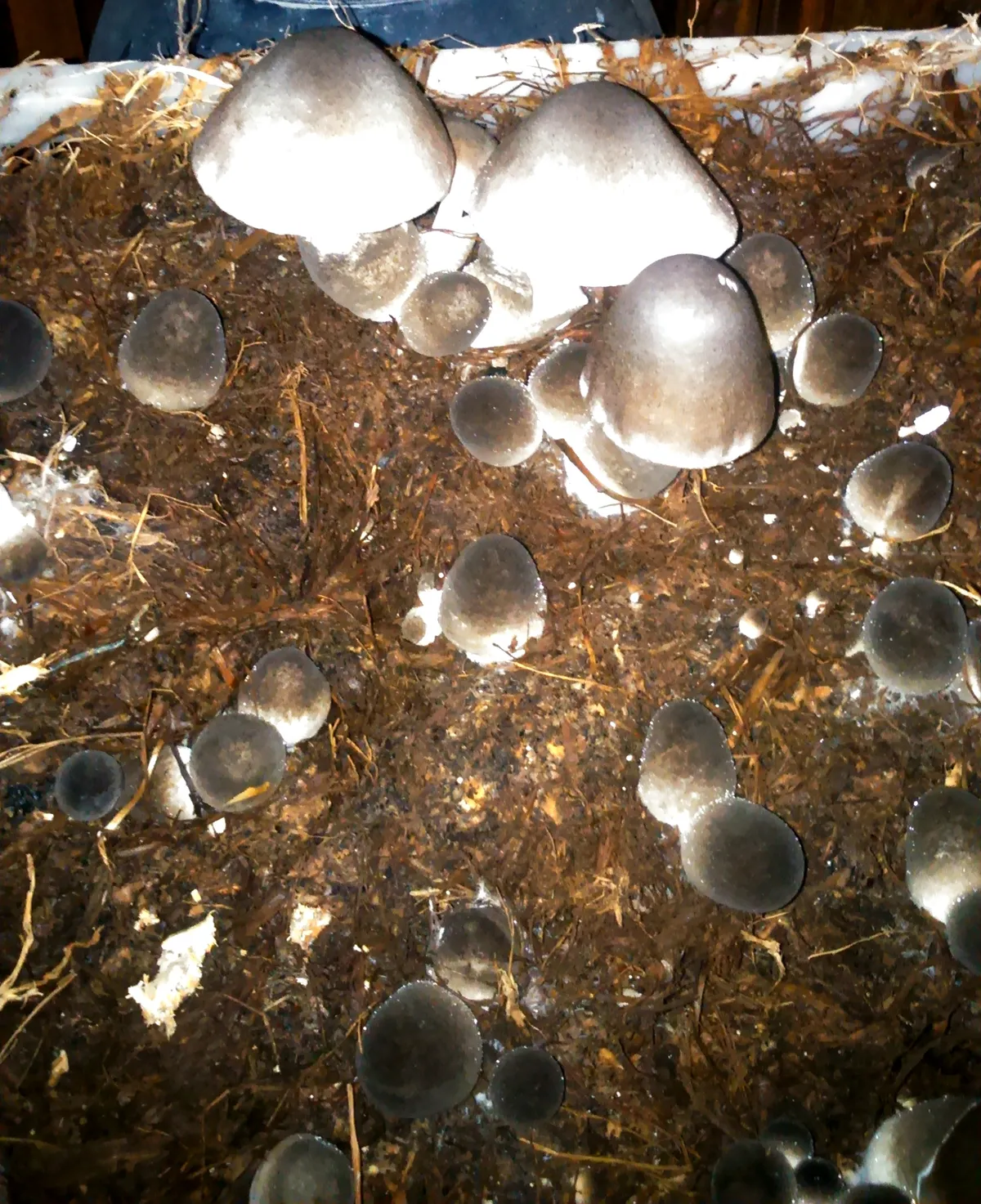
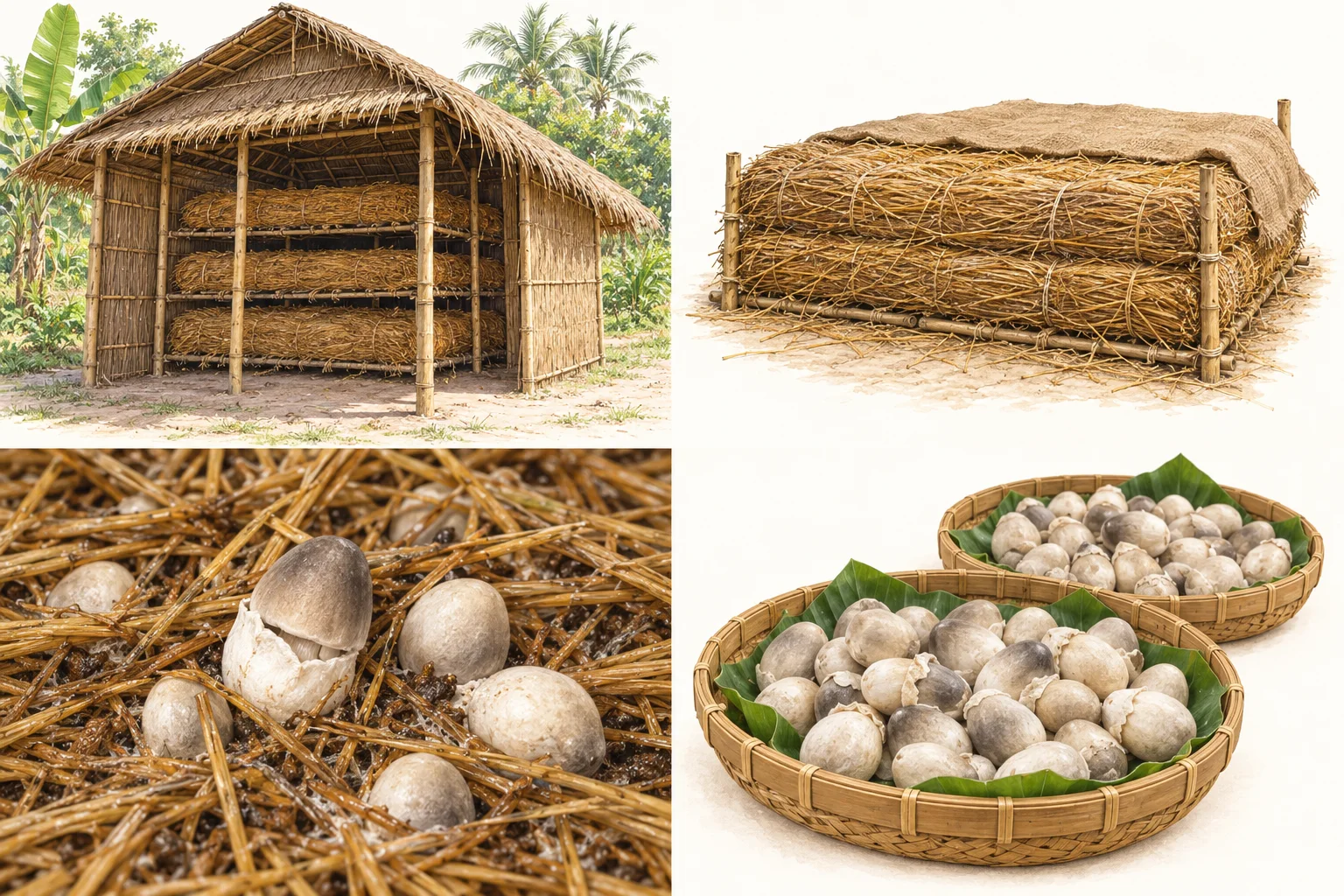
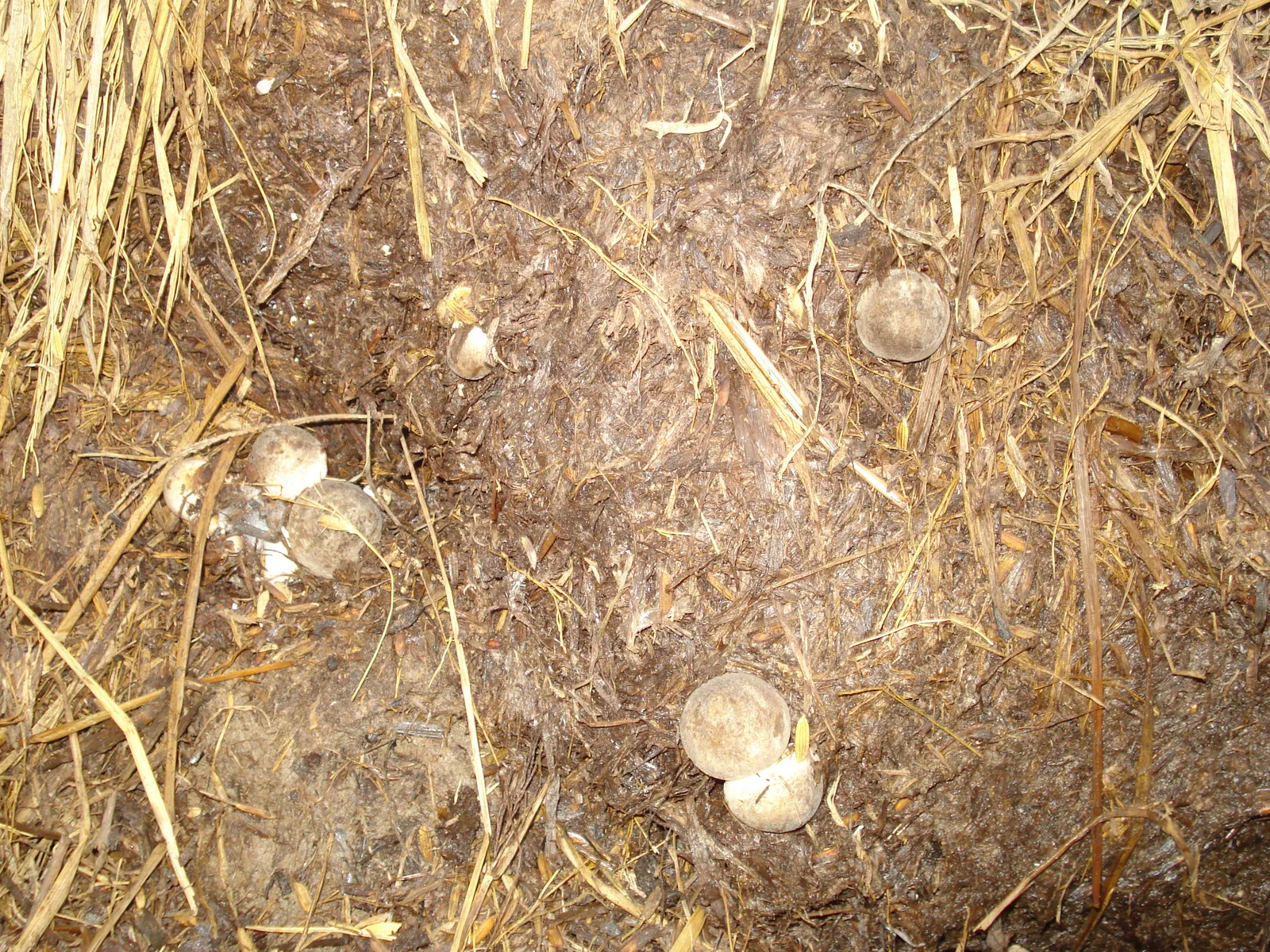
PAD-STRAW-BEDPaddy straw bed system
- Substrate
- clean paddy straw with verified history
- Container
- formed bed in a protected cultivation area
- Treatment
- Method-specific wetting and treatment; not described as an oyster pasteurization recipe.
- Scale context
- seasonal batch with route-to-market synchronized to harvest
- Straw inspection
- Bed preparation
- Layered spawning
- Spawn run
- Fruiting
- Development-stage observation
- Early harvest
- Immediate dispatch
System relationships
Conceptual crop diagrams
Each diagram shows sequence and boundaries without inventing dimensions, setpoints or wild-species identification cues.
- 01Crop requirement
Stage 1 has its own material, hygiene, environment and evidence checks.
- 02Room envelope
Stage 2 has its own material, hygiene, environment and evidence checks.
- 03Racks
Stage 3 has its own material, hygiene, environment and evidence checks.
- 04Air system
Stage 4 has its own material, hygiene, environment and evidence checks.
- 05Process equipment
Stage 5 has its own material, hygiene, environment and evidence checks.
- 06Cleaning reset
Stage 6 has its own material, hygiene, environment and evidence checks.
Trace the boundary
Evidence and limitations
technical-bulletin · tier APaddy straw mushroom cultivation
Indian institutional cultivation context for Volvariella systems and crop stages.
Historic bulletin values are not presented as universal modern setpoints, shelf-life guarantees or commercial expectations.
Open primary sourceresearch-report · tier AICAR annual report 2022 to 2023
Institutional trial context for low-cost paddy straw mushroom systems.
Report summaries do not establish all-India suitability or a complete operating protocol.
Open primary sourcetechnical-bulletin · tier APost-harvest technology of mushrooms
Species-specific post-harvest deterioration patterns and handling context.
Historic shelf-life statements depend on maturity, handling, packaging and storage conditions and are not reproduced as guarantees.
Open primary source