


A practical guide to growing mushrooms in IndiaA joint educational initiative by MushroomWale & DMR Solan
MushroomFarming.in

A joint educational initiative by

MushroomWale.com
ICAR–Directorate of Mushroom Research, Solan logoICAR–DMRSolan

MushroomFarming / article

Paddy straw mushroom biology

Understand cultivated Volvariella development in a known crop without using morphology to identify wild food. Evidence, method and India-context boundaries remain visible.

Practical explanation + detailed referenceSources & review ↓
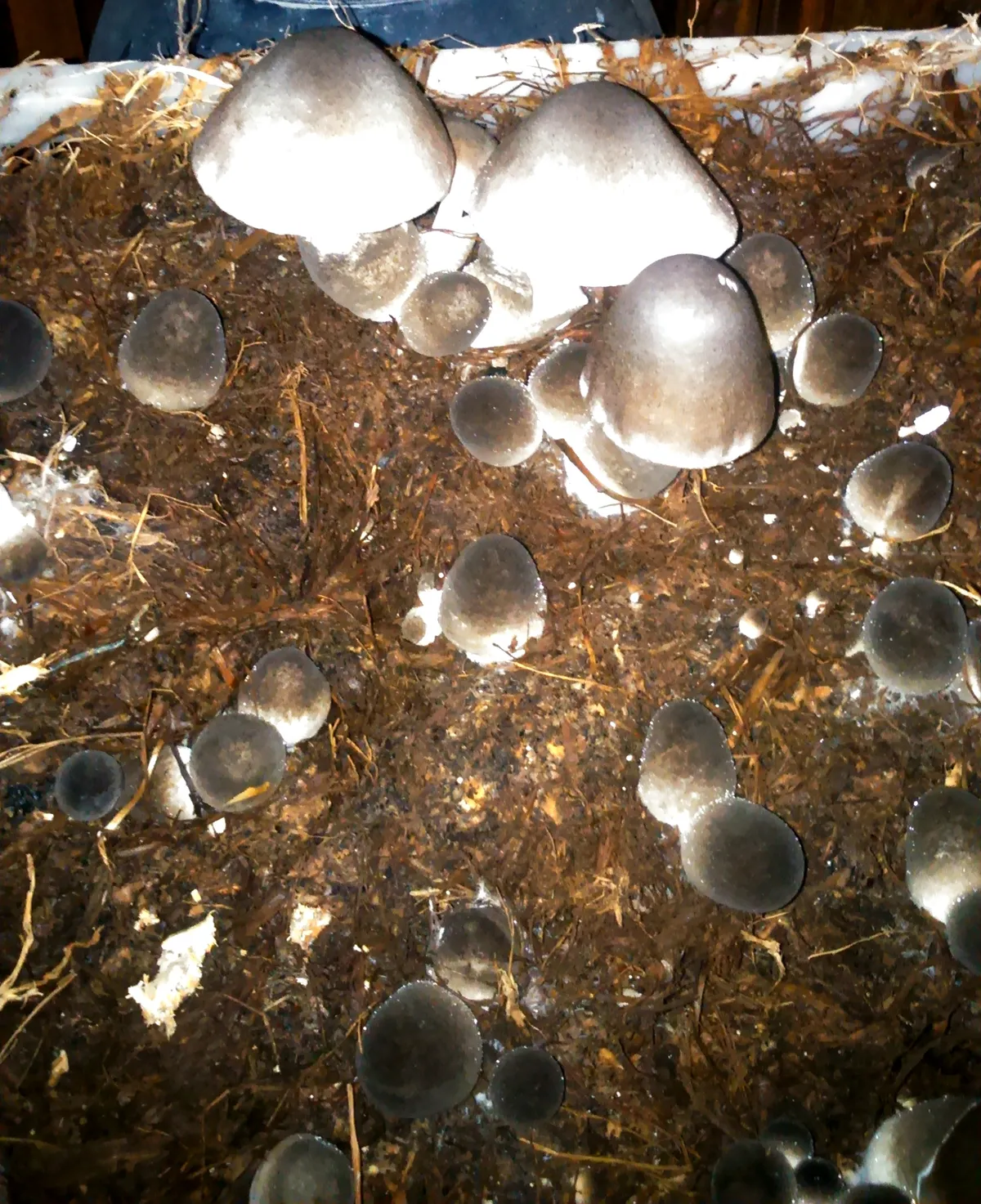
Volvariella volvacea buttons and open caps growing on a cultured rice-straw bed, displayed at Jejamuran, Yogyakarta, Indonesia.
Real cultivation photograph. Read its source for location and context; it is not a universal operating specification.Kembangraps · CC BY-SA 4.0View full photograph ↗
On this pageChoose a section, or keep reading below

Read this in the full guide: Plan Paddy straw mushroom as a fast, closely attended crop

Understand the topic

Start with the explanation.

Understand cultivated Volvariella development in a known crop without using morphology to identify wild food. This topic belongs to a Volvariella bed or validated container method with fast development and a route-to-market planned before harvest.

Part 01

Why this stage matters

Understand cultivated Volvariella development in a known crop without using morphology to identify wild food.

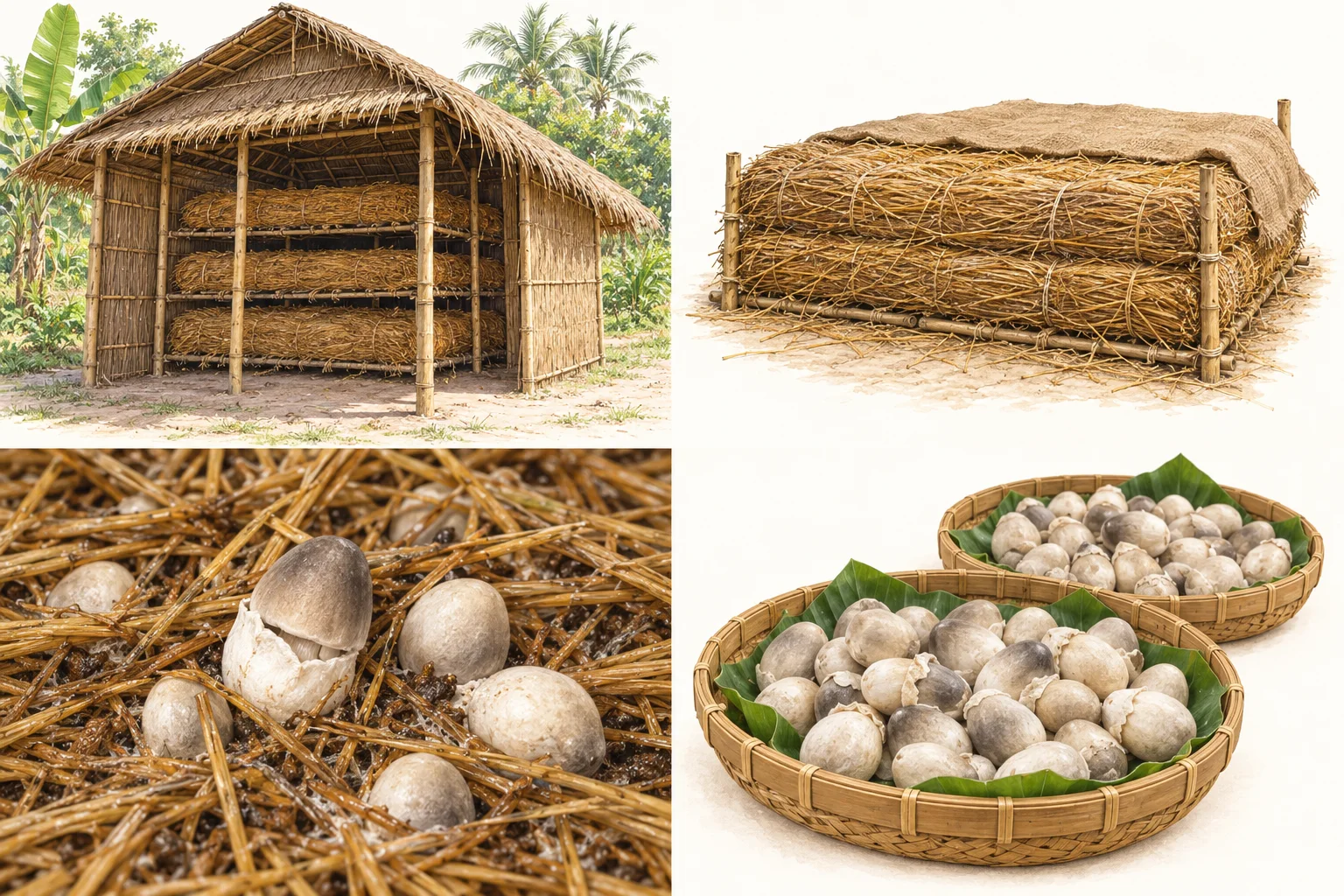
Illustration of a shaded traditional straw-bundle growing bed in an Indian hut.
AI teaching illustrationChoose a bed system

Traditional beds and controlled indoor systems are different methods. Combining isolated instructions from different methods can create gaps.

Conceptual explanation—not a real farm photograph, diagnostic finding or construction specification.
Part 02

Method boundary

This topic belongs to a Volvariella bed or validated container method with fast development and a route-to-market planned before harvest.

  • Confirm the culture as Volvariella volvacea, with strain or variety recorded where available.
  • Confirm one method: straw bed or validated bag or crate system.
  • Record substrate source, treatment class, batch and contamination observations.
Part 03

Observe and record

Use batch records, stage dates, room observations and contamination patterns. Compare the crop with its own prior condition before changing several variables at once.

Illustration of cultivated Paddy straw mushrooms in shallow baskets, including some opening fruit bodies.
AI teaching illustrationPrepare for dispatch

The harvest-to-buyer route is part of the production plan. The pictured forms are not a universal buyer-grade specification.

Conceptual explanation—not a real farm photograph, diagnostic finding or construction specification.
Part 04

Evidence status

The page publishes process relationships supported by primary institutional sources. Numeric recipes remain absent where source context, strain identity or specialist review is incomplete.

Go deeper

Technical reference, records and tools.

Detailed crop-stage information, parameters, diagrams and specialist tools are kept together below. This material retains its source conditions and review limits.

Open the complete technical reference

paddy-straw · cultivation stage

Paddy straw mushroom biology

Understand cultivated Volvariella development in a known crop without using morphology to identify wild food. Evidence, method and India-context boundaries remain visible.

Publication
Editorial review in progress
Evidence records
3
External review
Not yet recorded
Wild ID
Not provided
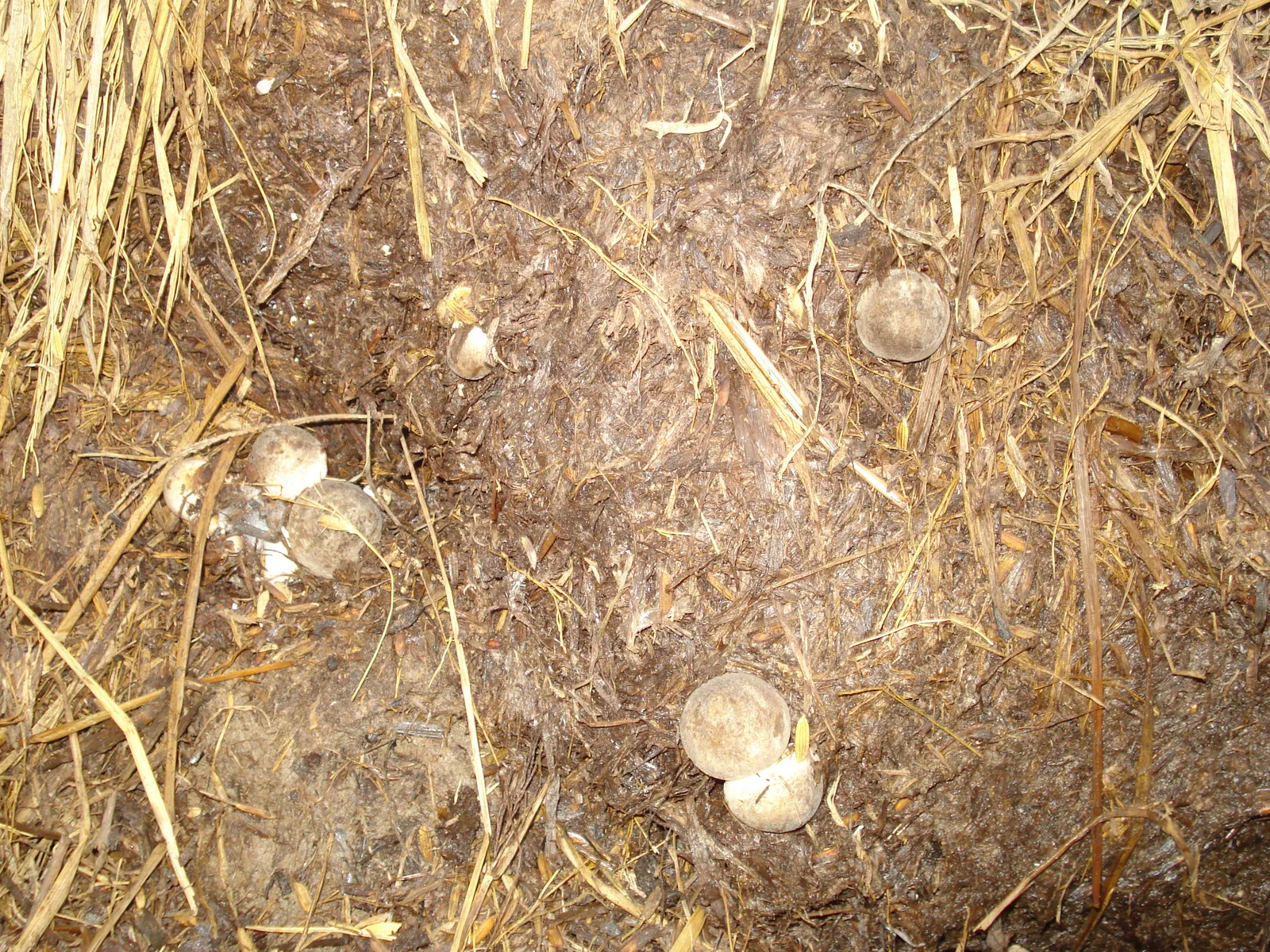
Egg-stage paddy straw mushrooms (Odia: pala chhatu) emerging from a rice-straw bed, Odisha, India.
Paddy straw mushroom (Volvariella volvacea) fruiting on a straw bed. Photo: Swetapadma07, CC BY-SA 3.0. Source

Five mushrooms side by side

Green band = fruiting temperature. Source: ICAR-DMR seasonal folder and manual.

10°C15°C20°C25°C30°C35°C40°CButton14-18°60-75 days · ●●●15-20 kg / 100 kg compostOyster10-30°45-60 days · ○○○60-100 kg / 100 kg dry strawMilky30-35°50-60 days · ●●○○80-100 kg / 100 kg dry strawPaddy straw28-35°20-25 days · ●●○○10-15 kg / 100 kg dry strawShiitake15-20°120-150 days · ●●●●15-45% of wet substrate
Fruiting temperature

Quick orientation

Understand cultivated Volvariella development in a known crop without using morphology to identify wild food. This topic belongs to a Volvariella bed or validated container method with fast development and a route-to-market planned before harvest.

01

Why this stage matters

Understand cultivated Volvariella development in a known crop without using morphology to identify wild food.

02

Method boundary

This topic belongs to a Volvariella bed or validated container method with fast development and a route-to-market planned before harvest.

  • Confirm the culture as Volvariella volvacea, with strain or variety recorded where available.
  • Confirm one method: straw bed or validated bag or crate system.
  • Record substrate source, treatment class, batch and contamination observations.
03

Observe and record

Use batch records, stage dates, room observations and contamination patterns. Compare the crop with its own prior condition before changing several variables at once.

04

Evidence status

The page publishes process relationships supported by primary institutional sources. Numeric recipes remain absent where source context, strain identity or specialist review is incomplete.

Production method records

One species can require more than one cultivation model.

PAD-STRAW-BED

Paddy straw bed system

Substrate
clean paddy straw with verified history
Container
formed bed in a protected cultivation area
Treatment
Method-specific wetting and treatment; not described as an oyster pasteurization recipe.
Scale context
seasonal batch with route-to-market synchronized to harvest
  1. Straw inspection
  2. Bed preparation
  3. Layered spawning
  4. Spawn run
  5. Fruiting
  6. Development-stage observation
  7. Early harvest
  8. Immediate dispatch

Trace the boundary

Evidence and limitations

technical-bulletin · tier APaddy straw mushroom cultivation

Indian institutional cultivation context for Volvariella systems and crop stages.

Historic bulletin values are not presented as universal modern setpoints, shelf-life guarantees or commercial expectations.

Open primary source
research-report · tier AICAR annual report 2022 to 2023

Institutional trial context for low-cost paddy straw mushroom systems.

Report summaries do not establish all-India suitability or a complete operating protocol.

Open primary source
technical-bulletin · tier APost-harvest technology of mushrooms

Species-specific post-harvest deterioration patterns and handling context.

Historic shelf-life statements depend on maturity, handling, packaging and storage conditions and are not reproduced as guarantees.

Open primary source

Read the evidence

Sources & review.

Editorial update: 2026-09-03. Independent technical review is not recorded for this entry.

  1. Paddy straw mushroom cultivation

    ICAR Directorate of Mushroom Research · 2007

  2. ICAR annual report 2022 to 2023

    Indian Council of Agricultural Research

  3. Post-harvest technology of mushrooms

    ICAR Directorate of Mushroom Research

Reading a source is not the same as applying its instructions to every farm. Confirm species, strain, crop stage, system, region and publication date. Old chemical recommendations are not current-use instructions.

See something that needs correcting? Tell us →