

A practical guide to growing mushrooms in IndiaA joint educational initiative by MushroomWale & DMR Solan
MushroomFarming.in

A joint educational initiative by

MushroomWale.com
ICAR–Directorate of Mushroom Research, Solan logoICAR–DMRSolan

Read · Observe · Practise · Check

Crop health: evidence before a diagnosis

Learn to make an observation useful to a crop specialist. This is not image recognition or permission to prescribe a chemical; photographs need crop, stage, pattern and history.

Begin the walkthrough ↓
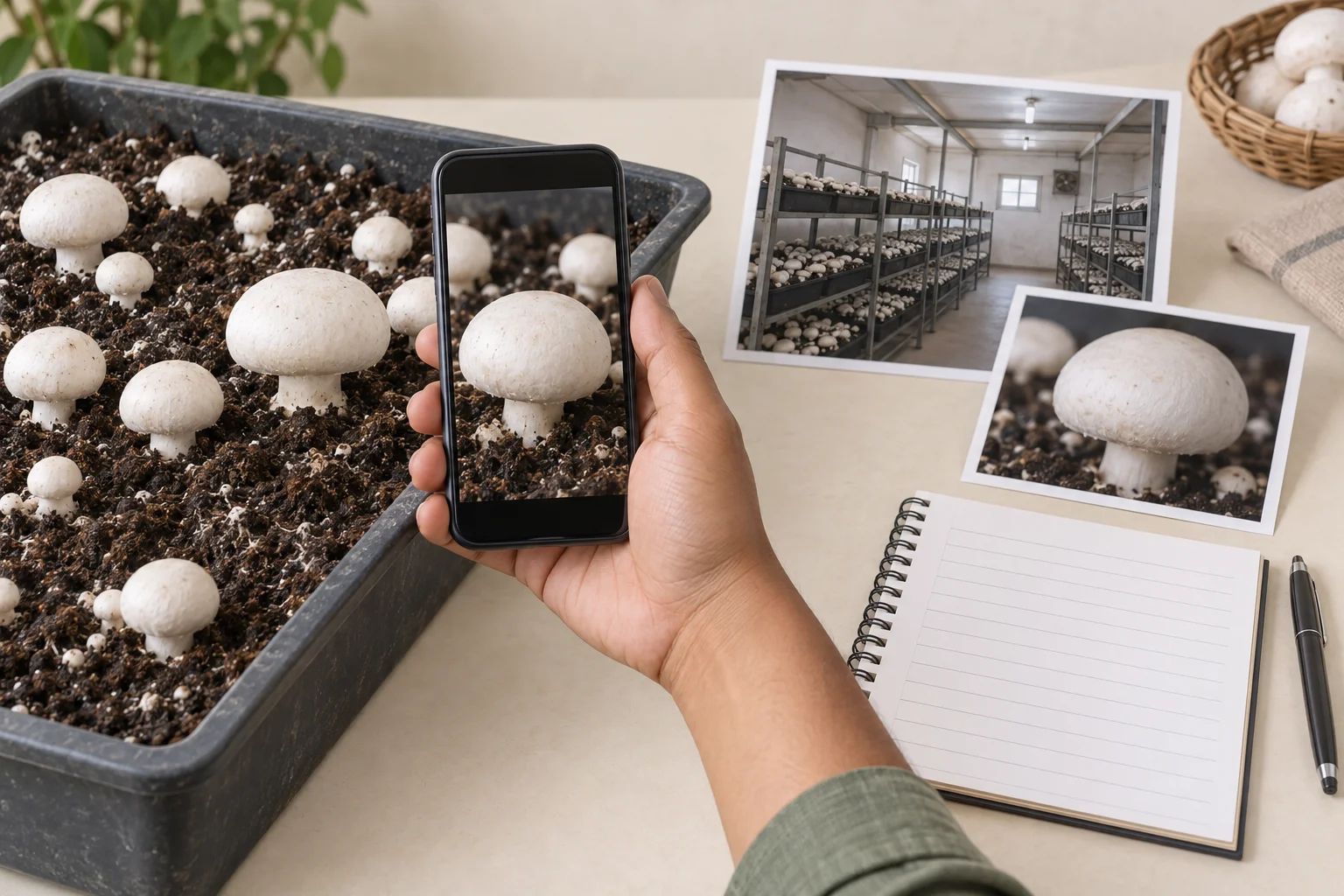
Generated demonstration of a crop detail photograph, a whole-room view and a notebook beside Button mushrooms.
AI-generated teaching illustrationDocument the room, affected area and detail. All pictured scenes are synthetic; these are not disease-reference photographs or laboratory findings.

Before you begin

  • Crop species, strain if known, stage and batch ID
  • A camera and a way to label images
  • Recent input, watering, handling and room records

Use the linked crop and technical lessons for method-specific detail. Practical work involving chemicals, pressure, electrical equipment or uncertain crop health requires competent supervision; illustrations are not operating specifications.

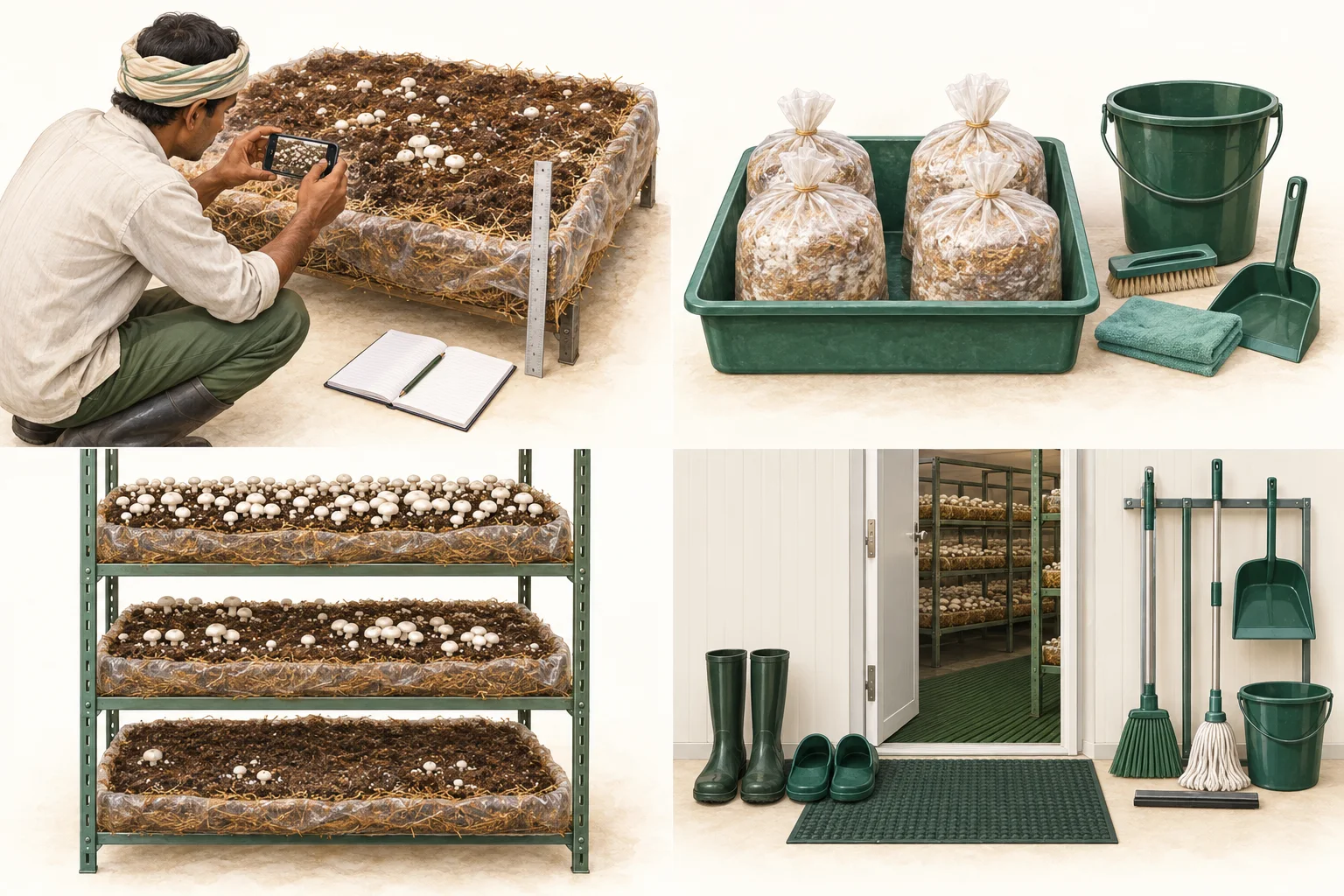
Illustration of an operator photographing an uneven crop beside a record sheet.

Conceptual AI teaching scene

Stage 1

Describe without naming a disease

Start with the change: colour, shape, growth rate, distribution or timing. A whole-room view, an affected-area view and a detail answer different questions. Keep an unaffected comparison when available.

Put it into practice
Make a short observation statement without disease names. Photograph the same location again at a recorded time.
Check your work
The record distinguishes what was seen from what somebody suspects.
Illustration of closed suspect cultivation bags separated from routine work and tools.

Conceptual AI teaching scene

Stage 2

Limit unnecessary movement

Suspect material, tools and footwear can complicate an investigation when moved between areas. Do not open or shake a suspect bag to obtain a better picture or deliberately smell it.

Put it into practice
Mark the affected batch and seek the farm’s containment and sample-submission procedure. Keep suspect work separate from clean operations.
Check your work
The action preserves evidence and does not spread material through routine harvest or input routes.
Educational illustration of uneven crop development across rack positions.

Conceptual AI teaching scene

Stage 3

Compare explanations

A symptom that follows one batch across rooms asks different questions from a symptom near one air outlet across batches. Such patterns guide the next check; they do not prove a pathogen.

Put it into practice
Build a table with possible cause, supporting observation, conflicting observation and missing information.
Check your work
Every proposed cause has evidence to test, and uncertainty remains visible.
Illustration of organised cleaning tools and an entry-footwear area.

Conceptual AI teaching scene

Stage 4

Learn from the outcome

Keep the adviser or laboratory finding with the original observations. Record the action, its purpose and what changed afterwards. Prevention depends on an observed weak point, not merely a new poster on the wall.

Put it into practice
Choose one verifiable prevention change and check it during the next working cycle.
Check your work
The closure record states what was confirmed, what remained uncertain and what routine changed.

Common mistakes—and the better question

A similar photograph confirms the disease
Use published photographs as comparison evidence, not a diagnosis.
A spray recipe is the first response
Use competent diagnosis and current authorised guidance before considering treatment.

A task to complete, not just a page to read

Prepare an adviser-ready crop report

Use a training case or your own documented observations. Include three image scales, chronology, affected and unaffected locations and previous interventions.

Bring back this evidence

A report that a specialist can read without asking which crop, room or date it concerns.

Completing this self-guided task is not verification of practical competence. Review it with a suitable instructor before relying on it for farm operation.

Study the detailed lessons in order

Mushroom Crop Health. Every lesson keeps its explanations, practical exercise, mistakes and self-checks.

  1. Observation & PatternDescribe what is present before naming a disease.
  2. Differential DiagnosisCompare infectious, pest and environmental explanations.
  3. Evidence & Negative EvidenceChoose measurements and confirmation methods that change the decision.
  4. Biosecurity & Chemical CautionContain risk and apply the current India label gate.

Keep the field guidance beside the lesson

Open the main subject guide →Diagnose a Mushroom Crop ProblemDifferential DiagnosisCrop Health MonitoringCrop Health Prevention

Sources, scope and review

Editorial learning material; no independent technical review is claimed. The tasks are original teaching exercises. Source-specific numerical schedules remain in the detailed lessons with their context, rather than being turned into universal instructions here.