


A practical guide to growing mushrooms in IndiaA joint educational initiative by MushroomWale & DMR Solan
MushroomFarming.in

A joint educational initiative by

MushroomWale.com
ICAR–Directorate of Mushroom Research, Solan logoICAR–DMRSolan

Read · Observe · Practise · Check

Your first crop: from an idea to a workable routine

Understand what a mushroom farm actually does before buying equipment. This route connects biology, materials, room conditions, people and buyers. Finish with a small-crop plan that another person can follow.

Begin the walkthrough ↓
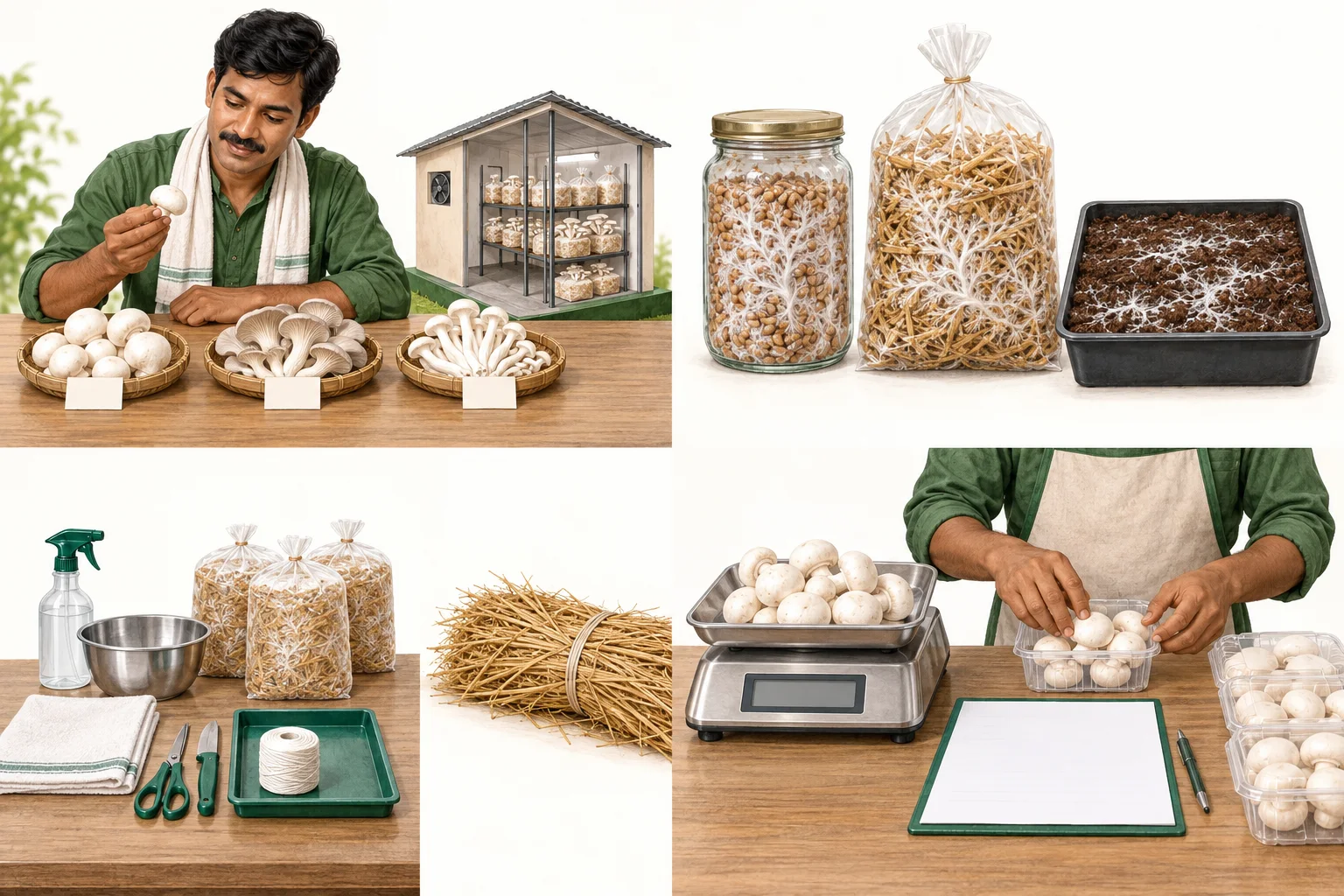
Educational illustration of a grower comparing mushroom crops and a small growing-room model.
AI-generated teaching illustrationConceptual learning scene, not a diagnostic photograph or construction specification.

Before you begin

  • A sketch of the proposed space and a notebook
  • The cultivated species and strain you are considering
  • One supplier conversation and one buyer conversation

Use the linked crop and technical lessons for method-specific detail. Practical work involving chemicals, pressure, electrical equipment or uncertain crop health requires competent supervision; illustrations are not operating specifications.

Educational illustration of a grower comparing mushroom crops and a small growing-room model.

Conceptual AI teaching scene

Stage 1

Choose with evidence

Species names are not interchangeable recipes. Write down the species, available growing material, expected growing season and buyer requirement. A crop that grows in another district may need a different room or strain in yours.

Put it into practice
Make a four-column sheet: room and season; available inputs; daily work; buyers. Put unanswered questions in the correct column.
Check your work
Can you explain why this crop fits all four columns, rather than only the expected selling price?
Illustrated comparison of grain spawn, a straw growing bag and a compost tray.

Conceptual AI teaching scene

Stage 2

Recognise what each material does

Spawn introduces the cultivated fungus. Substrate is the growing material it colonises. Casing is a separate layer in methods that require it. A ready-to-fruit block has already passed through operations that raw straw has not.

Put it into practice
Label pictures or closed specimens of spawn, prepared substrate and a colonised block. Write the work still required after each purchase.
Check your work
Someone else can identify the supplied stage without relying on a seller’s phrase such as ready material.
Educational illustration of a clean workbench, closed cultivation bags and separate raw straw.

Conceptual AI teaching scene

Stage 3

Walk through the work

A crop needs receiving, preparation, protected handling, growth, harvesting and cleaning. Work routes matter: raw inputs, suspect material and harvested food should not share an uncontrolled handling sequence.

Put it into practice
Draw the path of one batch through the room and assign a person, tool and record to every transfer.
Check your work
There is a workable route for harvest and crop-end removal, not just a place to put bags.
Illustration of mushrooms being weighed and packed beside a blank crop record.

Conceptual AI teaching scene

Stage 4

Learn from the whole cycle

One attractive flush is not the result of the whole crop. Record material used, rejected bags, harvested and sold quantities, labour, costs and cash collected. These explain what can be repeated and what needs changing.

Put it into practice
Prepare a blank batch sheet before starting. At crop end, reconcile all quantities and payments.
Check your work
You can distinguish crop performance, sales and payment collection.

Common mistakes—and the better question

Buying before choosing the method
Identify the starting material and remaining operations first.
Copying a calendar without observing the crop
Use the chosen method’s readiness checks alongside dates.

A task to complete, not just a page to read

Teach the process back

Explain the route from purchased material to buyer delivery to someone who has never grown mushrooms. Ask them to identify where spawn, substrate and harvest appear.

Bring back this evidence

A one-page crop plan, labelled material sheet and list of unresolved supplier/buyer questions.

Completing this self-guided task is not verification of practical competence. Review it with a suitable instructor before relying on it for farm operation.

Study the detailed lessons in order

Mushroom Farming Foundations. Every lesson keeps its explanations, practical exercise, mistakes and self-checks.

  1. What Mushrooms AreDistinguish fungi, mycelium and fruiting bodies without treating mushrooms as plants.
  2. Major Cultivated MushroomsCompare cultivated species by biological and production-system logic before choosing one.
  3. Mycelium, Spawn & SubstrateExplain how inoculum, growing medium and colonisation relate while keeping seed terminology precise.
  4. EnvironmentInterpret temperature, moisture, air and light as interacting context rather than universal setpoints.
  5. Hygiene & ContaminationSeparate prevention, observation and diagnosis from automatic chemical action.
  6. Cultivation CycleSequence preparation, inoculation, colonisation, fruiting, harvest and reset for the chosen species.
  7. Harvest & Post-HarvestRecognise how timing, handling, cooling and channel affect saleable quality.
  8. Business RealitySeparate revenue, cost, cash flow and profit and identify assumptions that need local evidence.
  9. Which Mushroom Fits Me?Build a shortlist from climate, skill, inputs, market and production-system constraints.

Keep the field guidance beside the lesson

Open the main subject guide →Cultivated mushroom speciesMulti-species spawn knowledge systemMushroom Farming Economics

Sources, scope and review

Editorial learning material; no independent technical review is claimed. The tasks are original teaching exercises. Source-specific numerical schedules remain in the detailed lessons with their context, rather than being turned into universal instructions here.