

Quick orientation
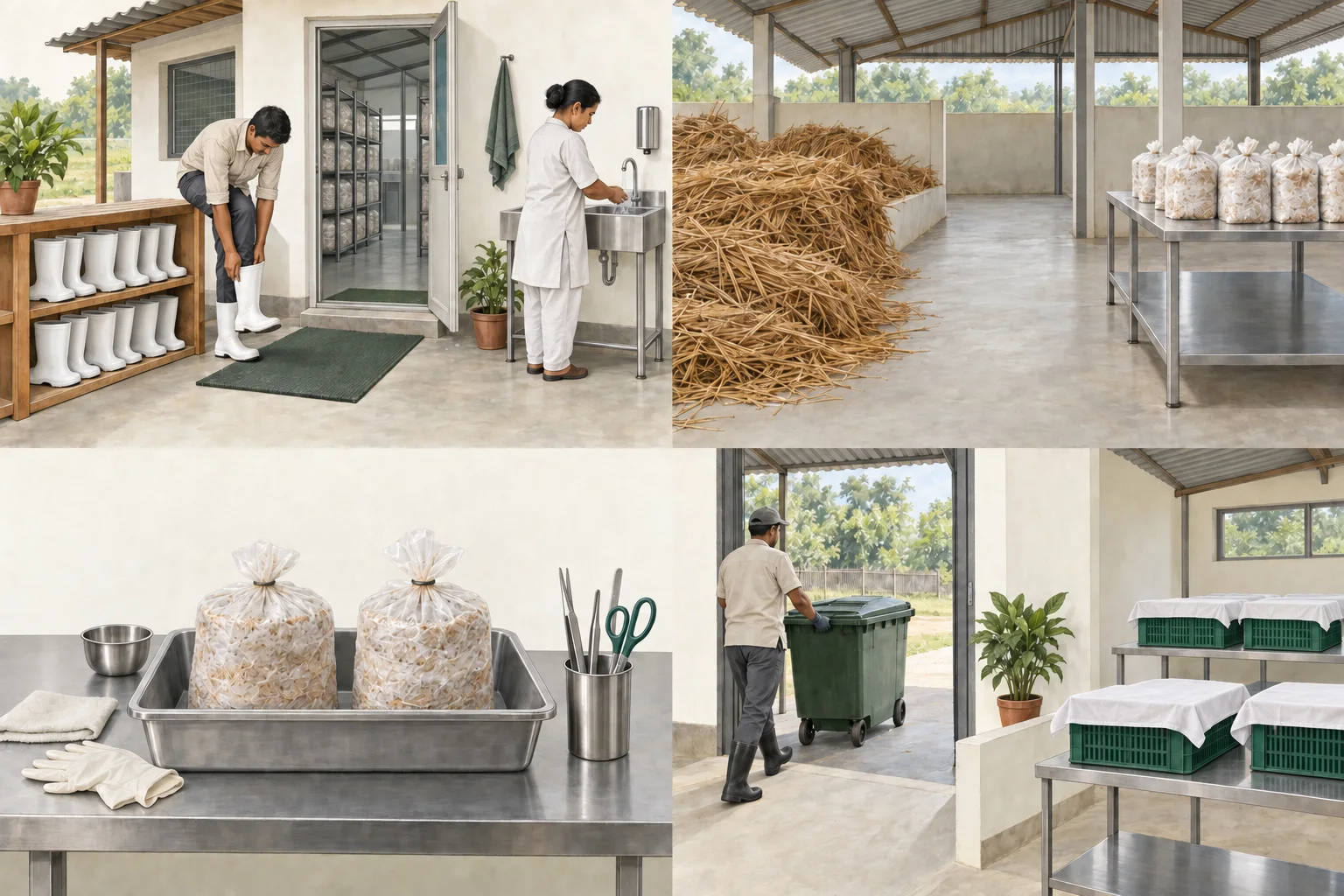
Assign routes, cleaning points, tools and movement order for every zone and shift.
01
Simple explanation
Dirty work should not travel backward into cleaner compost zones.
02
What is happening
Cross-contamination risk follows material contact, aerosols, water, soil, insects and traffic patterns.
03
Operator explanation
Assign routes, cleaning points, tools and movement order for every zone and shift.
04
What to observe
Observation should describe stage, location, pattern and change history before interpretation.
- Backtracking loaders
- shared tools
- standing water
- uncontrolled waste
- door and personnel flow
- cleaning verification
05
What to measure
Measurement must retain method, unit, location, timing, calibration and sample identity.
- Movement and cleaning records
- zone inspections
- water and drain condition
- contamination trend by batch
06
Equipment and process boundary
Equipment is useful only when its role in the biological process is explicit.
- Zone-specific tools
- wash and sanitation points
- drainage
- waste containers
- barriers and signage
07
Variables that interact
Raw storage, Phase I, controlled transfer, Phase II, ready compost, spawning and spent-material routes require boundaries.
08
What can go wrong
A symptom may have several mechanisms. Verify the cause before changing the process.
- One loader crosses every zone
- dirty drain to clean area
- shared tools
- spent substrate near ready compost
- unverified cleaning
09
What changes at commercial scale
Scaling changes geometry, repeatability, instrumentation, material flow and failure consequence.
- Simple route discipline works at small scale
- Commercial facilities need physical separation, scheduling and accountable verification
10
Evidence boundary
Mapped evidence: Farm Design for White Button Mushroom Cultivation; Mushroom Cultivation, Marketing and Consumption. Foundational, current operational, research and engineering sources retain their different roles.
Technical diagrams
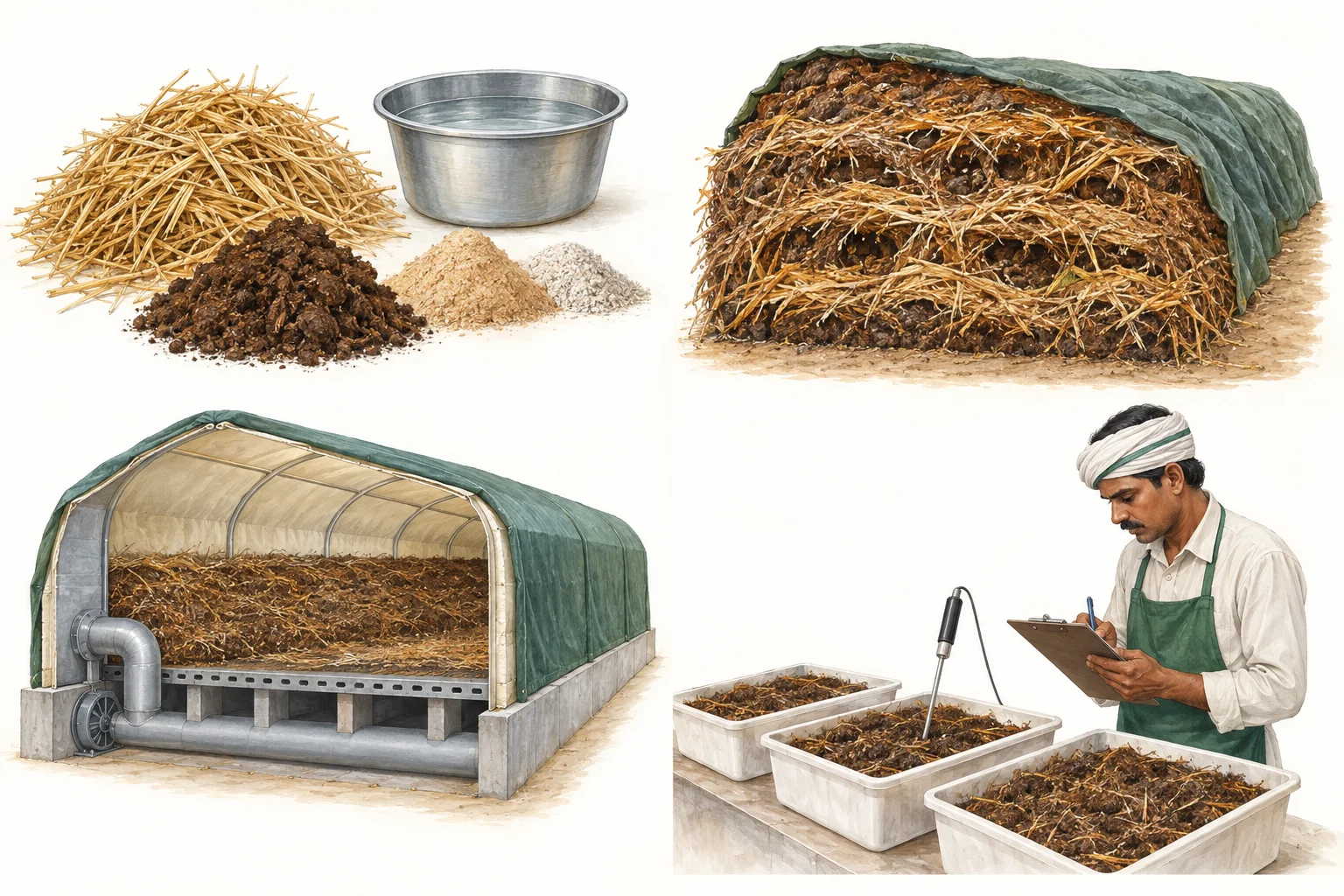
Original system diagrams separate air paths, material paths, measurements and biological transformations.
Progressive depth
Move from field observation to mechanism, engineering and evidence without losing the original question.
PracticalWhat the operator notices
- Dirty work should not travel backward into cleaner compost zones.
- Backtracking loaders
- shared tools
- standing water
TechnicalHow process variables interact
- Raw storage, Phase I, controlled transfer, Phase II, ready compost, spawning and spent-material routes require boundaries.
- Movement and cleaning records
- zone inspections
- water and drain condition
EngineeringHow the physical system serves the process
- Zone-specific tools
- wash and sanitation points
- drainage
- Simple route discipline works at small scale
- Commercial facilities need physical separation, scheduling and accountable verification
ResearchWhich evidence records govern this page
- COMPOST-SRC-DMR-FARM-DESIGN
- COMPOST-SRC-DMR-MANUAL
Evidence, applicability and review2 mapped sources
Sources support mechanisms and architecture. Technical and engineering values publish only through their separate governed registries.
Farm Design for White Button Mushroom Cultivation
Indian farm workflow, compost-unit components, tunnel and controlled-farm engineering vocabulary.
- Publisher
- ICAR-Directorate of Mushroom Research
- Accessed
- 2026-08-22
Mushroom Cultivation, Marketing and Consumption
Indian Button Mushroom compost methods, cultivation context, Phase I and Phase II process vocabulary.
- Publisher
- ICAR-Directorate of Mushroom Research
- Accessed
- 2026-08-22