


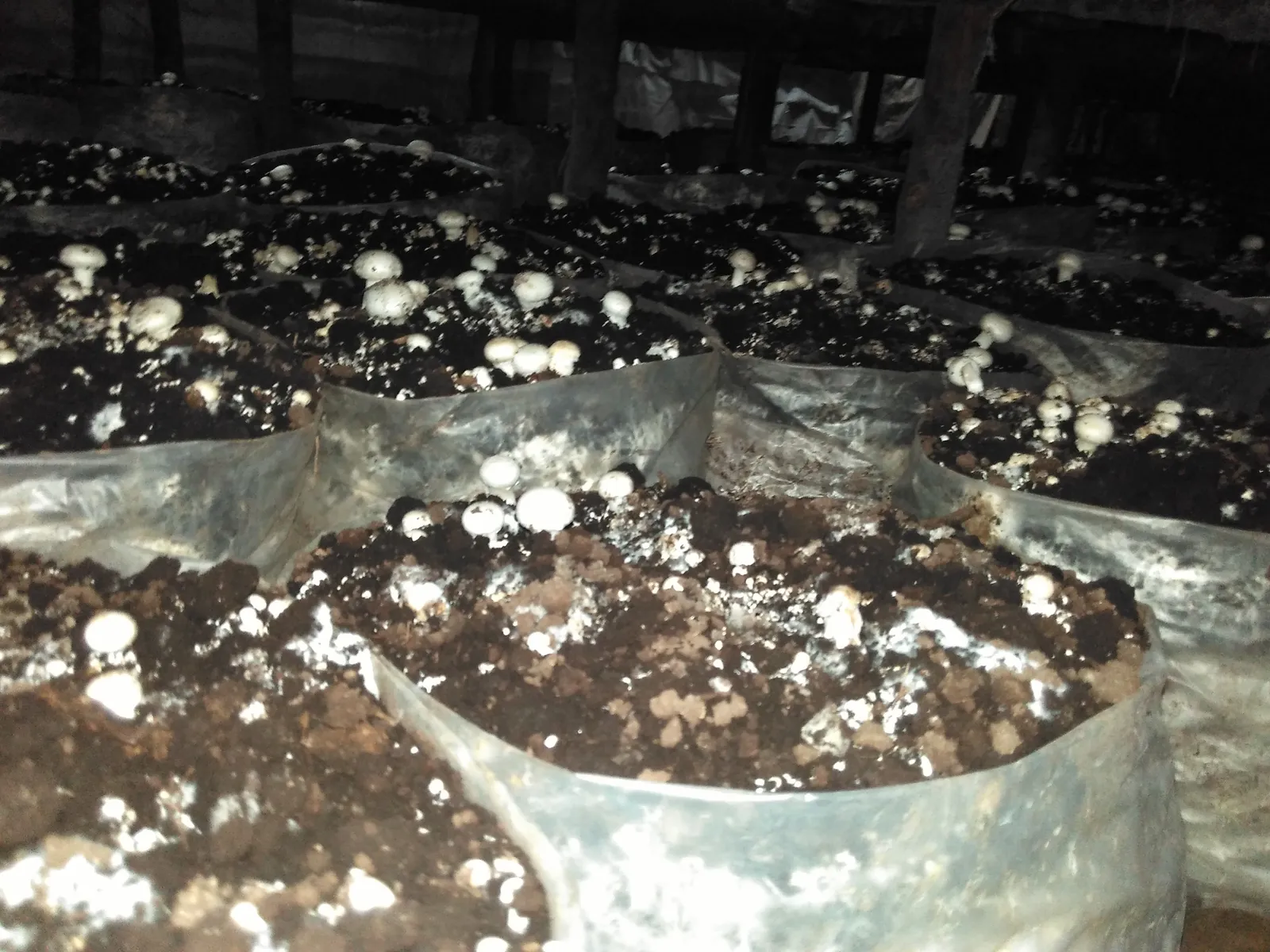
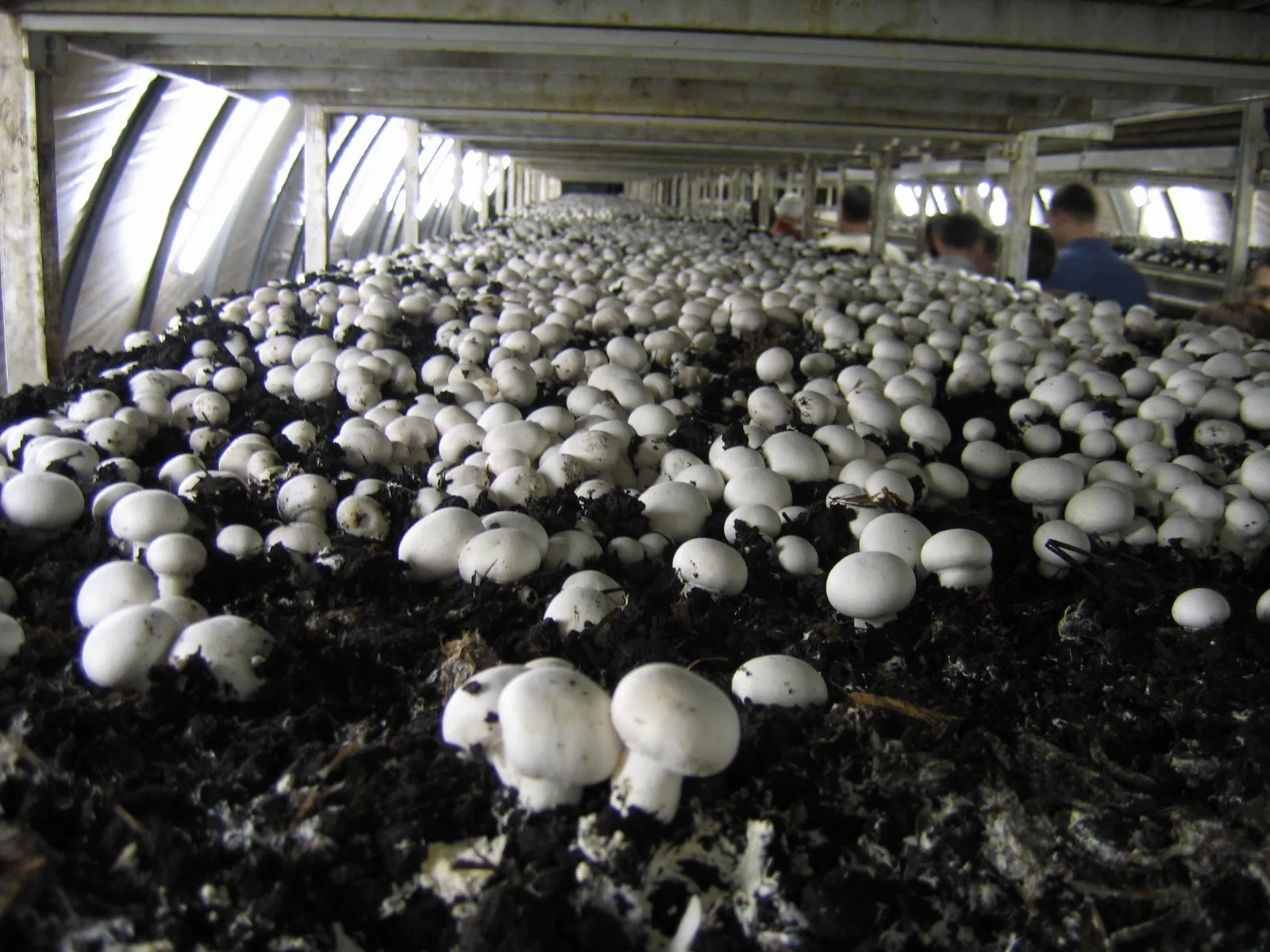
Quick orientation
Define what each tonne means, which stage it belongs to and whether capacity is per batch, week or year.
01
Simple explanation
A compost unit is a sequence of material and air systems, not a collection of isolated machines.
02
What is happening
Process biology sets time and condition requirements. Engineering provides space, flow, energy, water and control capacity.
03
Operator explanation
Define what each tonne means, which stage it belongs to and whether capacity is per batch, week or year.
04
What to observe
Observation should describe stage, location, pattern and change history before interpretation.
- Crossing routes
- bottlenecks
- insufficient storage
- loader conflicts
- drainage path
- maintenance access
- future expansion
05
What to measure
Measurement must retain method, unit, location, timing, calibration and sample identity.
- Stage-specific mass flow
- batch schedule
- usable volumes
- utility loads
- water balance
- energy by batch
06
Equipment and process boundary
Equipment is useful only when its role in the biological process is explicit.
- Storage
- mixer
- turner
- loader
- bunkers
- tunnels
- fans
- electrical and control systems
07
Variables that interact
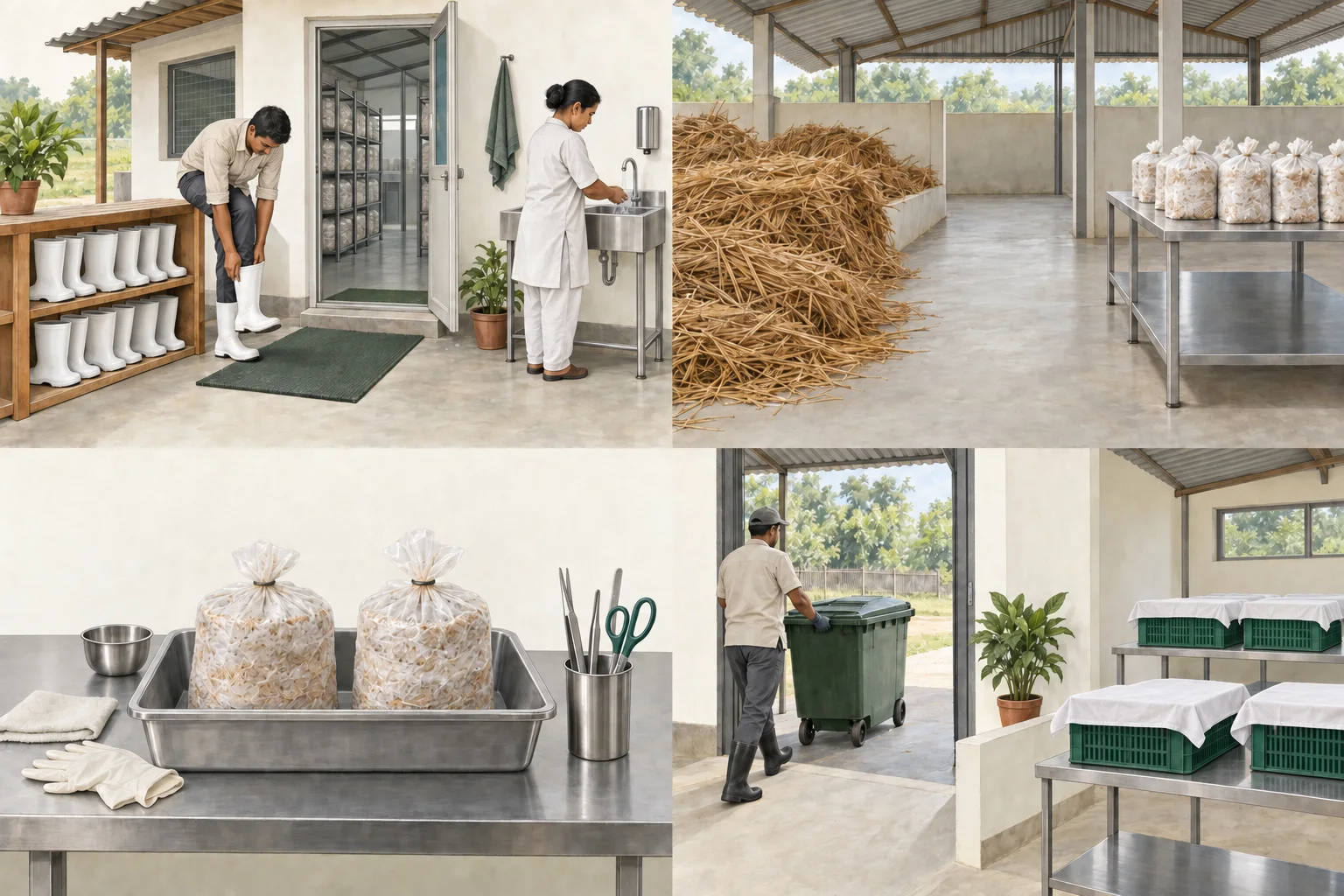
Receipt, storage, pre-wetting, mixing, bunkers, tunnels, machinery movement, blower rooms, controls, drains, utilities, maintenance and clean transfer must fit together.
08
What can go wrong
A symptom may have several mechanisms. Verify the cause before changing the process.
- Universal layout
- ambiguous capacity
- fan HP as process design
- dirty-to-clean backtracking
- downstream bottleneck ignored
09
What changes at commercial scale
Scaling changes geometry, repeatability, instrumentation, material flow and failure consequence.
- Seasonal units prioritize simple resilient flow
- Integrated plants require scheduling, redundancy, maintainability and phased expansion
10
Evidence boundary
Mapped evidence: Farm Design for White Button Mushroom Cultivation; Technologies Developed by ICAR-DMR for Commercial Use; Straightening Out Fan Curves; Improving Fan System Performance: A Sourcebook for Industry. Foundational, current operational, research and engineering sources retain their different roles.
Technical diagrams
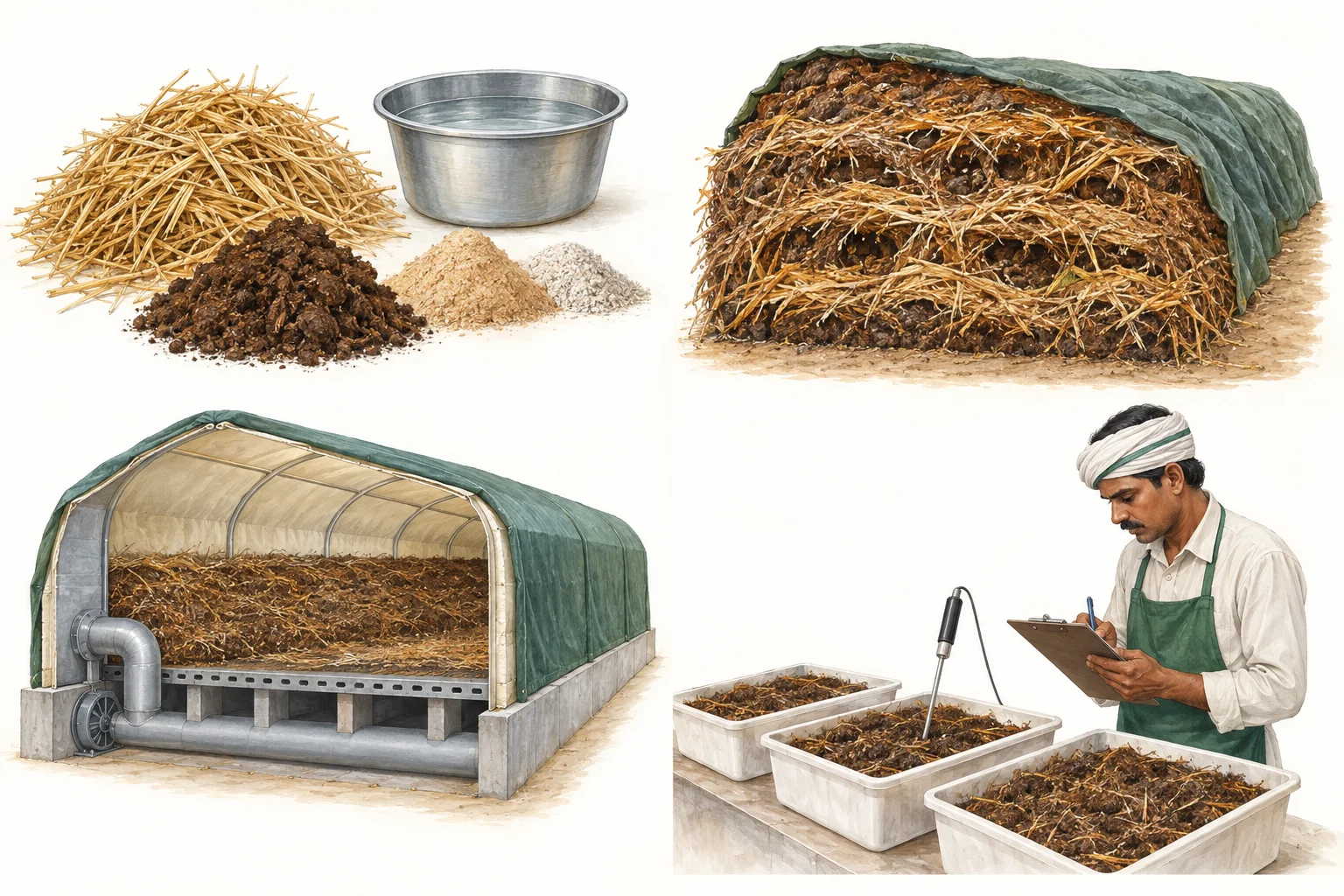
Original system diagrams separate air paths, material paths, measurements and biological transformations.
Progressive depth
Move from field observation to mechanism, engineering and evidence without losing the original question.
PracticalWhat the operator notices
- A compost unit is a sequence of material and air systems, not a collection of isolated machines.
- Crossing routes
- bottlenecks
- insufficient storage
TechnicalHow process variables interact
- Receipt, storage, pre-wetting, mixing, bunkers, tunnels, machinery movement, blower rooms, controls, drains, utilities, maintenance and clean transfer must fit together.
- Stage-specific mass flow
- batch schedule
- usable volumes
EngineeringHow the physical system serves the process
- Storage
- mixer
- turner
- Seasonal units prioritize simple resilient flow
- Integrated plants require scheduling, redundancy, maintainability and phased expansion
ResearchWhich evidence records govern this page
- COMPOST-SRC-DMR-FARM-DESIGN
- COMPOST-SRC-DMR-TECHNOLOGIES
- COMPOST-SRC-AMCA-FAN-CURVES
- COMPOST-SRC-DOE-FANS
The numbers for this step, with their source.
Process values are published from ICAR-DMR guidance with the stage and measuring point they apply to. A parameter still marked pending has no published Indian value yet.
Biological and process parameters
COMPOST.QUALITY.RECOVERYsource contextualCompost recovered per tonne of straw
1.75 to 3.5 t compost per t straw- Stage
- Finished compost
- Measurement context
- Weighed output per tonne of dry wheat straw
- Conditions
- Long method 1.75 to 2.0 tonnes; Short method 2.0 to 2.5 tonnes; Indoor bunker method 3.0 to 3.5 tonnes
Engineering design metrics
COMPOST.ELECTRICAL.CONNECTED_LOADpending technical verificationConnected load
Project value pending verification- Component
- Electrical system
- Design context
- All installed compost-unit equipment
- Method
- Project-specific engineering calculation required
COMPOST.ELECTRICAL.STARTING_DEMANDpending technical verificationStarting demand
Project value pending verification- Component
- Electrical system
- Design context
- Motor-starting sequence and supply response
- Method
- Project-specific engineering calculation required
COMPOST.WATER.BATCHpending technical verificationBatch water balance
Project value pending verification- Component
- Water monitoring
- Design context
- Declared incoming, process, cleaning and leachate boundary
- Method
- Project-specific engineering calculation required
COMPOST.ENERGY.BATCHpending technical verificationBatch energy
Project value pending verification- Component
- Energy monitoring
- Design context
- Metered equipment by batch boundary
- Method
- Project-specific engineering calculation required
Auditable calculation framework
Every equation exposes inputs, units, assumptions, output and validation rules.
COMPOST.FORMULA.THROUGHPUT_INPUTRelate required finished compost to an explicitly supplied recovery ratio.
Required upstream mass = Required finished mass ÷ Recovery ratio- Mf: Required finished compost
- kg or tonne. user input with stage and time basis
- R: Finished-compost recovery ratio
- dimensionless. verified or user-supplied; no default
Assumptions and validation
Assumptions
- Input and output stages are named
- ratio uses compatible mass and moisture bases
Validation tests
- Reject zero or negative ratio
- reject ratio above a contextually possible bound until reviewed
- preserve mass unit
COMPOST.FORMULA.BATCH_ENERGYSum metered energy categories within a declared batch boundary.
Total kWh = blower kWh + fan kWh + pump kWh + mixing kWh + other kWh- Ei: Metered equipment energy
- kWh. nonnegative user or meter record
Assumptions and validation
Assumptions
- Meters share a synchronized batch boundary
- double-counted shared loads are removed
Validation tests
- Reject negative energy
- sum all declared categories
- flag missing meter coverage
COMPOST.FORMULA.WATER_BALANCEReconcile declared incoming, process, cleaning and leachate water records.
Recorded outflow and retained water = incoming water + approved reuse - measured discharge and losses- Wi: Incoming water
- L or m³. metered input
- Wr: Approved reuse
- same volume unit. separate user record
- Wo: Measured outflow
- same volume unit. metered or estimated with method
Assumptions and validation
Assumptions
- All terms share one batch and one unit
- rainfall and evaporation are declared when material
Validation tests
- Reject mixed units without conversion
- reject negative inputs
- flag incomplete boundary
Evidence, applicability and review4 mapped sources
Sources support mechanisms and architecture. Technical and engineering values publish only through their separate governed registries.
Farm Design for White Button Mushroom Cultivation
Indian farm workflow, compost-unit components, tunnel and controlled-farm engineering vocabulary.
- Publisher
- ICAR-Directorate of Mushroom Research
- Accessed
- 2026-08-22
Technologies Developed by ICAR-DMR for Commercial Use
Documents distinct Indian composting methods, including aerated indoor Phase I and ZEPT concepts.
- Publisher
- ICAR-Directorate of Mushroom Research
- Accessed
- 2026-08-22
Straightening Out Fan Curves
Fan curve, system curve, airflow, static pressure, operating point and efficiency concepts.
- Publisher
- Air Movement and Control Association International
- Accessed
- 2026-08-22
Improving Fan System Performance: A Sourcebook for Industry
Fan-system efficiency, control, operating point and system-resistance principles.
- Publisher
- United States Department of Energy
- Accessed
- 2026-08-22