

Quick orientation
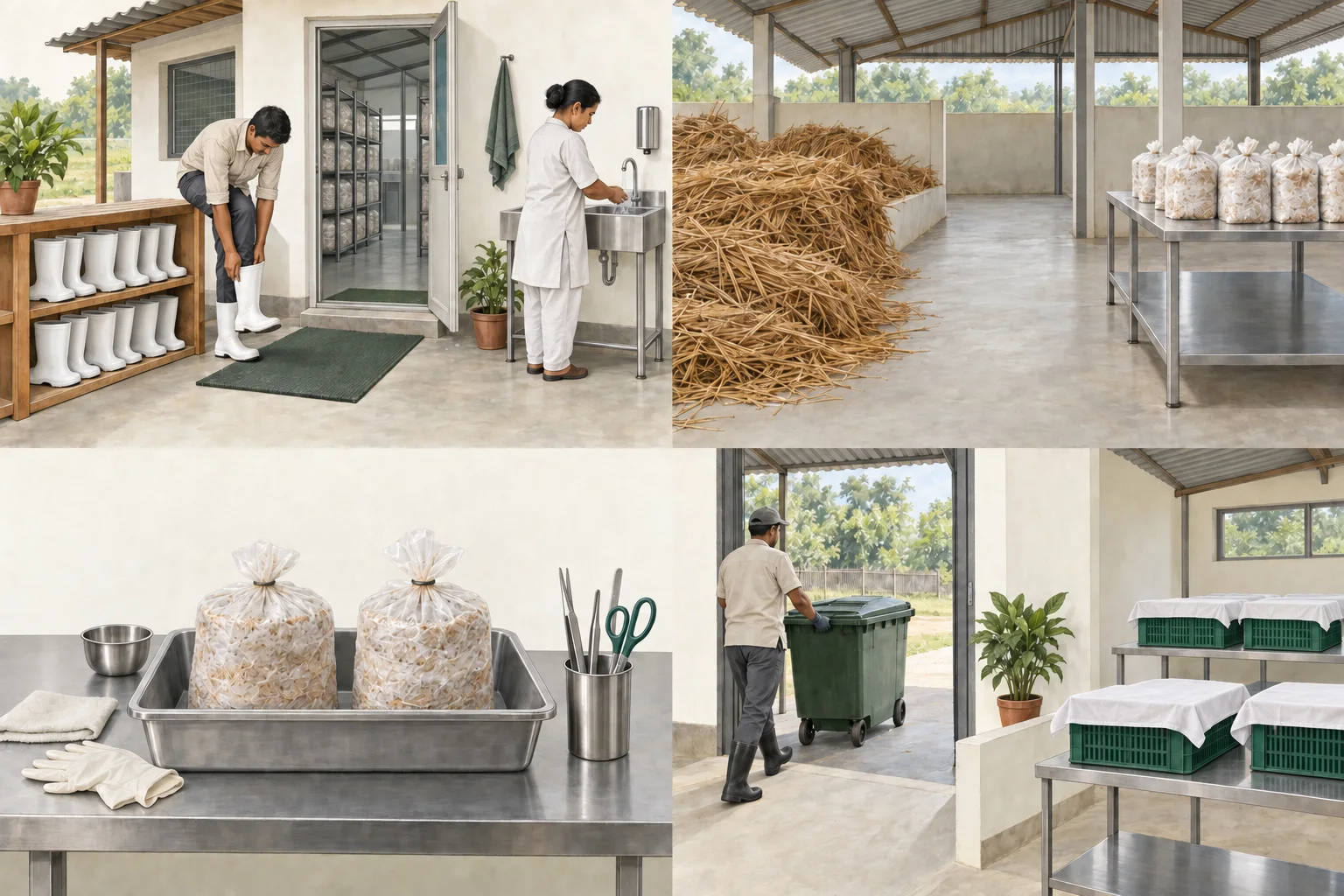
Map the first location, restrict movement, preserve a representative sample and escalate when action depends on identity.
01
Simple explanation
A colour or mould appearance is not a complete organism diagnosis.
02
What is happening
Competitors can enter with materials, survive inadequate treatment or spread through equipment, people, air, water and waste routes.
03
Operator explanation
Map the first location, restrict movement, preserve a representative sample and escalate when action depends on identity.
04
What to observe
Observation should describe stage, location, pattern and change history before interpretation.
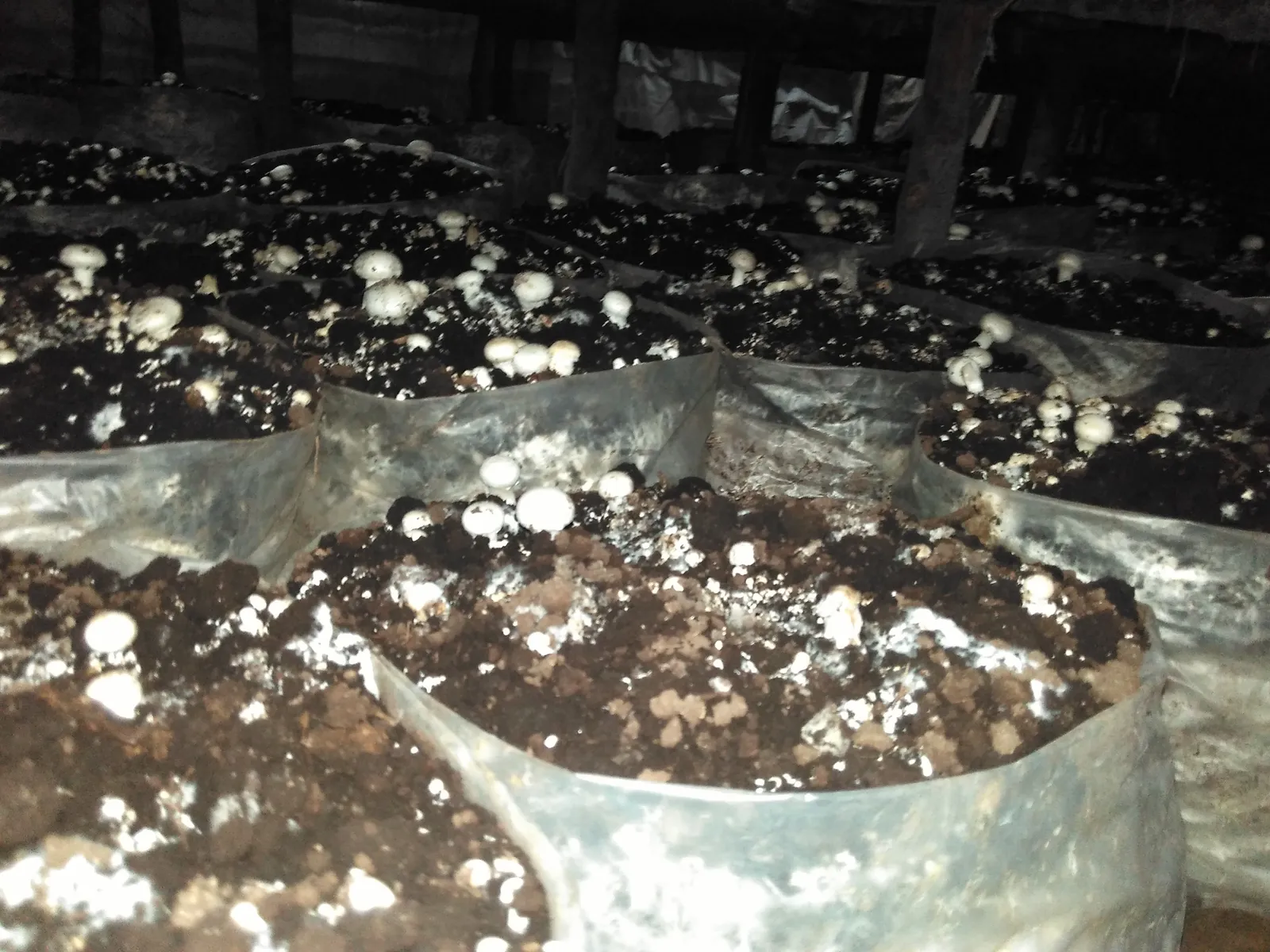
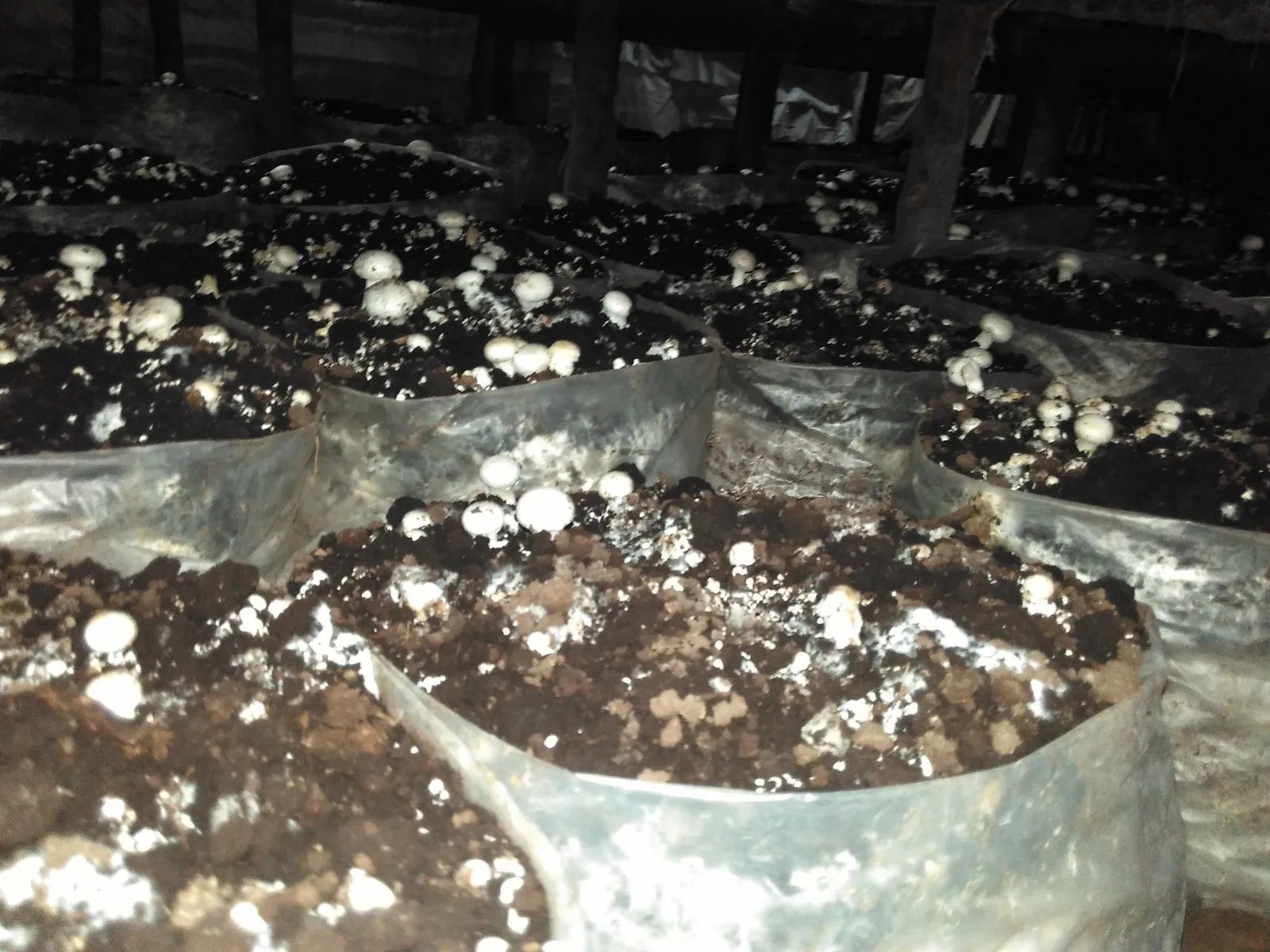
- Colour change
- growth pattern
- first affected zone
- batch links
- odour
- associated insects or water
05
What to measure
Measurement must retain method, unit, location, timing, calibration and sample identity.
- Laboratory identification where needed
- treatment record
- temperature map
- material and transfer traceability
06
Equipment and process boundary
Equipment is useful only when its role in the biological process is explicit.
- Contained sampling
- dedicated tools
- waste route
- cleaning system
- qualified laboratory
07
Variables that interact
Raw-material risk, pasteurization, conditioning, tunnel cleaning, spawn transition and crop disease records connect.
08
What can go wrong
A symptom may have several mechanisms. Verify the cause before changing the process.
- Every green mould treated alike
- disturbing spores before recording
- chemical recommendation without current verification
- clean-dirty crossover
09
What changes at commercial scale
Scaling changes geometry, repeatability, instrumentation, material flow and failure consequence.
- Small units can separate tools and movement
- Commercial units need zoning, containment, lot links and documented sanitation verification
10
Evidence boundary
Mapped evidence: Mushroom Cultivation, Marketing and Consumption; ICAR-DMR technical and diagnostic services. Foundational, current operational, research and engineering sources retain their different roles.
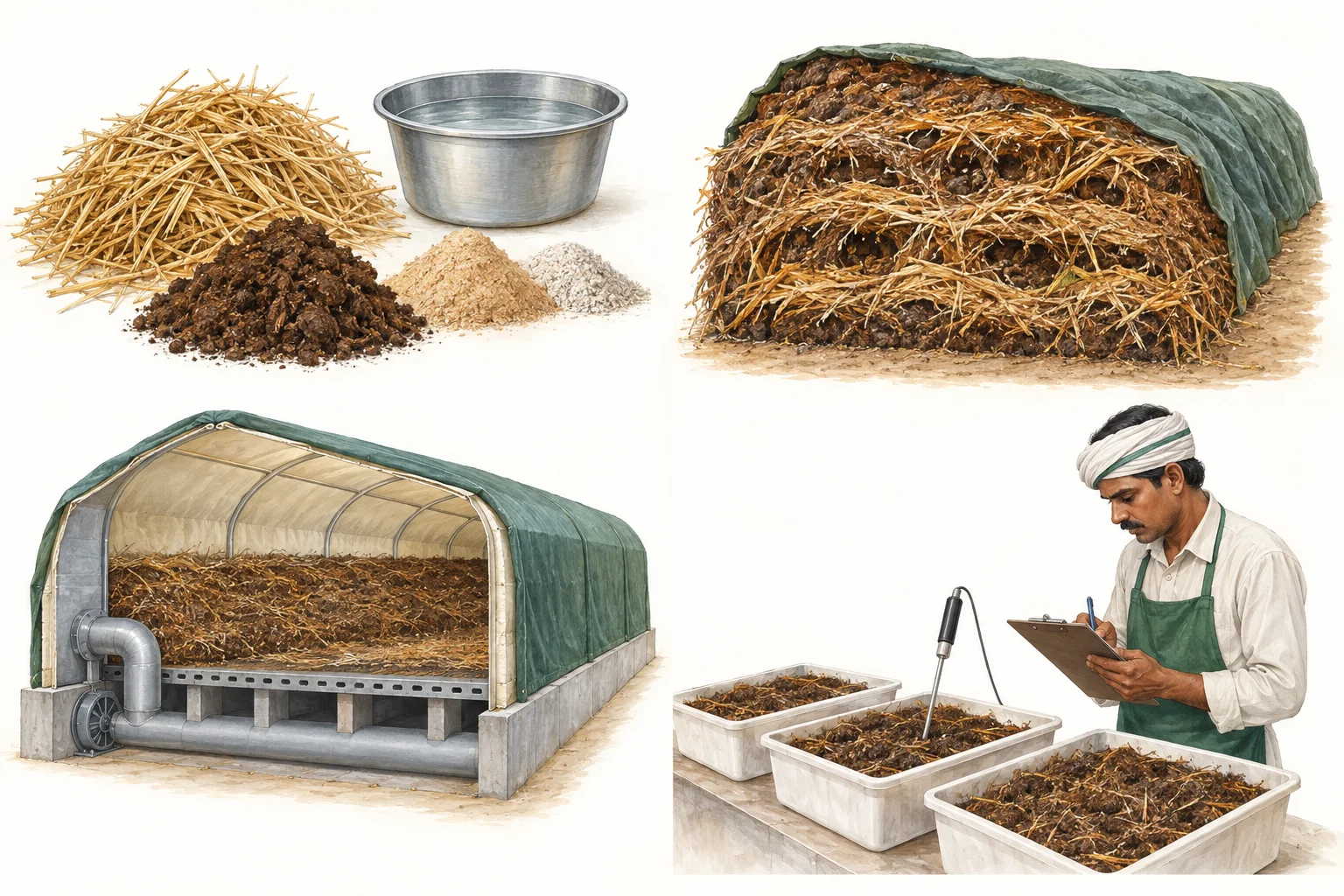
Technical diagrams
Original system diagrams separate air paths, material paths, measurements and biological transformations.
Progressive depth
Move from field observation to mechanism, engineering and evidence without losing the original question.
PracticalWhat the operator notices
- A colour or mould appearance is not a complete organism diagnosis.
- Colour change
- growth pattern
- first affected zone
TechnicalHow process variables interact
- Raw-material risk, pasteurization, conditioning, tunnel cleaning, spawn transition and crop disease records connect.
- Laboratory identification where needed
- treatment record
- temperature map
EngineeringHow the physical system serves the process
- Contained sampling
- dedicated tools
- waste route
- Small units can separate tools and movement
- Commercial units need zoning, containment, lot links and documented sanitation verification
ResearchWhich evidence records govern this page
- COMPOST-SRC-DMR-MANUAL
- COMPOST-SRC-DMR-SERVICES
Evidence, applicability and review2 mapped sources
Sources support mechanisms and architecture. Technical and engineering values publish only through their separate governed registries.
Mushroom Cultivation, Marketing and Consumption
Indian Button Mushroom compost methods, cultivation context, Phase I and Phase II process vocabulary.
- Publisher
- ICAR-Directorate of Mushroom Research
- Accessed
- 2026-08-22
ICAR-DMR technical and diagnostic services
Official scope for compost, casing and ingredient testing plus technical support.
- Publisher
- ICAR-Directorate of Mushroom Research
- Accessed
- 2026-08-22