


Quick orientation
Preserve measurements and batch history, ask discriminating questions and correct only the verified limiting domain.
01
Simple explanation
Start with the stage, pattern, timing and what changed before naming a cause.
02
What is happening
Similar symptoms can emerge from different biological, physical, chemical and engineering mechanisms.
03
Operator explanation
Preserve measurements and batch history, ask discriminating questions and correct only the verified limiting domain.
04
What to observe
Observation should describe stage, location, pattern and change history before interpretation.
- Stage
- method
- batch and material lots
- spatial pattern
- recent action
- odour and leachate
- sensor coverage
05
What to measure
Measurement must retain method, unit, location, timing, calibration and sample identity.
- Temperature map
- moisture
- airflow and pressure
- oxygen or ammonia where safe
- equipment state
- samples
06
Equipment and process boundary
Equipment is useful only when its role in the biological process is explicit.
- Batch record
- diagnostic question tree
- calibrated instruments
- safe isolation
- laboratory escalation
07
Variables that interact
The root-cause model links every symptom to candidate domains and measurements instead of assigning fake probabilities.
08
What can go wrong
A symptom may have several mechanisms. Verify the cause before changing the process.
- One symptom one cause
- manufactured probability
- blind corrective timer
- unsafe exposure
- lost traceability
09
What changes at commercial scale
Scaling changes geometry, repeatability, instrumentation, material flow and failure consequence.
- Small operations need structured questions to compensate for fewer instruments
- Commercial units can compare batches, zones and repeated failure patterns
10
Evidence boundary
Mapped evidence: Mushroom Cultivation, Marketing and Consumption; ICAR-DMR technical and diagnostic services; Straightening Out Fan Curves; Ammonia chemical safety fact sheet. Foundational, current operational, research and engineering sources retain their different roles.
Compost troubleshooting engine
Choose the observed symptom, then investigate candidate domains and discriminating checks.
Compost is not heating properly
Microbial heat production or heat retention is insufficient, or the measurement does not represent the active zone.
Candidate domains
- Raw-material condition
- insufficient moisture
- poor mixing
- limited active mass
- sensor error
Measure
- Multi-point temperature
- moisture method
- material-lot record
- oxygen or airflow evidence
Verify
- Compare multiple probes
- inspect wetting uniformity
- check method and batch geometry
Corrective options
- Correct only the verified limiting domain
- escalate when raw-material or contamination evidence is unclear
No probability, timer or treatment is manufactured here. Escalate when the evidence is weak or safety is involved.
Technical diagrams
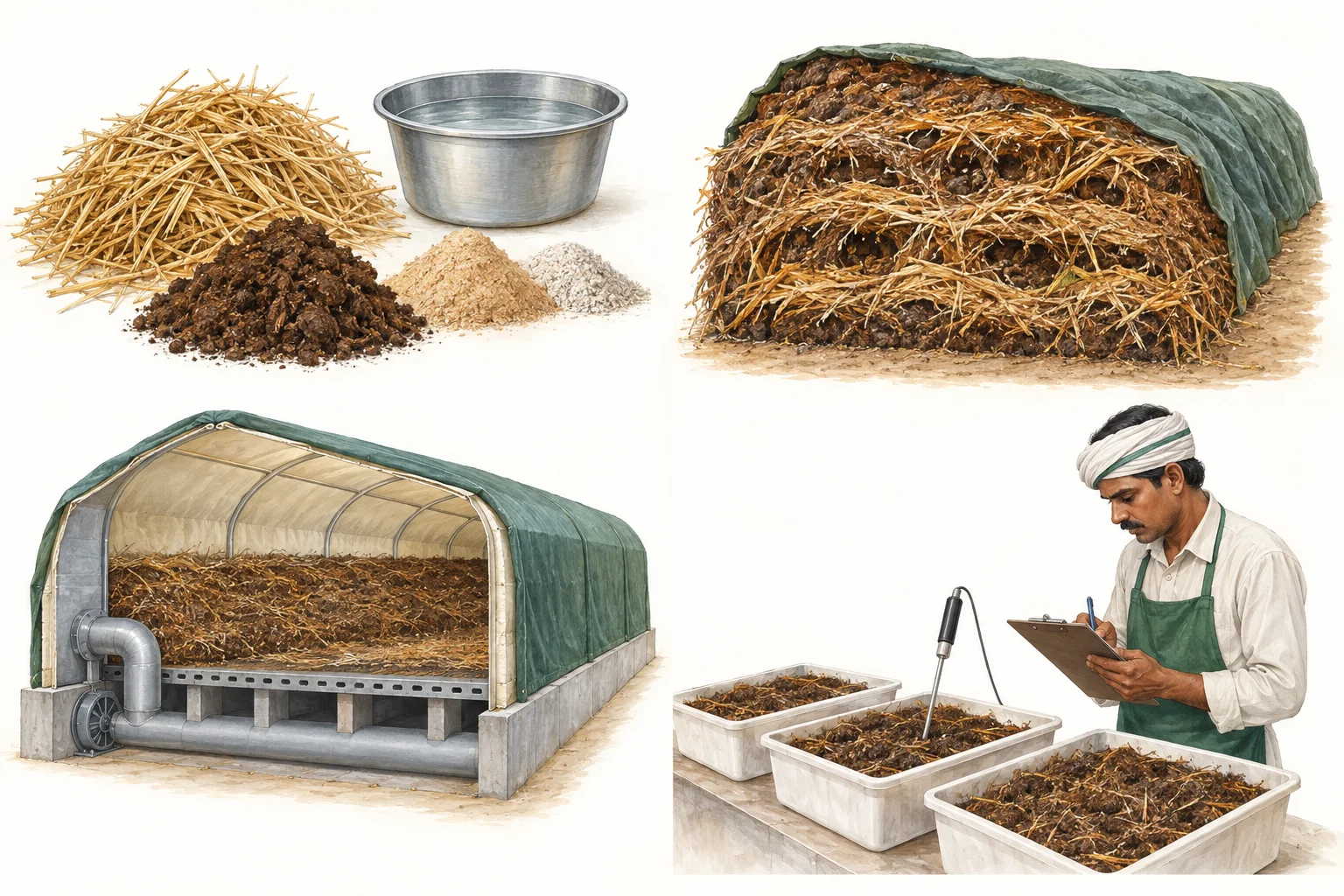
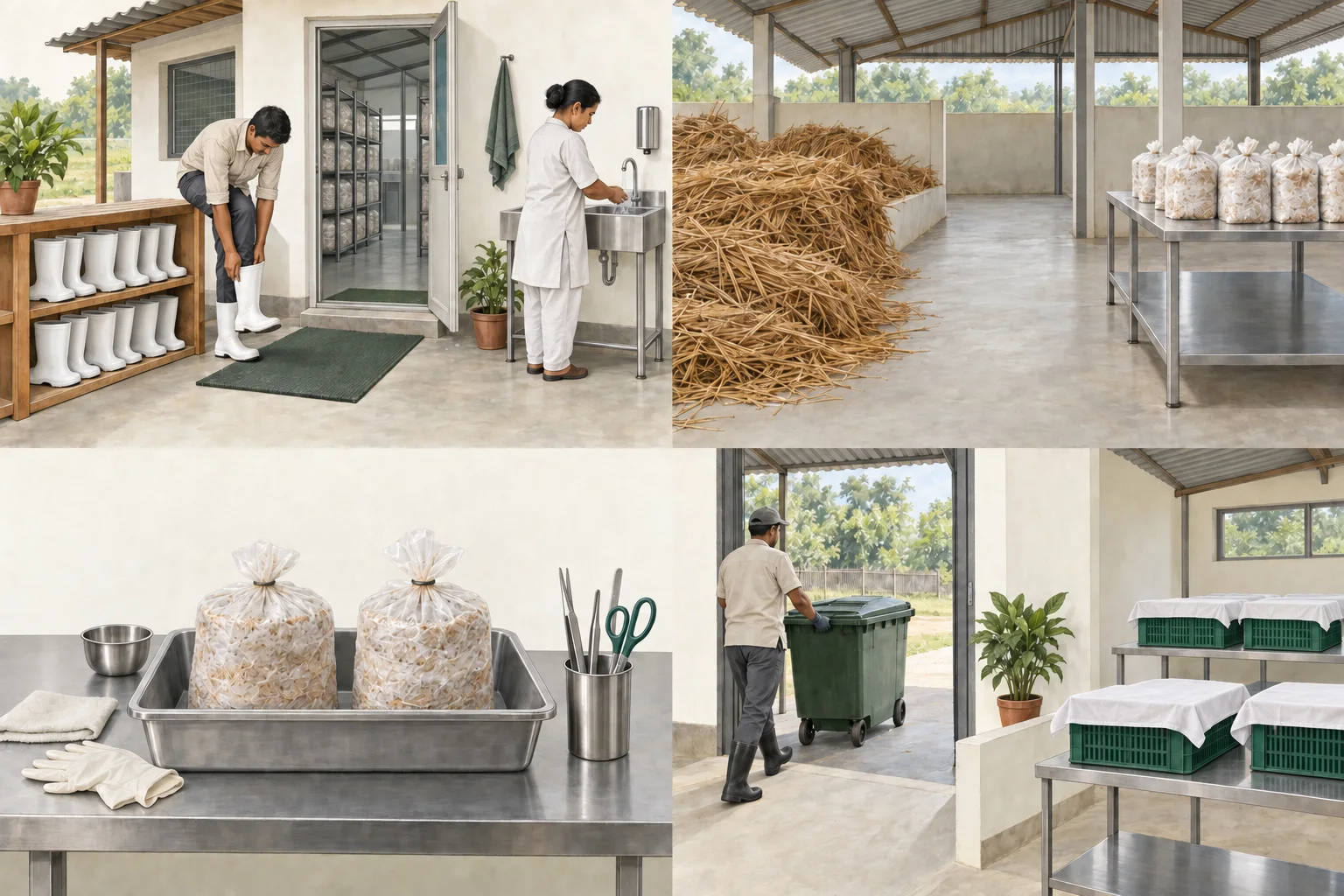
Original system diagrams separate air paths, material paths, measurements and biological transformations.
Progressive depth
Move from field observation to mechanism, engineering and evidence without losing the original question.
PracticalWhat the operator notices
- Start with the stage, pattern, timing and what changed before naming a cause.
- Stage
- method
- batch and material lots
TechnicalHow process variables interact
- The root-cause model links every symptom to candidate domains and measurements instead of assigning fake probabilities.
- Temperature map
- moisture
- airflow and pressure
EngineeringHow the physical system serves the process
- Batch record
- diagnostic question tree
- calibrated instruments
- Small operations need structured questions to compensate for fewer instruments
- Commercial units can compare batches, zones and repeated failure patterns
ResearchWhich evidence records govern this page
- COMPOST-SRC-DMR-MANUAL
- COMPOST-SRC-DMR-SERVICES
- COMPOST-SRC-AMCA-FAN-CURVES
- COMPOST-SRC-CDC-AMMONIA
The numbers for this step, with their source.
Process values are published from ICAR-DMR guidance with the stage and measuring point they apply to. A parameter still marked pending has no published Indian value yet.
Biological and process parameters
COMPOST.PHASE1.COMPOST_TEMPERATUREsource contextualPhase I heap temperature
65 to 70 °C- Stage
- Phase I
- Measurement context
- Core of the outdoor long-method heap
- Conditions
- The heap should reach 65 to 70 °C in the core (ICAR-DMR farmer folder); ICAR-DMR treats 80 °C as the upper safe core temperature; Probe depth, time since turning and weather change the reading
COMPOST.MOISTURE.COMPOSTsource contextualFinished compost moisture
64 to 72 %- Stage
- Finished compost
- Measurement context
- Squeeze test or oven sample at spawning
- Conditions
- Synthetic compost 68 to 72 percent at spawning; natural horse-manure compost 65 to 67 percent; After tunnel Phase II ICAR-DMR reports 64 to 66 percent; Never spawn above 72 percent moisture
COMPOST.AMMONIA.RESIDUALsource contextualResidual ammonia release criterion in the cited DMR method
Technical value pending verification- Stage
- POPC and release
- Measurement context
- Representative compost and process-air evidence using a declared safe method
- Conditions
- The cited release criterion is strictly below 10 ppm; State sampling location, instrument or method, temperature and cooling status; Do not use odour alone as a release measurement
Engineering design metrics
COMPOST.AERATION.AIRFLOWpending technical verificationRequired airflow
Project value pending verification- Component
- Aeration system
- Design context
- Process stage and loaded compost resistance
- Method
- Project-specific engineering calculation required
COMPOST.AERATION.STATIC_PRESSUREpending technical verificationRequired static pressure
Project value pending verification- Component
- Aeration system
- Design context
- Complete floor, duct and compost system
- Method
- Project-specific engineering calculation required
COMPOST.FAN.DUTY_POINTpending technical verificationOperating duty point
Project value pending verification- Component
- Fan or blower
- Design context
- Intersection of verified fan and system curves
- Method
- Project-specific engineering calculation required
Evidence, applicability and review4 mapped sources
Sources support mechanisms and architecture. Technical and engineering values publish only through their separate governed registries.
Mushroom Cultivation, Marketing and Consumption
Indian Button Mushroom compost methods, cultivation context, Phase I and Phase II process vocabulary.
- Publisher
- ICAR-Directorate of Mushroom Research
- Accessed
- 2026-08-22
ICAR-DMR technical and diagnostic services
Official scope for compost, casing and ingredient testing plus technical support.
- Publisher
- ICAR-Directorate of Mushroom Research
- Accessed
- 2026-08-22
Straightening Out Fan Curves
Fan curve, system curve, airflow, static pressure, operating point and efficiency concepts.
- Publisher
- Air Movement and Control Association International
- Accessed
- 2026-08-22
Ammonia chemical safety fact sheet
General ammonia exposure hazards and the limits of relying on human smell.
- Publisher
- United States Centers for Disease Control and Prevention
- Accessed
- 2026-08-22