


A practical guide to growing mushrooms in IndiaA joint educational initiative by MushroomWale & DMR Solan ↗
MushroomFarming.in

A joint educational initiative by

MushroomWale.com
ICAR–Directorate of Mushroom Research, Solan logoICAR–DMRSolan

MushroomFarming / guide

Farm planning tools

One auditable financial engine for feasibility, cost, production, market, cash, risk and comparison decisions.

Practical explanation + detailed referenceSources & review ↓
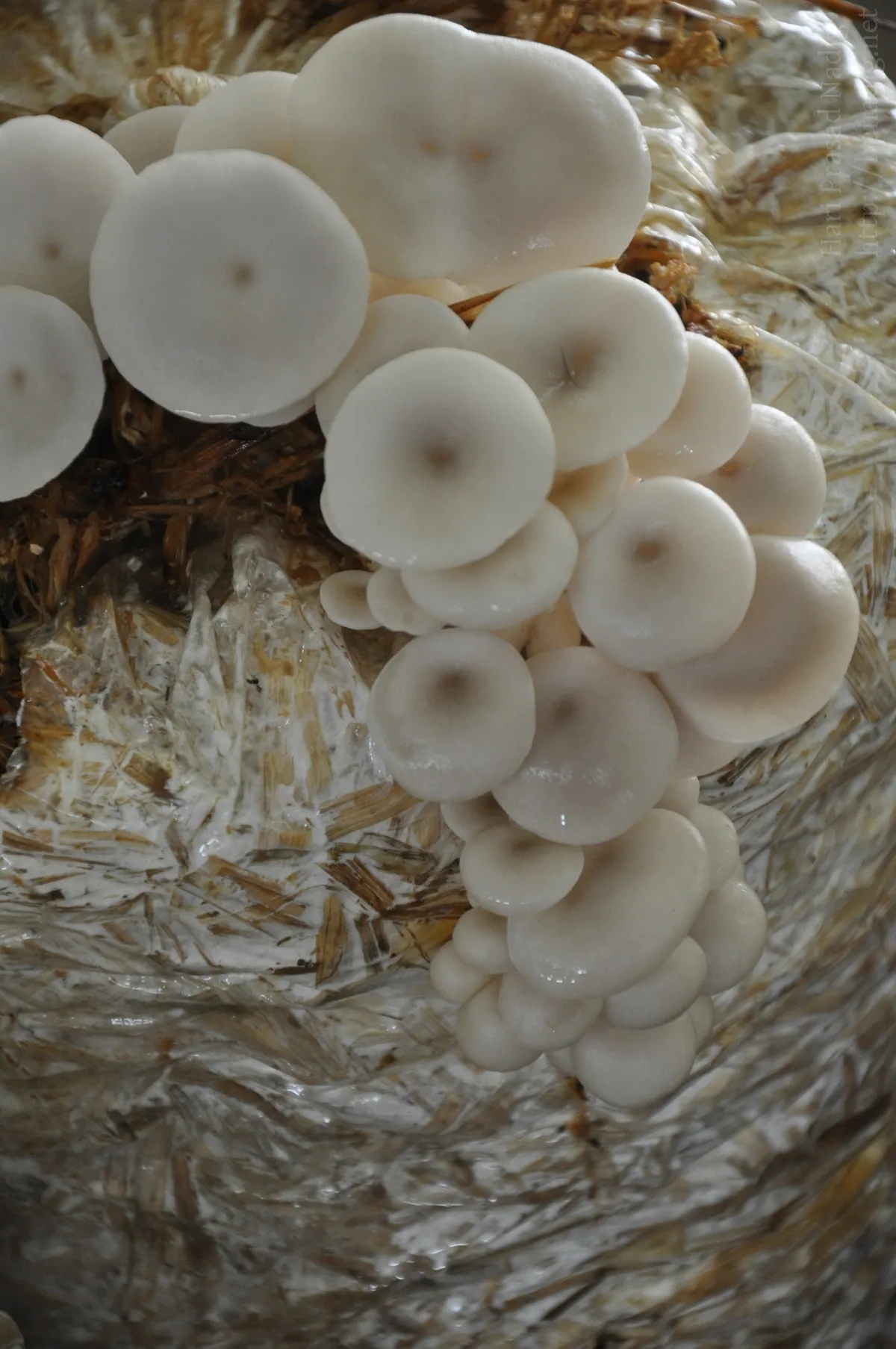
White oyster mushrooms fruiting from a paddy-straw bag, displayed at an organic food mela in Bangalore, Karnataka (2010).
Real cultivation photograph. Read its source for location and context; it is not a universal operating specification.Hari Prasad Nadig from Bangalore, India · CC BY-SA 2.0View full photograph ↗
On this pageChoose a section, or keep reading below

Understand the topic

What you need to know.

The farm planning tools on this site turn your inputs into production, cost, break-even, cash and risk figures, all from one calculation engine. This page explains what each tool answers, what it cannot know, and how to feed it honest numbers from your own records. A tool is only as good as its weakest input, and it is allowed to tell you not to build yet.

Teaching revised 2026-09-24. Source-linked editorial synthesis; this date does not imply independent technical review.

Part 01

What a calculator knows, and what only your farm can tell it

Every tool here runs on the same versioned engine, so a cost per kilogram in one tool matches the same figure in another. The engine does the arithmetic. It does not know your compost, your rooms, your electricity tariff or your buyers.

That split decides how to use the results. The tools keep production, saleable quantity, sales, realised price, operating result and cash movement apart, because each one answers a different question. Defaults are visible and editable, prices are either dated by you or left blank, and subsidy is never counted as operating revenue.

A result means something only when its inputs carry a label: measured on this farm, taken from a named document, or assumed. Keep that label beside every input. A blank field is more honest than a national average typed in to make the page look complete.

The results come from an educational pre-tax model. They are not a quotation, a bank-approved DPR, a subsidy decision or a promise of profit, and they can return no-go.

Source: MushroomFarming.in guide

From your records to a decision

  1. RecordsBills, crop diary, harvest weights and buyer slips.
  2. Labelled inputsEach marked measured, sourced or assumed, with a date.
  3. Base resultProduction, cost per sold kilogram, break-even and cash need.
  4. Downside runsLower yield, lower price, higher cost, slower payment.
  5. DecisionGo, conditional, pilot or no-go.
Part 02

Which tool answers which question

Pick the tool by the decision in front of you, not by the headline number you hope to see.

  • Feasibility check: tests the whole project across biology, climate, technical set-up, infrastructure, raw material, market, finance, operator and risk, and returns go, conditional, pilot or no-go.
  • CAPEX planner: builds an asset register with source type, date, place and GST treatment, and keeps contingency and working capital separate. It does not supply prices.
  • OPEX planner: sorts running costs into variable, semi-variable, fixed and step-fixed, so you can see which ones move with output.
  • Cost per kg calculator: gives variable, operating and fully loaded cost per sold saleable kilogram.
  • Production planner and crop scheduler: work back from the saleable output you want through yield, crop units and room use, and stagger rooms without assuming the same harvest every day.
  • Break-even calculator: the quantity, realised price and room use at which contribution covers fixed cost. Profitability calculator: revenue, contribution, operating profit or loss and finance, shown separately.
  • Cash-flow planner and working-capital calculator: monthly receipts and payments, and the cash tied up in stock, crops in progress and unpaid invoices, less supplier credit.
  • Sensitivity analysis: a yield and price grid, plus a chart ranking which assumption moves the result most.
  • Market-price evidence tool: stores your dated rate by market and grade with where it came from, or shows plainly that no checked local price is available.
  • Electricity, labour and compost make-or-buy tools: cost one input in detail, whether power from metered use or duty cycle, labour of every kind, or bought against home-made compost.

Source: MushroomFarming.in guide

Part 03

Feed the tools inputs you could defend to a lender

Enter each input in the form the tool asks for, and note where it came from. Replace published figures with your own records as soon as you have a finished crop.

  1. YieldStart low within a published range. For button mushrooms, Table 7.1 of the ICAR-DMR manual gives 10 to 15 kg per 100 kg compost for the long method and 18 to 25 kg for the short method.
  2. Saleable shareWeigh the harvest, then weigh what was sold, rejected and left unsold. Never enter harvested kilograms as sold.
  3. PriceEnter a dated rate from a named buyer for a named grade, less commission and transport. Leave the field blank rather than borrow an online retail price.
  4. Crops per roomEnter the number your rooms will really carry. The manual's economics model assumes 6 crops of 60 days per room each year in controlled rooms, while some seasonal growers take one crop a season.
  5. ElectricityUse metered kWh, or each machine's power times its duty cycle and running hours, with your tariff, demand and fixed charges.
  6. LabourInclude permanent, daily-wage, piece-rate, family and owner labour. Unpaid family work still has a value at the local wage.
  7. SubsidyLeave it out of operating revenue, and run every case without it.

Sources: ICAR-DMR manual, 2011 · MushroomFarming.in guide

Part 04

Keep four records, because the tools read nothing else

The tools are only as current as the records you keep. Four records cover almost every input, and each answers a different question.

An investment register lists assets, installation, delivery, taxes and exclusions: what must be funded before the farm operates. A crop cost sheet lists the inputs, labour, utilities, packing and shared overheads each crop consumed. A sales ledger lists accepted grades, quantities, prices, returns and deductions: the revenue actually earned. A cash calendar lists actual and expected receipts, payments and loan instalments: whether the farm can pay each bill on the day it falls due.

Weigh the harvest before grading and again after, and write both weights in the crop diary with the date. NHB's 2018 model report asks every applicant to describe the farm records they will keep, and its self-declaration commits the applicant to maintain proper farm accounts. The records that feed the tools are the same ones a bank and an inspection will ask to see.

After the first complete crops, put what actually happened back into the tools. Do not raise a forecast to match an income you hoped for.

Sources: MushroomFarming.in guide · NHB DPR model, 2018

Four records and the question each one answers

  1. Investment registerWhat must be funded before the farm operates?
  2. Crop cost sheetWhat did this crop consume?
  3. Sales ledgerWhat revenue was actually earned?
  4. Cash calendarCan the farm pay each bill on the day it falls due?
Part 05

Read the result before you act on it

IfBreak-even kilograms are more than your rooms can produce at a low yield.
ThenThe size or the cost structure does not work yet. Change the plan, not the yield.
IfThe break-even calculator finds no break-even point.
ThenNet price per kilogram is at or below variable cost, so extra volume only adds loss. Fix price or cost before anything else.
IfThe year shows a surplus but the cash-flow planner shows a negative month.
ThenThat lowest balance is working capital you must arrange before starting, from your own funds or an agreed limit.
IfThe sensitivity chart shows one input moving the result far more than the others.
ThenSpend your next effort on evidence for that input: a trial crop, a firm quotation or a buyer's written rate.
IfThe feasibility check returns pilot.
ThenRun a small number of crops at small scale, record them, and run the tools again with measured figures.
IfYour own compost looks far cheaper than bought compost.
ThenCheck that straw, manure, labour, power and the yard are each counted once, and that the yield on your own compost is measured, not assumed.

Source: MushroomFarming.in guide

Part 06

Input mistakes that make a weak plan look strong

Common mistakeSetting room use at 100 per cent.

Do this insteadRooms stand empty while they are filled, emptied and cleaned. Enter turnaround time and the share of the year each room is really in crop.

Common mistakeTyping in a price seen online, or a national average.

Do this insteadUse your own dated buyer record, or leave the price blank until you have one.

Common mistakeMultiplying the nameplate power of every machine by every hour of the year.

Do this insteadUse a meter reading, or power times duty cycle times the hours each machine actually runs.

Common mistakeLeaving family and owner labour at zero.

Do this insteadValue it in the labour tool, which shows both a cash view and an economic view.

Common mistakeComparing two projects built on different cost boundaries.

Do this insteadUse the project comparison tool, which applies the same method to both while keeping species, system, cycle and market differences visible.

Common mistakeTreating one run of the model as the answer.

Do this insteadSave the base case, run the low cases, and keep all of them with the date and the inputs used.

Source: MushroomFarming.in guide

Keep exploring

Every part of this topic.

Choose the stage, material or decision you need to understand next.

01

Which mushroom should I grow?

Use location, season, room control, substrate, skill, scale and market to form candidates, poor fits and verification questions. Evidence, method and India-context boundaries remain visible.

02

Seasonal mushroom calendar

Explore potentially suitable crop groups from month and ambient climate while keeping controlled production separate. Evidence, method and India-context boundaries remain visible.

03

Rack growing area calculator

A geometry-only calculator for nominal horizontal growing area.

04

Mushroom farm feasibility check

Assess project dimensions, financial model quality, red flags and a go, conditional, pilot or no-go decision.

05

Mushroom farm CAPEX planner

Build a relevant asset register with source type, date, geography, GST treatment, contingency and working capital kept separate.

06

Mushroom farm OPEX planner

Classify operating inputs, utilities, labour, distribution and overhead by variable, semi-variable, fixed or step-fixed behavior.

07

Mushroom cost per kg calculator

Calculate variable, operating and fully loaded cost per sold saleable kilogram.

08

Mushroom production planner

Work backwards from target average saleable production through yield, crop units, utilization, scheduling and market capacity.

09

Mushroom crop scheduler

Stagger rooms or batches without assuming uniform daily output or a fabricated production curve.

10

Mushroom farm break-even calculator

Calculate break-even quantity, realized price and utilization with contribution margin and edge-case handling.

11

Mushroom farm profitability calculator

Show revenue, contribution, operating profit or loss, finance, cost per kilogram and margin without selecting the flattering number.

12

Mushroom farm cash-flow planner

Model monthly receipts and payments to expose early cash gaps even when annual accounting profit is positive.

13

Mushroom farm working-capital calculator

Calculate inventory, crop WIP, receivables and cash buffer less supplier credit.

14

Mushroom farm sensitivity analysis

Test editable yield and price combinations plus a calculation-driven tornado of major assumptions.

15

Button mushroom room economics planner

Connect room capacity, crop duration, turnaround, utilization, power, labour and annual saleable output.

16

Compost make-or-buy planner

Compare purchased compost with own production without double counting inputs or assuming own compost is cheaper.

17

Mushroom market-price evidence tool

Record a user-supplied date, market, grade, min, max, modal, quantity and provenance, or clearly show that no independently checked local price is available.

18

Mushroom farm electricity-cost calculator

Combine measured kWh or equipment power, duty cycle, hours, tariff, demand and fixed charges without multiplying nameplate load by the whole year.

19

Mushroom farm labour-cost planner

Value permanent, daily-wage, piece-rate, family and owner labour in cash and economic views.

20

Mushroom project comparison

Compare two normalized annual scenarios with identical methodology while preserving species, system, cycle and market differences.

Go deeper

Technical reference, records and tools.

Detailed crop-stage information, parameters, diagrams and specialist tools are kept together below. This material retains its source conditions and review limits.

Open the complete technical reference

Governed planning calculators

Farm planning tools

One auditable financial engine for feasibility, cost, production, market, cash, risk and comparison decisions.

Run feasibility check
Prices
Dated or left blank
Defaults
Visible and editable
Subsidy
Never operating revenue
Decision
Can be no-go

17 governed routes in this planning system.

One canonical page per intent, linked back to technical causes.

Mushroom farm feasibility check

Assess project dimensions, financial model quality, red flags and a go, conditional, pilot or no-go decision.

Mushroom farm CAPEX planner

Build a relevant asset register with source type, date, geography, GST treatment, contingency and working capital kept separate.

Mushroom farm OPEX planner

Classify operating inputs, utilities, labour, distribution and overhead by variable, semi-variable, fixed or step-fixed behavior.

Mushroom cost per kg calculator

Calculate variable, operating and fully loaded cost per sold saleable kilogram.

Mushroom production planner

Work backwards from target average saleable production through yield, crop units, utilization, scheduling and market capacity.

Mushroom crop scheduler

Stagger rooms or batches without assuming uniform daily output or a fabricated production curve.

Mushroom farm break-even calculator

Calculate break-even quantity, realized price and utilization with contribution margin and edge-case handling.

Mushroom farm profitability calculator

Show revenue, contribution, operating profit or loss, finance, cost per kilogram and margin without selecting the flattering number.

Mushroom farm cash-flow planner

Model monthly receipts and payments to expose early cash gaps even when annual accounting profit is positive.

Mushroom farm working-capital calculator

Calculate inventory, crop WIP, receivables and cash buffer less supplier credit.

Mushroom farm sensitivity analysis

Test editable yield and price combinations plus a calculation-driven tornado of major assumptions.

Button mushroom room economics planner

Connect room capacity, crop duration, turnaround, utilization, power, labour and annual saleable output.

Compost make-or-buy planner

Compare purchased compost with own production without double counting inputs or assuming own compost is cheaper.

Mushroom market-price evidence tool

Record a user-supplied date, market, grade, min, max, modal, quantity and provenance, or clearly show that no independently checked local price is available.

Mushroom farm electricity-cost calculator

Combine measured kWh or equipment power, duty cycle, hours, tariff, demand and fixed charges without multiplying nameplate load by the whole year.

Mushroom farm labour-cost planner

Value permanent, daily-wage, piece-rate, family and owner labour in cash and economic views.

Mushroom project comparison

Compare two normalized annual scenarios with identical methodology while preserving species, system, cycle and market differences.

Profitability is an operational outcome.

Yield side

Compost quality + spawn quality + climate + disease + skill

Yield → saleable production → revenue
Cost side

Power + labour + compost + packaging + transport + finance

Cost → contribution → operating result

The model can say: do not build this yet.

No guaranteed return, monthly-income promise, timeless market price, assumed subsidy or 100% utilization is published.

Read the evidence

Sources & review.

Editorial update: 2026-08-23. Independent technical review is not recorded for this entry.

Source links for the expanded learning chapters are listed in the handbook above. The foundation summary itself is not independently reviewed.

Reading a source is not the same as applying its instructions to every farm. Confirm species, strain, crop stage, system, region and publication date. Old chemical recommendations are not current-use instructions.

See something that needs correcting? Tell us →