


A practical guide to growing mushrooms in IndiaA joint educational initiative by MushroomWale & DMR Solan
MushroomFarming.in

A joint educational initiative by

MushroomWale.com
ICAR–Directorate of Mushroom Research, Solan logoICAR–DMRSolan

MushroomFarming / guide

Himachal Pradesh mushroom scheme record

State-hosted MIDH mushroom guidance with special-geography context and an unknown application-window status.

Practical explanation + detailed referenceSources & review ↓
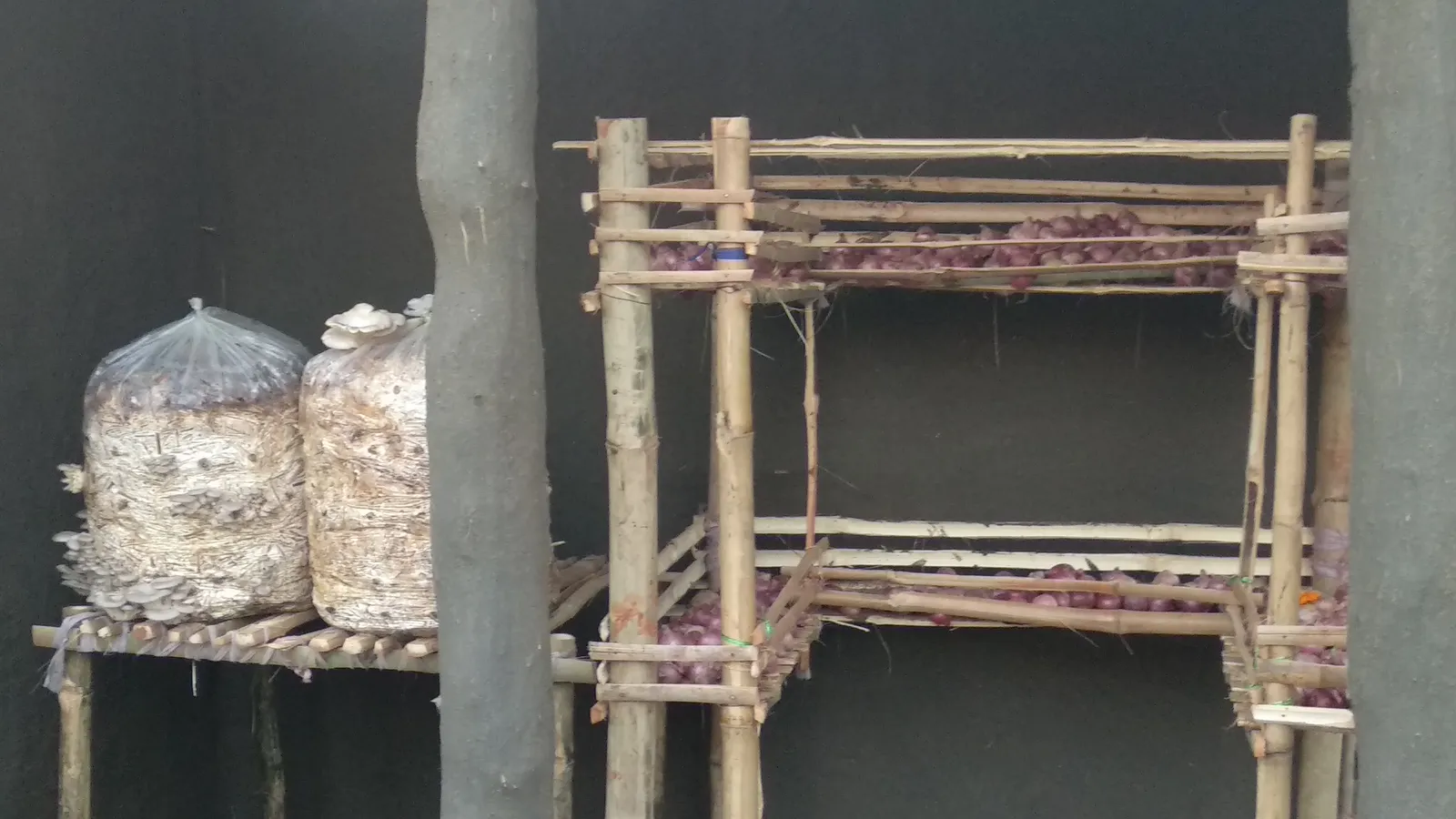
Spawned straw mushroom bags kept on a wooden shelf next to a bamboo onion-storage rack inside an adivasi (tribal) house, Odisha, India.
Real cultivation photograph. Read its source for location and context; it is not a universal operating specification.Soumendra Kumar Sahoo · CC BY-SA 4.0View full photograph ↗
On this pageChoose a section, or keep reading below

Read this in the full guide: Prepare an evidence-backed project file for schemes and lenders

Understand the topic

Start with the explanation.

The state-hosted guideline establishes published norms, while live intake, local process and any separate top-up still require confirmation.

Part 01

What the Himachal Pradesh record establishes

The attached Department of Horticulture eUdyan record is the state-hosted copy of the MIDH guidelines dated 31 December 2025. Its mushroom entries and special-geography context can support a component discussion with the implementing office.

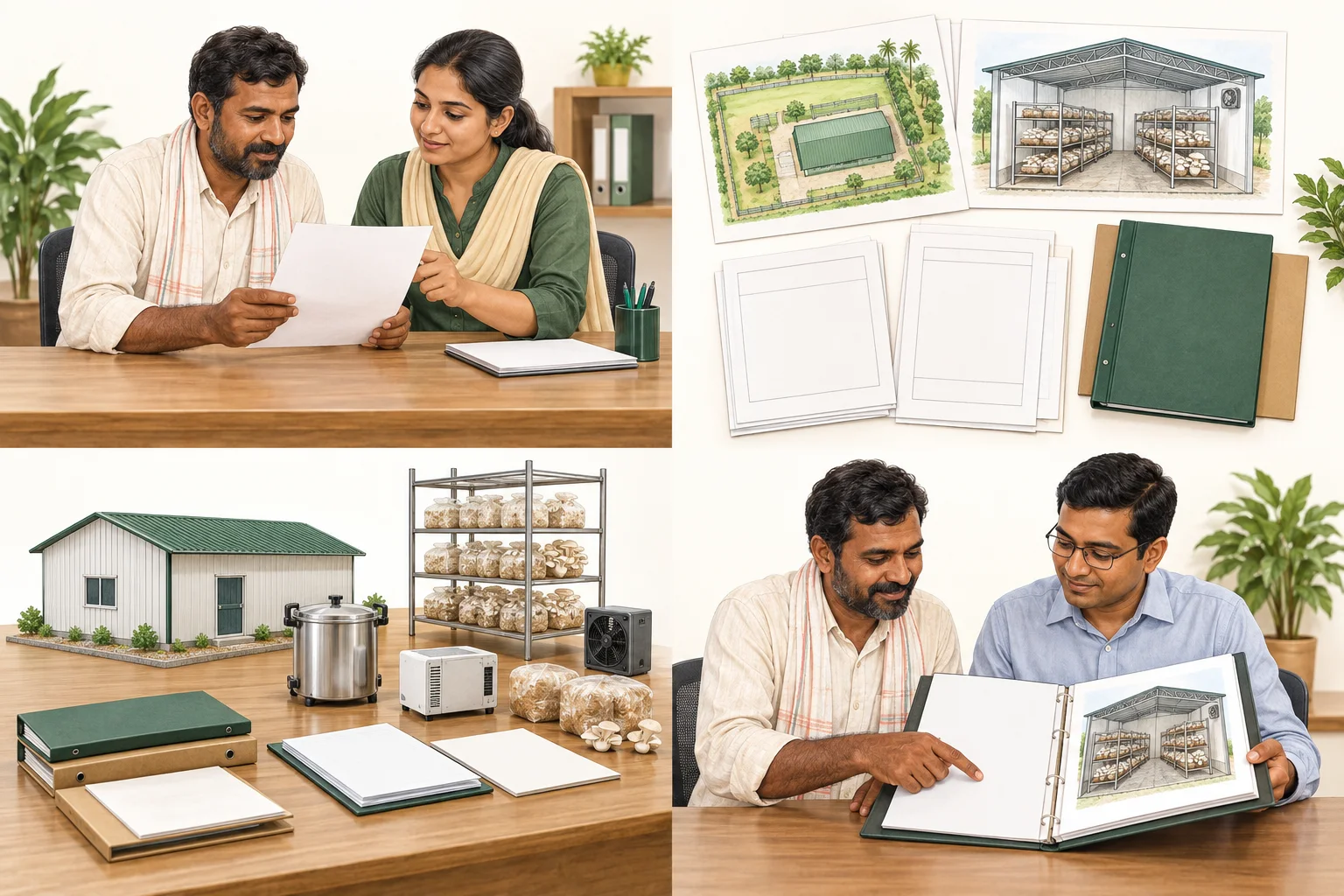
Illustration of a grower and adviser reviewing a project binder, without an approval stamp.
AI teaching illustrationCheck consistency

Names, capacity, scope and totals must agree across the file. Submission or acknowledgement does not guarantee sanction.

Conceptual explanation—not a real farm photograph, diagnostic finding or construction specification.
Part 02

What the record does not establish

The guideline copy does not prove that a district is currently accepting applications, that funds are available, that a separate state top-up exists or that a particular applicant will be sanctioned. Those items remain unknown until a current state or district notice answers them.

Part 03

Confirm the local implementation path

Ask the district or state horticulture authority for the current component name, applicant category, location treatment, application channel, closing date and required pre-sanction steps. Request the notice or written guideline reference rather than relying on a verbal percentage.

Illustration of a grower discussing project documents at an advisory desk.
AI teaching illustrationCheck the live rules

Eligibility, application intake and approval are separate questions. A guideline remaining online does not prove applications are open.

Conceptual explanation—not a real farm photograph, diagnostic finding or construction specification.
Part 04

Build the file around the applicable component

Match the proposed production, spawn, compost or low-cost structure to the exact guideline entry. Keep quotations, site evidence, finance plan and category or geography evidence aligned with that entry.

Go deeper

Technical reference, records and tools.

Detailed crop-stage information, parameters, diagrams and specialist tools are kept together below. This material retains its source conditions and review limits.

Open the complete technical reference

government directory

Himachal Pradesh mushroom scheme record

The state-hosted guideline establishes published norms, while live intake, local process and any separate top-up still require confirmation.

Editorial record: publishedPrimary sources: 1 linkedLatest attached source check: 2026-08-23

What the Himachal Pradesh record establishes

The attached Department of Horticulture eUdyan record is the state-hosted copy of the MIDH guidelines dated 31 December 2025. Its mushroom entries and special-geography context can support a component discussion with the implementing office.

What the record does not establish

The guideline copy does not prove that a district is currently accepting applications, that funds are available, that a separate state top-up exists or that a particular applicant will be sanctioned. Those items remain unknown until a current state or district notice answers them.

Confirm the local implementation path

Ask the district or state horticulture authority for the current component name, applicant category, location treatment, application channel, closing date and required pre-sanction steps. Request the notice or written guideline reference rather than relying on a verbal percentage.

Build the file around the applicable component

Match the proposed production, spawn, compost or low-cost structure to the exact guideline entry. Keep quotations, site evidence, finance plan and category or geography evidence aligned with that entry.

Primary sources

Open the attached authority records.

current2026-08-23

Himachal Pradesh eUdyan copy of MIDH guidelines dated 31 December 2025

This verifies the guideline hosted by the state department, not a currently open application window or a separate state top-up.

Authority
Government of Himachal Pradesh
Reference
Annexure V, page 49
Checksum
state-snapshot:HP-EUDYAN-MIDH-2026-08-23
Open official source

Read the evidence

Sources & review.

Editorial update: 2026-08-23. Independent technical review is not recorded for this entry.

  1. Himachal Pradesh eUdyan copy of MIDH guidelines dated 31 December 2025

    Department of Horticulture, Government of Himachal Pradesh · 2025

Reading a source is not the same as applying its instructions to every farm. Confirm species, strain, crop stage, system, region and publication date. Old chemical recommendations are not current-use instructions.

See something that needs correcting? Tell us →