

A practical guide to growing mushrooms in IndiaA joint educational initiative by MushroomWale & DMR Solan ↗
MushroomFarming.in

A joint educational initiative by

MushroomWale.com
ICAR–Directorate of Mushroom Research, Solan logoICAR–DMRSolan

MushroomFarming / guide

Mushroom farm DPR system

Build an internally consistent, source-versioned project report across project identity, technology, capacity, cost, finance, market, cash flow, risk and compliance.

Practical explanation + detailed referenceSources & review ↓
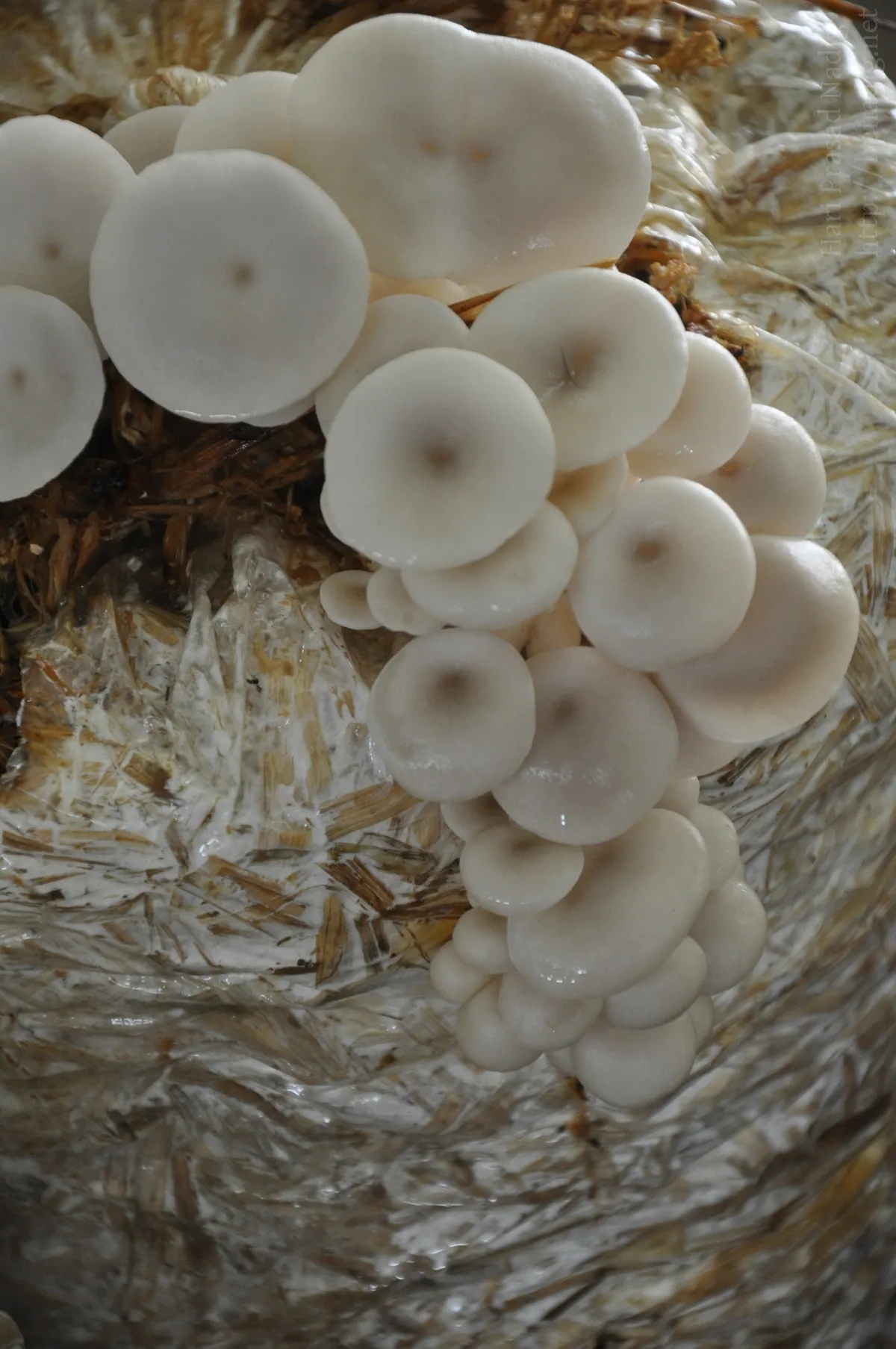
White oyster mushrooms fruiting from a paddy-straw bag, displayed at an organic food mela in Bangalore, Karnataka (2010).
Real cultivation photograph. Read its source for location and context; it is not a universal operating specification.Hari Prasad Nadig from Bangalore, India · CC BY-SA 2.0View full photograph ↗
On this pageChoose a section, or keep reading below

Understand the topic

What you need to know.

A detailed project report, or DPR, is the document a lender and a scheme authority read to decide whether a mushroom project holds together. This page explains what a bankable report contains, why each chapter is there, which ratios a reviewer checks, and how to test the plan before anyone else does. A complete report is not an approval. It is the evidence an approval is decided on.

Teaching revised 2026-09-24. Source-linked editorial synthesis; this date does not imply independent technical review.

Part 01

A DPR describes one unit, and every chapter must describe the same one

A DPR is an appraisal document. The lender and the scheme authority use it to decide; it does not promise that either will approve.

The clearest public example of its shape is NHB's 2018 model template for mushroom production technology. It opens with a project-at-a-glance page, then covers the applicant, the project and its site, the scheme and its components, and a long project-details chapter on agro-climatic suitability, market viability, financial viability, crop husbandry, post-harvest management and marketing. It closes with technology providers, food safety, a checklist and signed declarations, and asks the applicant to sign every page with the date. NABARD's 2016 model bankable project for mushroom cultivation in Himachal Pradesh is a second structural reference, but it is historical, not a quotation book or a subsidy notice.

Because the chapters are signed as one document, they must agree. The room sizes in the layout plan, the compost filled per crop, the crops per year, the yield, the kilograms sold, the price, the operating cost, the working capital and the loan repayment all describe the same unit. A mismatch between any two chapters is the first thing a reviewer finds.

Sources: NHB DPR model, 2018 · National Bank for Agriculture and Rural Development: Mushroom cultivation in Himachal Pradesh, model bankable project

Build the report in this order

  1. Fix the basisSpecies, strain, yield, price and crops per year, each with a named source.
  2. Build productionCompost or substrate per crop, crops per year, kilograms sold per year.
  3. Build the moneyCapital cost, operating cost, working capital, finance and repayment.
  4. Check consistencyThe same yield, price and crop count in every table.
  5. Annex the evidenceQuotations, rate slips, land papers, water report, and lists of sourced and assumed figures.
Part 02

What each chapter has to prove to a reviewer

Read each chapter as the answer to a question a reviewer will ask. The headings follow NHB's 2018 template.

  • Project at a glance: one page where capacity, total cost, means of finance and key ratios must match every later table.
  • Applicant: who carries the risk, their training, and every earlier benefit. The template asks whether a subsidy claim was ever refused or had to be refunded.
  • Site and land: ownership or registered lease, current land use, conversion of land use and a layout plan. An inspection later compares the building with this plan.
  • Technology and crop husbandry: the strain and why it was chosen, the spawn source, raw materials, and a month-wise operating chart.
  • Market viability: target market, price variation in the state and nearby markets, the value chain and your marketing strategy, backed by named buyers and dated rates.
  • Financial viability: project cost, means of finance, a cash flow statement for the next 7 years, profit and loss, the repayment schedule, break-even and sensitivity.
  • Risk: market glut, crop failure, low prices, pests and diseases, and natural calamities, each with how it will be managed.
  • Declarations: from a crop expert and a chartered accountant if they prepared chapters, and your own self-declaration that the report is true.

Source: NHB DPR model, 2018

Part 03

The ratios NHB's template asks a finance expert to report

Section 5.3.10 of the template body prints a benchmark beside each ratio. They show what a reviewer measures. They are one board's figures from 2018, and your lender applies its own current policy, so ask for it before you fill the table.

Promoters' contribution25% minimumYour own money as a share of the project. The means of finance table splits it from the term loan and any unsecured loan.
Debt service coverage (DSCR)1.50:1The sensitivity table asks for minimum, maximum and overall values.
Current ratio1.25:1For units other than export units.
Debt to equity3:1
Security coveragemore than 100% of the loan amount
Repayment periodup to 7 yearsExcluding moratorium, within an overall tenor of 10 years.

Source: NHB DPR model, 2018

Part 04

One yield, one price, one crop count, carried through every table

The commonest failure in a mushroom report is a contradiction: the production table uses one yield, the revenue table implies another, and the repayment schedule needs a third. A reviewer checks consistency before plausibility, because it takes minutes and shows whether the numbers were built or borrowed.

Declare the basis at the start, as the ICAR-DMR manual does for its own economics chapter: compost made by the indoor method, 6 crops per room per year of 60 days each, and a yield of 18 kg per 100 kg compost. Then use those same figures everywhere.

Take each figure from a named source and write the source beside its first appearance. Published documents need checking too. NHB's own template gives strain S-454 a yield of 16 to 18 kg per 100 kg compost in its strain description and 18 to 20 kg in its list of recommended cultivars. Choose one, say which, and keep it.

Annex two lists: sourced figures with the document and page, and assumed figures with the reason and the person who will test them. The template's sample text also carries a state retail price range and health statements. Copying it would put someone else's undated claims under your signature.

Sources: ICAR-DMR manual, 2011 · NHB DPR model, 2018

Checking one figure before it enters the report

  1. Find itTake the figure from a named document and note the page.
  2. Cross-check itNHB's template gives S-454 as 16 to 18 kg in one place and 18 to 20 kg in another.
  3. Choose and say whichPick one value and state which and why.
  4. Carry itUse it unchanged in production, revenue, working capital and repayment.
  5. List itPut it in the sourced list, or in the assumed list with a reason.
Part 05

Stress-test the plan the way the template does, then harder

The template's sensitivity table starts from a base case, the first full year of operation, and asks for profit before and after tax and the minimum, maximum and overall DSCR under three changes. Run those first, then add the cases that hurt mushroom farms most.

  1. Case I: less capacity usedReduce capacity utilisation by 10 per cent.
  2. Case II: lower salesReduce sales by 10 per cent.
  3. Case III: dearer raw materialRaise raw material cost by 10 per cent.
  4. Low yieldUse the bottom of the published range for your strain or compost method, not the middle.
  5. A lost cropRemove one whole crop from one room, as if contamination had taken it, and check that instalments are still paid.
  6. A slow buyerPush collections back by your buyer's worst recent delay and read the lowest month on the cash flow.

Source: NHB DPR model, 2018

Part 06

Report mistakes that stop an appraisal

Common mistakeCopying another farm's or district's report with its yields and prices still inside.

Do this insteadBuild from your own basis and your own quotations. A reviewer can tell borrowed figures from built ones.

Common mistakeUsing the template's model component costs as your estimate.

Do this insteadThe 2018 template's annexure prints model costs for units from 50 to 1000 tonnes a year. Treat them as dated examples, and attach current quotations that state taxes, delivery and exclusions.

Common mistakeShowing expected subsidy as income, or as money available to build with.

Do this insteadShow it as a separate funding line with its conditions. Plan cash at full cost, and include a case without assistance.

Common mistakeFilling every table but attaching no evidence.

Do this insteadAnnex quotations, rate slips, land papers, the water report and your crop records, so each number can be traced.

Common mistakeTreating a complete template as a bankable one.

Do this insteadCompleteness is not bankability. Weak assumptions in a full template still fail appraisal.

Source: NHB DPR model, 2018

Keep exploring

Every part of this topic.

Choose the stage, material or decision you need to understand next.

01

Mushroom farm DPR builder

Build a local-first ten-step DPR draft with sources, assumptions, finance and compliance sections.

02

Mushroom DPR consistency auditor

Flag mismatches in capacity, rooms, project cost, finance, working capital, assistance timing, price, power and compost.

03

Mushroom project bank-readiness check

Assess promoter contribution, quotations, market evidence, cash flow, debt service and approval readiness.

Go deeper

Technical reference, records and tools.

Detailed crop-stage information, parameters, diagrams and specialist tools are kept together below. This material retains its source conditions and review limits.

Open the complete technical reference

dpr hub

Mushroom farm DPR system

A DPR is a decision and appraisal document, not a promise that a bank or scheme will approve the project.

Editorial record: publishedPrimary sources: 2 linkedLatest attached source check: 2026-08-23

Build the DPR

Audit consistency

Check bank readiness

A DPR is one reconciled operating model

Project identity, site, technology, room and batch capacity, saleable yield, market route, capital cost, operating cost, working capital, finance and repayment must describe the same unit. A mismatch between any two sections is an appraisal risk.

Replace historical model values with current evidence

The attached NABARD model is useful as a structural reference, not as a current quotation book or subsidy notification. Date every local equipment quote, civil estimate, input price, wage, tariff, selling-price observation and transport assumption.

Show the production-to-repayment chain

Connect biological assumptions to monthly saleable volume, then connect that volume to sales, variable cost, fixed cost, working-capital cycles and debt service. Include downside cases for lower yield, lower price, delayed sales and higher input or energy cost.

Use the three-stage workflow

Build the project in the DPR tool, run the consistency auditor and then complete the bank-readiness check. Export the result for review by the appropriate technical professional, accountant, compliance adviser and lender.

Primary sources

Open the attached authority records.

historical2026-08-23

Mushroom cultivation in Himachal Pradesh, model bankable project

This is an older model project and institutional reference, not a current subsidy notification, quotation or bank sanction standard.

Authority
NABARD
Reference
Chapters 5 and 8
Checksum
historical-pdf:NABARD-MUSHROOM-HP-2016
Open official source
current2026-08-23

Priority Sector Lending Targets and Classification Directions, 2025

Priority-sector classification is not an instruction to approve a particular borrower or project.

Authority
Reserve Bank of India
Reference
Official page
Checksum
url-snapshot:RBI-PSL-2025-08-23
Open official source

Read the evidence

Sources & review.

Editorial update: 2026-08-23. Independent technical review is not recorded for this entry.

  1. Mushroom cultivation in Himachal Pradesh, model bankable project ↗

    National Bank for Agriculture and Rural Development · 2016

  2. Priority Sector Lending Targets and Classification Directions, 2025 ↗

    Reserve Bank of India · 2025

Reading a source is not the same as applying its instructions to every farm. Confirm species, strain, crop stage, system, region and publication date. Old chemical recommendations are not current-use instructions.

See something that needs correcting? Tell us →

Quick answers · Follow the full explanation

Questions to resolve before your next step.

These short answers introduce the detailed guides. Keep each guide’s sources, conditions and review limits with its advice. Answer summaries updated 2026-09-20; this is not a new independent technical review.

What belongs in a mushroom farming project report?

A project report should connect the applicant, site, crop model, capacity, production assumptions, market evidence, itemised investment, operating costs, working capital, funding and risks. Use current quotations and document the basis of each assumption; copying a sample DPR does not establish feasibility.

Build the underlying production plan →

Does a DPR or consultant quotation guarantee a bank loan or subsidy?

No. A DPR is evidence for assessment, not an approval. Lenders and scheme authorities apply their own current eligibility, documentation and sanction processes. Keep proposed assistance separate from confirmed funding and check the official rules before committing expenditure.

Check scheme sources and application boundaries →

Can MushroomWale help turn the learning into a project discussion?

MushroomWale provides a separate commercial pathway for project planning and implementation. Take a written scope, location, capacity, site and utility details, market evidence and dated assumptions to the discussion. Confirm the deliverables and exclusions directly; the educational partnership does not approve an individual project.

Read the service scope and partnership boundary →