


A practical guide to growing mushrooms in IndiaA joint educational initiative by MushroomWale & DMR Solan
MushroomFarming.in

A joint educational initiative by

MushroomWale.com
ICAR–Directorate of Mushroom Research, Solan logoICAR–DMRSolan

MushroomFarming / guide

Does mushroom farming get 40% subsidy?

Why the MIDH percentage is component, geography, cost-basis, applicant, credit and application dependent.

Practical explanation + detailed referenceSources & review ↓
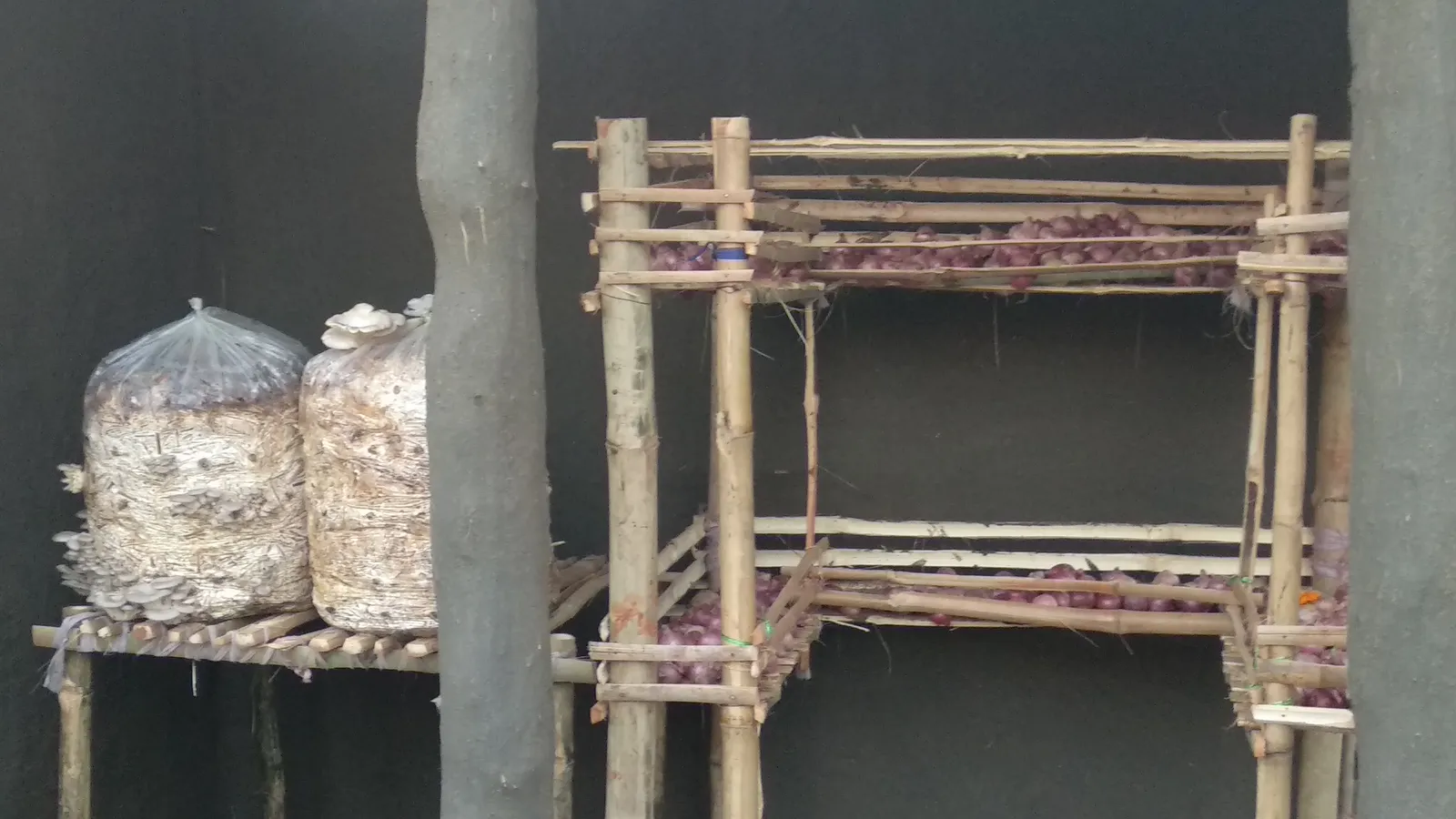
Spawned straw mushroom bags kept on a wooden shelf next to a bamboo onion-storage rack inside an adivasi (tribal) house, Odisha, India.
Real cultivation photograph. Read its source for location and context; it is not a universal operating specification.Soumendra Kumar Sahoo · CC BY-SA 4.0View full photograph ↗
On this pageChoose a section, or keep reading below

Read this in the full guide: Prepare an evidence-backed project file for schemes and lenders

Understand the topic

Start with the explanation.

The short answer is not universally. The published percentage is applied to an eligible normative basis under a specific component, not automatically to every rupee of project cost.

Part 01

The short answer: 40% is not a universal project rebate

The attached MIDH guideline lists different mushroom components and assistance patterns. The general rate shown for specified production, spawn and compost infrastructure cannot be transferred to every applicant, activity, geography, expenditure item or application period.

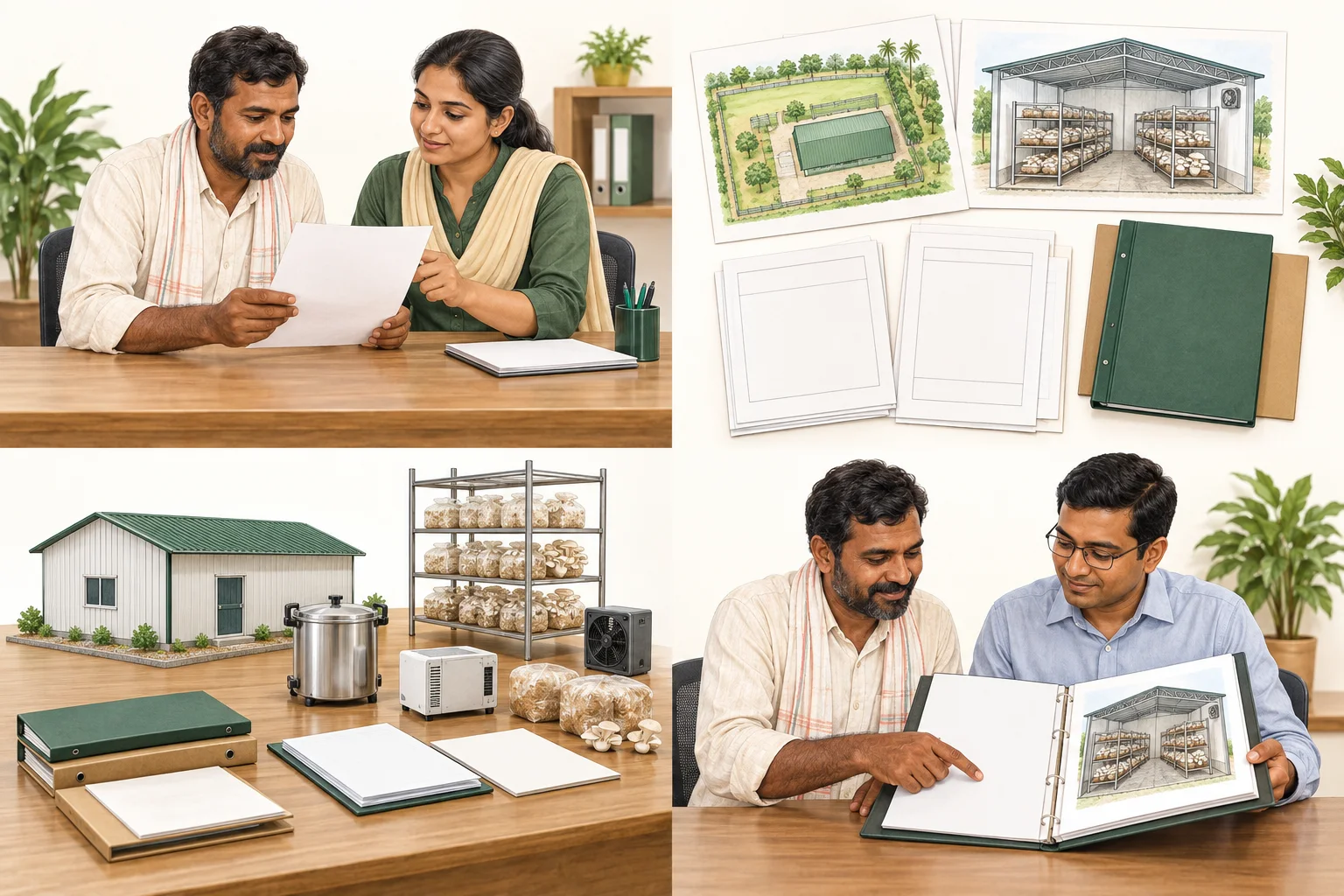
Illustration of a grower discussing project documents at an advisory desk.
AI teaching illustrationCheck the live rules

Eligibility, application intake and approval are separate questions. A guideline remaining online does not prove applications are open.

Conceptual explanation—not a real farm photograph, diagnostic finding or construction specification.
Part 02

Apply the percentage to the eligible normative basis

First identify the exact component and its cost norm. Compare the admissible actual eligible cost with the normative basis and allowed units, then apply the applicable rate and any ceiling; do not multiply the headline percentage by total project cost.

Part 03

Rate and procedure can change with project facts

Location category, applicant type, component, unit cap, project cost, eligible expenditure and the implementing agency's credit-linkage procedure all matter. Special-area treatment or a higher rate must be established with the required geography evidence.

Part 04

Keep assistance out of day-zero cash until confirmed

A published calculation is only an indicative rule result. Confirm the current application window, sanction sequence, inspections, lender treatment and release mechanism before reflecting assistance in the finance plan.

Illustration of a grower and adviser reviewing a project binder, without an approval stamp.
AI teaching illustrationCheck consistency

Names, capacity, scope and totals must agree across the file. Submission or acknowledgement does not guarantee sanction.

Conceptual explanation—not a real farm photograph, diagnostic finding or construction specification.

Go deeper

Technical reference, records and tools.

Detailed crop-stage information, parameters, diagrams and specialist tools are kept together below. This material retains its source conditions and review limits.

Open the complete technical reference

government article

Does mushroom farming get 40% subsidy?

The short answer is not universally. The published percentage is applied to an eligible normative basis under a specific component, not automatically to every rupee of project cost.

Editorial record: publishedPrimary sources: 1 linkedLatest attached source check: 2026-08-23

The short answer: 40% is not a universal project rebate

The attached MIDH guideline lists different mushroom components and assistance patterns. The general rate shown for specified production, spawn and compost infrastructure cannot be transferred to every applicant, activity, geography, expenditure item or application period.

Apply the percentage to the eligible normative basis

First identify the exact component and its cost norm. Compare the admissible actual eligible cost with the normative basis and allowed units, then apply the applicable rate and any ceiling; do not multiply the headline percentage by total project cost.

Rate and procedure can change with project facts

Location category, applicant type, component, unit cap, project cost, eligible expenditure and the implementing agency's credit-linkage procedure all matter. Special-area treatment or a higher rate must be established with the required geography evidence.

Keep assistance out of day-zero cash until confirmed

A published calculation is only an indicative rule result. Confirm the current application window, sanction sequence, inspections, lender treatment and release mechanism before reflecting assistance in the finance plan.

Primary sources

Open the attached authority records.

current2026-08-23

MIDH Operational Guidelines 2025, guidelines dated 31 December 2025

The guideline establishes cost norms and assistance patterns. It does not prove that applications are open in a particular state or that a project will be approved.

Authority
Department of Agriculture and Farmers Welfare
Reference
Guideline page 17 and Annexure V page 49
Checksum
sha256:1e9ffa6b727d11deb0a258c4b627fe31430ab7f8d1aeee459cd0d481f07911db
Open official source

Read the evidence

Sources & review.

Editorial update: 2026-08-23. Independent technical review is not recorded for this entry.

  1. MIDH Operational Guidelines 2025, guidelines dated 31 December 2025

    National Horticulture Board, Ministry of Agriculture and Farmers Welfare · 2025

Reading a source is not the same as applying its instructions to every farm. Confirm species, strain, crop stage, system, region and publication date. Old chemical recommendations are not current-use instructions.

See something that needs correcting? Tell us →