

A practical guide to growing mushrooms in IndiaA joint educational initiative by MushroomWale & DMR Solan
MushroomFarming.in

A joint educational initiative by

MushroomWale.com
ICAR–Directorate of Mushroom Research, Solan logoICAR–DMRSolan

Read · Observe · Practise · Check

Harvest and post-harvest: protect what the crop has produced

Connect harvest maturity, careful handling, grading, packing and delivery. Product appearance, safety and buyer acceptance are different questions; a fresh-looking photograph cannot establish all three.

Begin the walkthrough ↓
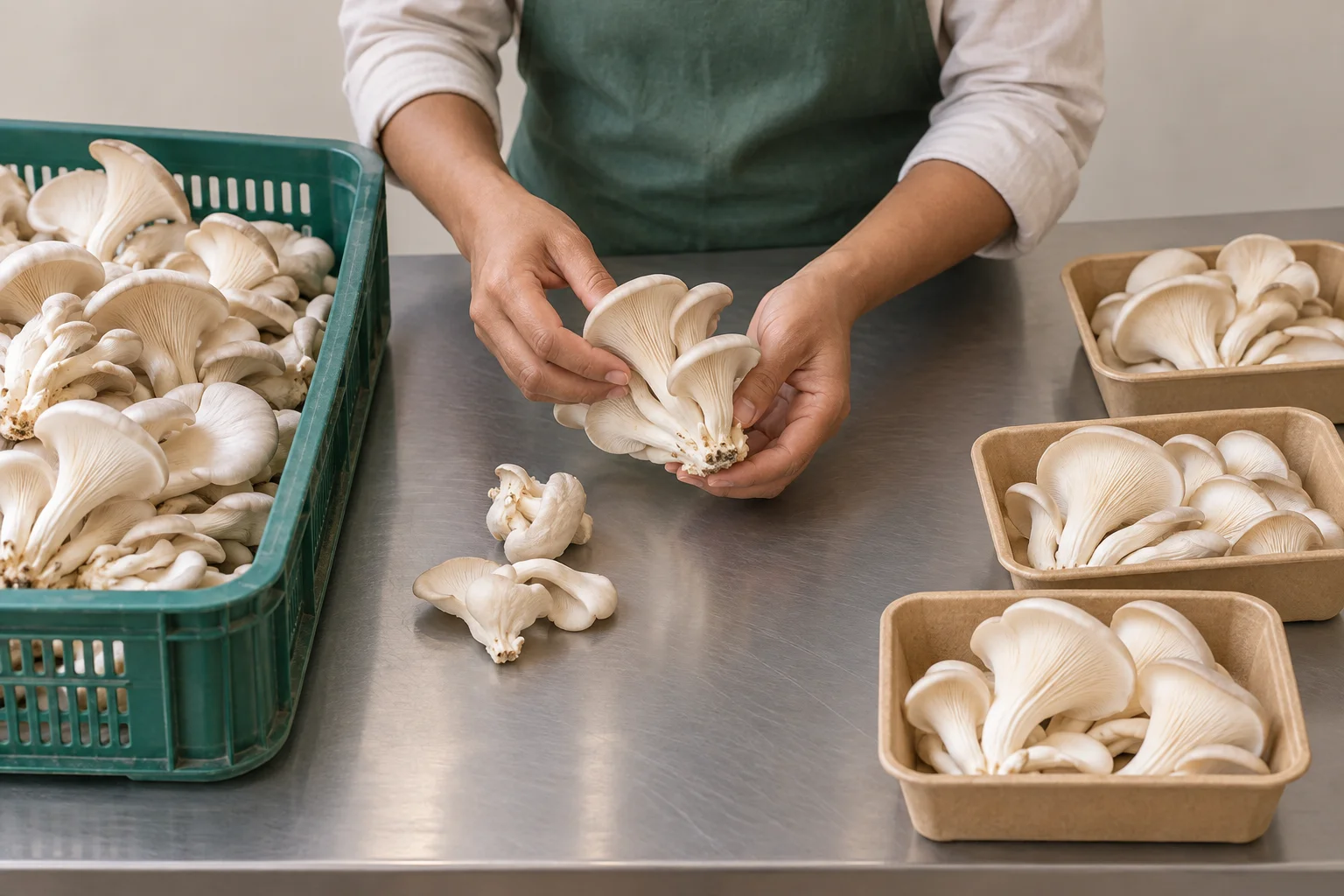
Generated scene of oyster clusters being gently sorted from a shallow crate into produce containers on a clean-looking bench.
AI-generated teaching illustrationHandling and grading concept. It does not establish a validated hygiene procedure, food safety, shelf life or packing specification.

Before you begin

  • Cultivated species and agreed buyer grade
  • Clean suitable food-contact tools and containers
  • Species-specific handling guidance and a dispatch plan

Use the linked crop and technical lessons for method-specific detail. Practical work involving chemicals, pressure, electrical equipment or uncertain crop health requires competent supervision; illustrations are not operating specifications.

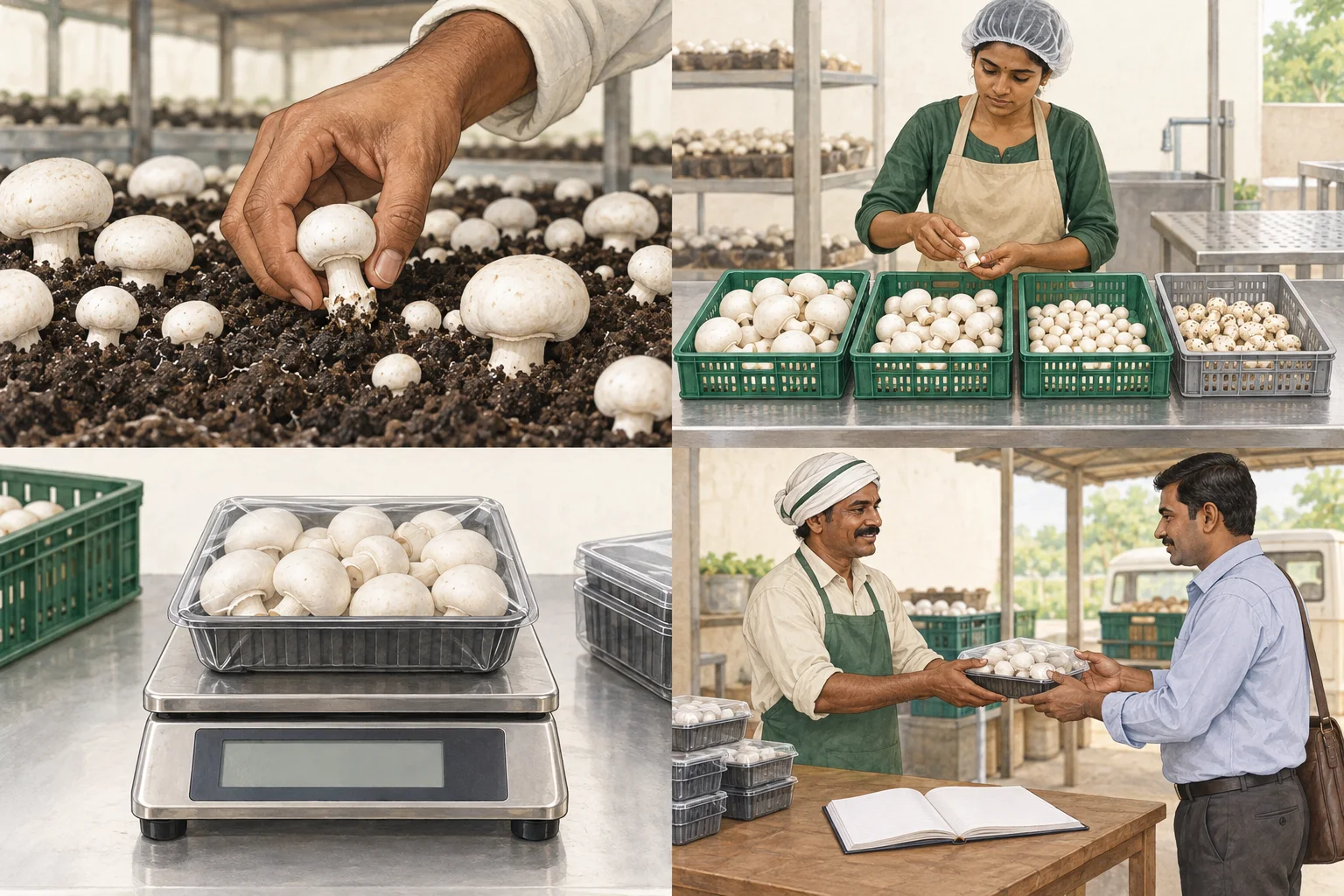
Generated close-up illustration of a hand picking a Button mushroom from casing.

Conceptual AI teaching scene

Stage 1

Agree maturity and grade

Before picking, establish what the buyer accepts and how that specification is recognised for the chosen cultivated species. Size alone may not describe maturity. Do not use cultivated crop photographs to identify wild mushrooms for food.

Put it into practice
Prepare a written buyer specification and compare it with the species harvesting guide.
Check your work
Harvest staff can explain accepted maturity and how uncertain or rejected material is handled.
Generated illustration of a grower sorting Button mushrooms into different crates.

Conceptual AI teaching scene

Stage 2

Handle without avoidable damage

Keep handling deliberate and containers suitable for the delicate crop. A workflow should minimise unnecessary transfers and keep dirty material away from harvested food. The packing illustration shows a concept, not a validated hygiene procedure.

Put it into practice
Walk one harvest container through picking, grading, weighing and packing. Identify crushing, delay or contamination risks.
Check your work
The product moves through a defined clean handling route without unexplained detours.
Generated illustration of packaged mushrooms on a scale with an intentionally blank display.

Conceptual AI teaching scene

Stage 3

Keep grades and quantities separate

Packed, downgraded, rejected and unsold material need distinct records. Combining all picked kilograms into a sales figure conceals losses and makes buyer feedback difficult to interpret.

Put it into practice
Label the lot and weigh each destination. Record buyer deductions and returns against the same dispatch.
Check your work
Harvest, dispatch and accepted sales reconcile, with differences explained.
Generated illustration of an Indian grower handing a packed mushroom tray to a buyer beside a ledger.

Conceptual AI teaching scene

Stage 4

Control the handover

The appropriate holding and transport conditions depend on species, product and method. A cold-room rule copied from another mushroom may be unsuitable. Record timing and responsibility when the product leaves the farm.

Put it into practice
Use the applicable handling guidance and agree collection, packaging and delay response with the buyer.
Check your work
A delivery can be traced to its crop and handling history; preservation or shelf-life claims are not invented.

Common mistakes—and the better question

One storage temperature suits every mushroom
Check species-specific validated guidance.
Drying or processing rescues any rejected crop
Do not divert unsafe or uncertain material into another food product.

A task to complete, not just a page to read

Trace one container

Follow a labelled training lot from picking to buyer acceptance. Explain every change in its weight, grade and custody.

Bring back this evidence

A harvest-to-dispatch sheet and quantity reconciliation.

Completing this self-guided task is not verification of practical competence. Review it with a suitable instructor before relying on it for farm operation.

Keep the field guidance beside the lesson

Open the main subject guide →Harvesting Button MushroomOyster mushroom harvestPaddy straw mushroom harvestMushroom market validation

Sources, scope and review

Editorial learning material; no independent technical review is claimed. The tasks are original teaching exercises. Source-specific numerical schedules remain in the detailed lessons with their context, rather than being turned into universal instructions here.