


A practical guide to growing mushrooms in IndiaA joint educational initiative by MushroomWale & DMR Solan
MushroomFarming.in

A joint educational initiative by

MushroomWale.com
ICAR–Directorate of Mushroom Research, Solan logoICAR–DMRSolan

MushroomFarming / technical parameter

Carbon dioxide in Button Mushroom cultivation

Interpret carbon dioxide as a crop and ventilation signal across stage, location and room load.

Practical explanation + detailed referenceSources & review ↓
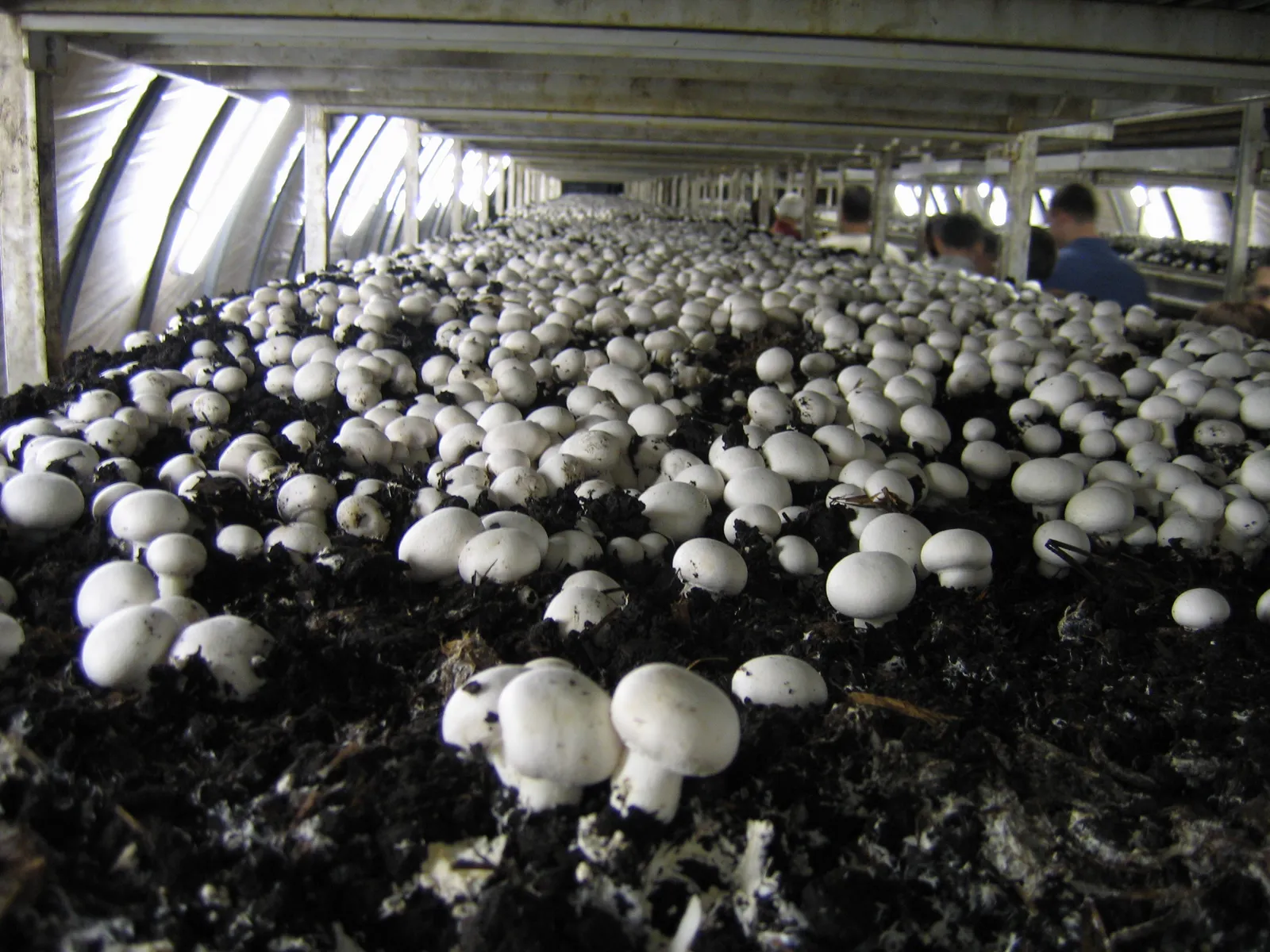
White button mushrooms on casing soil in long shelf beds inside a commercial cropping room near Eger, Hungary.
Real cultivation photograph. Read its source for location and context; it is not a universal operating specification.Andrew Bossi · CC BY-SA 2.5View full photograph ↗
On this pageChoose a section, or keep reading below

Read this in the full guide: Run a Button mushroom crop from receipt to room reset

Understand the topic

Start with the explanation.

Carbon dioxide changes with crop respiration, fresh-air delivery, recirculation and distribution. A sensor near a return path may answer a different question from a reading inside a loaded rack.

Part 01

Why this matters

Carbon dioxide connects crop metabolism, ventilation and morphology.

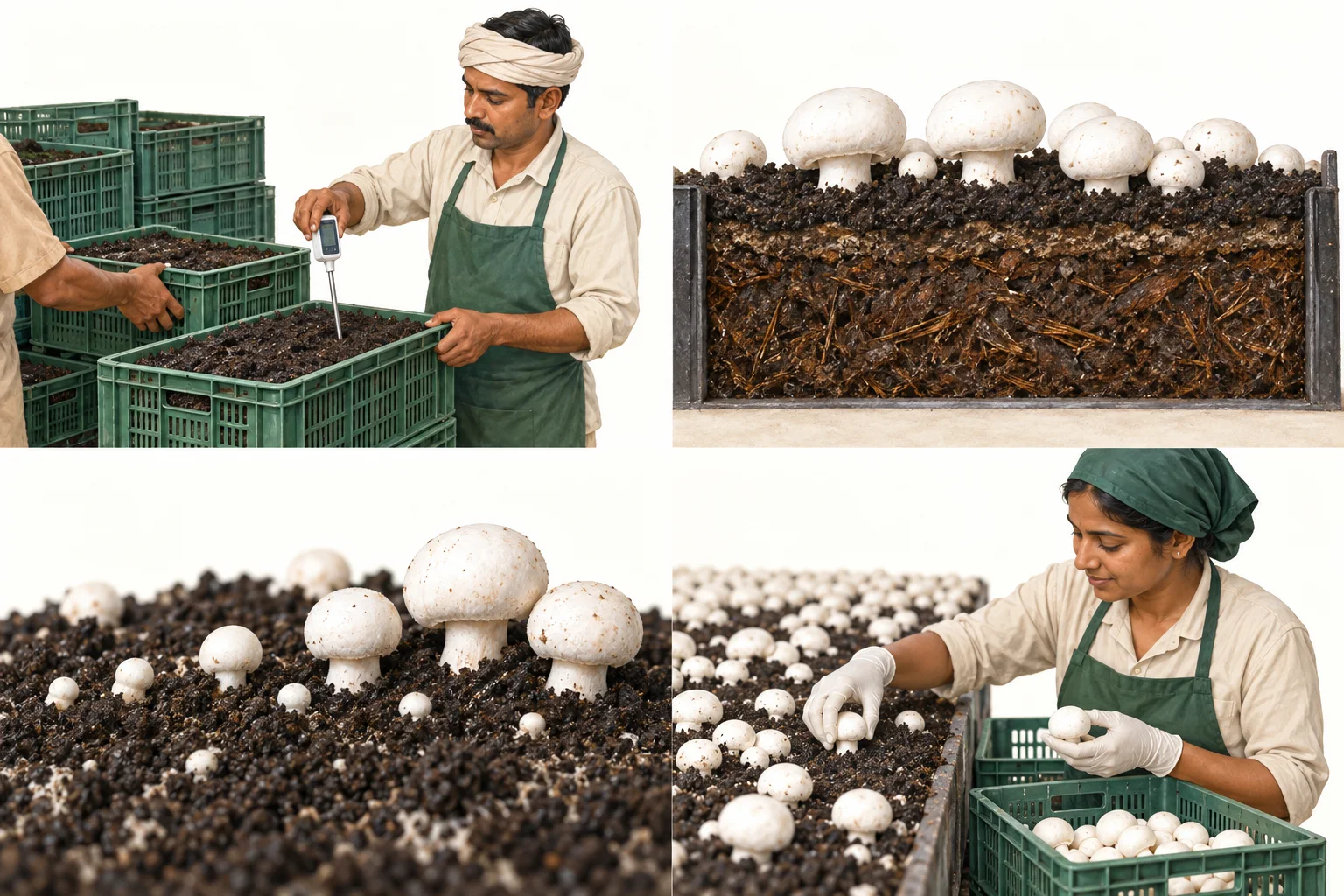
Illustration of compost receipt and a probe measurement.
AI teaching illustrationReceive the right compost

The delivered compost stage determines the work still needed. Phase II and Phase III deliveries require different handovers.

Conceptual explanation—not a real farm photograph, diagnostic finding or construction specification.
Part 02

What to look for

Build a record before making a change.

  • Crop stage and load
  • Sensor position
  • Fresh-air and recirculation state
  • Spatial pattern and morphology
Part 03

How to make the next decision

Use the observation to narrow a decision, then verify the response.

  • Measure the relevant zone
  • Verify sensor drift
  • Separate concentration from air movement
  • Change ventilation with capacity and climate consequences in view
Part 04

What to check before moving on

This topic cannot be interpreted in isolation.

  • Respiration
  • Fresh-air system
  • Mixing
  • Room leakage
  • Sensor maintenance
Part 05

On the farm

Start in the room with crop stage and load and sensor position. Record location, stage and recent events before changing the process.

Part 06

The technical explanation

The technical model joins respiration, fresh-air system, mixing. Any operating value must be attached to a registered parameter, measurement location and applicable condition.

Part 07

What the evidence can tell you

This page is grounded in: Farm Design for White Button Mushroom Cultivation; Mushroom Cultivation, Marketing and Consumption. Source provenance does not remove the need to check stage, system, date and local applicability.

Illustration of careful Button mushroom harvesting into clean food-contact containers.
AI teaching illustrationHarvest and reset

Picking, grading, packing and room reset are connected tasks. A strong flush can still lose value through poor handling or delayed dispatch.

Conceptual explanation—not a real farm photograph, diagnostic finding or construction specification.

Go deeper

Technical reference, records and tools.

Detailed crop-stage information, parameters, diagrams and specialist tools are kept together below. This material retains its source conditions and review limits.

Open the complete technical reference

Button Mushroom · technical parameter

Carbon dioxide in Button Mushroom cultivation

Agaricus bisporus

Interpret carbon dioxide as a crop and ventilation signal across stage, location and room load.

Publication
Public editorial page
External review
Not yet recorded · needed from Button Mushroom technical reviewer
Updated
2026-08-22
Evidence records
2
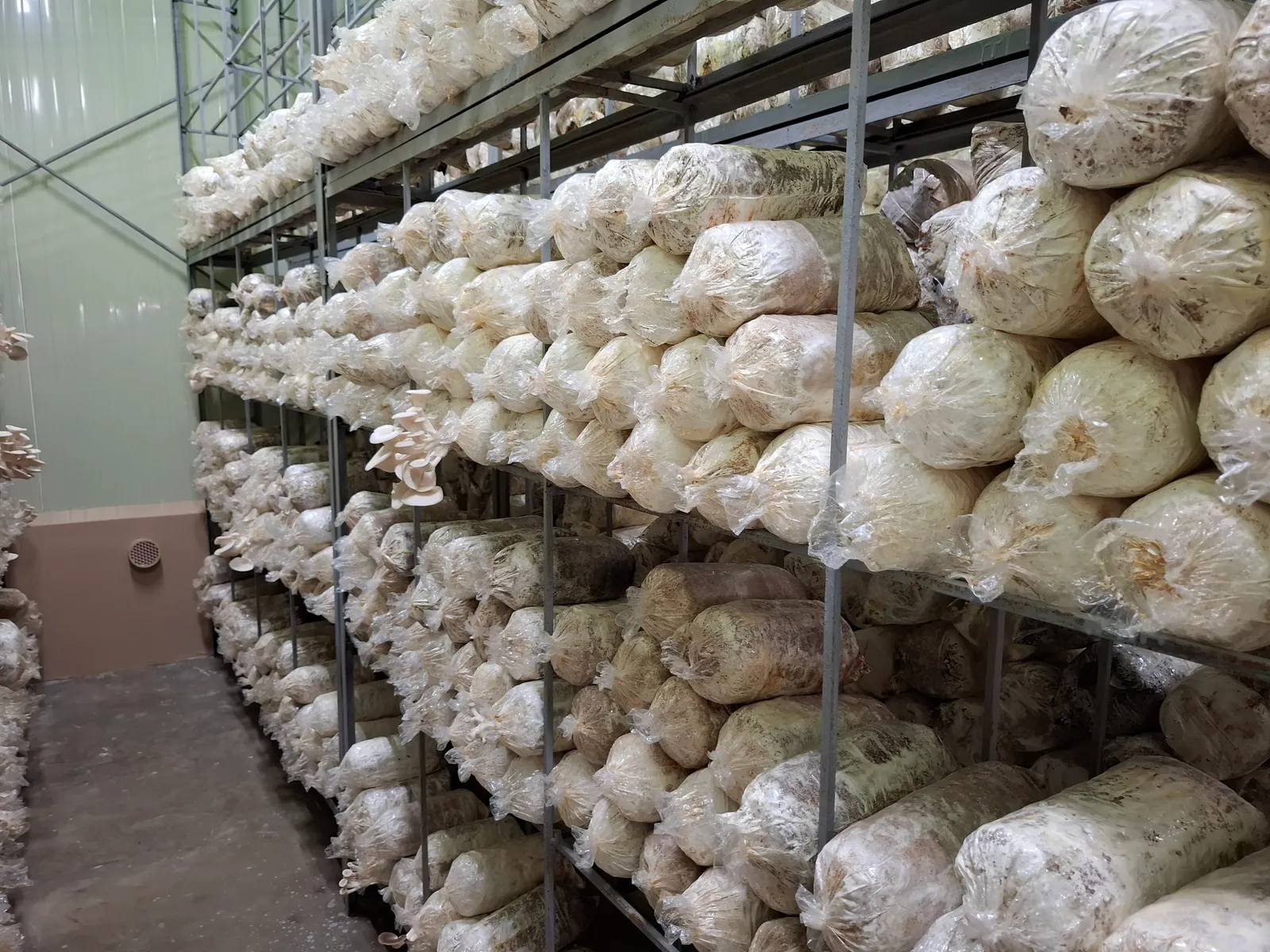
Long tiered metal racks packed with colonised oyster-mushroom fruiting bags inside a grow room, Bicol, Philippines.
Grow room with tiered racks of oyster-mushroom fruiting bags (Philippines). Photo: MarvinBikolano, CC BY-SA 4.0. Source

Room climate by crop stage

Source: ICAR-DMR manual

10°C15°C20°C25°C30°CSpawn run22-25°C85-95% RHCase run23-25°C90-95% RHPinning16-18°C85-90% RHCropping15-18°C80-85% RH
Temperature bandRelative humidity

Quick orientation

Carbon dioxide changes with crop respiration, fresh-air delivery, recirculation and distribution. A sensor near a return path may answer a different question from a reading inside a loaded rack.

01

System role

Carbon dioxide connects crop metabolism, ventilation and morphology.

02

What to observe

Build a record before making a change.

  • Crop stage and load
  • Sensor position
  • Fresh-air and recirculation state
  • Spatial pattern and morphology

03

Decision framework

Use the observation to narrow a decision, then verify the response.

  • Measure the relevant zone
  • Verify sensor drift
  • Separate concentration from air movement
  • Change ventilation with capacity and climate consequences in view

04

Dependencies and handoffs

This topic cannot be interpreted in isolation.

  • Respiration
  • Fresh-air system
  • Mixing
  • Room leakage
  • Sensor maintenance

05

Practical layer

Start in the room with crop stage and load and sensor position. Record location, stage and recent events before changing the process.

06

Technical layer

The technical model joins respiration, fresh-air system, mixing. Any operating value must be attached to a registered parameter, measurement location and applicable condition.

07

Evidence boundary

This page is grounded in: Farm Design for White Button Mushroom Cultivation; Mushroom Cultivation, Marketing and Consumption. Source provenance does not remove the need to check stage, system, date and local applicability.

Progressive depth

Go deeper without losing the field question.

PracticalWhat to notice in the room
  • Crop stage and load
  • Sensor position
  • Fresh-air and recirculation state
  • Spatial pattern and morphology
TechnicalHow the interacting system is interpreted
  • Respiration
  • Fresh-air system
  • Mixing
  • Room leakage
  • Sensor maintenance
ResearchWhich evidence records govern this page
  • ICAR-DMR-FARM-DESIGN
  • ICAR-DMR-CULTIVATION-MANUAL

Technical registry

The numbers for this stage, with their source.

Values are published from ICAR-DMR guidance with the stage and measuring point they apply to. A parameter still marked pending has no published Indian value yet.

BUTTON.CLIMATE.CO2

Carbon dioxide concentration

800 to 15,000 ppm

10,000 to 15,000 ppm during spawn run with no fresh air; 800 to 1,000 ppm for pinning; 1,000 to 1,500 ppm during cropping with 20 to 30 percent fresh air.

Stage
Spawn run through cropping
Measured at
Representative room and rack positions
Crop meaning
A crop-activity and ventilation signal that needs stage context.
Applicable conditions
Stage; Crop load; Fresh-air strategy
published sourced
Evidence and review record2 mapped sources

Sources support the page architecture and conceptual guidance. Technical values remain governed separately in the Button registry.

Tier A · foundational

Farm Design for White Button Mushroom Cultivation

Room planning, workflow, environmental-control architecture and engineering vocabulary.

Accessed
2026-08-22
Publisher
ICAR mushroom research institute
Open original source
Tier A · foundational

Mushroom Cultivation, Marketing and Consumption

Broad cultivation, post-harvest and market context. Values are not promoted without page-level review.

Accessed
2026-08-22
Publisher
ICAR-Directorate of Mushroom Research
Open original source

Read the evidence

Sources & review.

Editorial update: 2026-08-22. Independent technical review is not recorded for this entry.

  1. Farm Design for White Button Mushroom Cultivation

    ICAR mushroom research institute · Foundational official bulletin. Engineering guidance must still be checked against current codes, equipment and project conditions.

  2. Mushroom Cultivation, Marketing and Consumption

    ICAR-Directorate of Mushroom Research

Reading a source is not the same as applying its instructions to every farm. Confirm species, strain, crop stage, system, region and publication date. Old chemical recommendations are not current-use instructions.

See something that needs correcting? Tell us →