


Quick orientation
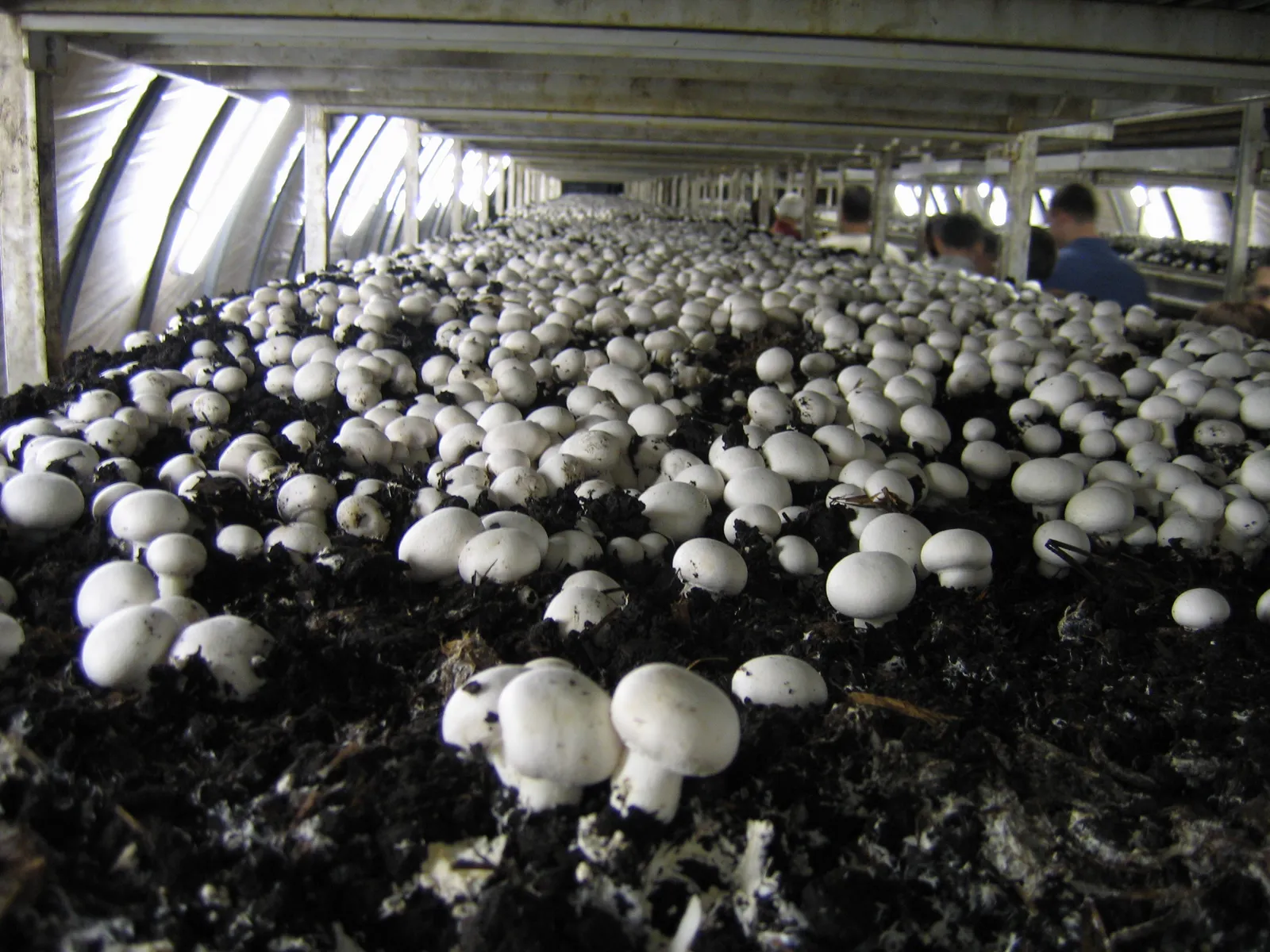
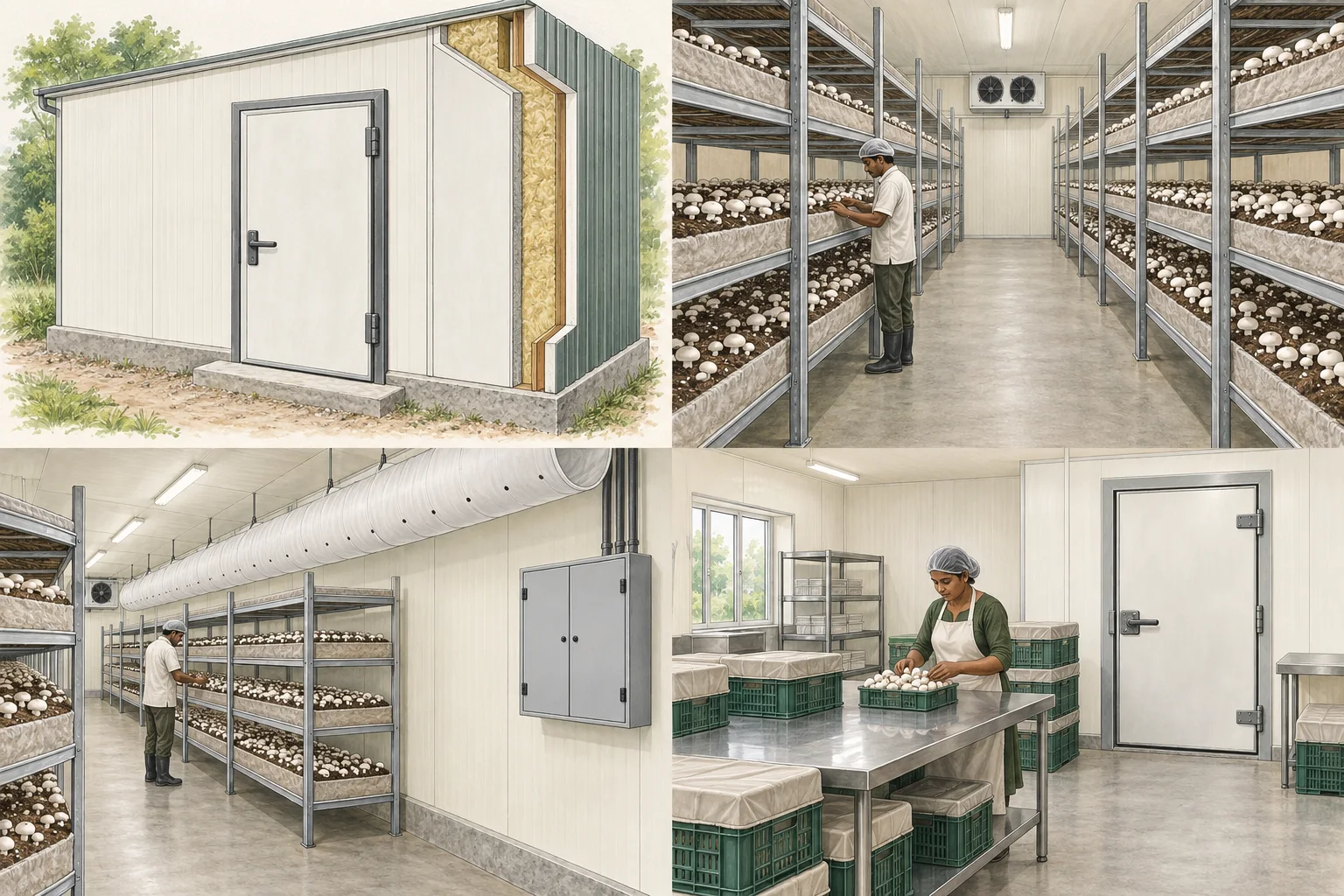
Fan output is not crop-zone airflow. Ducts, racks, fill, mushrooms, doors and return paths shape how air reaches the crop and returns to the system.
PracticalWhat to notice in the room
- Supply and return path
- Rack-zone velocity
- Dead and high-movement zones
- Room response under crop load
TechnicalHow the interacting system is interpreted
- Room geometry
- Duct design
- Rack layout
- Fan control
- Crop density
ResearchWhich evidence records govern this page
- ICAR-DMR-FARM-DESIGN
Uneven pinning
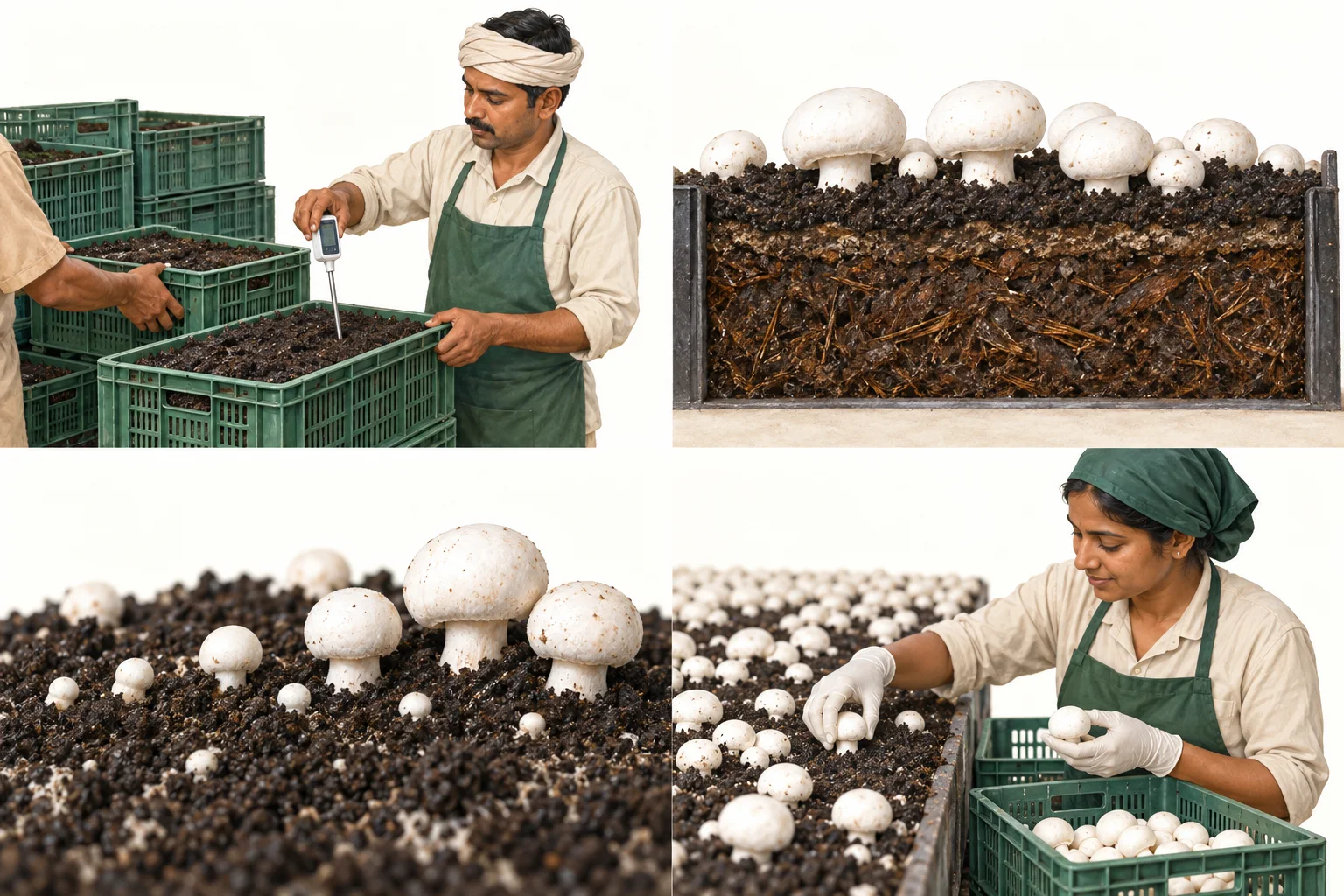
Observe- Pins cluster in particular rack zones
- Development differs between edges and centres
- The pattern repeats near air or water paths
Checks and prevention
Discriminating checks
- Map the pattern before changing a setting
- Compare casing depth and moisture across affected and unaffected zones
- Compare crop-zone air and temperature history
- Review the timing of watering and climate transitions
Prevention principles
- Verify uniform application and room distribution
- Use mapped observations rather than a single centre-room reading
- Review the complete transition into pinning
Long stipes or weak cap development
Observe- Stem extension is disproportionate to cap development
- The pattern may be room-wide or local
- Timing may align with crop-load or ventilation changes
Checks and prevention
Discriminating checks
- Confirm sensor calibration and placement
- Map readings and morphology by rack zone
- Review fresh-air and recirculation behaviour under crop load
- Compare with unaffected rooms or flushes without assuming one cause
Prevention principles
- Commission airflow with the room loaded
- Maintain traceable crop and climate logs
- Review transitions by stage and flush
Persistent surface wetness or condensation
Observe- Free water remains on the casing or mushrooms
- Condensation appears on cold surfaces
- Wetness is local to particular walls, ducts or rack zones
Checks and prevention
Discriminating checks
- Distinguish applied water from condensation
- Compare surface and air conditions over time
- Inspect local air paths and cold surfaces
- Review door, cooling and humidification events
Prevention principles
- Manage surfaces and air as one moisture system
- Calibrate watering delivery
- Maintain cleanable drainage and envelope details
Evidence and review record1 mapped source
Sources support the page architecture and conceptual guidance. Technical values remain governed separately in the Button registry.
Farm Design for White Button Mushroom Cultivation
Room planning, workflow, environmental-control architecture and engineering vocabulary.
- Accessed
- 2026-08-22
- Publisher
- ICAR mushroom research institute