

A practical guide to growing mushrooms in IndiaA joint educational initiative by MushroomWale & DMR Solan
MushroomFarming.in

A joint educational initiative by

MushroomWale.com
ICAR–Directorate of Mushroom Research, Solan logoICAR–DMRSolan

MushroomFarming / article

Spawn laboratory system

Separate aseptic laboratory production, culture preservation, testing and release from routine farm handling. Evidence, method and India-context boundaries remain visible.

Practical explanation + detailed referenceSources & review ↓
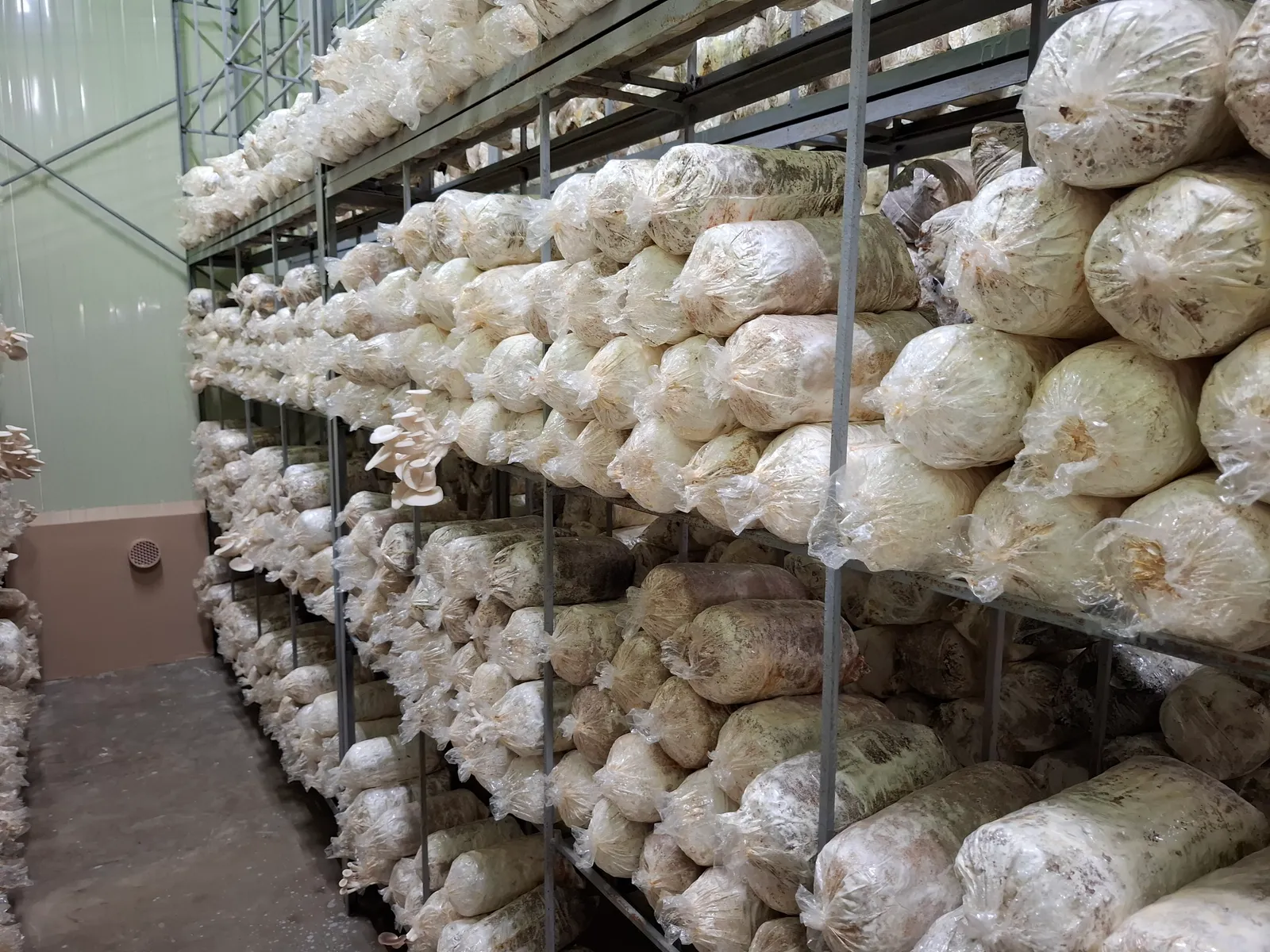
Long tiered metal racks packed with colonised oyster-mushroom fruiting bags inside a grow room, Bicol, Philippines.
Real cultivation photograph. Read its source for location and context; it is not a universal operating specification.MarvinBikolano · CC BY-SA 4.0View full photograph ↗
On this pageChoose a section, or keep reading below

Understand the topic

Start with the explanation.

Separate aseptic laboratory production, culture preservation, testing and release from routine farm handling. This page preserves taxon identity, production method, evidence maturity and Indian commercial context.

Part 01

Why this stage matters

Separate aseptic laboratory production, culture preservation, testing and release from routine farm handling.

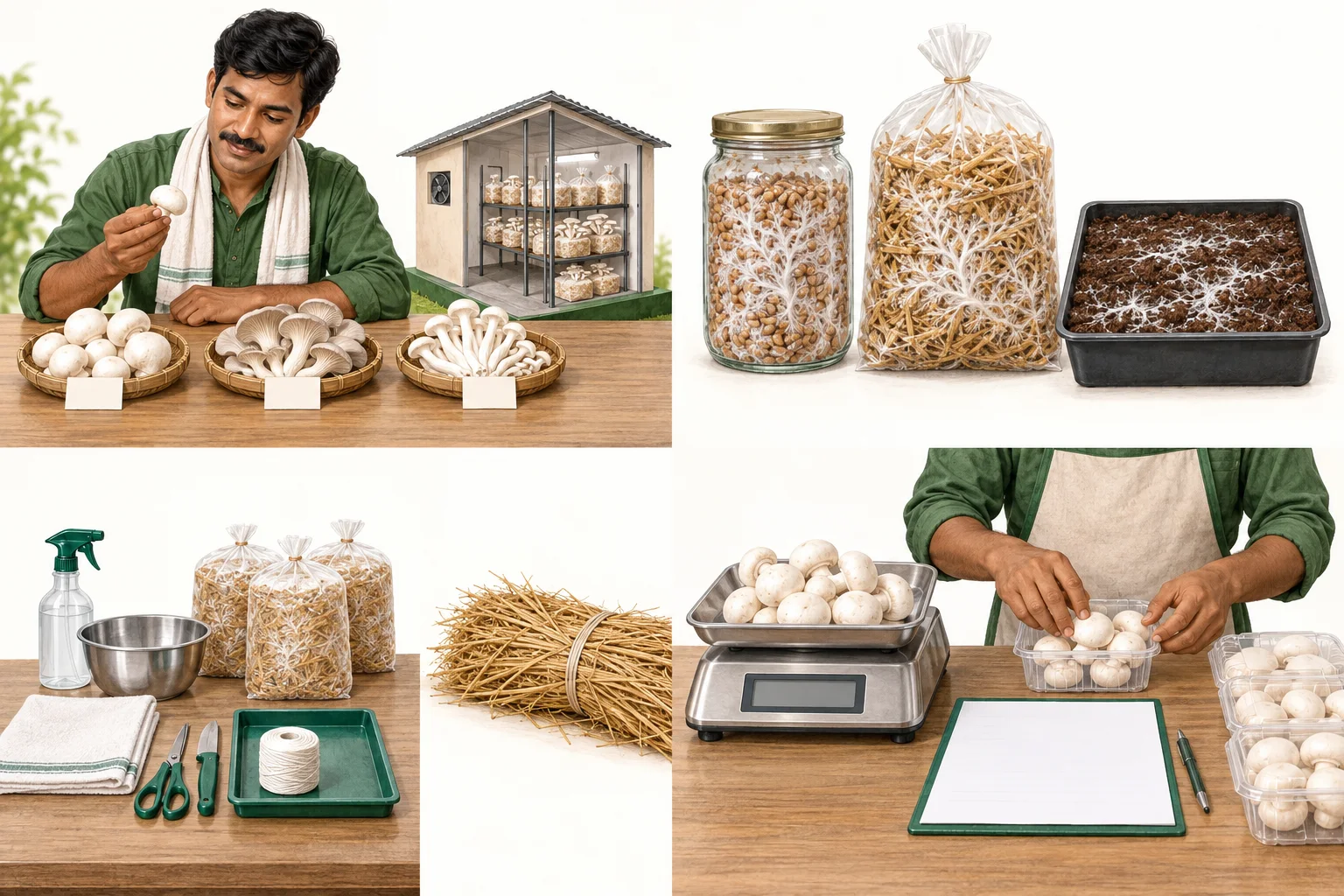
Educational illustration of a grower comparing mushroom crops and a small growing-room model.
AI teaching illustrationChoose your crop

Crop, room, season and buyer belong in one decision. A popular mushroom is not automatically the best fit for your room.

Conceptual explanation—not a real farm photograph, diagnostic finding or construction specification.
Part 02

Method boundary

This page preserves taxon identity, production method, evidence maturity and Indian commercial context.

  • Record species and strain.
  • Record method and substrate.
  • Record location, month and environmental-control capability.
Part 03

Observe and record

Use batch records, stage dates, room observations and contamination patterns. Compare the crop with its own prior condition before changing several variables at once.

Illustration of mushrooms being weighed and packed beside a blank crop record.
AI teaching illustrationHarvest, sell, record

Harvest weight, accepted sales and cash received are separate records. Unsold or rejected mushrooms still consumed inputs and labour.

Conceptual explanation—not a real farm photograph, diagnostic finding or construction specification.
Part 04

Evidence status

The page publishes process relationships supported by primary institutional sources. Numeric recipes remain absent where source context, strain identity or specialist review is incomplete.

Go deeper

Technical reference, records and tools.

Detailed crop-stage information, parameters, diagrams and specialist tools are kept together below. This material retains its source conditions and review limits.

Open the complete technical reference

multi-species · cultivation stage

Spawn laboratory system

Separate aseptic laboratory production, culture preservation, testing and release from routine farm handling. Evidence, method and India-context boundaries remain visible.

Publication
Editorial review in progress
Evidence records
2
External review
Not yet recorded
Wild ID
Not provided
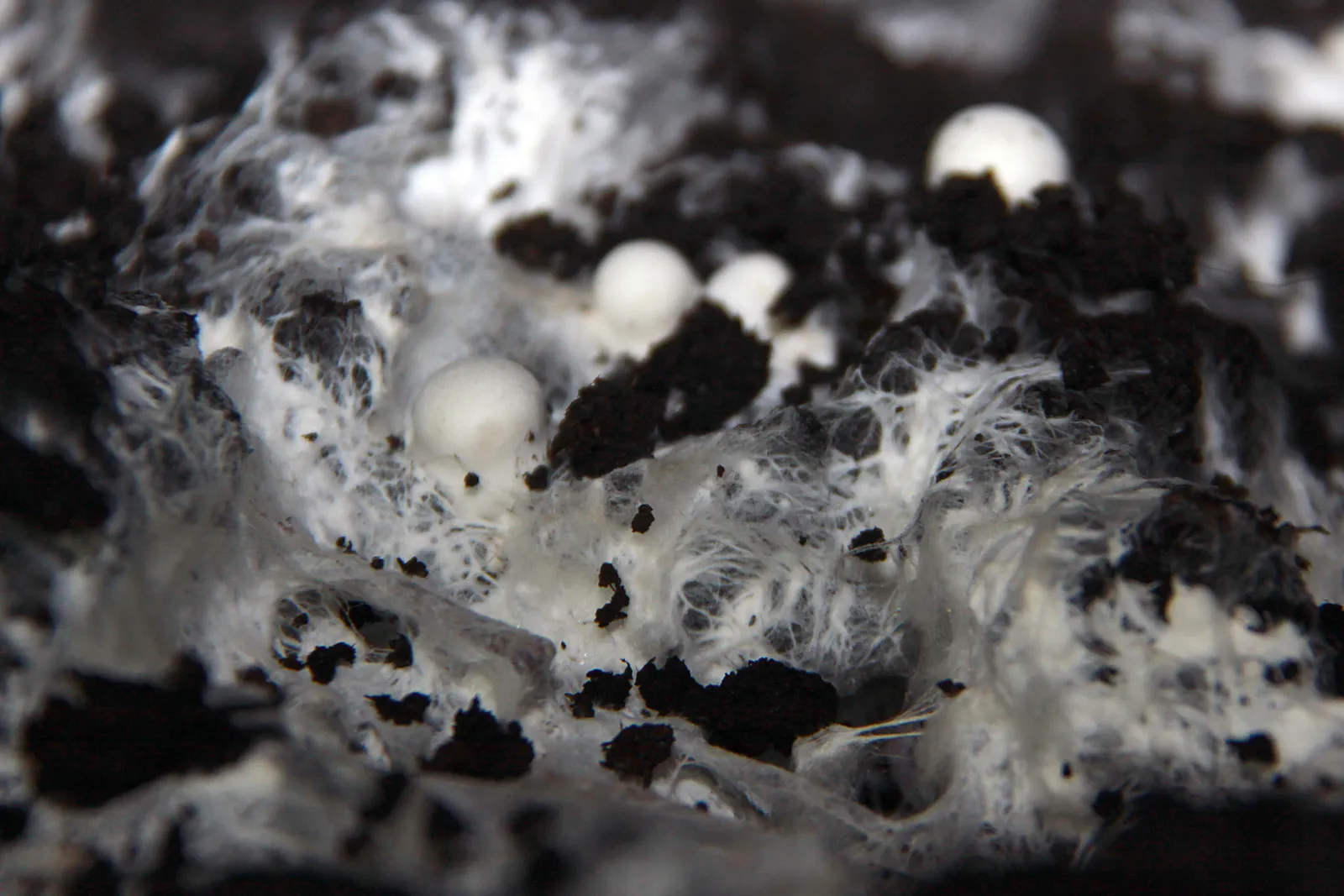
Close-up of white Agaricus mycelium running through dark compost with small button pinheads, Pradejón, La Rioja, Spain.
Mycelium (spawn run) and pinheads on compost (Spain). Photo: Pradejoniensis, CC BY-SA 3.0. Source

Button mushroom crop cycle

  1. CompostDay 0Pasteurised, ammonia below 10 ppm
  2. Spawn run12-15 days22-25 °C in the dark
  3. CasingDay 153-4 cm layer, pH 7-7.5
  4. Case run7-10 daysMycelium reaches the surface
  5. PinningDay 25Air the room, 15-18 °C
  6. FlushesDay 32-70Three flushes, 7-10 days apart

Quick orientation

Separate aseptic laboratory production, culture preservation, testing and release from routine farm handling. This page preserves taxon identity, production method, evidence maturity and Indian commercial context.

01

Why this stage matters

Separate aseptic laboratory production, culture preservation, testing and release from routine farm handling.

02

Method boundary

This page preserves taxon identity, production method, evidence maturity and Indian commercial context.

  • Record species and strain.
  • Record method and substrate.
  • Record location, month and environmental-control capability.
03

Observe and record

Use batch records, stage dates, room observations and contamination patterns. Compare the crop with its own prior condition before changing several variables at once.

04

Evidence status

The page publishes process relationships supported by primary institutional sources. Numeric recipes remain absent where source context, strain identity or specialist review is incomplete.

Trace the boundary

Evidence and limitations

institutional · tier AResearch programmes

Current institutional scope for cultivated and specialty mushroom research in India.

Research scope does not by itself establish a farm recommendation, commercial readiness or strain-specific operating range.

Open primary source
regulatory · tier AFood Safety and Standards Advertising and Claims Regulations

Governance boundary for food advertising, nutritional statements and health claims in India.

The platform provides cultivation education, not product claim approval or legal advice. Current amendments and product classification still require verification.

Open primary source

Read the evidence

Sources & review.

Editorial update: 2026-09-03. Independent technical review is not recorded for this entry.

  1. Research programmes

    ICAR Directorate of Mushroom Research

  2. Food Safety and Standards Advertising and Claims Regulations

    Food Safety and Standards Authority of India

Reading a source is not the same as applying its instructions to every farm. Confirm species, strain, crop stage, system, region and publication date. Old chemical recommendations are not current-use instructions.

See something that needs correcting? Tell us →