


A practical guide to growing mushrooms in IndiaA joint educational initiative by MushroomWale & DMR Solan
MushroomFarming.in

A joint educational initiative by

MushroomWale.com
ICAR–Directorate of Mushroom Research, Solan logoICAR–DMRSolan

Read · Observe · Practise · Check

Specialty mushrooms: evaluate one complete cultivation method

Use a disciplined learning route for cultivated species outside the main five. Similar-looking fruit bodies or a high quoted price are not enough to choose a production system. This is a method-evaluation unit, not a universal specialty-mushroom recipe.

Begin the walkthrough ↓
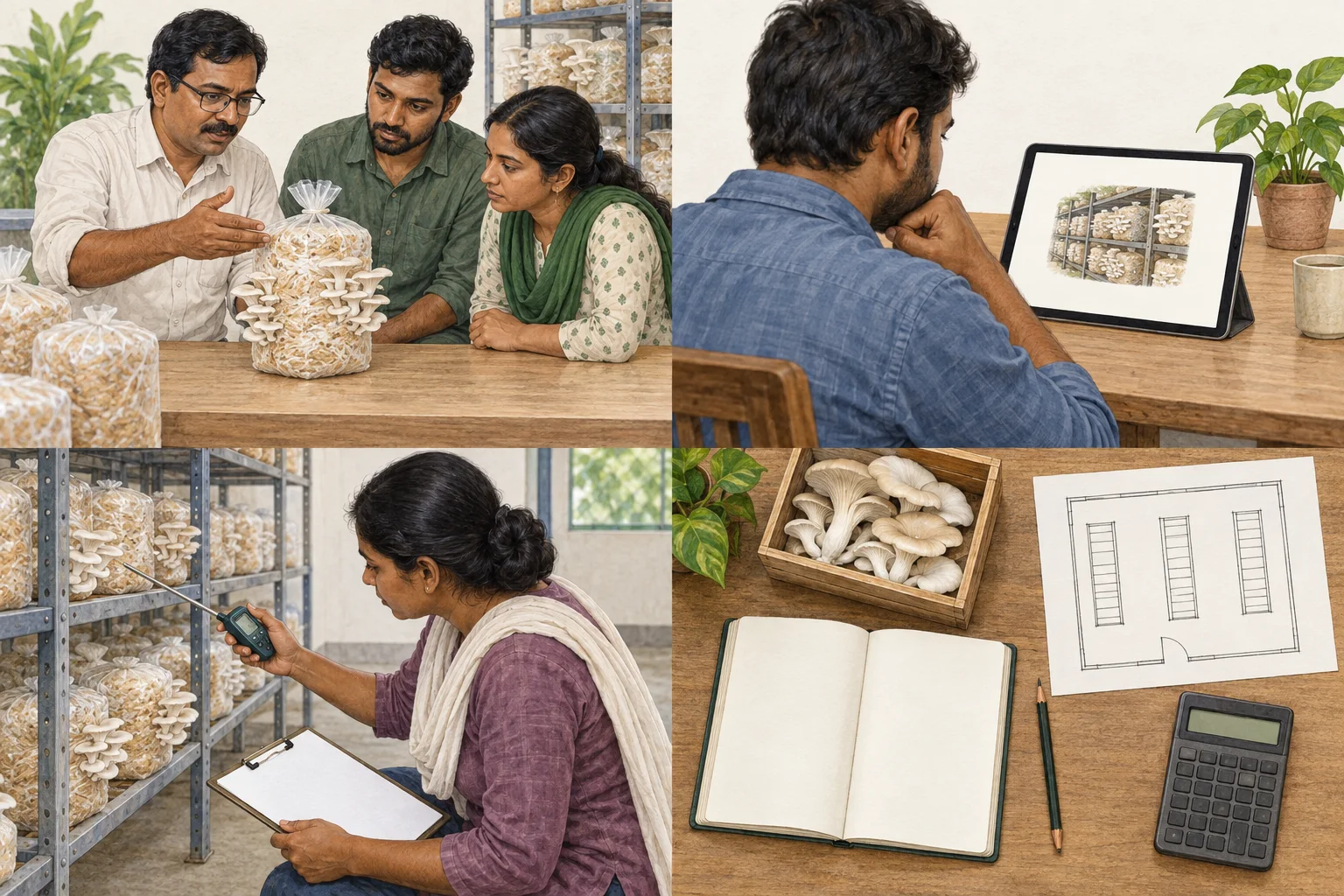
Generated illustration of an instructor and growers examining an Oyster mushroom cultivation bag.
AI-generated teaching illustrationConceptual learning scene, not a diagnostic photograph or construction specification.

Before you begin

  • Exact cultivated species and strain identity
  • A traceable spawn or block supplier
  • An applicable complete method and a verified buyer requirement

Use the linked crop and technical lessons for method-specific detail. Practical work involving chemicals, pressure, electrical equipment or uncertain crop health requires competent supervision; illustrations are not operating specifications.

Generated illustration of an instructor and growers examining an Oyster mushroom cultivation bag.

Conceptual AI teaching scene

Stage 1

Identify the method and its evidence

Separate a supplier’s sales claim, a research experiment and a repeatable grower protocol. Read the material, strain, facilities and measurement basis before transferring a result to your farm.

Put it into practice
Make a source sheet stating what was actually demonstrated and under which conditions.
Check your work
You can explain the limits of the evidence without treating a trial result as a guaranteed farm outcome.
Generated illustration of a grower watching a mushroom cultivation demonstration on a tablet.

Conceptual AI teaching scene

Stage 2

Locate the production boundary

Culture maintenance, spawn production, block manufacture and fruiting supplied material are different operations. Identify which ones you will perform and which are supplied externally.

Put it into practice
Draw the incoming product and remaining stages. List the facility, skill and quality check needed at each stage.
Check your work
The proposed unit has the capability for its actual work, not only a fruiting-room photograph.
Generated illustration of a grower using a probe beside Oyster bags and keeping a blank record sheet.

Conceptual AI teaching scene

Stage 3

Test the learning plan

Choose a bounded supervised pilot with traceable inputs, comparison records and a defined stop or review condition. New species need method-specific teaching rather than reused Button parameters.

Put it into practice
Prepare the observation and harvest sheets before committing inputs. Record failed as well as successful units.
Check your work
The pilot can answer a specific question about method, room or market fit.
Generated overhead illustration of a notebook, blank calculator, mushroom crate and simple room sketch.

Conceptual AI teaching scene

Stage 4

Validate the product and market

Confirm buyer identity, accepted product form, grade, volume and payment terms. Cultivation does not establish medicinal efficacy or authorise health claims. Food or other product compliance depends on the actual intended use.

Put it into practice
Record buyer feedback and verify applicable requirements before advertising or scaling.
Check your work
The scale-up decision uses accepted sales and relevant evidence rather than a headline market price.

Common mistakes—and the better question

An expensive mushroom must be profitable
Test accepted demand and the full production cost.
All specialty species share one protocol
Use species-, strain- and method-specific guidance.

A task to complete, not just a page to read

Build a go, hold or investigate dossier

Evaluate one cultivated species using source applicability, input supply, facilities, skills, crop observations and buyer evidence. Explain every unresolved point.

Bring back this evidence

A method-comparison file with a reasoned next step, not a promise of production or health benefit.

Completing this self-guided task is not verification of practical competence. Review it with a suitable instructor before relying on it for farm operation.

Keep the field guidance beside the lesson

Open the main subject guide →Cultivated mushroom speciesMushroom market validationresources

Sources, scope and review

Editorial learning material; no independent technical review is claimed. The tasks are original teaching exercises. Source-specific numerical schedules remain in the detailed lessons with their context, rather than being turned into universal instructions here.