Start with the foundations, choose your crop, then follow materials, climate, crop health, harvest and business. Each route pairs pictures with explanations, tasks and checks. The detailed Academy lessons remain available in sequence.
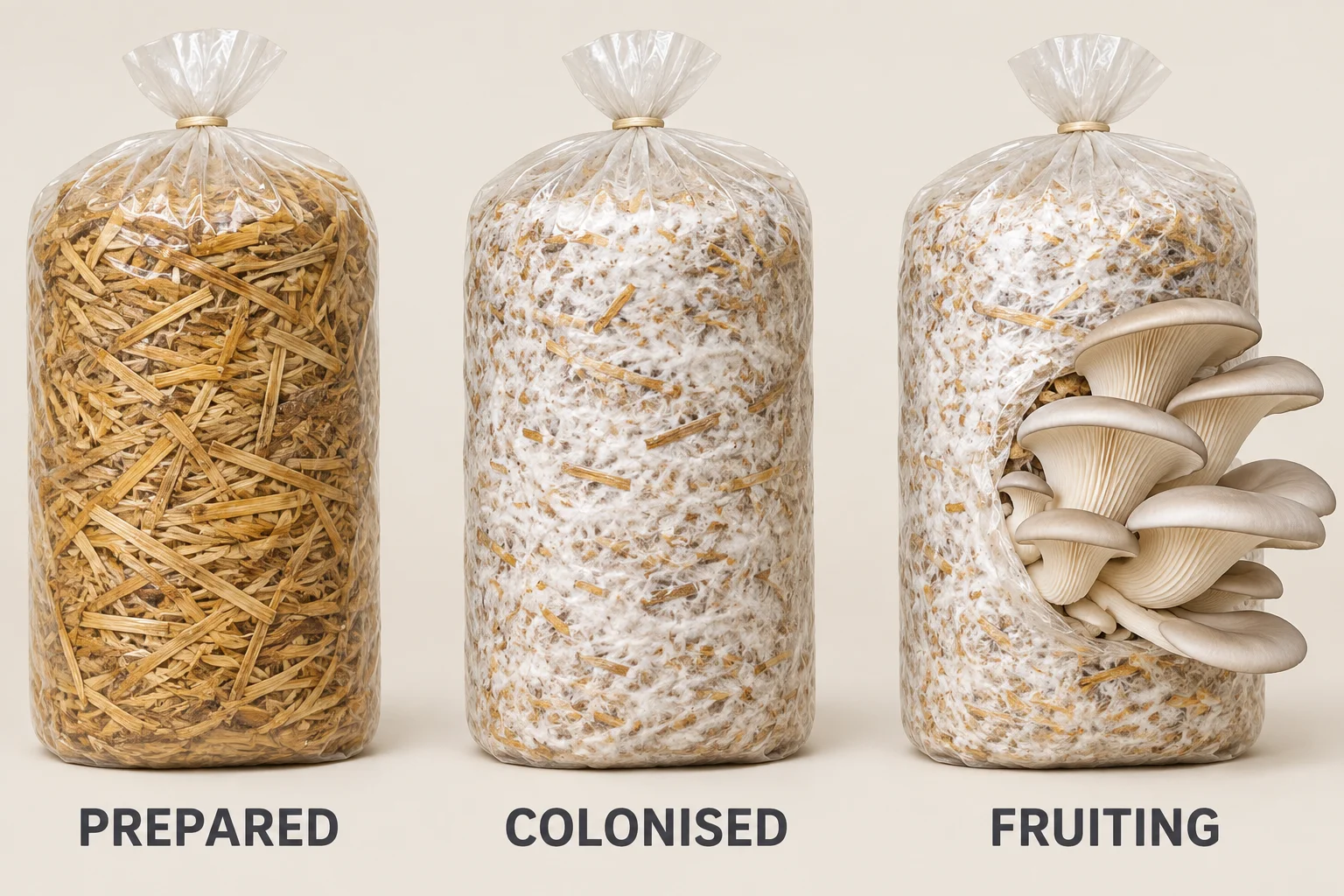
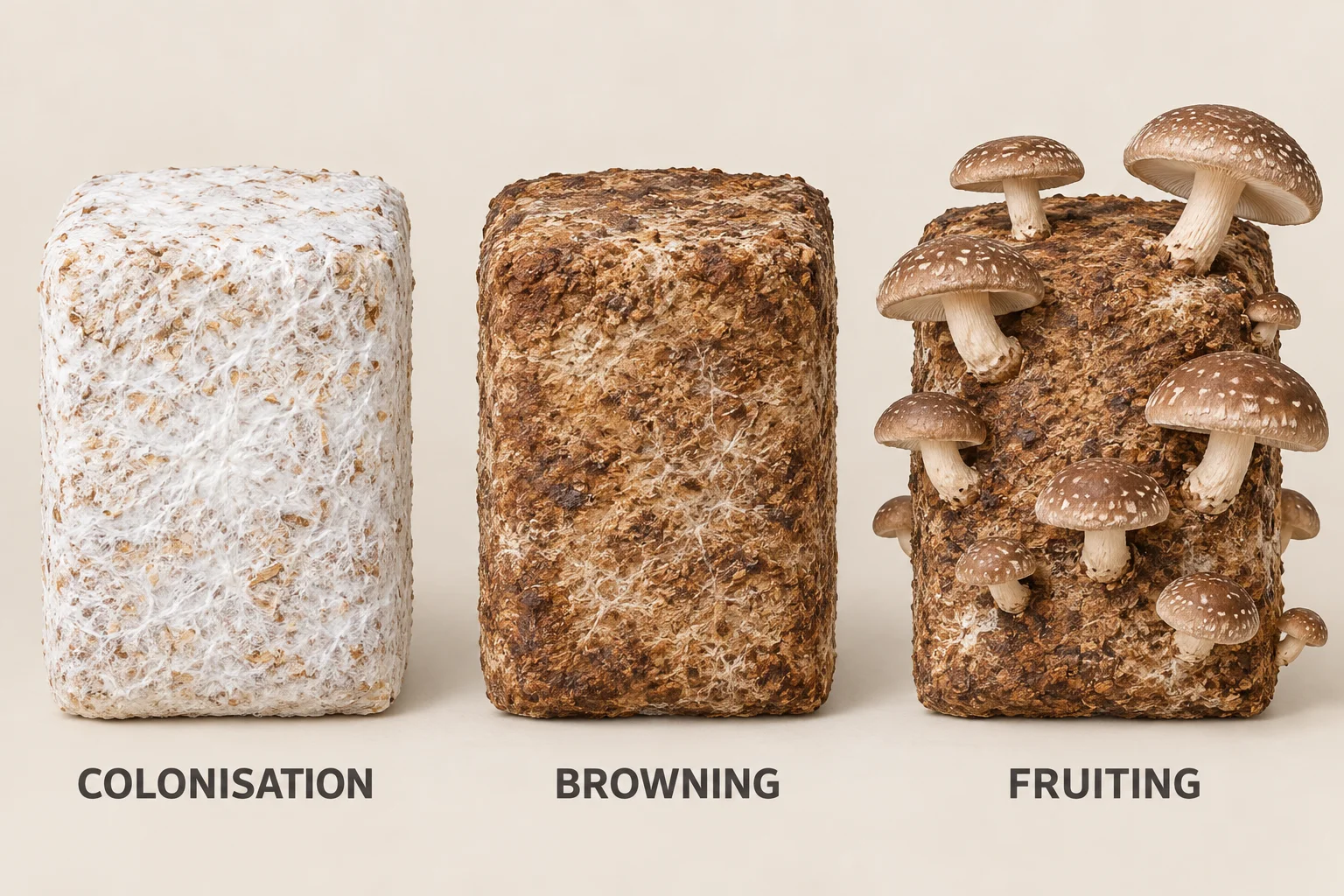
AI-generated teaching illustrationA conceptual stage sequence, not three guaranteed dates or a visual test for healthy mycelium. Use the applicable species, strain and bag method.
English teaching material. Independent technical review and full Hindi translation remain pending. This is education, not a validated operating protocol or a competency certificate.
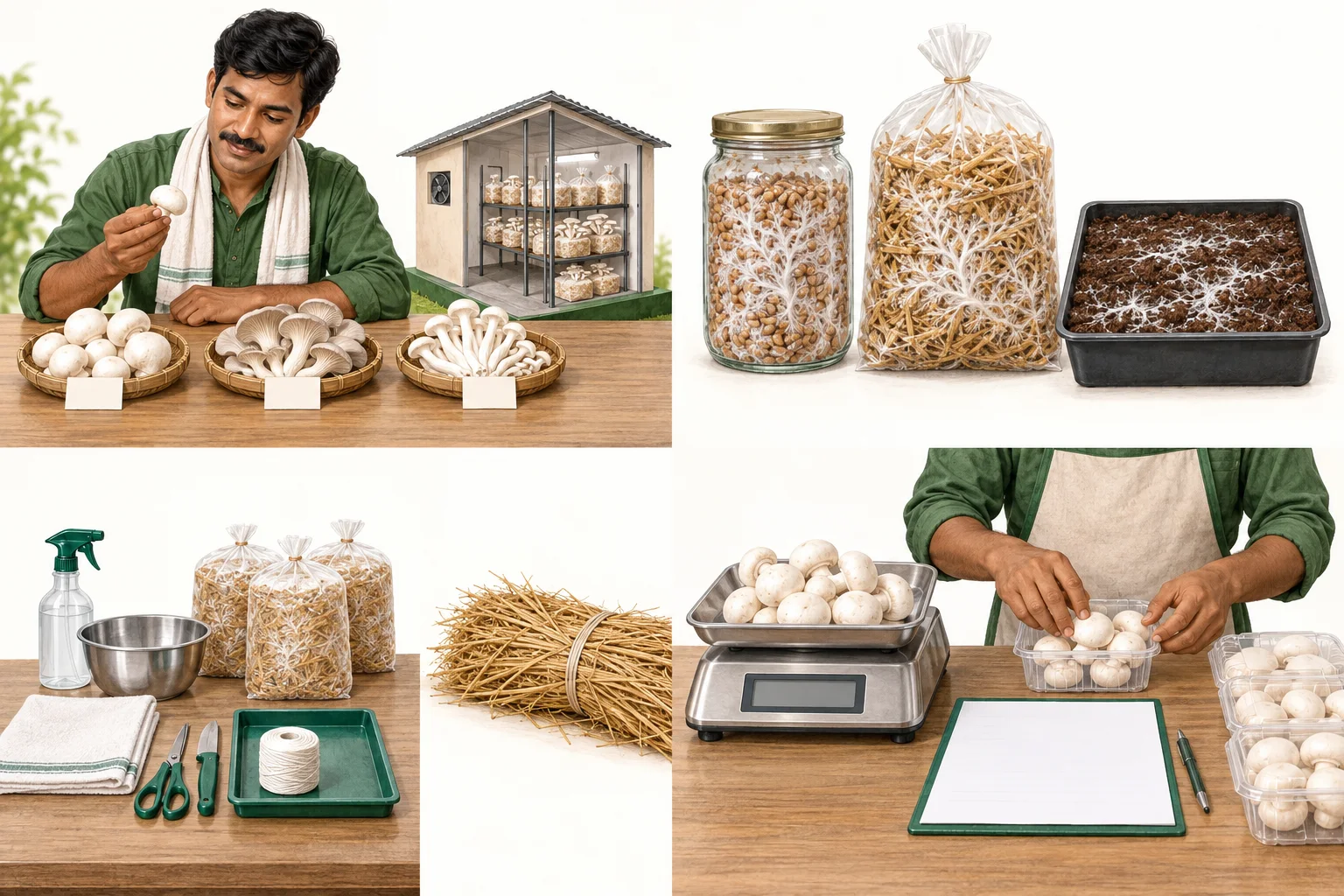
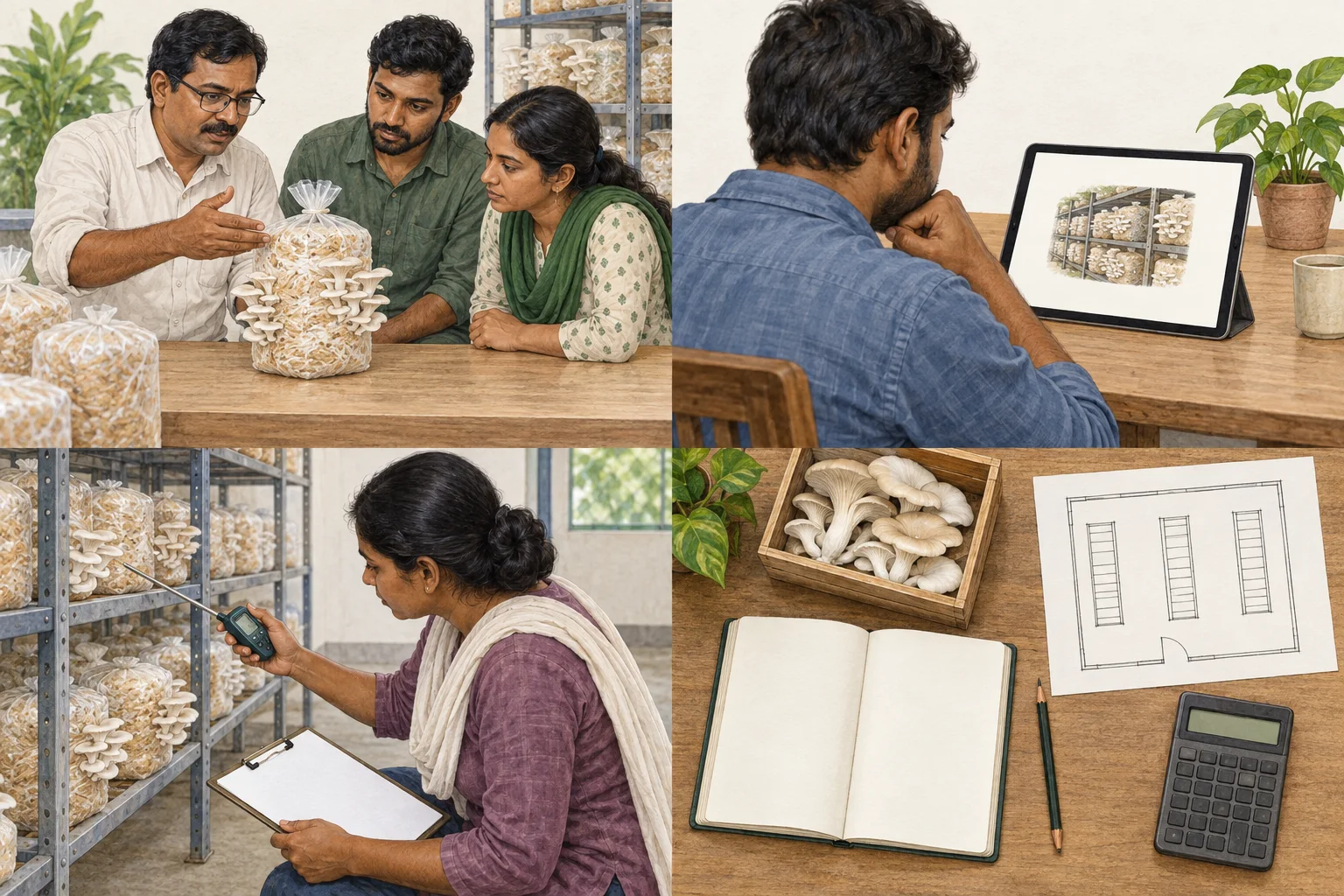
Understand what a mushroom farm actually does before buying equipment. This route connects biology, materials, room conditions, people and buyers. Finish with a small-crop plan that another person can follow.
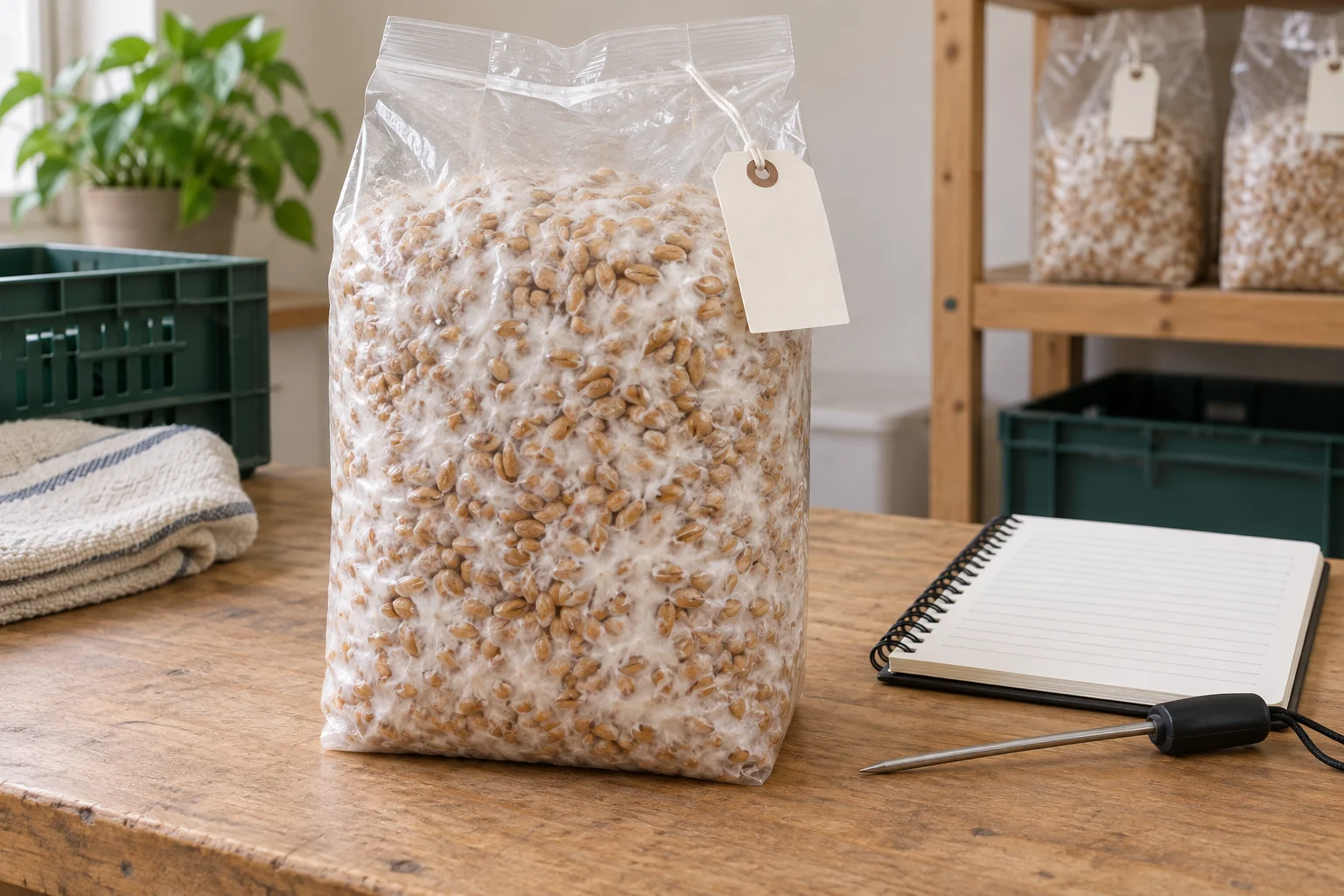
Learn the grower’s receiving responsibility without confusing it with laboratory spawn manufacture. White growth in a generated image is not a purity test or evidence that a real batch is suitable.
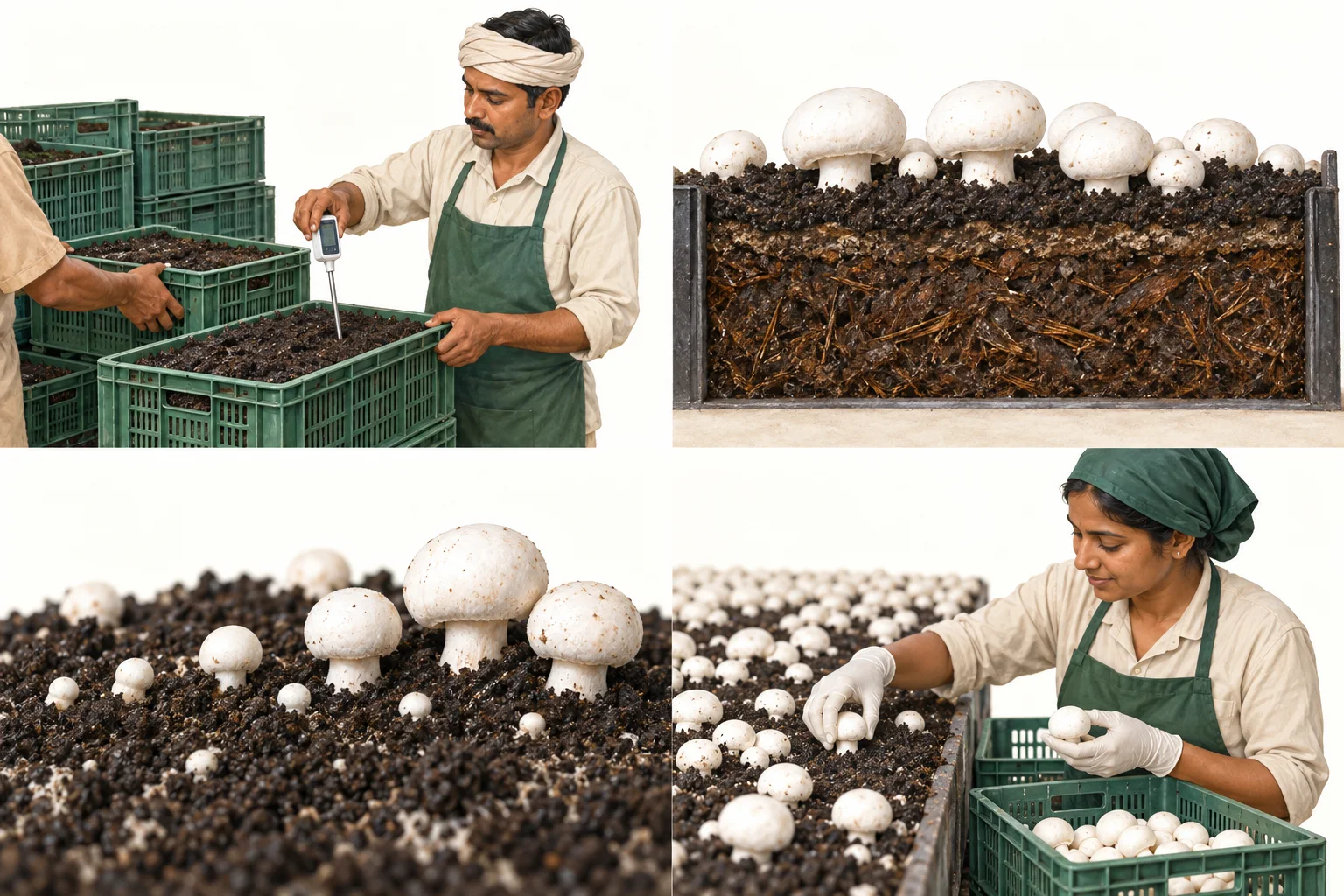
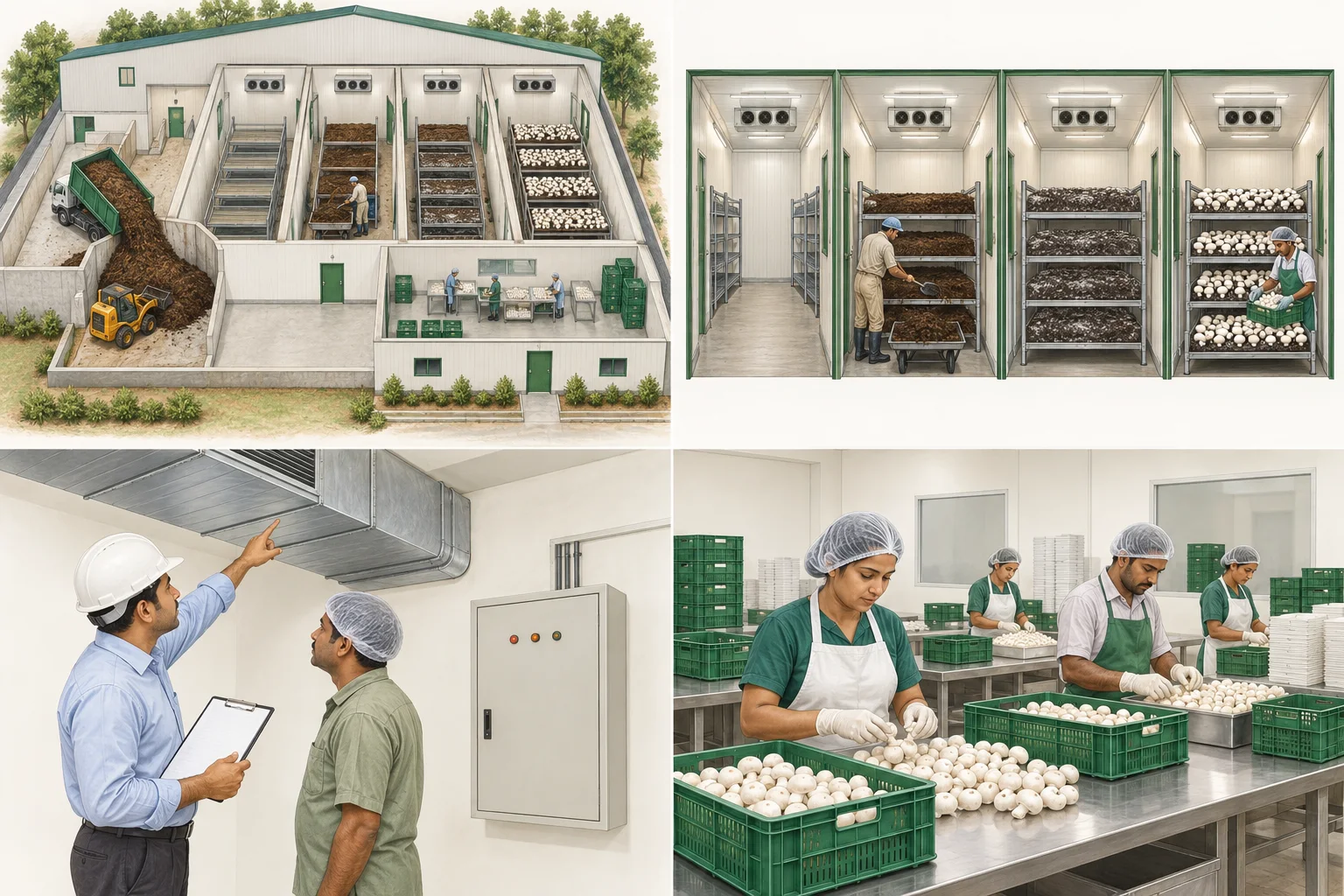
Follow a Button crop without confusing compost preparation, colonisation, casing and fruiting. The study sequence includes eighteen detailed lessons; the practical walkthrough below connects the handovers.
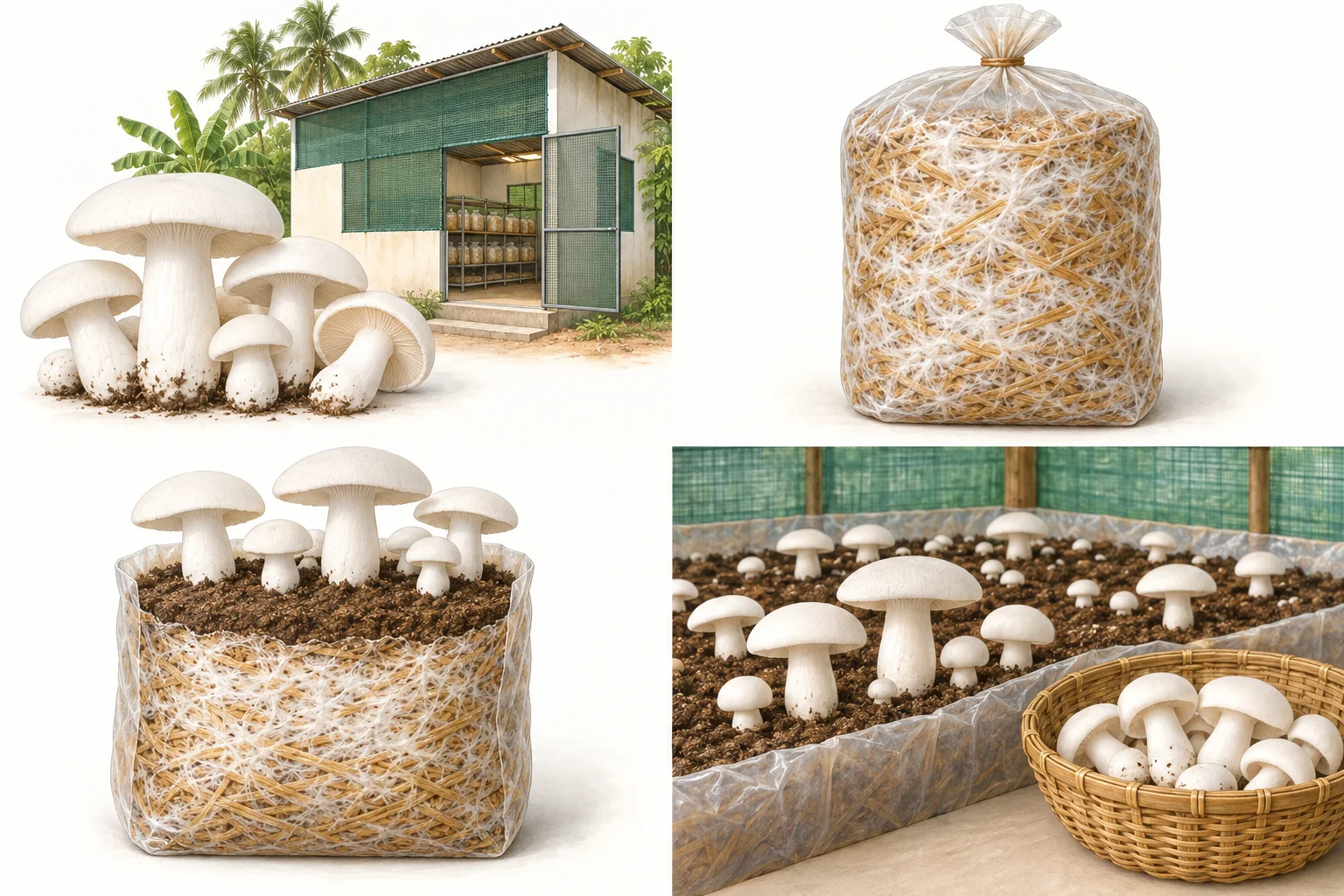
Choose the exact Pleurotus species and method, then connect substrate preparation, inoculation, bag development and harvesting. The three pictured stages explain a sequence, not a fixed number of days.
Understand why a milky mushroom crop includes a separate casing operation. Keep preparation, colonisation, casing and fruiting in the right order instead of applying an oyster method unchanged.
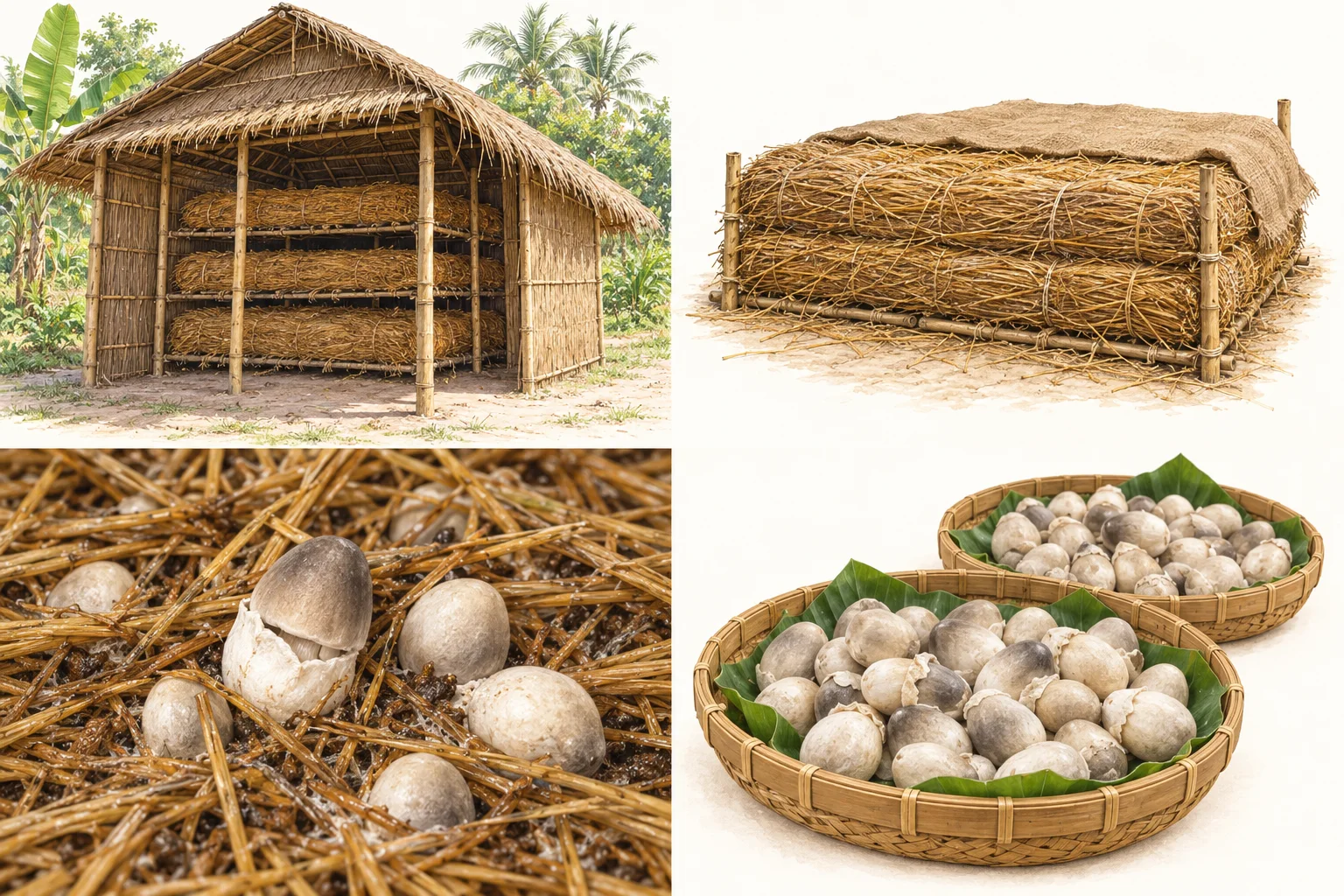
Learn a complete selected bed method and organise the work around a time-sensitive harvest. Traditional straw-bundle systems and controlled indoor methods must not be combined as if they were identical.
Understand which production stages you operate. Log culture, block manufacture and fruiting purchased blocks have different inputs, facilities, waiting periods and risks.
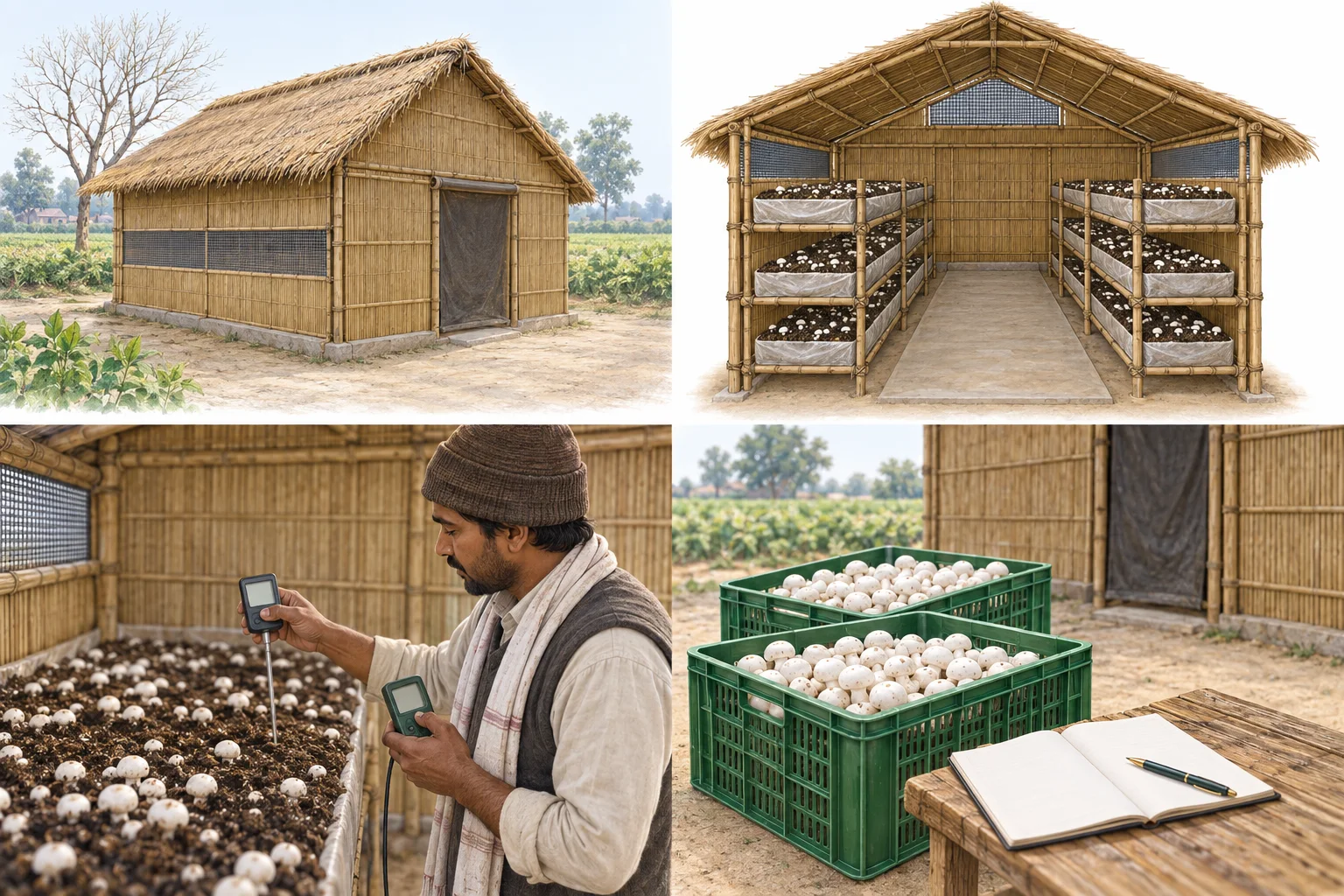
Understand the limits of a seasonal structure. The crop window must cover the actual supplied compost stage, crop development, harvesting and turnaround; a cool night alone does not establish suitability.
Use a disciplined learning route for cultivated species outside the main five. Similar-looking fruit bodies or a high quoted price are not enough to choose a production system. This is a method-evaluation unit, not a universal specialty-mushroom recipe.
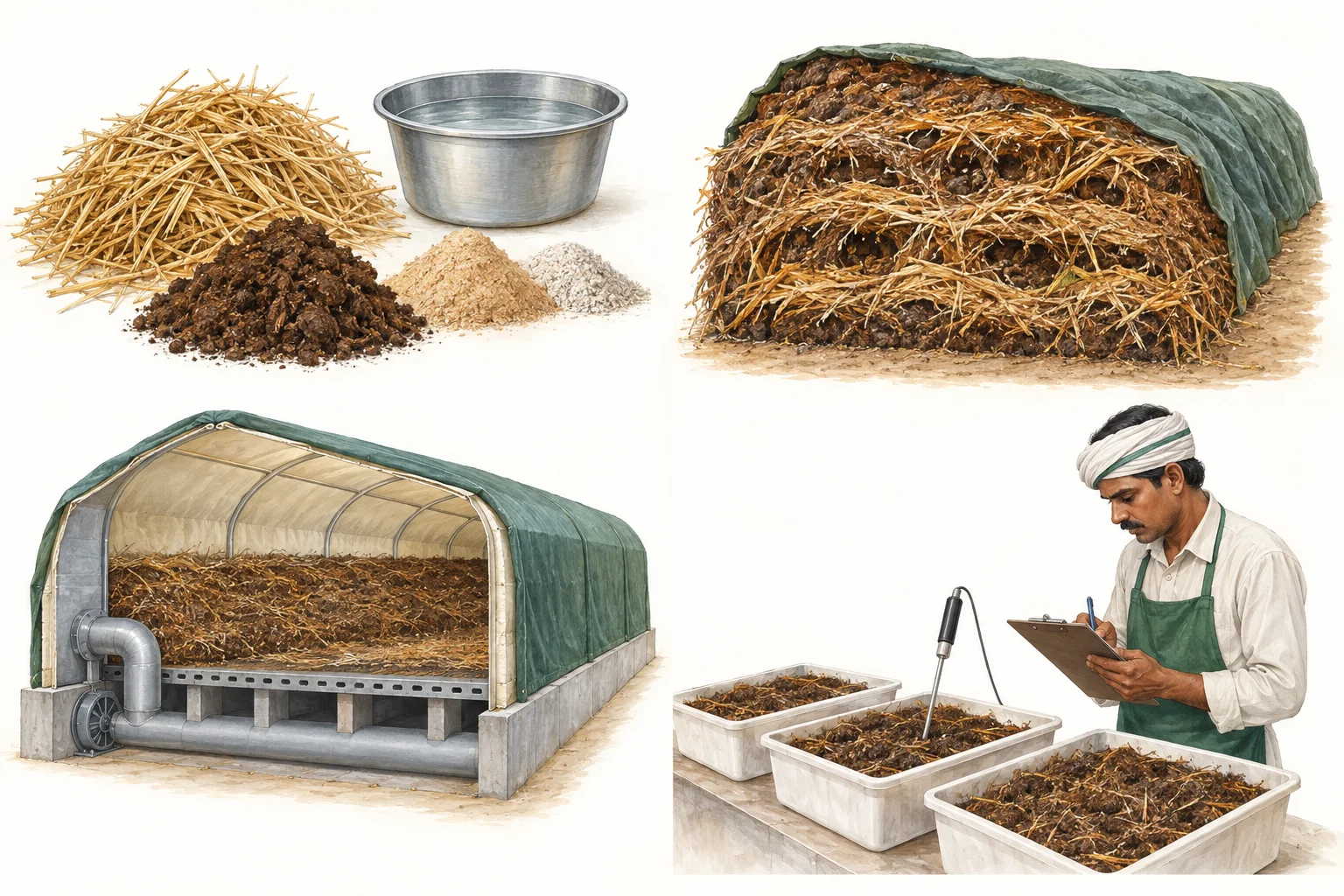
Learn the eighteen compost lessons as one batch workflow. Formulation, material structure, aeration, biological activity, treatment and release belong together; a recipe by weight alone is not a process.
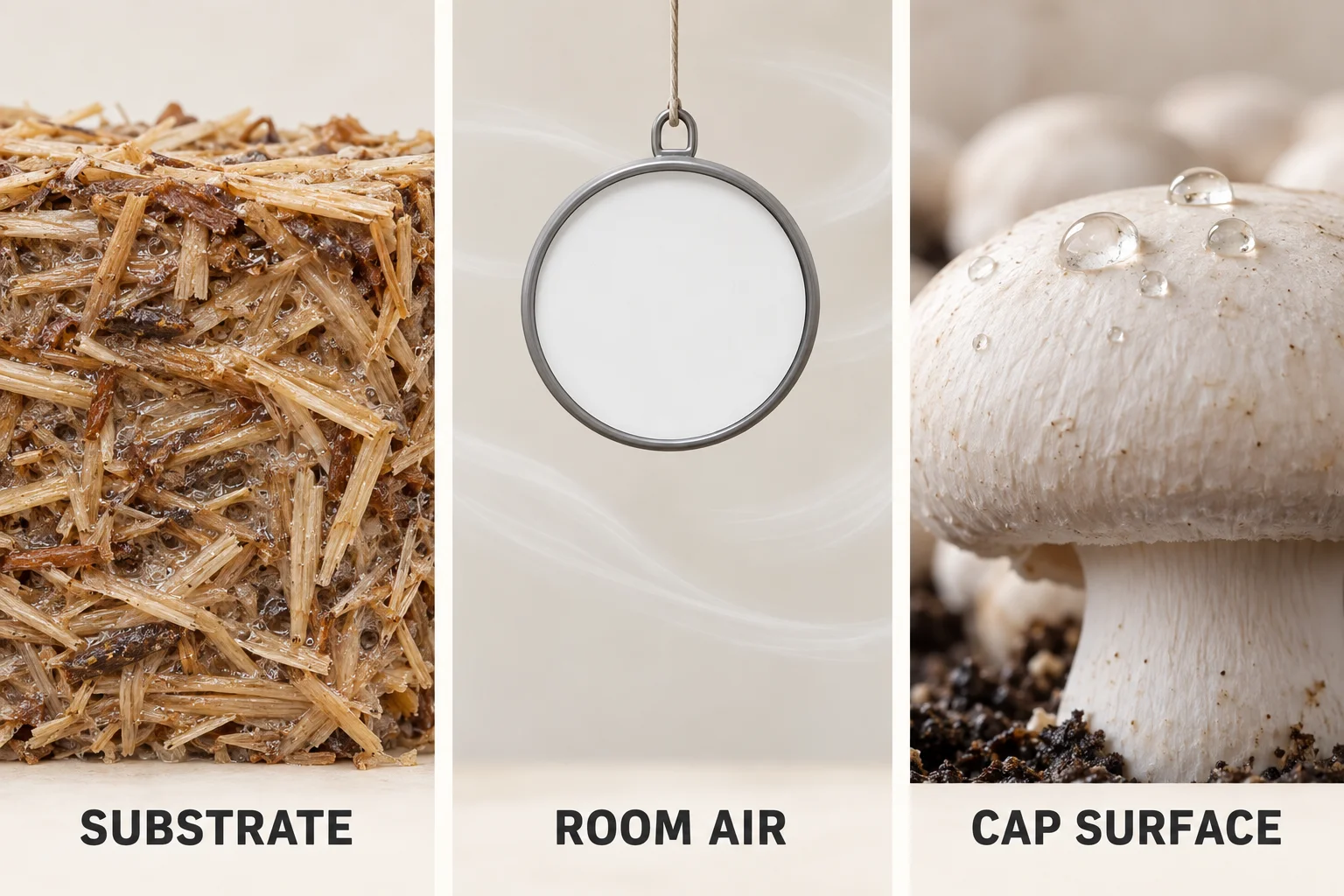
Understand the difference between a controller number and conditions experienced by the crop. Learn the five climate lessons alongside a repeatable room-round exercise.
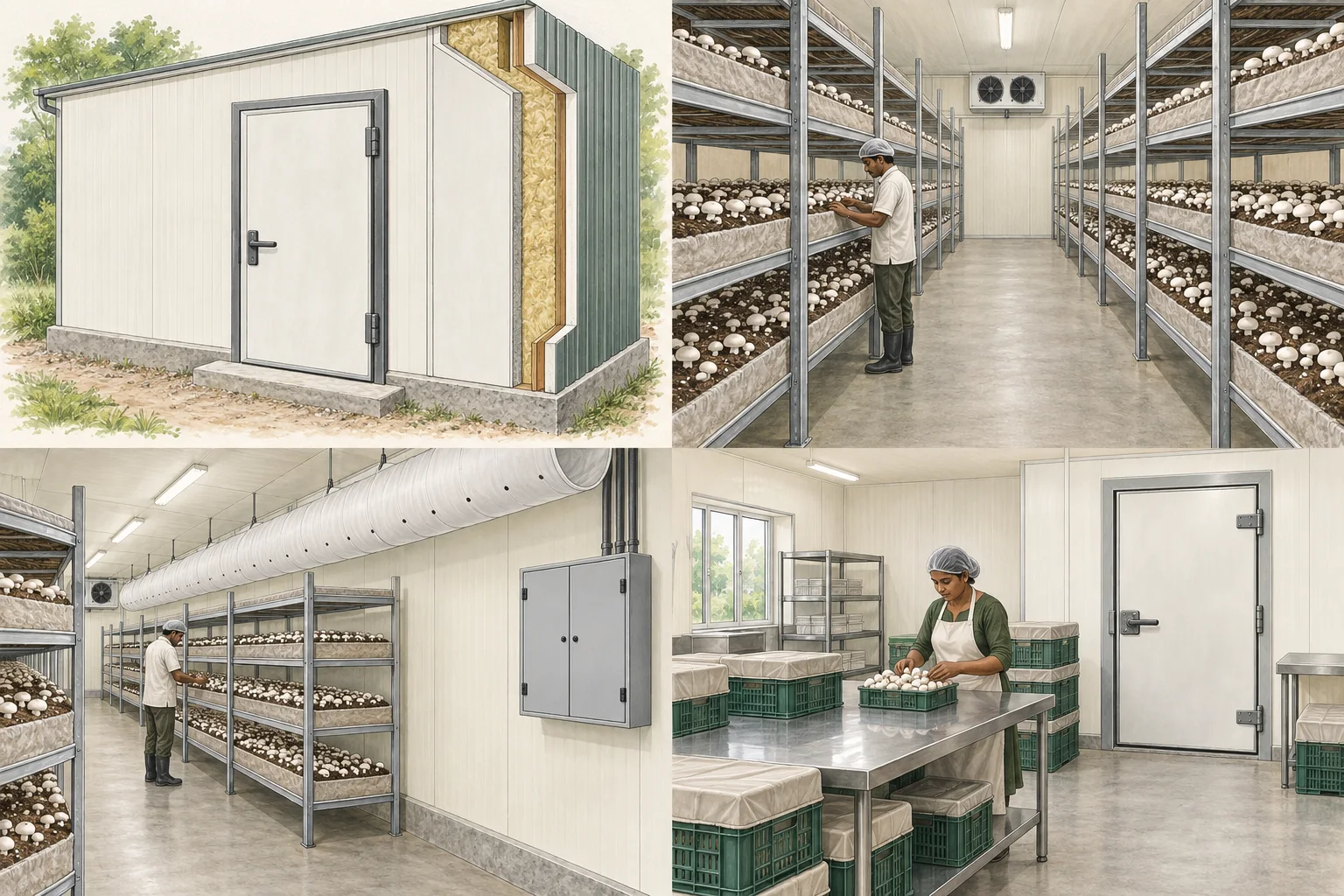
Learn to discuss a room with a qualified designer and inspect its handover intelligently. This route explains requirements and verification; it is not permission to size, wire or commission specialist equipment without competence.
Turn a room specification into daily operating evidence. The four operator lessons connect loading, stage transitions, room mapping and corrective decisions.
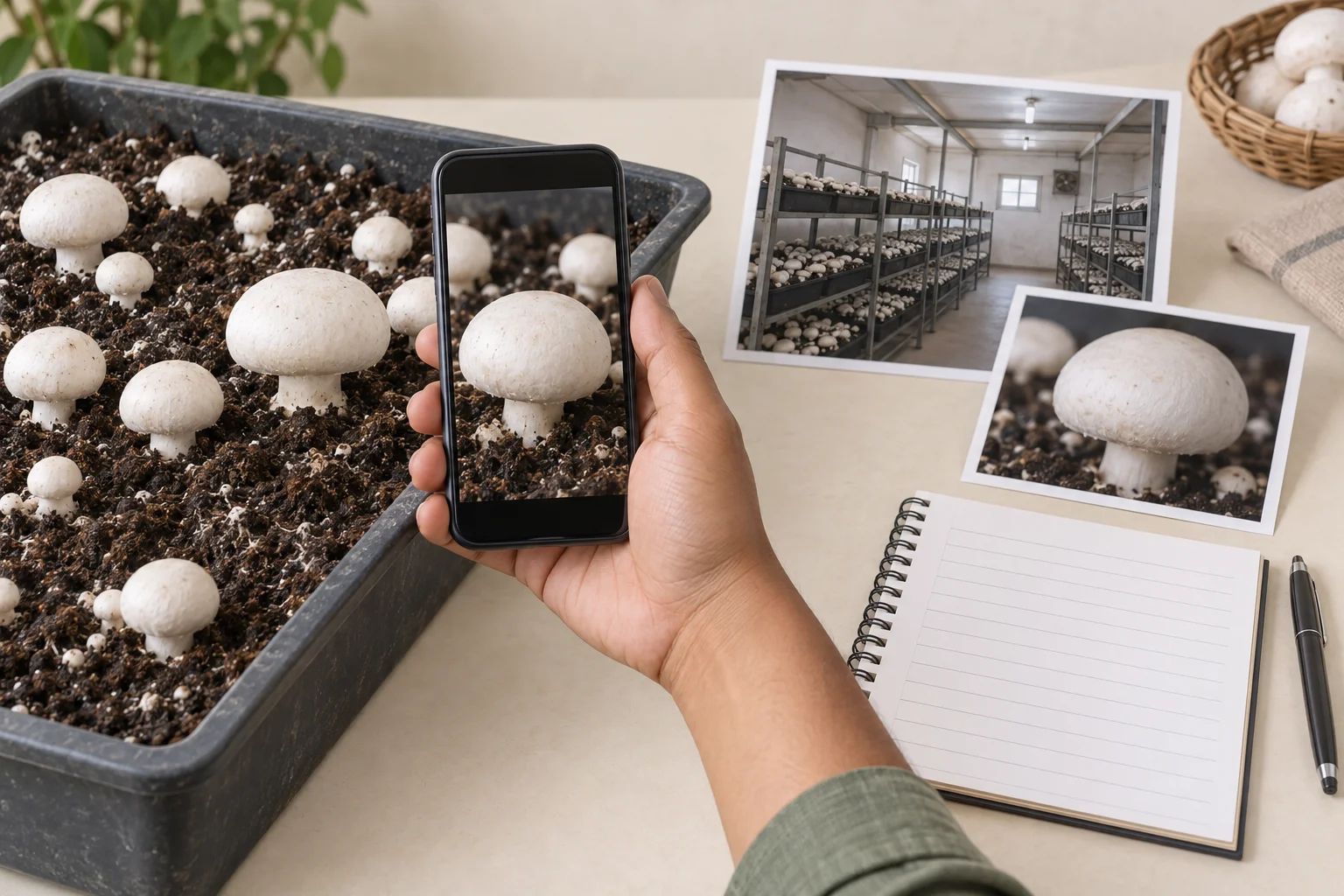
Learn to make an observation useful to a crop specialist. This is not image recognition or permission to prescribe a chemical; photographs need crop, stage, pattern and history.
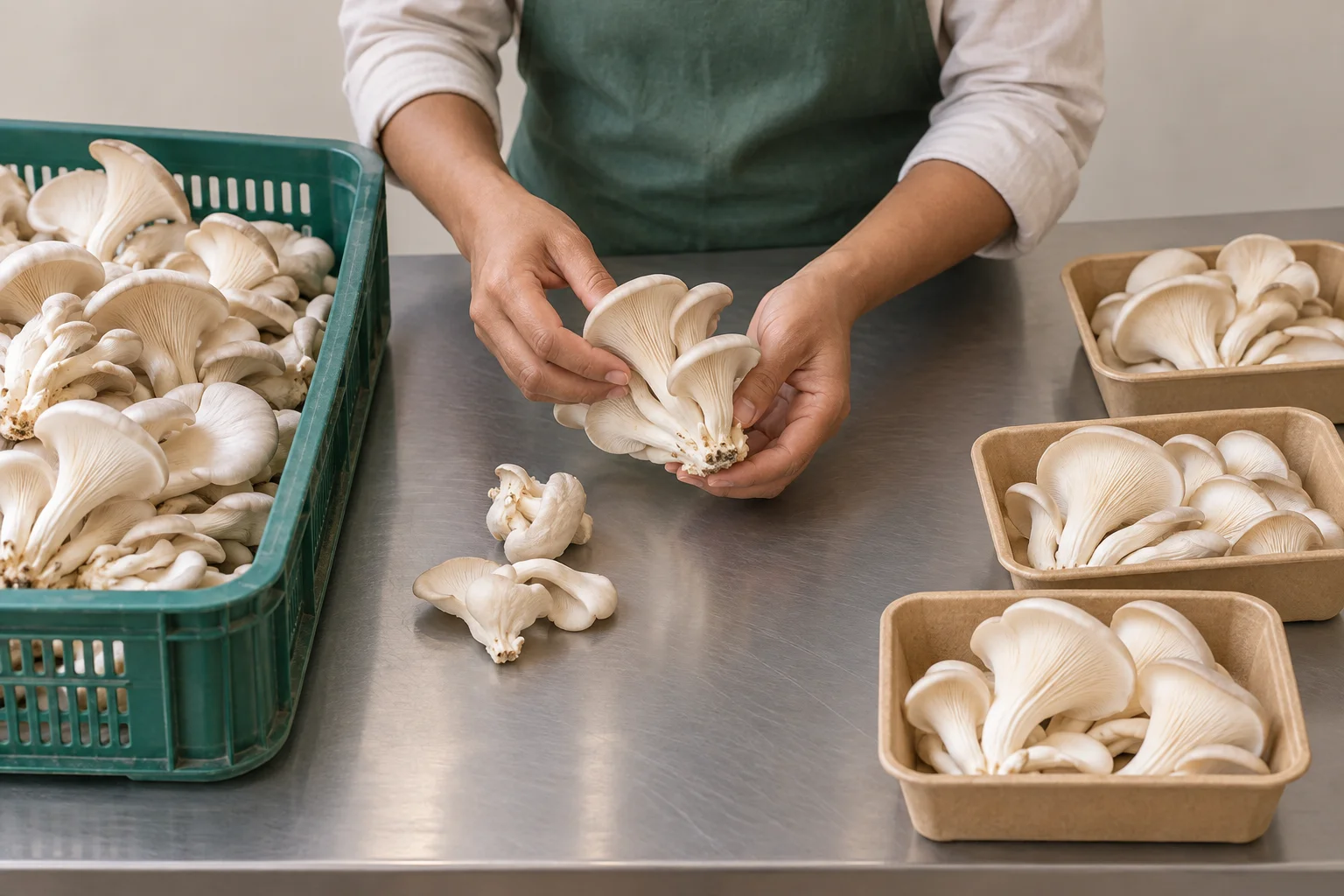
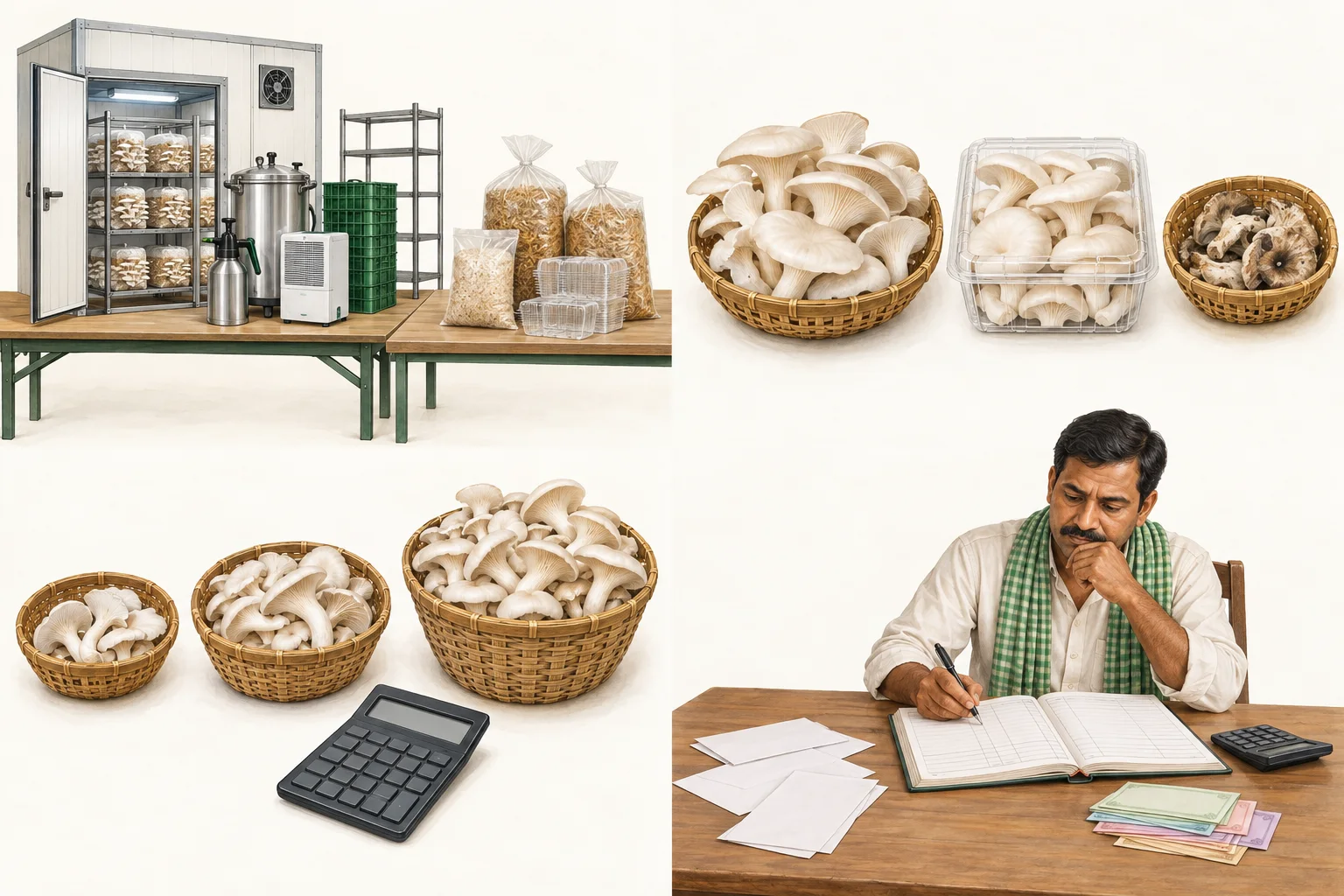
Connect harvest maturity, careful handling, grading, packing and delivery. Product appearance, safety and buyer acceptance are different questions; a fresh-looking photograph cannot establish all three.
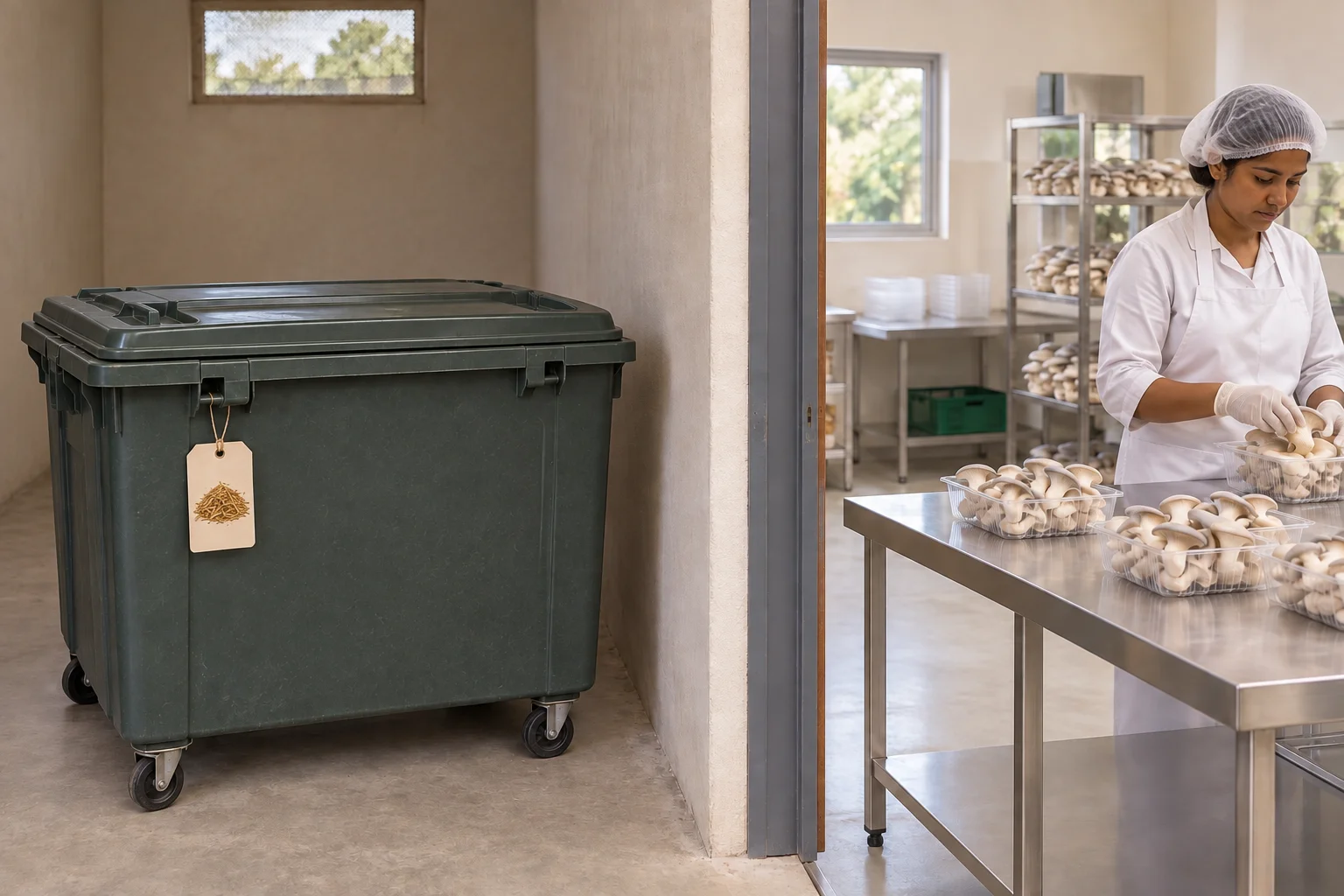
Keep crop-end handling connected to farm hygiene and local environmental responsibilities. Used substrate from different species and histories is not automatically the same product or suitable for every reuse.
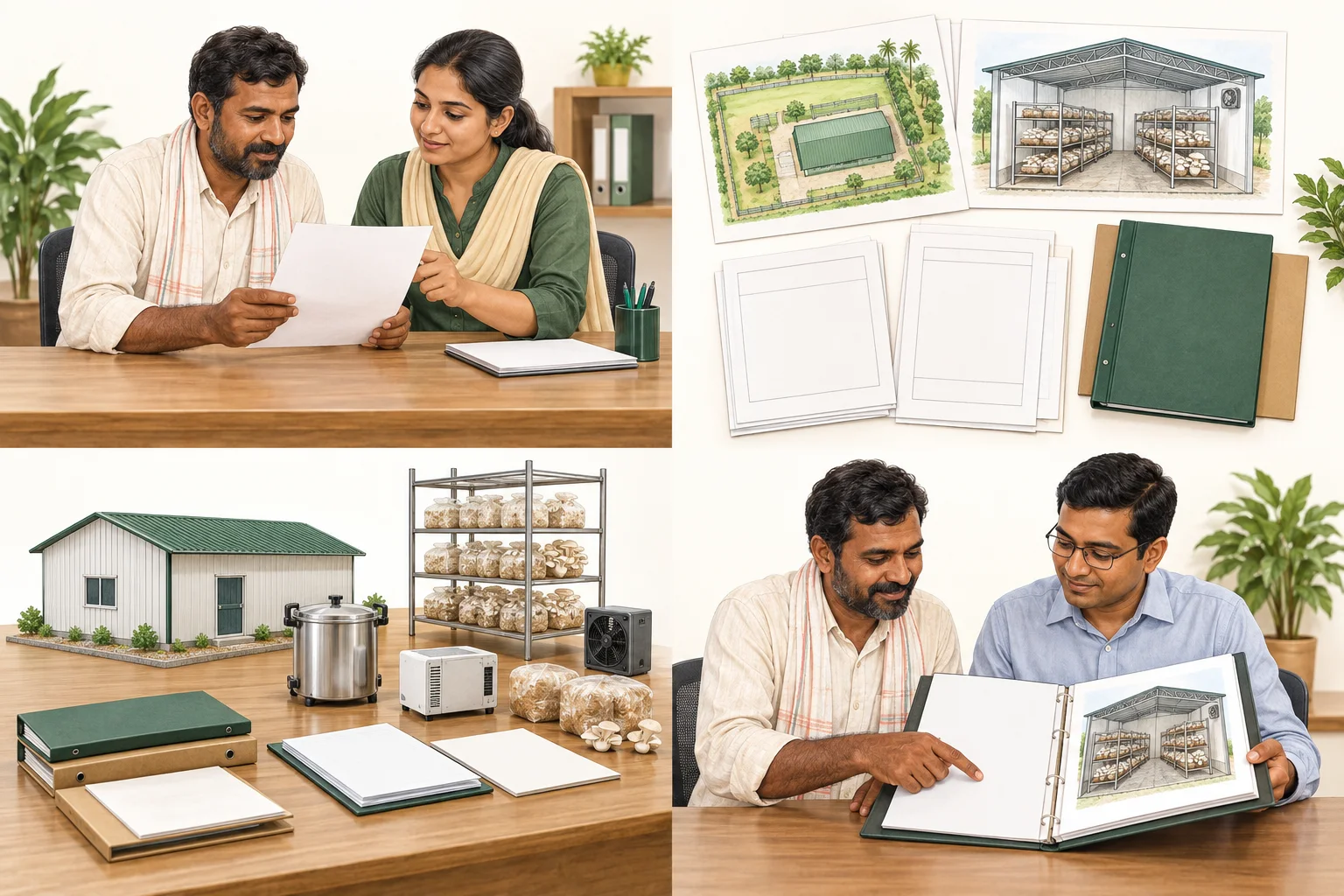
Connect market demand, compost supply, room occupancy, utilities, labour and finance before comparing equipment offers. A project proposal must describe how the farm will operate, not only what will be built.
Separate project viability, scheme eligibility, lender appraisal and payment of assistance. This learning route does not promise approval, state-specific entitlement or a current subsidy amount.
Images in this curriculum are generated teaching scenes. Real cultivation and published disease photographs elsewhere retain separate credits and evidence limits.