


Quick orientation
Define the question first, then select locations, depth, timing, composite logic, container and transport.
01
Simple explanation
A precise laboratory result from a poor sample creates false confidence.
02
What is happening
Spatial heterogeneity and sample handling create uncertainty that can exceed instrument precision.
03
Operator explanation
Define the question first, then select locations, depth, timing, composite logic, container and transport.
04
What to observe
Observation should describe stage, location, pattern and change history before interpretation.
- Hot and cold zones
- top-bottom difference
- local contamination
- sample exposure
- container and label
05
What to measure
Measurement must retain method, unit, location, timing, calibration and sample identity.
- Moisture
- pH by method
- ammonia safely
- density
- nitrogen or other laboratory parameters where justified
06
Equipment and process boundary
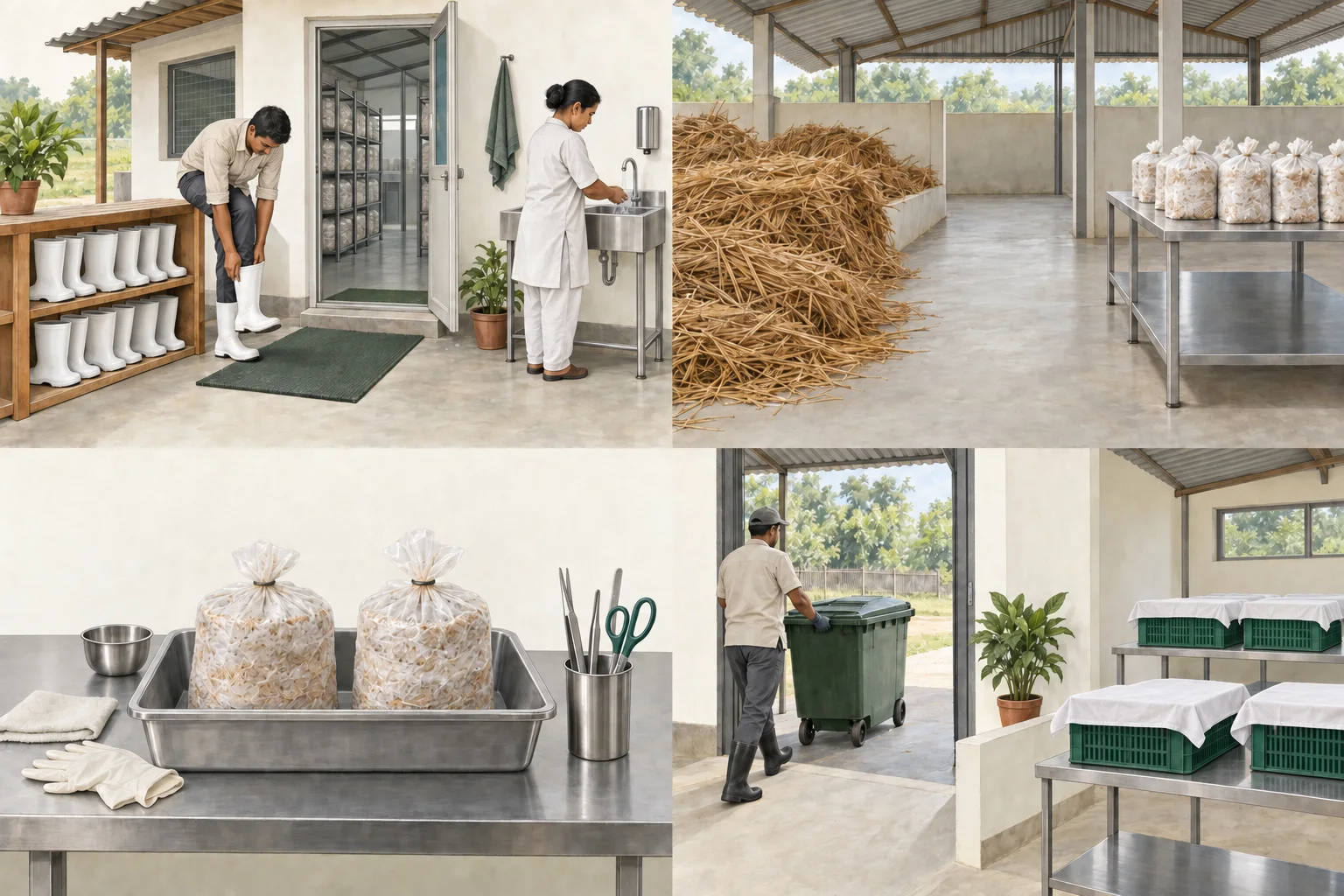
Equipment is useful only when its role in the biological process is explicit.
- Clean sampler
- sealed containers
- labels
- calibrated instruments
- cool or protected transport where method requires
07
Variables that interact
Sampling plan, method, calibration, unit, chain of custody, interpretation and limitations belong to one test record.
08
What can go wrong
A symptom may have several mechanisms. Verify the cause before changing the process.
- Single convenient grab
- over-compositing a local failure
- unrecorded timing
- incompatible methods
- unsafe ammonia sniffing
09
What changes at commercial scale
Scaling changes geometry, repeatability, instrumentation, material flow and failure consequence.
- Representative sampling effort rises with batch heterogeneity
- Commercial systems need sample IDs, custody and repeatability
10
Evidence boundary
Mapped evidence: ICAR-DMR technical and diagnostic services; Ammonia chemical safety fact sheet. Foundational, current operational, research and engineering sources retain their different roles.
Structured testing guides
Sampling procedure is part of the measurement, not a note added afterward.
COMPOST-TEST-MOISTUREWater affects microbial access, heat transfer, free air space and handling.
Sampling
- Composite multiple locations
- include depth and zone
- seal and label promptly
Measurement
- Field squeeze as a quick indicator
- gravimetric or laboratory method
- validated instrument method
Compare only values produced by compatible methods and representative samples. Field feel is operator-dependent; surface moisture may not represent the mass.
COMPOST-TEST-PHSupports chemistry interpretation but does not independently certify maturity.
Sampling
- Representative composite sample
- document stage and sample temperature
Measurement
- Declared extraction ratio
- calibrated pH instrument
- method-specific laboratory procedure
Values from different preparation procedures are not automatically comparable. Ratio and water quality change results; temperature and calibration matter.
COMPOST-TEST-AMMONIAResidual ammonia is a process and spawning-readiness concern as well as an occupational hazard.
Sampling
- Use a safe defined sample point
- map representative compost locations
- record process and ventilation state
Measurement
- Detection tube or strip where appropriate
- calibrated instrument
- laboratory analysis
Presence, concentration, human perception and crop suitability are different statements. Do not deliberately inhale to test; sensor range and cross-sensitivity matter.
COMPOST-TEST-DENSITYConnects physical volume to mass, air resistance, capacity and transport.
Sampling
- Declare compaction method
- record moisture and stage
- repeat across representative locations
Measurement
- Known-volume mass method
- facility-specific validated procedure
Density applies only to the stated compost condition and measurement method. Compression changes the result; one value cannot span all process stages.
COMPOST-TEST-COMPOSITEA laboratory result is only as useful as the sample it represents.
Sampling
- Multiple horizontal locations
- top, middle and lower zones
- hot and cold areas
- defined sample timing
- controlled transport
Measurement
- Composite sample where justified
- separate diagnostic samples where variation matters
Retain spatial identity when the question concerns nonuniformity. Over-mixing can hide a local failure; poor handling changes moisture and gas evidence.
Technical diagrams
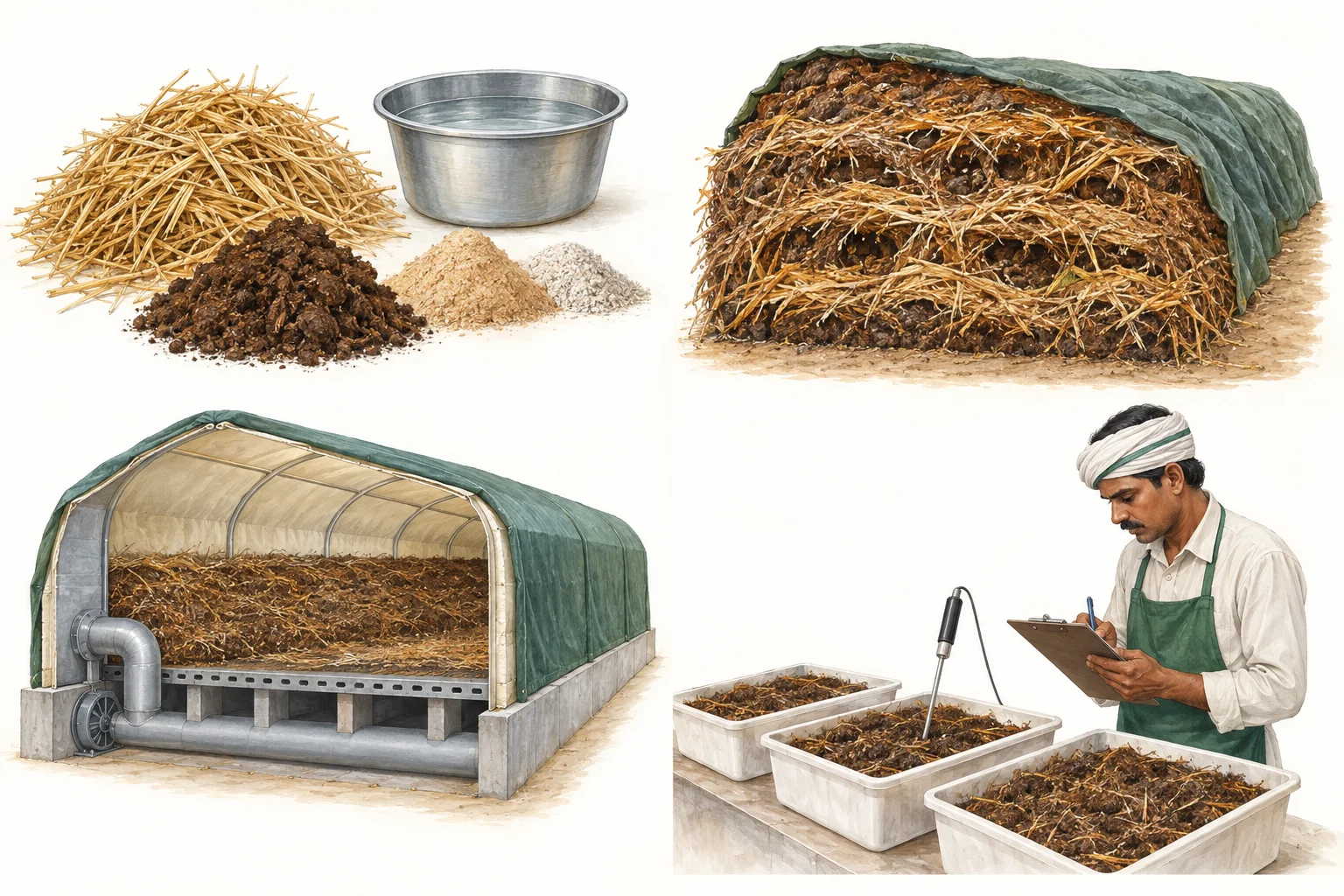
Original system diagrams separate air paths, material paths, measurements and biological transformations.
Progressive depth
Move from field observation to mechanism, engineering and evidence without losing the original question.
PracticalWhat the operator notices
- A precise laboratory result from a poor sample creates false confidence.
- Hot and cold zones
- top-bottom difference
- local contamination
TechnicalHow process variables interact
- Sampling plan, method, calibration, unit, chain of custody, interpretation and limitations belong to one test record.
- Moisture
- pH by method
- ammonia safely
EngineeringHow the physical system serves the process
- Clean sampler
- sealed containers
- labels
- Representative sampling effort rises with batch heterogeneity
- Commercial systems need sample IDs, custody and repeatability
ResearchWhich evidence records govern this page
- COMPOST-SRC-DMR-SERVICES
- COMPOST-SRC-CDC-AMMONIA
The numbers for this step, with their source.
Process values are published from ICAR-DMR guidance with the stage and measuring point they apply to. A parameter still marked pending has no published Indian value yet.
Biological and process parameters
COMPOST.MOISTURE.COMPOSTsource contextualFinished compost moisture
64 to 72 %- Stage
- Finished compost
- Measurement context
- Squeeze test or oven sample at spawning
- Conditions
- Synthetic compost 68 to 72 percent at spawning; natural horse-manure compost 65 to 67 percent; After tunnel Phase II ICAR-DMR reports 64 to 66 percent; Never spawn above 72 percent moisture
COMPOST.CHEMISTRY.PHsource contextualCompost pH at spawning
7.2 to 7.8 pH- Stage
- Finished compost
- Measurement context
- Composite sample of finished, conditioned compost
- Conditions
- ICAR-DMR: finished compost pH 7.2 to 7.8; After Phase I the pH sits higher, at 8.2 to 8.5; Sample ratio, water and instrument calibration change the reading
COMPOST.AMMONIA.RESIDUALsource contextualResidual ammonia release criterion in the cited DMR method
Technical value pending verification- Stage
- POPC and release
- Measurement context
- Representative compost and process-air evidence using a declared safe method
- Conditions
- The cited release criterion is strictly below 10 ppm; State sampling location, instrument or method, temperature and cooling status; Do not use odour alone as a release measurement
COMPOST.PHYSICS.BULK_DENSITYpending technical verificationContextual bulk density
Technical value pending verification- Stage
- Loading and capacity planning
- Measurement context
- Representative material at stated compaction and moisture
- Conditions
- Process stage; moisture; compaction; particle structure
Sampling Sheet
Record actual observations and measured values. No unsourced setpoint is prefilled.
Evidence, applicability and review2 mapped sources
Sources support mechanisms and architecture. Technical and engineering values publish only through their separate governed registries.
ICAR-DMR technical and diagnostic services
Official scope for compost, casing and ingredient testing plus technical support.
- Publisher
- ICAR-Directorate of Mushroom Research
- Accessed
- 2026-08-22
Ammonia chemical safety fact sheet
General ammonia exposure hazards and the limits of relying on human smell.
- Publisher
- United States Centers for Disease Control and Prevention
- Accessed
- 2026-08-22