

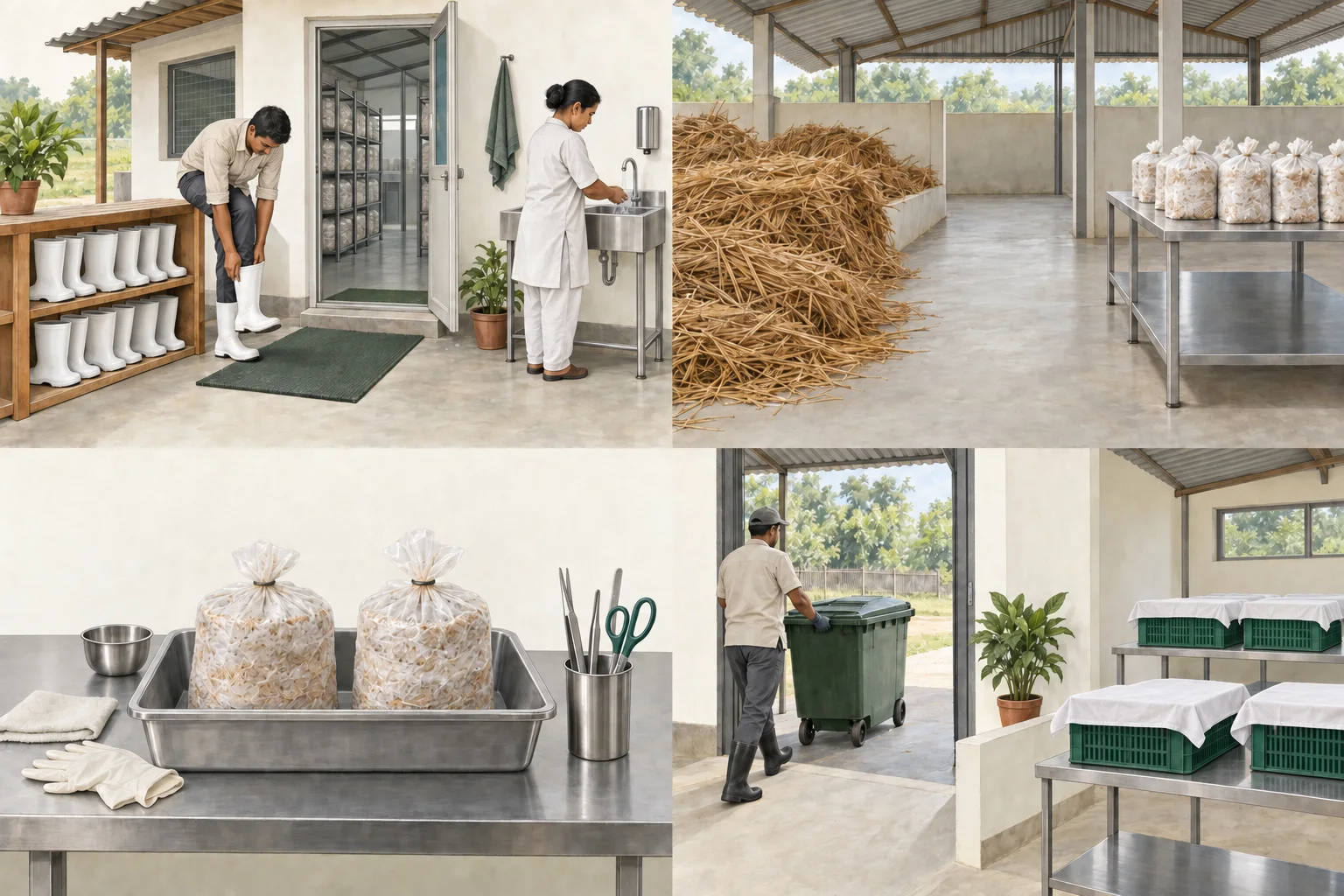
Quick orientation
Record original crop, disease status, storage, weather exposure, processing and intended destination before reuse.
01
Simple explanation
Spent substrate has already supported a crop. It is not the same material as fresh compost.
02
What is happening
Cropping changes organic matter, nutrients, microbial communities, structure and moisture. Further composting or treatment can change it again.
03
Operator explanation
Record original crop, disease status, storage, weather exposure, processing and intended destination before reuse.
04
What to observe
Observation should describe stage, location, pattern and change history before interpretation.
- Crop contamination history
- fresh versus aged material
- waterlogging
- foreign material
- odour
- intended receiver
05
What to measure
Measurement must retain method, unit, location, timing, calibration and sample identity.
- Mass and moisture
- laboratory analysis for intended use
- processing history
- runoff and storage condition
06
Equipment and process boundary
Equipment is useful only when its role in the biological process is explicit.
- Separate waste route
- contained storage
- reprocessing area
- sampling tools
- transport cover
07
Variables that interact
Room emptying, waste routes, storage, recomposting, transport, soil use and environmental management connect.
08
What can go wrong
A symptom may have several mechanisms. Verify the cause before changing the process.
- Universal fertilizer value
- fresh SMS applied without context
- contaminated material moved through clean zones
- automatic leachate reuse
09
What changes at commercial scale
Scaling changes geometry, repeatability, instrumentation, material flow and failure consequence.
- On-farm use requires agronomic and hygiene context
- Commercial volumes need outlet planning, environmental controls and buyer specifications
10
Evidence boundary
Mapped evidence: Effect of composted Button Mushroom spent substrate on pea; Physico-chemical properties and thermophilic flora in Button Mushroom compost using spent substrate; Farm Design for White Button Mushroom Cultivation. Foundational, current operational, research and engineering sources retain their different roles.
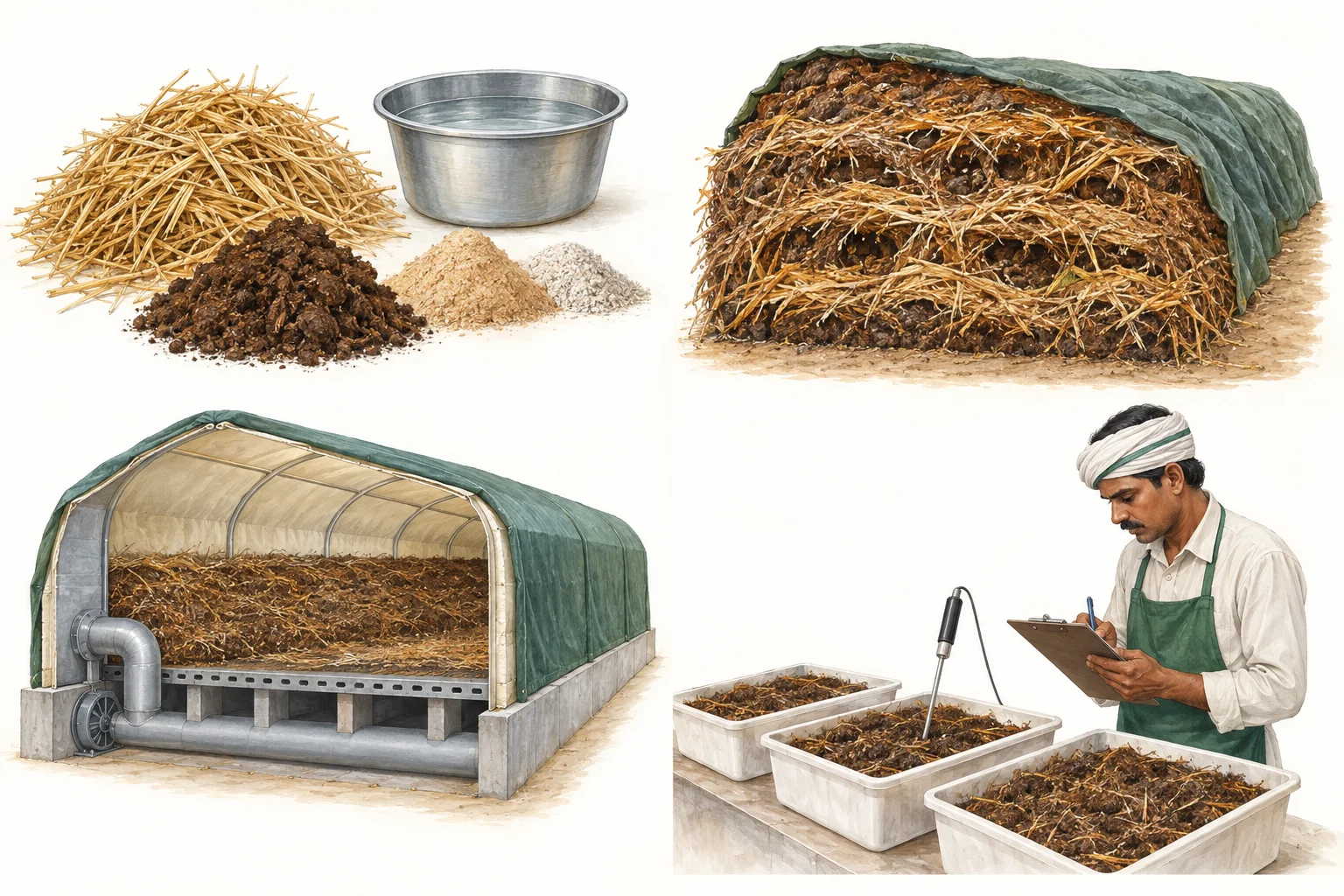
Technical diagrams
Original system diagrams separate air paths, material paths, measurements and biological transformations.
Progressive depth
Move from field observation to mechanism, engineering and evidence without losing the original question.
PracticalWhat the operator notices
- Spent substrate has already supported a crop. It is not the same material as fresh compost.
- Crop contamination history
- fresh versus aged material
- waterlogging
TechnicalHow process variables interact
- Room emptying, waste routes, storage, recomposting, transport, soil use and environmental management connect.
- Mass and moisture
- laboratory analysis for intended use
- processing history
EngineeringHow the physical system serves the process
- Separate waste route
- contained storage
- reprocessing area
- On-farm use requires agronomic and hygiene context
- Commercial volumes need outlet planning, environmental controls and buyer specifications
ResearchWhich evidence records govern this page
- COMPOST-SRC-ICAR-SMS
- COMPOST-SRC-ICAR-THERMOPHILES
- COMPOST-SRC-DMR-FARM-DESIGN
Evidence, applicability and review3 mapped sources
Sources support mechanisms and architecture. Technical and engineering values publish only through their separate governed registries.
Effect of composted Button Mushroom spent substrate on pea
Bounded Indian evidence for agricultural use of processed spent substrate.
- Publisher
- Mushroom Research, ICAR
- Accessed
- 2026-08-22
Physico-chemical properties and thermophilic flora in Button Mushroom compost using spent substrate
Thermophilic fungi, ammonia reduction and experimental raw-material substitution context.
- Publisher
- Mushroom Research, ICAR
- Accessed
- 2026-08-22
Farm Design for White Button Mushroom Cultivation
Indian farm workflow, compost-unit components, tunnel and controlled-farm engineering vocabulary.
- Publisher
- ICAR-Directorate of Mushroom Research
- Accessed
- 2026-08-22