

A practical guide to growing mushrooms in IndiaA joint educational initiative by MushroomWale & DMR Solan
MushroomFarming.in

A joint educational initiative by

MushroomWale.com
ICAR–Directorate of Mushroom Research, Solan logoICAR–DMRSolan

Read · Observe · Practise · Check

Crop-end materials: plan removal before the next fill

Keep crop-end handling connected to farm hygiene and local environmental responsibilities. Used substrate from different species and histories is not automatically the same product or suitable for every reuse.

Begin the walkthrough ↓
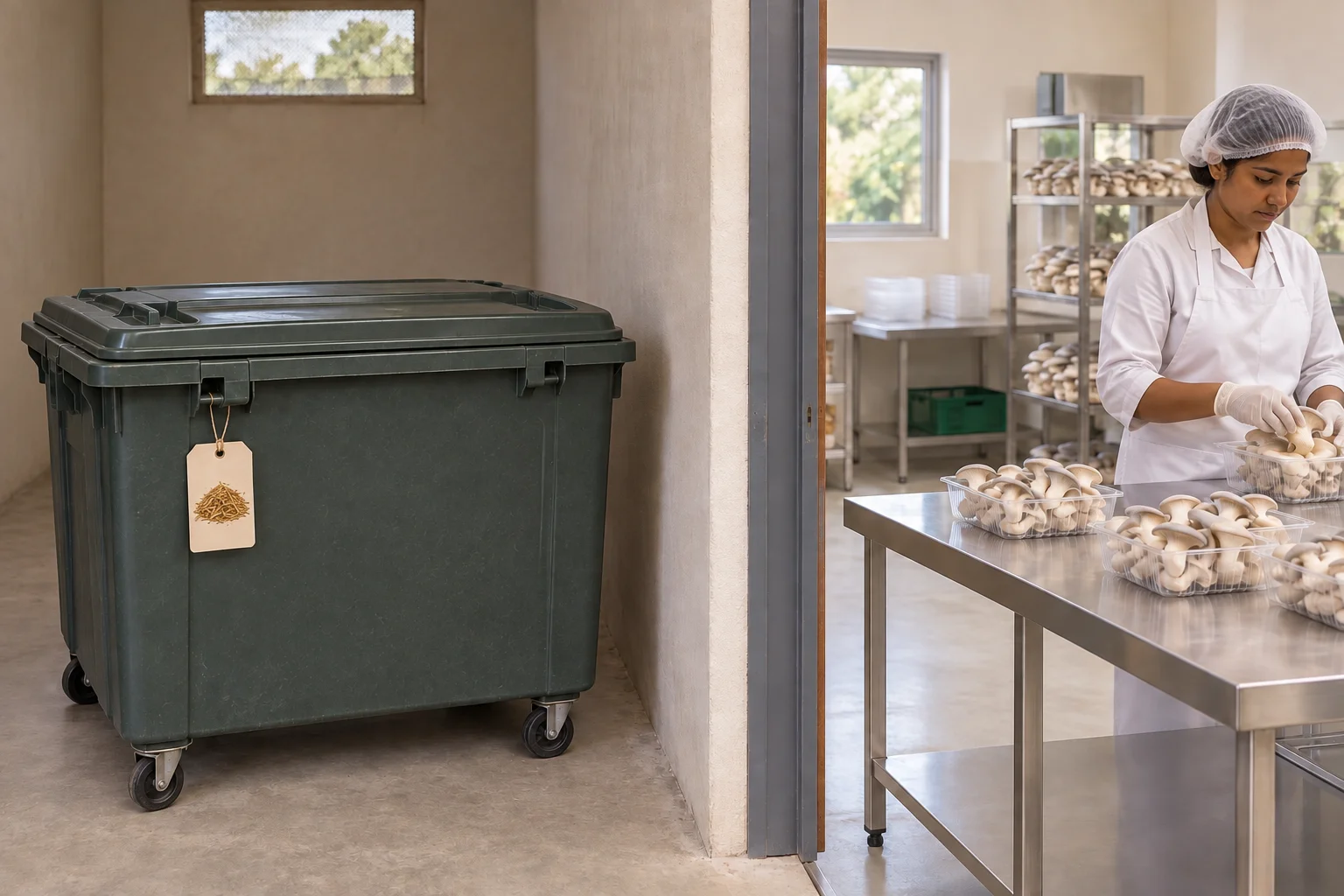
Generated farm scene with a closed used-material bin in a separate service space and mushroom packing on the other side of a partition.
AI-generated teaching illustrationSeparate working routes. The open doorway does not establish airflow isolation, and the illustration does not demonstrate waste treatment or suitability for reuse.

Before you begin

  • Crop and material history, including unresolved health concerns
  • An identified removal and storage route
  • Competent local advice on treatment, reuse or disposal

Use the linked crop and technical lessons for method-specific detail. Practical work involving chemicals, pressure, electrical equipment or uncertain crop health requires competent supervision; illustrations are not operating specifications.

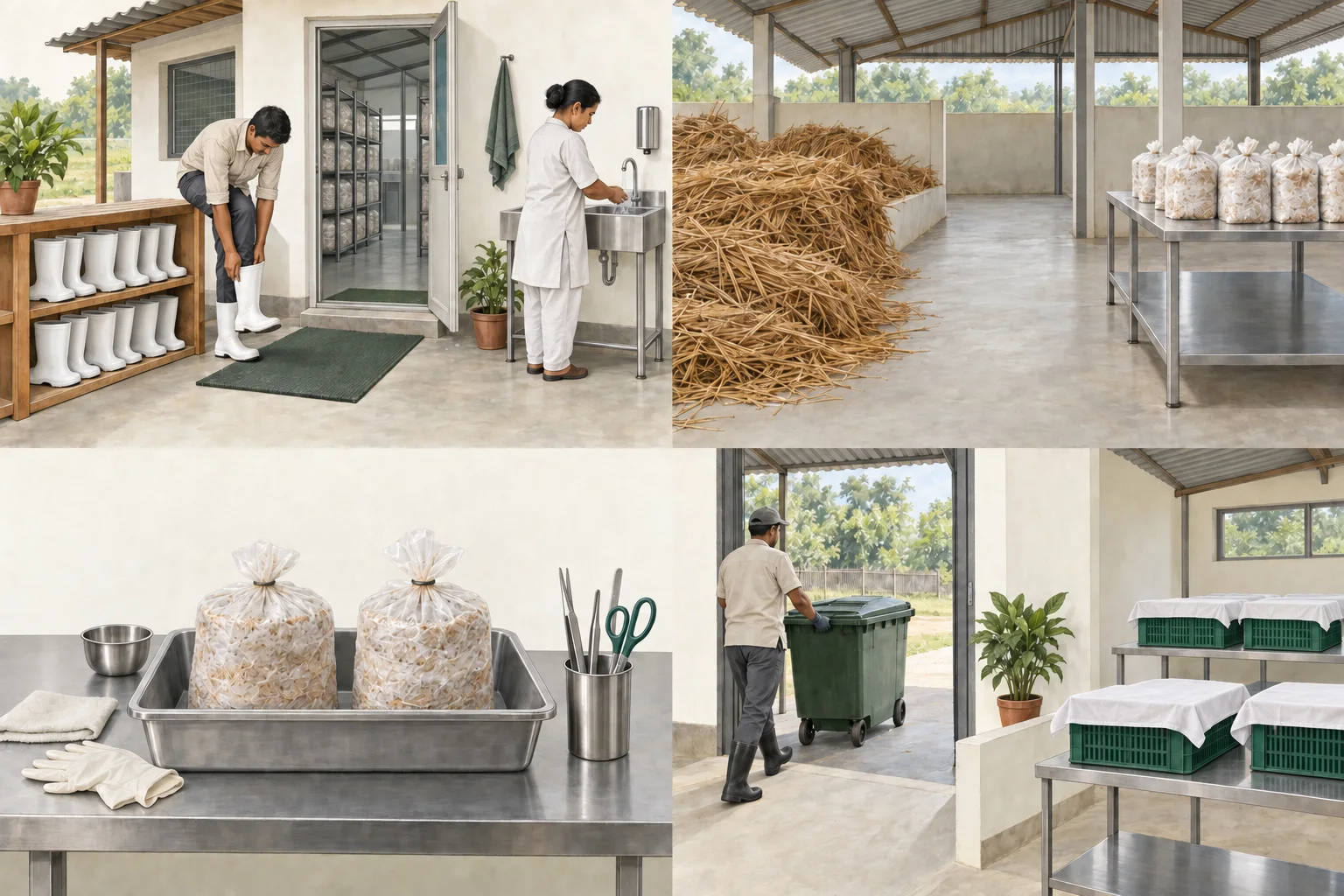
Generated illustration of dedicated work footwear and a handwashing basin at a farm entrance.

Conceptual AI teaching scene

Stage 1

Identify what is leaving

Keep ordinary crop-end material distinct from material held for investigation. Record species, substrate and any relevant treatment or contamination history. A generic label such as organic waste does not establish suitability for reuse.

Put it into practice
Prepare a removal register linked to the crop IDs and the intended destination.
Check your work
The destination decision is based on identified material, not appearance or a presumed fertiliser value.
Generated illustration of raw straw separated from closed cultivation bags on a different bench.

Conceptual AI teaching scene

Stage 2

Protect the next crop

Used material, equipment and worker movement should not undo the separation of clean work. The illustration shows different spaces, not verified air isolation or a waste-treatment system.

Put it into practice
Trace the actual exit route during a busy turnaround and identify crossings with inputs and harvest.
Check your work
The route and work order keep unnecessary movement away from clean operations.
Generated illustration of two closed cultivation bags in a washable tray with dedicated tools.

Conceptual AI teaching scene

Stage 3

Assess the proposed destination

Potential uses of spent substrate require consideration of its properties and history. The DMR bulletin discusses reuse and environmental risks; it does not make every fresh or suspect batch immediately suitable for every crop or soil.

Put it into practice
Ask what testing, treatment, storage or local approval applies to the intended use. Keep uncertainties recorded.
Check your work
There is a documented destination and a competent basis for the decision; no uncontrolled dumping is assumed.
Generated illustration of a covered waste tub leaving a separate area away from covered harvest crates.

Conceptual AI teaching scene

Stage 4

Reset and learn

Removal is followed by cleaning, checks and release for the next crop under the farm procedure. Keep unresolved defects and the responsible person visible.

Put it into practice
Record emptying, cleaning, maintenance and the next-fill decision separately.
Check your work
A room is not labelled ready solely because its racks look empty.

Common mistakes—and the better question

Every used substrate is ready fertiliser
Confirm material properties, history and the intended use.
Waste handling starts after the last harvest
Plan route, capacity and responsibility before the crop begins.

A task to complete, not just a page to read

Draw a no-crossing turnaround plan

Use arrows on a room sketch for incoming material, harvested food and used material. Identify every crossing and change the work order or route.

Bring back this evidence

A removal register, destination record and next-fill checklist.

Completing this self-guided task is not verification of practical competence. Review it with a suitable instructor before relying on it for farm operation.

Keep the field guidance beside the lesson

Open the main subject guide →Button Mushroom farm hygieneresources

Sources, scope and review

Editorial learning material; no independent technical review is claimed. The tasks are original teaching exercises. Source-specific numerical schedules remain in the detailed lessons with their context, rather than being turned into universal instructions here.