


A practical guide to growing mushrooms in IndiaA joint educational initiative by MushroomWale & DMR Solan
MushroomFarming.in

A joint educational initiative by

MushroomWale.com
ICAR–Directorate of Mushroom Research, Solan logoICAR–DMRSolan

Read · Observe · Practise · Check

Spawn receiving: identify, handle and trace the planting material

Learn the grower’s receiving responsibility without confusing it with laboratory spawn manufacture. White growth in a generated image is not a purity test or evidence that a real batch is suitable.

Begin the walkthrough ↓
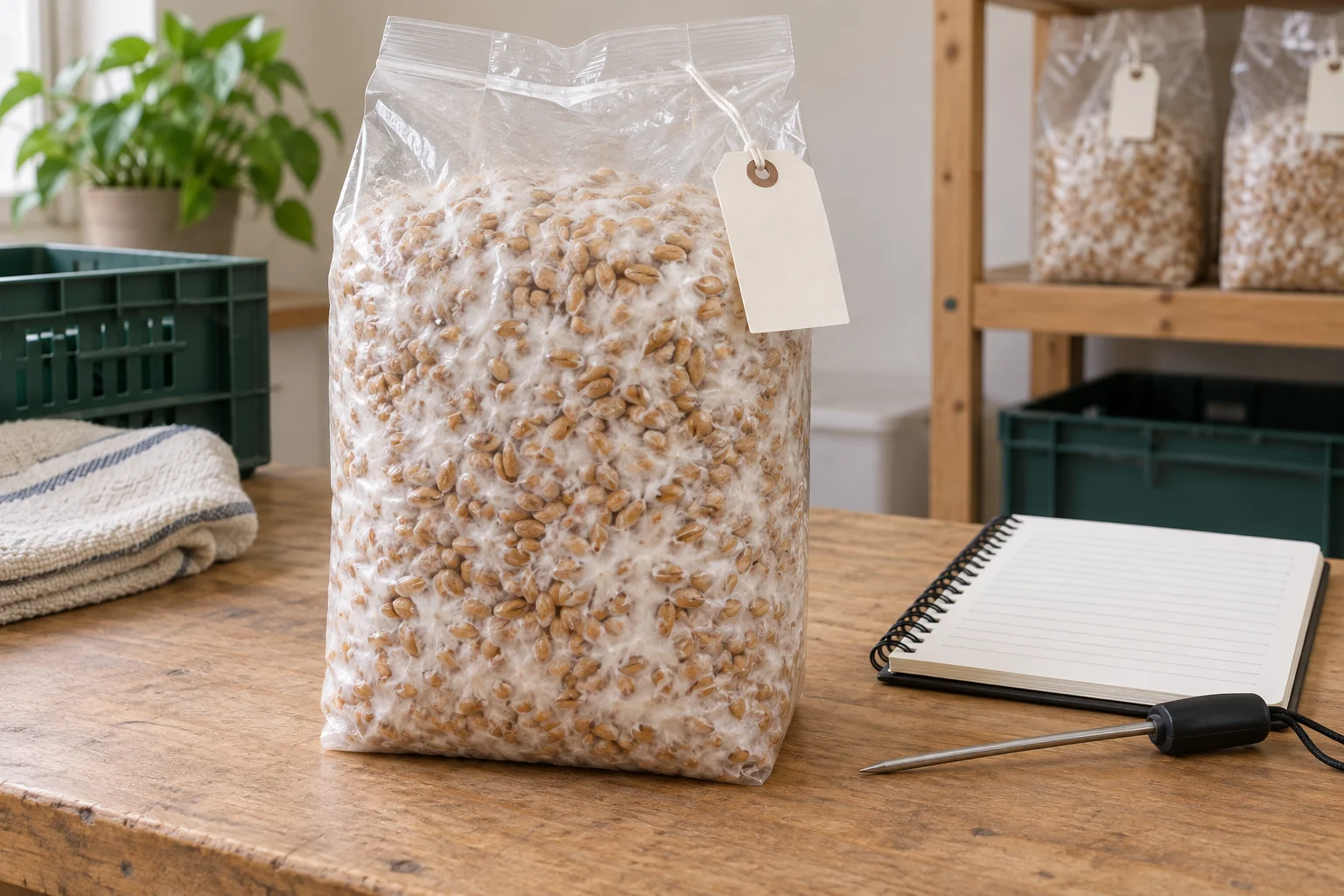
Generated illustration of a closed grain-spawn bag with identifiable grains and white mycelium beside a blank batch record.
AI-generated teaching illustrationReceiving concept, not a laboratory-production or purity standard. Keep material closed during initial inspection; the blank tag must be replaced by real batch information in practice.

Before you begin

  • Supplier identity, species, strain and batch information
  • Product-specific handling and use-by guidance
  • A clean receiving area and a record of planned use

Use the linked crop and technical lessons for method-specific detail. Practical work involving chemicals, pressure, electrical equipment or uncertain crop health requires competent supervision; illustrations are not operating specifications.

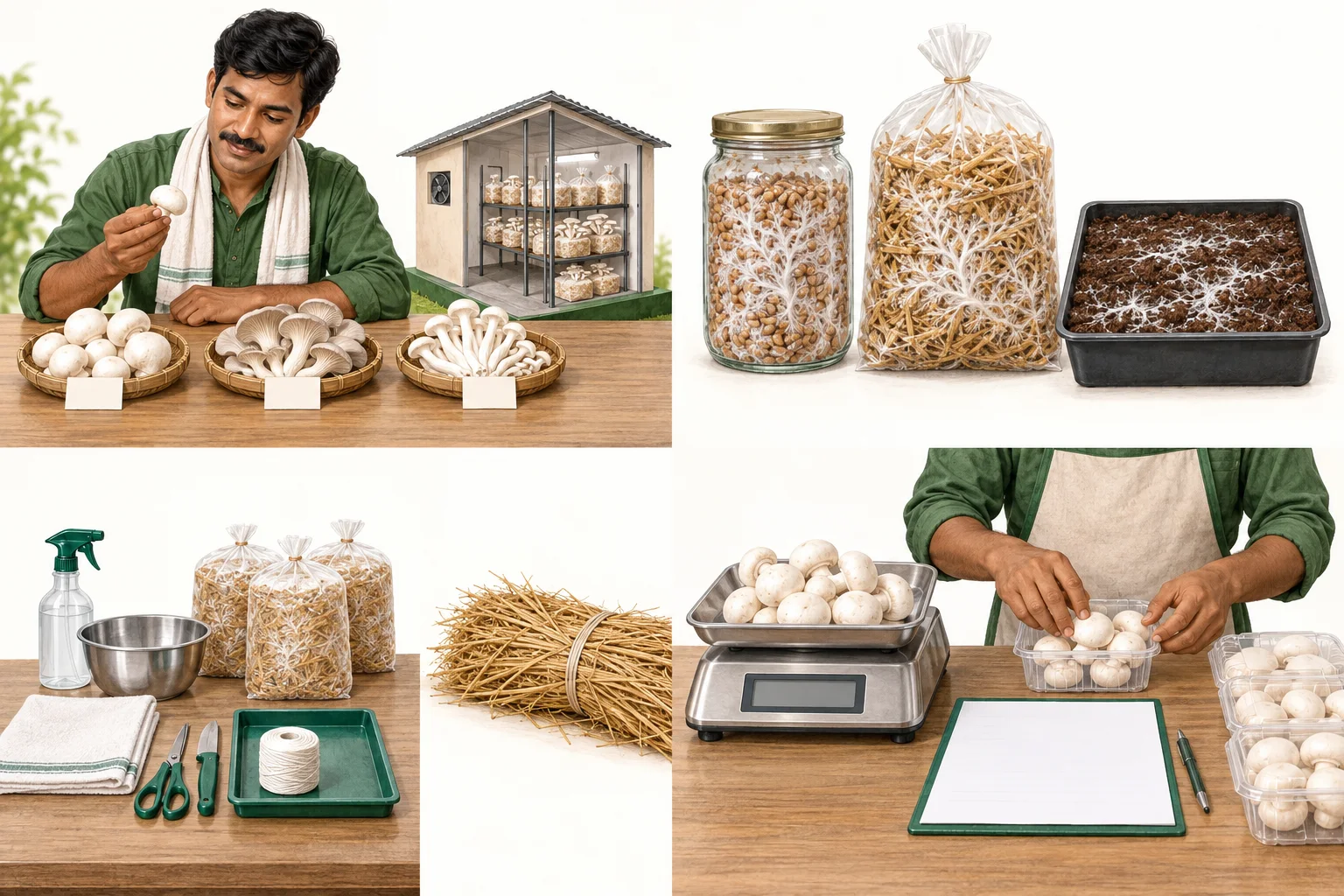
Educational illustration of a grower comparing mushroom crops and a small growing-room model.

Conceptual AI teaching scene

Stage 1

Identify the product

Spawn contains cultivated mycelium on a carrier. Species, strain, carrier, production stage and intended method matter. A similar-looking bag is not proof that two products are interchangeable.

Put it into practice
Record the supplier’s product name and intended use beside the crop plan.
Check your work
The actual supplied material matches the operation you intend to perform.
Illustrated comparison of grain spawn, a straw growing bag and a compost tray.

Conceptual AI teaching scene

Stage 2

Inspect without compromising it

Review packaging integrity, visible condition, label and transport history while keeping the material closed. Do not puncture or open a bag simply to investigate an unfamiliar appearance.

Put it into practice
Photograph the closed package and label. Separate unresolved lots from accepted stock while contacting the supplier.
Check your work
The receiving record preserves the discrepancy and does not guess purity from colour.
Educational illustration of a clean workbench, closed cultivation bags and separate raw straw.

Conceptual AI teaching scene

Stage 3

Follow the applicable handling guidance

Storage limits depend on the supplied product and conditions. A blanket age rule is not a substitute for traceable supplier instructions. Plan use so handling and inventory do not become an undocumented experiment.

Put it into practice
Record receipt, specified storage, planned use and deviations. Keep different lots identifiable.
Check your work
An operator can find the correct instructions and distinguish accepted, held and used stock.
Illustration of mushrooms being weighed and packed beside a blank crop record.

Conceptual AI teaching scene

Stage 4

Connect spawn to the crop

Traceability must continue after the package is opened for its intended operation. Record which substrate batches received each spawn lot and retain useful supplier references.

Put it into practice
Link spawn lot, substrate lot, inoculation date and resulting crop IDs.
Check your work
A later crop investigation can identify which other batches shared the same input.

Common mistakes—and the better question

All white growth is verified spawn
Identity and quality require appropriate evidence, not colour alone.
The same expiry applies to every spawn product
Use product-specific documented guidance.

A task to complete, not just a page to read

Accept or hold a training delivery

Prepare one complete label and one label missing species or batch details. Explain what you can accept, what needs clarification and which crop records would be affected.

Bring back this evidence

A receiving sheet with acceptance, hold and traceability fields.

Completing this self-guided task is not verification of practical competence. Review it with a suitable instructor before relying on it for farm operation.

Keep the field guidance beside the lesson

Open the main subject guide →Start mushroom farming with the right questionsSpawning Button Mushroom compostOyster spawn run

Sources, scope and review

Editorial learning material; no independent technical review is claimed. The tasks are original teaching exercises. Source-specific numerical schedules remain in the detailed lessons with their context, rather than being turned into universal instructions here.