


A practical guide to growing mushrooms in IndiaA joint educational initiative by MushroomWale & DMR Solan
MushroomFarming.in

A joint educational initiative by

MushroomWale.com
ICAR–Directorate of Mushroom Research, Solan logoICAR–DMRSolan

Read · Observe · Practise · Check

Winter Button huts: plan around the full season

Understand the limits of a seasonal structure. The crop window must cover the actual supplied compost stage, crop development, harvesting and turnaround; a cool night alone does not establish suitability.

Begin the walkthrough ↓
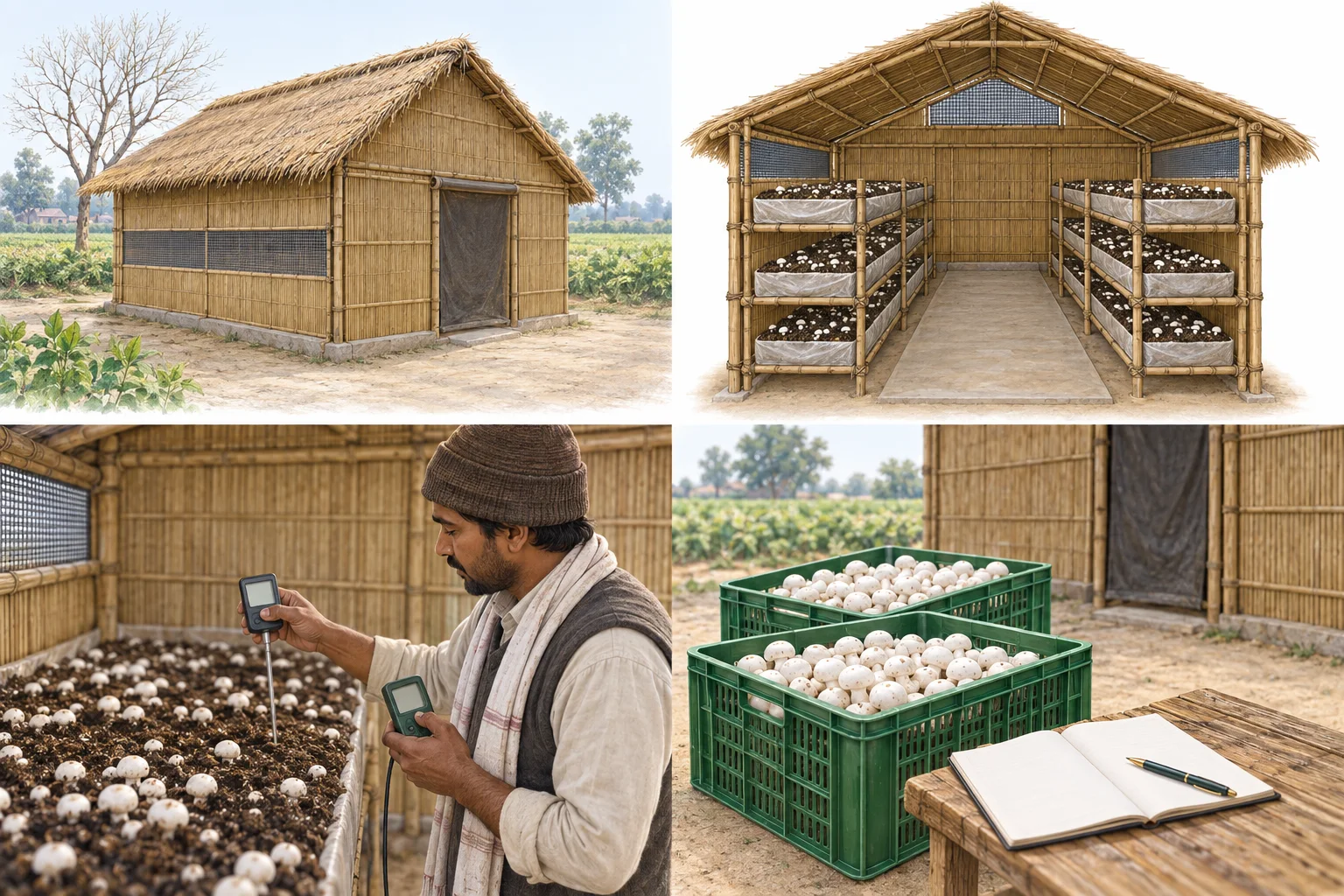
Conceptual illustration of a thatched mushroom hut in an Indian winter landscape.
AI-generated teaching illustrationConceptual learning scene, not a diagnostic photograph or construction specification.

Before you begin

  • Local observations inside the proposed hut
  • Compost supply stage and dependable delivery plan
  • Safe structure, drainage, working routes and buyer arrangements

Use the linked crop and technical lessons for method-specific detail. Practical work involving chemicals, pressure, electrical equipment or uncertain crop health requires competent supervision; illustrations are not operating specifications.

Conceptual illustration of a thatched mushroom hut in an Indian winter landscape.

Conceptual AI teaching scene

Stage 1

Map the seasonal window

Compare the selected crop method with day and night observations inside the growing space. Outdoor weather records provide context but do not describe every bed in a filled hut.

Put it into practice
Work backwards from the likely end of suitable conditions and include delivery or crop delays.
Check your work
The plan contains an explicit response if the usable season is shorter than expected.
Conceptual hut cutaway showing mushroom trays, a walkway and ventilation openings.

Conceptual AI teaching scene

Stage 2

Design the working routes

A low-cost structure still needs safe access, loading, inspection, harvesting and used-material removal. Drawings here explain the system but are not structural designs or bills of quantities.

Put it into practice
Walk the proposed routes with empty containers and identify crossing clean and dirty work.
Check your work
Structure and services receive competent local review and operators can reach their tasks safely.
Illustration of a grower checking separate room and compost instruments in a hut.

Conceptual AI teaching scene

Stage 3

Keep a weather-linked routine

Compare exposed and sheltered crop positions after changes in outdoor conditions. Record compost and air readings separately and connect them with recent watering and ventilation operations.

Put it into practice
Use a consistent daily-round sheet, adding extra observations after significant weather changes.
Check your work
The response is linked to the crop’s condition rather than a fixed action copied from another farm.
Illustration of clean Button harvest crates and a crop notebook beside a hut.

Conceptual AI teaching scene

Stage 4

Review the entire season

Count all batches, losses, repairs, labour and collected sales. Reusable infrastructure and recurring seasonal costs should remain distinguishable.

Put it into practice
Reconcile crop records and cash before deciding on more beds or another season.
Check your work
Expansion is based on repeatable performance and the actual seasonal limit.

Common mistakes—and the better question

A hut works wherever winter feels cold
Measure the intended crop space and full crop window.
Low capital cost means low operating risk
Include weather, input and buyer risks in the plan.

A task to complete, not just a page to read

Prepare a season-end contingency

Assume suitable conditions end earlier than planned. Explain which planned fills change and how you communicate with suppliers, workers and buyers.

Bring back this evidence

A seasonal calendar and documented go/hold decisions for each planned fill.

Completing this self-guided task is not verification of practical competence. Review it with a suitable instructor before relying on it for farm operation.

Keep the field guidance beside the lesson

Open the main subject guide →Button Mushroom farm typesCompost Quality ControlMushroom Farming Economics

Sources, scope and review

Editorial learning material; no independent technical review is claimed. The tasks are original teaching exercises. Source-specific numerical schedules remain in the detailed lessons with their context, rather than being turned into universal instructions here.