


तुड़ाई, समस्याएँ और ढींगरी का व्यवसाय
इस पाठ में सही समय पर तुड़ाई, पैकिंग, आम समस्याओं की पहचान और पुराने संदर्भ आँकड़ों को अपने खेत के हिसाब से अलग रखना सिखाया गया है।
- By the end you can harvest by twisting at the right stage and plan three flushes.
- By the end you can pack, cool and sell within the shelf life DMR reports.
- By the end you can keep DMR's dated cost figures apart from your own numbers.
तुड़ाई से बाज़ार तक
स्रोत: ICAR-DMR मैनुअल और पोस्ट-हार्वेस्ट बुलेटिन 2008।
- तोड़ेंपरदा खुलने से पहले, कैप 3 से 5 सेमी; घुमाकर खींचें।सुबह
- जड़ काटें और छांटेंमिट्टी वाला हिस्सा काटें; आकार और खुलेपन से ग्रेड।1 घंटे में
- ठंडा करेंगूदे का तापमान 4 से 5 °C तक; बर्फ का सीधा संपर्क नहीं।कुछ घंटों में
- पैक करें200 से 400 ग्राम पैक, हवादार; नमी 87 से 90 प्रतिशत।उसी दिन
- बेचेंफ्रिज में 2 से 3 दिन; कमरे के तापमान पर 12 घंटे।24 से 72 घंटे
ये आंकड़े संबंधित स्रोत और विधि के संदर्भ में हैं। इन्हें हर प्रजाति या फार्म का सार्वभौमिक निर्देश न मानें। पुराने मूल्य वर्तमान बाज़ार भाव नहीं हैं।
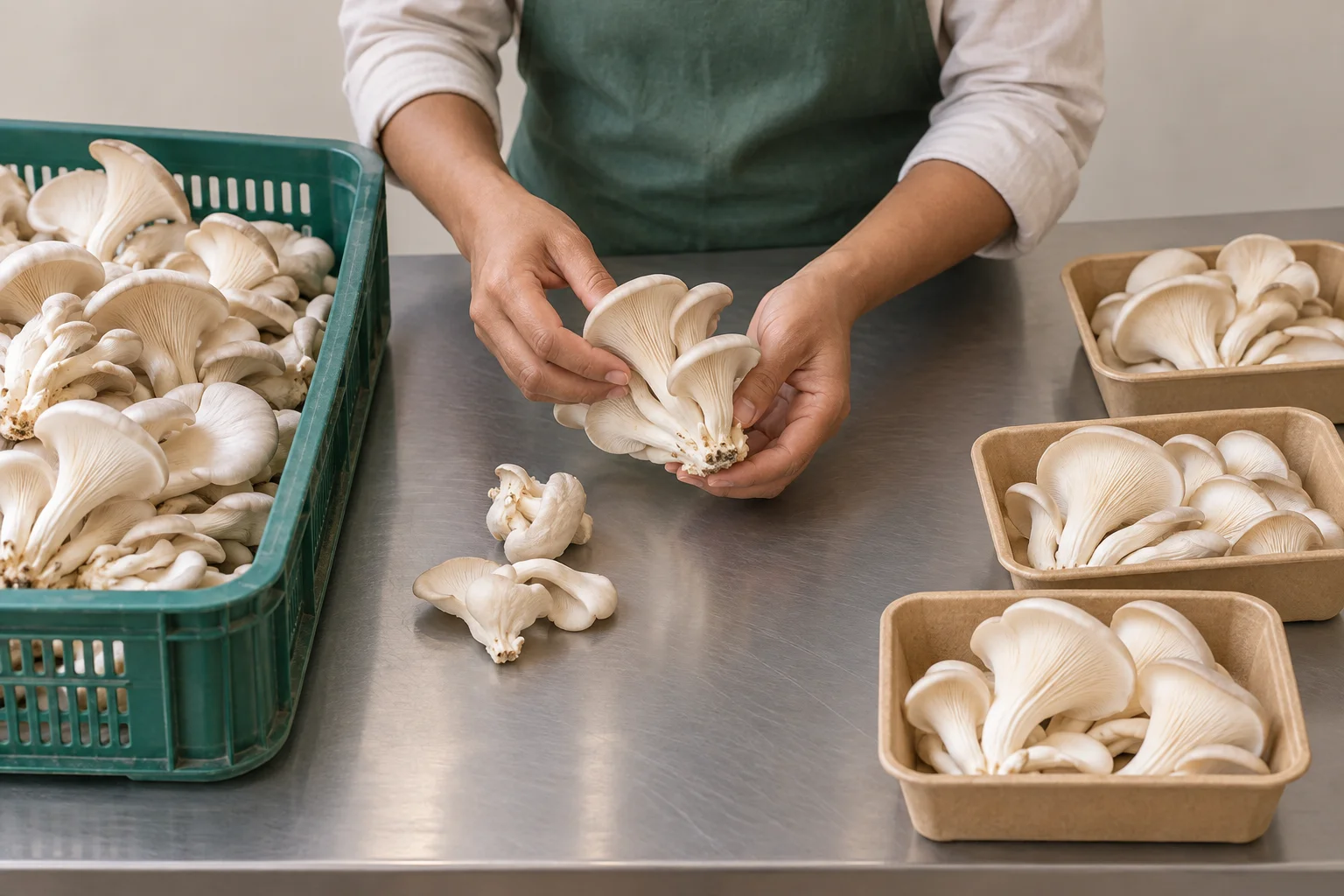
Look, explain, then apply
Handling and grading concept. It does not establish a validated hygiene procedure, food safety, shelf life or packing specification.
See where this fits in the full workflow →01Harvest and flushes
Twist the whole cluster off at the base before the cap edges flatten and curl; a flat cap is shedding spores and tears easily. The DMR folder adds a health rule: open doors and windows two hours before harvesting and wear a mask, because oyster spores cause allergy.
A flush is one wave of mushrooms. The folder says the first flush gives about half or more of the total, the second comes 8-10 days later, and three flushes are worth keeping; then the bags go to a deep pit.
The folder reports 700-800 g fresh mushroom per kg dry straw; the manual states a minimum of 500-700 kg per tonne in 45-60 days. Reports, not promises.
02Packing and shelf life
Fresh oyster keeps 24-48 hours at room temperature, so plan the sale before the pick. The folder's method: spread the mushrooms on a cloth for about two hours so surface water dries, then pack in perforated polythene; in a refrigerator they hold 2-4 days.
The DMR post-harvest bulletin specifies polythene under 100 gauge with holes giving about 5 per cent vent area. TNAU packs 200 g per bag for retail.
If you cannot sell fresh, dry. The manual says dried oyster at 2-4 per cent moisture keeps 3-4 months when sealed. Drying is a second product, not a rescue for spoiled mushrooms.
03Problems you will meet
Match the symptom to the cause before acting. Green mould in bags: poor straw treatment, old spawn or low pH. Long stalks, small caps: high CO2 or low light. Pale yellow caps: light under 100 lux. Brown caps in sajor-caju: temperature above its band. Wet, rotting caps: water left on the surface. Larvae in stalks: flies got in; screen with 35 mesh net, use a light trap, and cover spent bags in the pit with at least 10 cm of manure.
This course gives no spray recipes. Hygiene, air, light and temperature fix most of the above. If a product is used, check current label approval and keep the 48-hour gap between spraying and picking that NHB requires.
04Business: what DMR's numbers are and are not
The DMR folder puts the cost of producing a kilogram of dhingri at 10-15 rupees. It is undated, from the early 2010s, and marked medium confidence. The 2011 manual's model assumes 70 per cent biological efficiency and a sale price of 50 rupees per kg. Use these to learn the shape of a budget, never as today's prices.
Your numbers come from your diary: straw, spawn, polythene, labour and power for one batch; kilograms sold, not picked; the price each buyer actually paid; kilograms thrown away. Divide cost by kilograms sold. The folder itself prints two cycle lengths, 45-60 days in its introduction and 40-50 in its economics, so measure yours.
Run one batch as a business test
- Before opening bags, list three buyers with the price each pays and the day they buy.
- Harvest early by twisting, trim the base, weigh every flush.
- Air-dry on cloth two hours, pack 200 g in perforated bags, deliver the same morning.
- Write kg sold, kg unsold and the price each buyer actually paid.
- Total straw, spawn, polythene, labour and power; divide by kg sold, not picked.
डायरी में लिखें: Flush dates and kg, kg sold and unsold, price per buyer, batch costs, cost per kg sold.
ये गलतियां न करें
- Counting picked kg as sold kg; mushrooms unsold after 48 hours are a loss.
- Harvesting after caps flatten; they tear, spores fill the room, buyers reject.
- Using a 2011 DMR price of 50 rupees today; get three dated local quotes.
खुद को जांचें
तीन सवाल, तुरंत जवाबFresh oyster keeps at room temperature for about:
DMR's 10-15 rupees per kg cost should be treated as:
Before entering the room to harvest, the folder advises:
यह संपादकीय स्व-जांच है, प्रमाणपत्र नहीं। जवाब इस डिवाइस पर भी सहेजे नहीं जाते।
शब्दावली
- Flush
- One wave of mushrooms from a bag; oyster gives three worth picking.
- Biological efficiency
- Fresh mushroom weight as a percentage of dry substrate weight.
- Vent area
- The share of a pack's surface cut as holes so mushrooms can breathe.
- Cost per kg sold
- All batch costs divided by kilograms actually sold, not picked.
संदर्भ और आगे पढ़ें
Species, strain, climate and production method must remain explicit.
संदर्भ खोलें