Weather gate
Calendar के नाम पर नहीं, अपने daily minimum/maximum record पर फैसला करें। Cool window spawn run, casing, fruiting और harvest के लिए पर्याप्त होनी चाहिए।
 MushroomFarming.in
एक संयुक्त शैक्षिक पहल

 ICAR–DMRसोलन
Winter field guide · उत्तर-पश्चिमी मैदान और उपयुक्त ठंडे क्षेत्र
Mud, bamboo या thatch hut के लिए field-oriented operating manual, 14-day site audit, written procurement, stage release, water-air decisions, harvest dispatch, stop-loss और pilot economics तक।
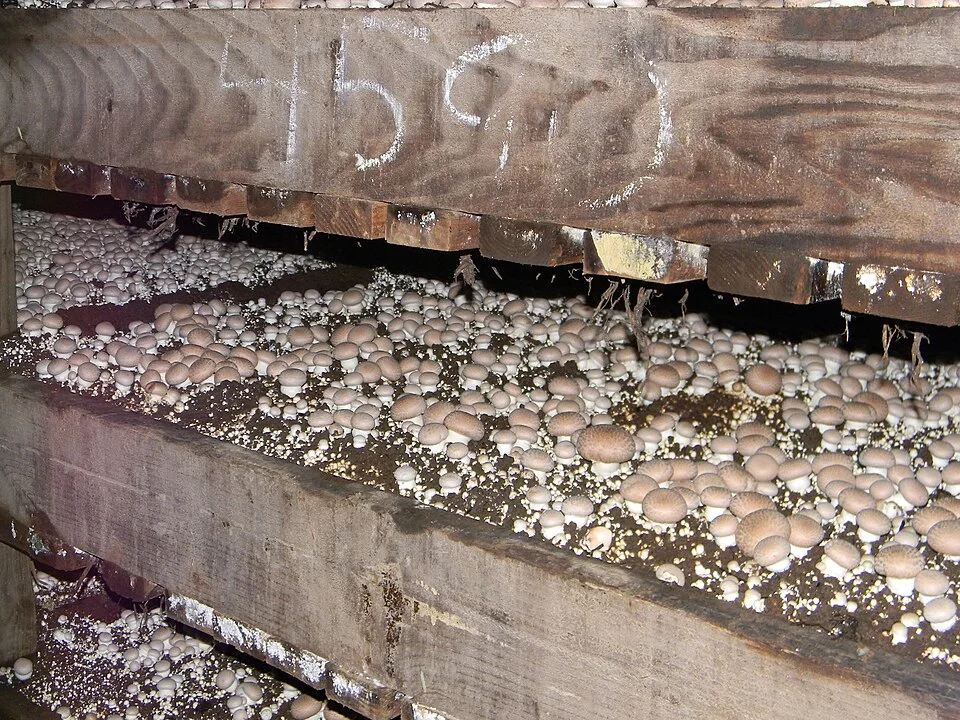 वास्तविक contextual photo
Tiered beds पर Button Mushroom की वास्तविक cultivation photograph। Rack, spacing और crop density केवल context हैं, construction drawing या yield standard नहीं।
Photo: I. G. Safonov (IGSafonov). CC BY-SA 3.0. Source और licenceNon-negotiable
Hut temperature के तेज बदलाव को धीमा करता है और ventilation में मदद करता है। यह winter पैदा नहीं करता, compost heat हटाता नहीं और fruiting environment की guarantee नहीं देता। Stage condition hold न हो तो crop रोकें या engineered control अपनाएं।
चित्र में पूरी journey
हर panel एक decision handoff दिखाता है। Detail पढ़ने से पहले यह visual map याद रखें।
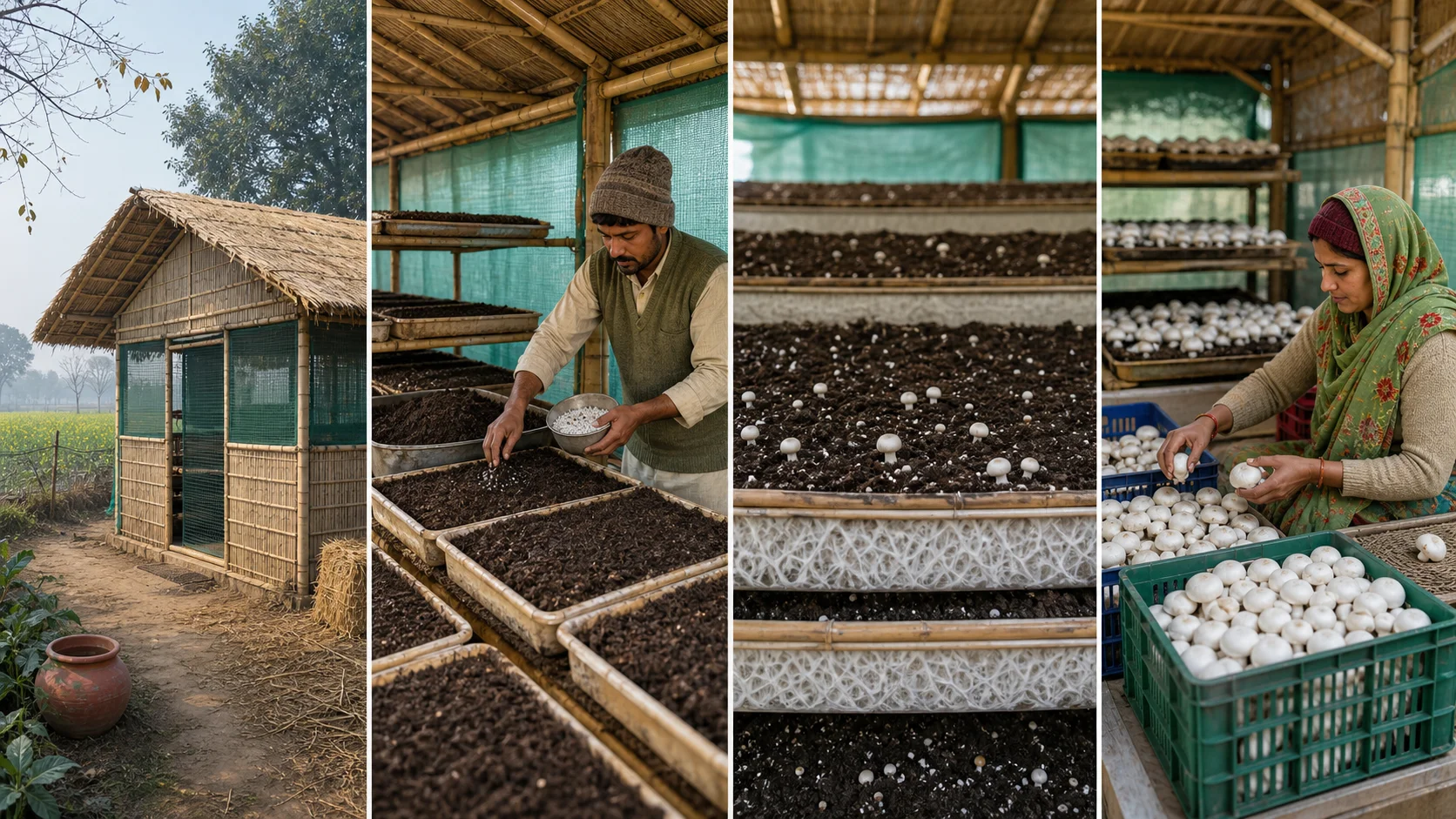
Decision 01 · खर्च से पहले
Calendar के नाम पर नहीं, अपने daily minimum/maximum record पर फैसला करें। Cool window spawn run, casing, fruiting और harvest के लिए पर्याप्त होनी चाहिए।
Selective, conditioned, ammonia-free Button compost, traceable spawn, prepared casing और clean loading route पहले secure करें।
Buyer, pack size, weekly volume, payment timing, transport और fresh mushroom पहुंचने का समय confirm करें।
Local climate first
Hot-winter location, unreliable compost/casing, hygiene boundary के बिना site, या assumed yield/premium price पर निर्भर project के लिए यह method सही नहीं है।
ICAR-DMR favourable outside winter में seasonal production बताता है। PAU के Punjab context में operational window September–March है।
ICAR-DMR hills में September–April की व्यापक संभावना बताता है; actual window altitude और local weather तय करते हैं।
Himachal Pradesh की एक study में spawning late October/early November से और crop March end तक रहा। इसे study context मानें, national calendar नहीं।
Visual seasonal calendar
यह north-west plains के लिए planning illustration है। Actual load date अपने outside min/max और bed-temperature risk से तय करें; hills का window अलग हो सकता है।
PAU का Punjab context September–March है; ICAR-DMR temperate hills में September–April तक seasonal possibility बताता है। इसे location-specific window की तरह पढ़ें, universal schedule की तरह नहीं।
Decision 02 · stage climate
हर value के साथ stage और measurement location लिखें। Air temperature, bed/compost temperature और surface condition अलग observations हैं।
यह managed-room reference है; passive hut की क्षमता का प्रमाण नहीं। Cited profile में high RH और लगभग 15,000 ppm CO₂ है। Strain, load, bed heat और spatial uniformity verify करें।
Source में growing beds/bags लिखा है, room-air temperature नहीं। Measurement हो तो CO₂ को ventilation से 800–1,200 ppm की ओर manage करें।
Mapped measurements लें और passive cooling या ventilation के दौरान cap wetness व condensation से बचें।
Warming-period advice नई crop load करने की permission नहीं है; remaining weather margin पहले देखें।
Decision 03 · structure
Mud wall, bamboo और thatch उपयोगी हो सकते हैं, लेकिन structure का हर हिस्सा measurable काम करे और crop-contact system साफ किया जा सके।
Deep thatch या insulated roof solar heat और night cooling swing घटाए। इसे dry, intact और pest inspection योग्य रखें।
PAU pucca floor बताता है। Drainage और cleaning route ऐसी हो कि dirty water beds पर splash न करे।
आमने-सामने controllable openings और cleanable insect screens दें। Humidity बचाने के लिए room पूरी तरह seal न करें।
Mud/lime या insulated walls swing buffer कर सकती हैं। Loading से पहले crack, rain entry और rodent path repair करें।
Harvest और cleaning access रखें। PAU का लगभग 2–2.5 ft rack-line gap और करीब 1 ft container gap एक reference है, universal design rule नहीं।
Outside air, room air और representative bed temperature के fixed points mark करें। संभव हो तो RH और CO₂ जोड़ें।
Field operator guidance
इन chapters को operating handoff की तरह उपयोग करें। हर chapter बताता है, क्या verify करना है, क्या लिखना है और crop आगे बढ़ाने से पहले क्या सच होना चाहिए।
Chapter 01 · site को prove करें
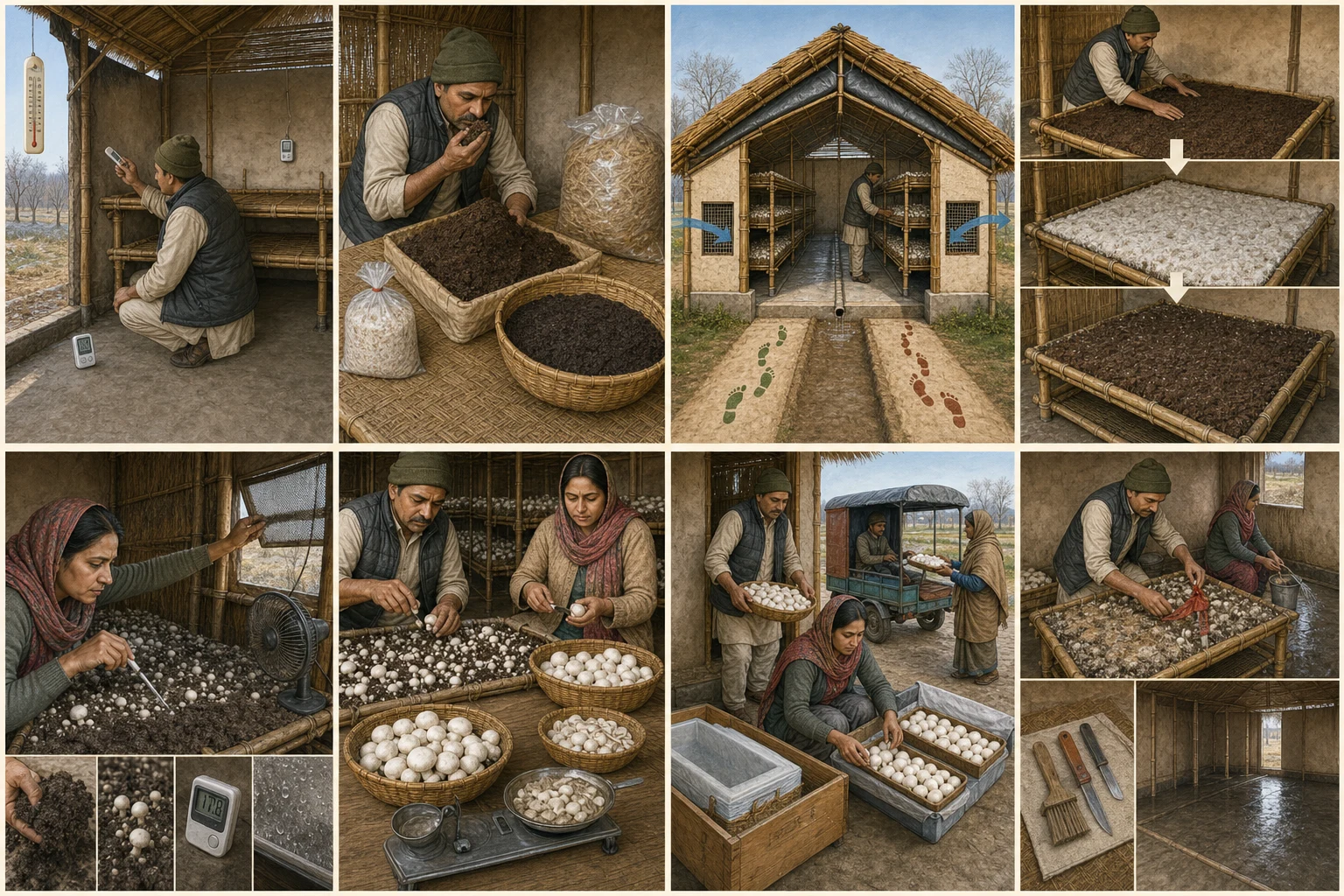
Common mistake: एक afternoon reading देखकर location को suitable मान लेना।
हर cell में min/max या fixed-time reading लिखें। नीचे door, water, rain/fog/sun और unusual event note करें।
Shaded outdoor air, room centre, संभावित warm rack और संभावित cold/wet surface पर repeatable points चुनें।
दिन के coldest और warmest हिस्से cover करने वाले fixed times पर log करें। Rain, fog, sun, wind और हर door/water action लिखें।
Hut को empty चलाएं। Normal opening schedule, screening, floor/wall wetting और drainage test करें; इसे crop validation न कहें।
Evidence को spawn-run और fruiting दोनों needs से compare करें। ‘Winter’ शब्द नहीं, fruiting window loading तय करती है।
Empty-hut evidence सम्भावना दिखाता है, लेकिन compost की metabolic heat, moisture या CO₂ को validate नहीं करता। Commercial release से पहले एक bounded, instrumented loaded pilot चलाएं।
Window संभव है लेकिन narrow, uneven या real compost heat के साथ untested है। एक bounded traceable lot लें।
Fruiting band hold नहीं होती, condensation बनती है, drainage fail है या crop finish होने से पहले market window बंद होगी।
Chapter 02 · loose material नहीं, process खरीदें
Common mistake: Sharp smell या abnormal heat को hut में डालकर बाद में ठीक करने की कोशिश।
Supplier, batch, process date, loading basis, moisture/pH/ammonia release evidence और transport time
Unknown batch; sharp ammonia; abnormal heat, wet pockets, sour/putrid odour या साफ non-uniformity
Correct species और declared strain, producer, batch, manufacture/use-by information, storage और transport condition
Unlabelled pack, damaged seal, overheating, mixed identity या visible abnormal contamination
Material recipe/source, preparation और treatment record, clean storage, structure और water-holding behaviour
Unknown origin, insects, mould, foul odour, sludge texture या preparation के बाद recontamination
Relevant food-contact suitability, clean condition, consistent fill capacity और unique position code
Contaminated reuse, sharp damage, clean storage नहीं या position trace नहीं हो सकती
Grade, pack size, receiving window, rejection rule, payment term, transport time और backup buyer
सिर्फ verbal price, grade agreement नहीं, receipt trail नहीं या unsold crop plan नहीं
Chapter 03 · empty hut commission करें
Common mistake: सुंदर thatch structure को functional climate room मान लेना।
Roof leak, crack, rodent path और direct sun entry repair करें। Walls और roof dry confirm करें।
Receiving, clean work, harvest और dirty exit route mark करें। Spent material clean inputs को cross न करे।
केवल planned surfaces wet करें। Drainage, splash-back, stagnant pocket और rack leak check करें।
Clean tissue/ribbon से opposing openings का air path occupied zone में check करें; हर opening screen और control करें।
Probes को साथ compare, label और repeatable location fix करें। एक wall thermometer पूरी crop नहीं बताता।
कौन खोलेगा, पानी देगा, record करेगा, buyer को call करेगा और suspect bag isolate करेगा, loading से पहले run करें।
Room तभी release करें जब clean, dry, drainable, screenable, measurable हो और हर shift का named operator हो।
Chapter 04 · stage handoffs
Common mistake: Calendar match करने के लिए incomplete spawn run को case करना।
यह source-based orientation है, deadline नहीं। C0 = actual casing day. Biological checkpoint fail हो तो clock रोकें।
Accepted compost और spawn; clean room; position map ready
Even fill, lot/position code और starting bed temperature record
हर unit traceable और room response stable
Loading के बाद Day 0
Moisture protect, bed heat और colonisation pattern observe; fruiting जैसी fresh-air change न करें
Reviewed colonisation casing के लिए complete और sufficiently uniform; managed conditions में DMR foundation लगभग 12–14 days बताता है
Reviewed spawn-run completion के बाद
Prepared casing को open-clod structure के साथ even लगाएं; installments में पानी दें, runoff compost में न जाए
Surface even, moist, not saturated, और bed identity intact
Casing के तुरंत बाद
Case-run environment hold करें; mycelium distribution, temperature और surface देखें
Mycelium casing valleys तक; DMR guidance managed conditions में लगभग एक सप्ताह बताती है
Case-run evidence के बाद
Temperature, fresh air और RH साथ shift करें; blind overnight shock नहीं
Room condensation या rapid casing drying के बिना fruiting band hold कर सके
Fruiting shift के बाद
Surface microclimate protect, CO₂ को crop form के साथ पढ़ें और heavy rescue water से बचें
Pins distributed और developing; whole-room correction से पहले patch/rack-side pattern investigate
Buyer grade, veil खुलने से पहले
Watering से पहले harvest, nearby pins protect, grade-wise weight और casing hole repair
Dispatch/rejection record close; अगला water decision surface need से
Output handling risk cover न करे या crop unsafe हो
Dirty route से remove, suspect material segregate, clean/dry और crop ledger review
Signed review: repeat, redesign या stop
Chapter 05 · coupled controls
Common mistake: Dry-looking casing पर एक बड़ी rescue watering या high CO₂ पर सारे doors अचानक खोलना।
कई points पर touch/structure, bed heat, recent water और air movement
Small installments में moisture restore और penetration recheck
Compost में जाने वाली बड़ी rescue dose
Dew-point risk, night temperature fall, direct spray और stagnant air
Direct wetting रोकें; condensation cause सुधारें और gentle air movement लौटाएं
High RH को हमेशा अच्छा मानना
Distribution, opening schedule, available CO₂ reading और crop load
Air path को progressive correct करें और response देखें
सब कुछ अचानक खोलकर casing सुखाना
Multiple bed points, room air, crop age और loading density
Observation बढ़ाएं, heat removal review और persistent rise पर technical help
Compost core ignore करके केवल room cool करना
Water timing, droplet, pooling, casing depth और recent ventilation
Heavy water hold, affected pattern map और unaffected pins protect
Calendar के कारण वही watering दोहराना
हर intervention में चार entries: reason → action → location → next round response। Response unknown है तो control loop अधूरा है।
Chapter 06 · quality customer तक
Common mistake: Total picked kg को saleable yield और profit मान लेना।
Watering से पहले agreed button stage पर pick करें। Gentle twist, clean trim और nearby pins protect।
Saleable grade, reject और suspect mushroom अलग करें। Quality problem को good lot में blend न करें।
Gross picked, grade-wise saleable, reject और sample weight record। Saleable weight के बिना yield business evidence नहीं।
Crop warm room से जल्दी निकालकर available cooling chain शुरू करें। DMR rapid cooling और continuous cool handling पर जोर देता है।
Buyer-agreed pack, crushing depth से बचाव, harvest date/lot identity और dirty outer surface को crop-contact से अलग रखें।
Departure, arrival, accepted kg, rejected kg, realized rate, commission/transport और payment due date लिखें।
DMR के अनुसार washed mushroom dry-packed mushroom से जल्दी deteriorate हो सकती है। केवल appearance के लिए routine wash न करें; cleanliness और handling method buyer से agree करें।
Chapter 07 · ownership
Common mistake: Harvest खत्म होने तक mushrooms को warm room में जमा रखना।
Stage release, climate-change approval, stop decision
Stage handoff sheet
Rounds, temperature/RH/CO₂ जहाँ available, opening और watering
Daily environment log
Entry, tools, screens, drains, suspect material और close-out
Hygiene/incident log
Grade, weights, pack identity, cooling और dispatch
Harvest/rejection ledger
Buyer confirmation, receipt, payment follow-up और actual selling cost
Sales/cash ledger
Verbal-only handoff नहीं। अगले व्यक्ति को stage, last readings, last action, unresolved risk और next decision time दिखना चाहिए।
Chapter 08 · अगली crop बचाएं
Common mistake: Suspect bed disturb करके contaminated tools को healthy room में ले जाना।
Local + boundedMark → isolate → photo → separate tools
Spreading / unknownHold work → call specialist → share full evidence
Environment / food safety failsStop crop → protect other rooms → controlled close-out
Compost release doubtful, ammonia, spawn identity uncertain या weather gate weak
Lot clean route के बाहर; खोलने/mix करने से पहले document और escalate
Local abnormal patch, suspect bag/tray, एक point पर flies या water leak
Boundary mark, tools/movement restrict और disturbance से पहले pattern photograph
Bed heat बढ़ती रहे, disorder spread, identity unclear या correction से crop worse
Lot, stage, distribution, readings, photos और action history share, एक close-up नहीं
Fruiting environment hold न हो, contamination spread, food safety uncertain या harvest handling risk cover न करे
People/other rooms protect, current local disposal guidance follow और record honestly close
Root cause, cleaning release, supplier issue या structure fault unresolved
Next lot से पहले written crop review और corrective-action check
Field sequence · एक पूरी crop
Local weather record करें; warming period से उल्टा calendar बनाएं और failure margin रखें।
Empty, clean, dry, repair, openings screen, clean/dirty movement map और instruments test करें।
Spawning से पहले supplier/batch, temperature, moisture pattern, uniformity और residual ammonia check करें।
Traceable spawn, hygienic handling और even filling रखें। Bag/tray identity और position record करें।
Colonisation और bed heat follow करें। Uncontrolled hut में समय बढ़ सकता है; calendar से अधिक readiness देखें।
बताए गए readiness checks के बाद casing evenly लगाएं। PAU seasonal package करीब 3.2–3.8 cm (1.25–1.5 in) बताता है।
Natural cooling window, controlled fresh air और careful surface-water management उपयोग करें। Warm crop को blindly shock न दें।
Buyer specification पर pick करें, remaining pins बचाएं, grade-wise saleable weight और quick dispatch record करें।
Spent material dirty route से निकालें; clean, dry, repair और next loading से पहले crop review करें।
Field sheet · रोज 2–3 rounds
Change के बाद next round में response लिखें। इससे action और result का link बनता है।
DIY field records · print-ready
A4 landscape चुनें। Blank rows को photocopy करें; phone screenshot के बजाय signed paper record बेहतर handoff देता है।
Crop खरीदने से पहले सुबह/दोपहर/रात या fixed local times पर भरें। जरूरत हो तो दूसरा print लगाएं।
हर compost, spawn और casing batch को clean route में लाने से पहले अलग decision दें।
एक observation से एक reasoned action और अगले round का response जोड़ें।
Picked kg को saleable kg न मानें; buyer acceptance और cash close करें।
Failure map
Sharp smell, weak या uneven spawn run
Spawning hold करें; supplier/trained advisor से compost release verify करें। Smell mask न करें।
Room acceptable लेकिन bed temperature बढ़ रही है
More observation points लें; crop को सुखाए बिना heat load और air exchange review करें।
Long stems, small caps, weak pin quality
Distribution और opening schedule check करें; broad change से पहले CO₂ measure करें यदि संभव हो।
Dull/pale/cracked surface; stalled pins
धीरे correction करें। भारी rescue watering pins damage और lower-zone saturation कर सकती है।
Water film, cap spotting risk, wet cold surface
Surface temperature को dew point से compare करें, cause correct करें और direct cap wetting रोकें।
Traps, openings या drain के पास adults
Screens repair, breeding material हटाएं, exclusion improve और pest identify करें; unverified spray से शुरू न करें।
Pilot economics
Seasonal farms एक ही cool months में supply लाती हैं, इसलिए market pressure structural risk है। पुराने NHB report में भी winter glut का जिक्र है, इसे आज की price नहीं, current local buyer verify करने की warning मानें।
Purchased compost kg, spawn, casing, containers और crop consumables
Hut repair, water, electricity, labour hours, hygiene, transport और cooling
Grade-wise sold kg, total picked kg नहीं
Rejection, commission और unsold product के बाद actual invoice/receipt value
Contribution per crop, cash timing, loss events और pilot repeatable था या नहीं
Investment infographic
Fixed asset, per-crop cost, market cost, working cash और risk reserve को मिलाकर देखने से ही funding need समझ आती है।
Hut, insulated roof, washable floor, screened openings
Racks, trays/bags, access और handling
Thermometer, bed probes, RH और optional CO₂
Compost, spawn, casing, packaging
Loading, observation, watering, picking, cleaning
Grading, cooling, transport, commission
Crop cost और payment आने के बीच का gap
Rejection, repair, weather loss और failed batch
Interactive crop economics · केवल आपके numbers
अपने location की quotations और records भरें। Chart permanent investment, one-crop operating cost, revenue और इस crop पर charge की गई fixed-investment share को अलग रखता है।
Merit / demerit
इस method की strength और weakness एक ही source से आती है: natural weather पर dependence।
Current-use safety boundary
कुछ पुराने extension documents में ऐसे chemicals हैं जिनका status बदल चुका है। PPQS list में lindane banned है। पुराने PDF या neighbour notebook की dose copy न करें। Current crop label, registration/status और local extension advice verify करें; exclusion, hygiene, monitoring और सही identification को प्राथमिकता दें।
Evidence record · 2 September 2026 को evidence rechecked · external scientist review अभी दर्ज नहीं
Source context बचाकर रखा गया है। Study yield, पुराने package values और enterprise stories को guarantee में नहीं बदला गया।
Seasonal-system definition, farm design and crop-room context.
Open official sourceSeasonal windows, crop sequence and production-system boundaries.
Open official sourceCurrent month- and stage-specific fruiting, humidity and ventilation guidance.
Open official sourceRapid cooling, packaging, transport and continuous cold-chain principles.
Open official sourceSymptom patterns, hygiene boundaries and diagnostic context; old chemical directions are not copied.
Open official sourcePunjab seasonal calendar, house layout, compost readiness and crop operations.
Open official sourceNatural-winter cultivation, mud/thatch structures and broader climate ranges.
Open official sourceA bounded low-hill study; useful context, not a universal yield forecast.
Open official sourceEvidence for a small seasonal pilot before expansion.
Open official sourceA government cost norm and assistance reference, not an actual project quote or automatic entitlement.
Open official sourceCurrent legal-safety check for obsolete chemicals in legacy documents.
Open official source